 Follow Us on Google News


 Follow Us on Google Discover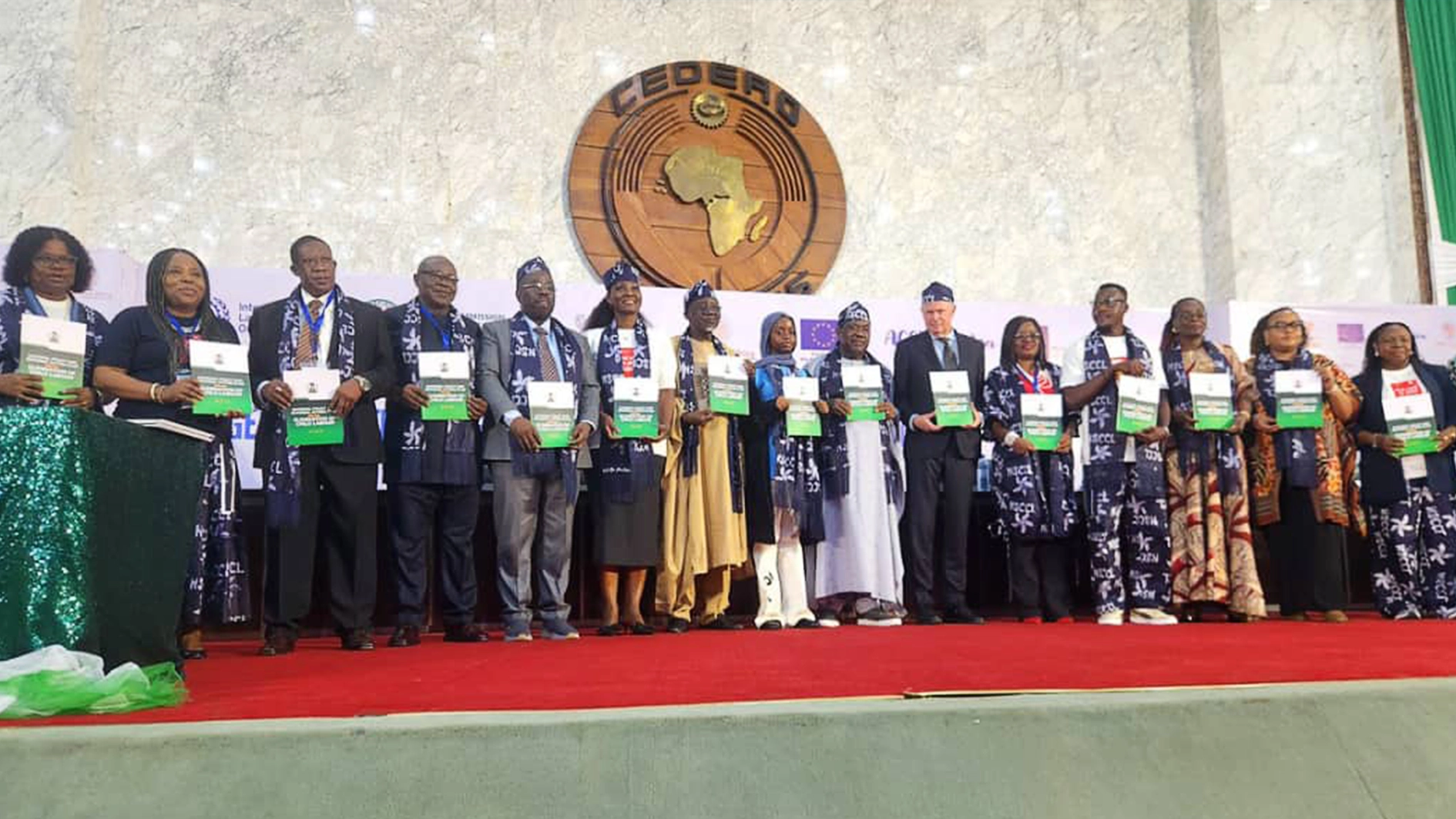
The success of the recently launched national policy and action plan on child labour should not be measured by how many children are removed from active work, but by how many households reach economic security where they no longer depend on children’s labour to survive, GLORIA NWAFOR reports.
Nigeria recently charted a clear roadmap to accelerate efforts towards eliminating child labour and ensuring that every Nigerian child is protected and educated.
At the two-day dialogue tagged National Dialogue on Advancing the Implementation of Nigeria’s National Child Labour Policy and National Action Plan Towards 2030, the 2024 National Child Labour Survey and the 2026–2030 National Action Plan on Child Labour were unveiled by President Bola Tinubu, who was represented by the Government of the Federation, George Akume.
The President said the Federal Government would intensify efforts to tackle the root causes of child labour exploitation.
He declared that eradicating child labour has become a national development priority, warning that the menace undermines education, poverty reduction, economic growth, food security, human capital development, and national security.
According to him, “Every nation is judged by how well it protects its children. A child who is forced into labour instead of attending school loses more than an education. That child loses opportunities, confidence, health and the chance to fully contribute to national development.”

Tinubu said the Federal Government considers the elimination of child labour not merely as a labour issue, but as a national development priority, stressing that it is linked to education, social protection, economic growth, poverty reduction, food security, human capital development and national security.
Speaking on the theme ‘Red Card to Child Labour: Fair Play for Children, Decent Work for Adults’, Tinubu said it reflects Nigeria’s determination to reject all forms of child exploitation.
He said his administration would continue to strengthen labour administration and inspection systems, child protection mechanisms and interventions aimed at addressing poverty, unemployment, inadequate access to quality education and social exclusion.
With less than four years to the 2030 deadline for ending child labour under the Sustainable Development Goals (SDGs), millions of children across the globe continue to spend their days on farms, mines and workshops instead of classrooms and playgrounds.
While the Federal Government of Nigeria has renewed its commitment to eliminate child labour by 2030, the scale of the problem remains daunting. According to the Nigeria Child Labour Survey 2022, approximately 25 million Nigerian children between the ages of five and 17 are engaged in child labour, representing nearly four out of every 10 children in that age bracket.
The figures become even more alarming in rural communities, where the ratio of victims is 50 per cent.
These are not merely statistics. They represent children carrying heavy loads on farms, working long hours in domestic service, digging in artisanal mining sites and participating in economic activities that expose them to physical harm, exploitation and long-term developmental risks.
At the International Labour Conference organised by the International Labour Organisation (ILO) in Geneva, global leaders said that although progress has been made, much more remains to be done.
ILO Director-General Gilbert Houngbo described the persistence of child labour as an unacceptable denial of childhood itself.
Nearly 138 million children remain trapped in child labour globally, including 54 million engaged in hazardous work. For Houngbo and other advocates, the figures underscore the urgency of moving beyond declarations and translating commitments into concrete action.
This year’s campaign theme, ‘Red Card to Child Labour: Fair Play for Children, Decent Work for Adults’, reflects a growing recognition that child labour is often a symptom of broader economic and social failures.
Poverty remains the single biggest driver. For many families struggling to survive, children’s earnings — however meagre — can mean the difference between eating and going hungry. Limited access to quality education, weak social protection systems and inadequate enforcement of labour laws further deepen the crisis.
In Nigeria, these factors intersect with a vast informal economy where regulation is often weak and exploitation difficult to detect.
The result is a system in which child labour becomes normalised, particularly in agriculture, domestic work and small-scale mining.
Although government officials point to policy reforms and international partnerships as evidence of progress, experts argue that implementation remains the country’s greatest challenge.
Before the launch of the survey report, Magaji Ademu, Director of the Labour Inspectorate Department at the Federal Ministry of Labour and Employment, reaffirmed Nigeria’s commitment to ending child labour and implementing resolutions agreed upon at international forums.
The framework builds on previous interventions while aligning with regional and global initiatives, including the Marrakech Global Framework for Action and child protection strategies across West Africa.
Commenting on the launch of the survey report in a piece titled ‘Can Nigeria Eliminate Child Labour Without Fixing The Informal Economy?’, an expert on labour matters, Lekan Olayiwola, argued that Nigeria’s drive to eliminate child labour by 2030 may face a major structural hurdle unless the Federal Government addresses the precarious livelihoods that push vulnerable households to depend on children’s economic contributions.
He said the challenge is underscored by findings from the 2022 Nigeria Child Labour and Forced Labour Survey, which estimated that 24.67 million children aged five to 17 were engaged in child labour, representing 39.2 per cent of the age group.
The report said nearly 15 million were aged between five and 11, while 35.3 per cent of children aged five to 14 combined schooling with work. Among those aged 15 to 17, the proportion was 45.3 per cent.
According to him, the figures suggest that child labour is deeply embedded in household survival strategies, rather than being confined to conventional workplaces.
This, he argued, makes Nigeria’s highly informal labour market a critical part of the child-labour debate.
According to the National Bureau of Statistics, informal employment accounted for 92.7 per cent of total employment in the first quarter of 2024, rising to 97.6 per cent in rural areas, compared with 89 per cent in urban centres.
The statistics also showed that 84 per cent of employed Nigerians were self-employed, while only 16 per cent were in wage employment.
Olayiwola argued that while most Nigerians earn their livelihoods outside conventional employment structures, a child-labour strategy centred largely on inspection, prohibition and withdrawal of children from work could face significant limitations.
Much of the work involving children, he said, takes place in dispersed, small-scale, family-based economic activities that are difficult for conventional labour inspection systems to monitor.
The bigger challenge, he stressed, is not only how to identify and stop illegal child employment, but how to address the economic vulnerability that makes children’s contributions necessary to household survival.
The International Labour Organisation has similarly emphasised the need to combine enforcement with social protection, education and decent work for adults.
Nigeria’s labour-market figures further illustrate the challenge.
In the first quarter of 2024, unemployment stood at 5.3 per cent, while time-related underemployment was 10.6 per cent. Youth unemployment among people aged 15 to 24 was 8.4 per cent, while the NEET rate stood at 14.4 per cent.
Olayiwola stressed that the figures stated above highlight why unemployment alone may not adequately capture household income insecurity.
He argued that a parent may be technically employed but have no predictable income, particularly where livelihoods depend on petty trading, casual labour, agriculture or several informal activities.
In such households, he said removing a child from work without strengthening the family’s income security could shift the household’s coping strategy rather than eliminate the conditions that produced child labour.
According to him, this implies that child protection must increasingly be linked to decent adult work.
For Nigeria, he said the effectiveness of the new national action plan would depend not only on the number of children withdrawn from work or inspections conducted, but also on whether the conditions driving child labour begin to change.
This, he said, would require stronger child-labour surveillance at state level, better links between schools, social services and labour administration, and sufficient personnel and resources for labour inspectors to reach informal workplaces.
He said it would also require social-protection programmes that reach vulnerable households before economic shocks push children into work, alongside education policies that address the costs and practical barriers that leave children combining school and work.
“The success of the 2026–2030 action plan should therefore be measured not merely by how many children are removed from work, but by how many households eventually reach a level of economic security where they no longer depend on children’s labour to survive.
“That is where Nigeria’s child-labour campaign meets the much larger challenge of reforming its informal economy,” he said.
Labour advocates already say a significant gap remains between legislation and enforcement.
Nigeria’s legal framework itself presents contradictions. While the Labour Act permits certain forms of employment from the age of 12, the Child Rights Act and the Universal Basic Education Act effectively prohibit child labour among children below 18.
These inconsistencies create loopholes that employers can exploit and make enforcement much harder.
Compounding the problem is the shortage of labour inspectors and the limited reach of regulatory agencies, particularly in remote rural areas where child labour is most prevalent.
For organised labour, the issue extends beyond economics. Nigeria Labour Congress President, Joe Ajaero, argued that child labour is fundamentally a social justice concern.
According to him, no society can claim to promote decent work while millions of children remain trapped in dangerous and degrading conditions.
His position reflects a broader consensus among labour groups, which continue to push for stronger enforcement of child protection laws, improved access to quality education and expanded social safety nets for vulnerable households.
Research increasingly shows that children exposed to exploitative working conditions face elevated risks of chronic stress, anxiety, depression, and psychological trauma.
Long hours of work, exposure to abuse, and the burden of adult responsibilities can disrupt emotional development and leave lasting scars that persist well into adulthood.
Yet mental health remains largely absent from many child labour interventions, which traditionally focus on education, law enforcement, and economic support.
For child rights advocates, this omission highlights the need for a more holistic approach, one that recognises children not simply as economic actors but as individuals whose emotional and psychological well-being requires protection.
As the countdown to 2030 continues, Nigeria’s challenge is not a lack of commitment. The country has policies, action plans and international partnerships. What remains uncertain is whether those commitments can be translated into measurable results at the scale required.
The red cards raised in Geneva may have symbolised global resolve. But unless governments move decisively to address poverty, strengthen institutions, and protect vulnerable families, stakeholders say the final whistle on child labour may still be a long way off.

