 Follow Us on Google News


 Follow Us on Google Discover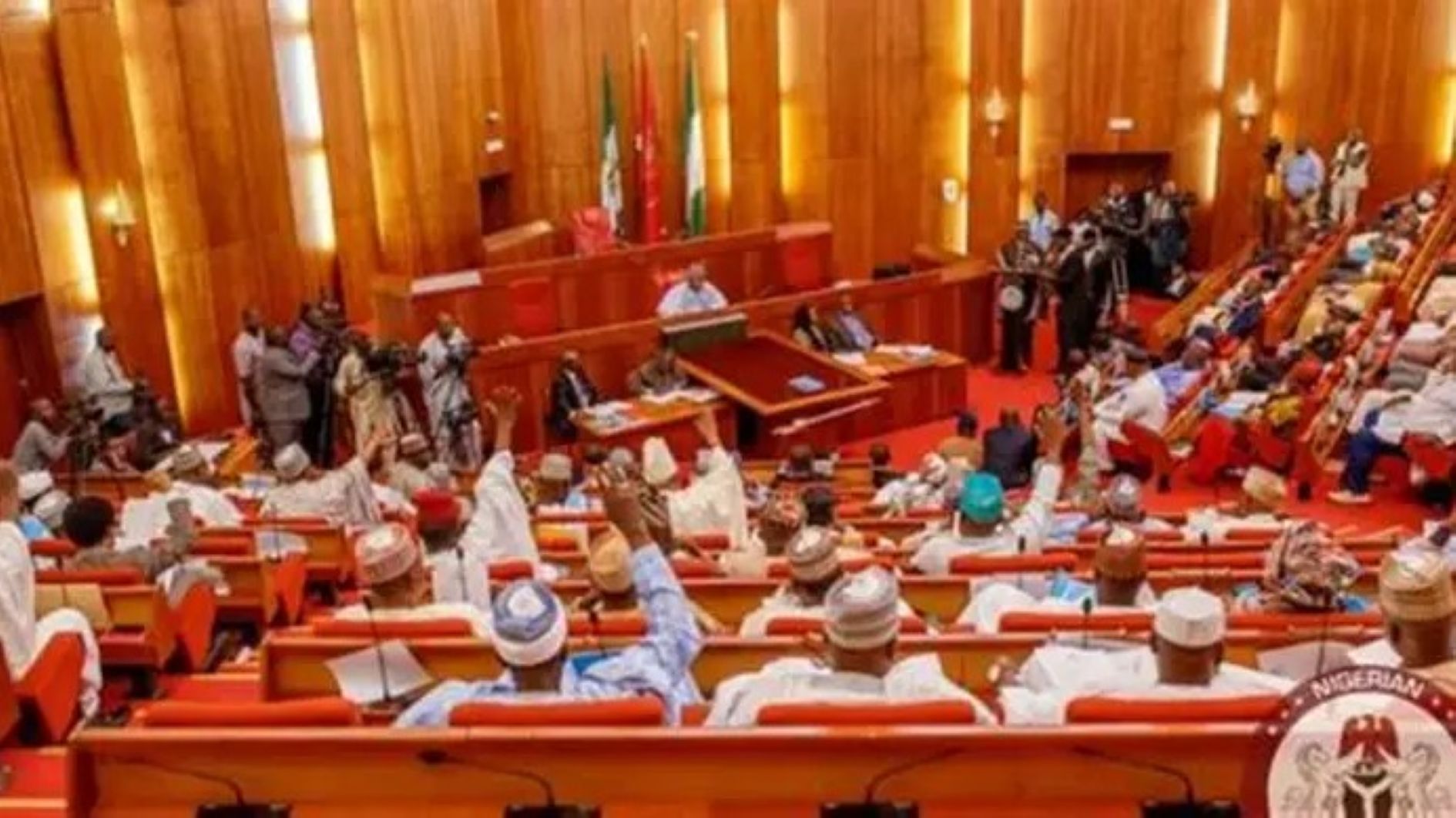
The Senate’s ambitious investigation into billions of naira in oil and gas revenues suffered an immediate setback on Monday after several key government agencies, including the Central Bank of Nigeria (CBN), the Nigerian Upstream Petroleum Regulatory Commission (NUPRC) and the Niger Delta Development Commission (NDDC), failed to honour summons to appear before the Senate Public Accounts Committee over issues arising from the Nigeria Extractive Industries Transparency Initiative (NEITI) audit reports.
The committee, chaired by Senator Ibrahim Hassan Dankwambo (PDP, Gombe North), reacted angrily to the agencies’ absence, describing it as a blatant disregard for the constitutional oversight powers of the National Assembly and a direct affront to Nigerians who expect transparency and accountability in the management of public resources.
Monday’s hearing marked the commencement of a comprehensive legislative investigation into the 2021, 2022 and 2023 NEITI Oil and Gas Industry Audit Reports, a process expected to scrutinise oil sector revenues, remittances to the Federation Account, statutory financial obligations, royalty payments, regulatory compliance and the operational activities of more than 60 Ministries, Departments and Agencies (MDAs), regulators, government-owned enterprises, as well as indigenous and multinational oil companies.
However, despite formal invitations, public notices published in national newspapers and weeks of advance notice, the invited agencies failed to appear before the committee.
The absence of the agencies forced lawmakers to suspend the proceedings after waiting for well over an hour.
Visibly displeased, members of the committee accused the agencies of treating the Senate with contempt and undermining legislative efforts to ensure accountability in one of Nigeria’s most strategic economic sectors.

Leading the criticism, Senator Babangida Hussaini described the repeated failure of government agencies to honour Senate invitations as a “recurring decimal,” arguing that such conduct erodes public confidence in democratic institutions and weakens parliamentary oversight.
According to him, the committee derives its investigative powers from the Constitution and the Senate Standing Orders, making compliance with its summons a legal obligation rather than a matter of discretion.
He lamented that lawmakers had cut short their annual recess and constituency engagements to attend the hearing, only to discover that none of the invited agencies considered it necessary to send either their chief executives or representatives to explain their absence.
He also condemned the development, saying it was unfortunate that lawmakers had suspended their holiday plans and travelled from different parts of the country for the hearing, only to be left waiting by agencies expected to account for public funds. He warned that if the Senate of the Federal Republic of Nigeria could summon heads of agencies and they failed to appear without consequences, it would send the wrong message about accountability in government. He urged the committee to invoke the appropriate constitutional powers to address what he described as a disgrace to the nation.
Similarly, Senator Francis Ndubueze criticised the agencies for failing to provide any explanation for their absence, noting that no letters were written, no excuses offered and no representatives sent to brief the committee. He argued that such conduct showed a lack of respect for the Senate and its constitutional oversight responsibilities, insisting that the integrity of the National Assembly must be protected.
Following the debate, the committee unanimously resolved to grant the defaulting agencies one final opportunity to appear before it on Thursday, August 6, 2026.
The committee also directed its secretariat to immediately communicate the resolution to all affected organisations and notify them that failure to honour the rescheduled hearing could compel the Senate to invoke its constitutional powers to enforce compliance.
Earlier, the committee had announced that the investigation was being conducted pursuant to Sections 85(5), 88 and 89 of the 1999 Constitution (as amended), as well as Order 95(5)(d) of the Senate Standing Orders, 2026.
The NEITI audit reports, which form the basis of the investigation, contain extensive information on revenues generated from Nigeria’s oil and gas industry, payments made by operators, remittances to government, production figures, royalties, taxes and compliance with statutory obligations.
The Senate said the exercise is intended to determine whether revenues due to the Federation were fully accounted for, whether agencies complied with applicable financial laws and regulations, and whether any leakages identified in the audit reports require legislative or prosecutorial action.
The investigation is expected to involve appearances by the Nigerian National Petroleum Company Limited (NNPCL), NEITI, the Nigerian Midstream and Downstream Petroleum Regulatory Authority (NMDPRA), the Revenue Mobilisation Allocation and Fiscal Commission (RMAFC), the Office of the Accountant-General of the Federation, the Office of the Auditor-General for the Federation, the Ministry of Petroleum Resources, the Federal Ministry of Finance, the Federation Account Allocation Committee (FAAC), as well as dozens of indigenous and international oil companies, including Seplat Energy, Aradel Energy, Oando, Chevron Nigeria, TotalEnergies EP Nigeria, Shell Nigeria Exploration and Production Company, Mobil Producing Nigeria Unlimited, Esso Exploration and Production Nigeria, Conoil Producing, CNOOC Exploration and Production Nigeria Limited, Aiteo Eastern E&P and several others.
The committee had directed all invited organisations to appear with their chief accounting officers, relevant technical officials and all documents relating to the issues raised in the NEITI audit reports, warning that requests for adjournment would only be entertained under exceptional circumstances and with prior approval.
With the first hearing ending without substantive proceedings, lawmakers insisted that Thursday’s sitting would determine whether the Senate would proceed with constitutional enforcement measures against agencies that continue to disregard legislative summons.

