 Follow Us on Google News
 Follow Us on Google Discover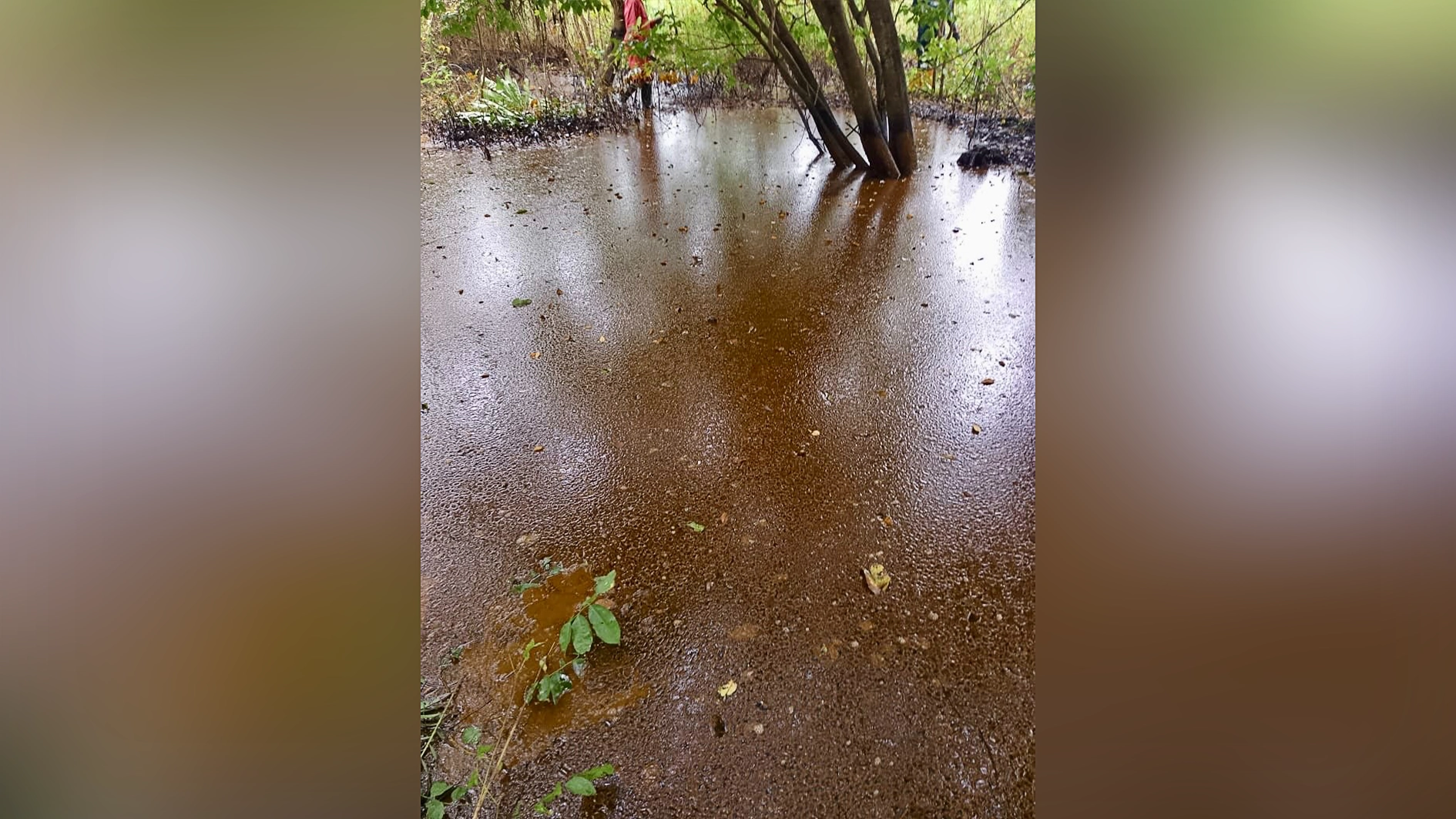
Nigeria’s weakly regulated upstream oil sector continues to leak vast amounts of methane, enriching government coffers and investor returns across Nigeria, Europe and America while undermining climate commitments and exposing vulnerable communities to environmental and health risks. KINGSLEY JEREMIAH investigates the scale of the emissions, the regulatory gap fuelling the silence, and those paying the highest price.
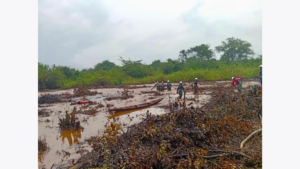
On 27 June, residents of Uzere, an inland, rainforest town in Delta State’s Isoko South area council, fled their homes, convinced they were under attack. They were not. An oil well operated by Heritage Energy had failed, and more than a month later, Well-14 was still spewing crude, gas and water into the community.
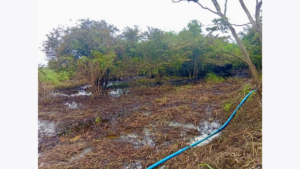
Fifty-six-year-old Daniel Odorewu had built his life around two fishponds dug beside a natural pond his grandfather once used. “That is how I survived,” he says. “I hatched fish, raised them and sold them. There is nothing I can rebuild.”
A few plots away, cassava farmer Evevie Ajirioghene watched the same crude swallow the only farmland she owns; the cassava was meant to feed her family until next June. “I have nothing else,” she says.
The Chairman of Oil and Gas for the community, Columbus Oguname, said 12 tanker loads of crude are hauled from the site daily, though the damage keeps spreading through the night, with impacts on the forest, water, and farmland too obvious to ignore. Flooding fears have compounded it, considering that the already-overwhelmed health centre in the community has had to evacuate patients, including dead bodies, during past rains.
“Our priority is not compensation,” Oguname said. “First, save the community.”

Affected natural pond in Uzere.
ACTING General Manager, Government, JV and External Relations, Esosa Anenih, acknowledged that the Well-14 failure resulted in “an uncontrolled gas release”, effectively confirming methane emissions from the blowout, although Heritage Energy did not quantify the volume released. She said preliminary findings indicate that the wellhead (Christmas tree) collapsed and subsided into the cellar pit, but stressed that the exact cause remains under investigation. Anenih also disclosed that the well had been shut in for several years due to operational constraints, raising questions about the integrity monitoring and maintenance of inactive wells.
While Anenih said Heritage activated its emergency response, established an exclusion zone, deployed continuous gas monitoring, and is considering engaging specialist well-control experts to permanently stabilise the well, the company stopped short of providing methane emission estimates or timelines for capping the leak. Instead, she said technical and environmental assessments are ongoing, leaving key questions over the scale of emissions and their climate impact unanswered.
What makes methane dangerous is precisely what makes it invisible. In its pure form, it is colourless and odourless; communities see and smell the hydrocarbons released alongside a leak, not the methane itself, and have no way to measure what is escaping without specialised sensors.
That invisibility made Nigeria’s regulatory gap possible for decades. A new generation of satellites has ended it.
Instruments including the European Space Agency’s Sentinel-5P, launched on October 13, 2017, as part of the Copernicus environmental monitoring programme, use the Tropospheric Monitoring Instrument (TROPOMI) to support the UN in measuring methane emissions. NASA’s Earth Surface Mineral Dust Source Investigation (EMIT), aboard the International Space Station, detect the distinctive way methane absorbs infrared light, letting UNEP’s International Methane Emissions Observatory (IMEO) map plumes from orbit, though not with certainty. Satellite estimates carry a margin of error NUPRC has itself cited, typically 9–13 per cent, and pin down concentration and rough location rather than definitive cause. What they remove is an operator’s ability to say a leak was never known.
In May, NUPRC said operators must begin reporting methane emissions using the Intergovernmental Panel on Climate Change (IPCC) Tier two methodologies from the third quarter of 2026 and transition fully to IPCC Tier three by January 2027. The transition represents a shift from using country- or technology-specific emission factors to facility-specific measurements and detailed activity data, resulting in more accurate and site-specific emissions reporting.
But with ageing infrastructure and weak enforcement, the announcement alone will not fix what the Principal Consultant, Amelin Energy Limited, Eloho Amagada, described as the recurring “leaks and bursts” of oil facilities laid over five decades ago without repair.
Amagada had noted that ageing infrastructure was a major cause of oil spills, accounting for about 50 per cent of all spill incidents in the country. National Oil Spill Detection and Response Agency data corroborated his claim, although with lower estimates. The 2023 audited financial document of NNPC shows it spent nearly $29 million or N45.88 billion on pipeline security and maintenance nationwide. The state oil firm admitted that the infrastructure is weak and, last year, began a $2 billion negotiation with Nexus Alliance to repair some of the ageing infrastructure. No commitment has been announced five years after it first opened a bid to overhaul the assets.
The Minister of State for Petroleum Resources (Oil), Heineken Lokpobiri, admitted that: “The pipelines that were traditionally transporting our crude were built in the 1960s and the 1970s, and their lifespan is over.” But they are still being used to pump crude at the detriment of vulnerable communities and climate pledges.
Historical pattern of methane emissions
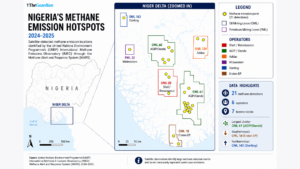
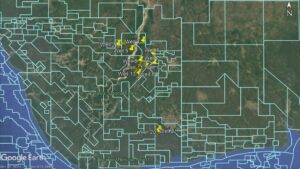
BETWEEN May 2024 and May 2025, IMEO identified 21 confirmed methane hotspot clusters across the Niger Delta, several sitting inside Isoko South, the same council area as Uzere. Uzere’s blowout, in other words, happened inside a zone already flagged as a persistent emissions cluster months before Well-14 failed. Of all hotspots IMEO logged, only one operator responded and fixed the problem.
That single case shows what accountability looks like when it happens. In June 2024, IMEO detected a plume at a Niger Delta gas plant using EMIT, tracing the leak in archival imagery back to December 2023. The facility was releasing roughly 4.5 tonnes of methane an hour, comparable hour for hour to the climate impact of more than 80 cars driven for a year. UNEP notified the government and the operator, Eni, on 26 and 27 June 2024. Within weeks, Eni confirmed the cause as a faulty ring joint on a compressor’s inlet scrubber, shut the unit down and fixed it. Estimated emissions before repair were 21,000 tonnes. Nigeria’s overall response rate to such alerts is roughly 20 per cent, above the 12–13 per cent global average but still meaning four in five confirmed warnings go unanswered and mitigation stands at just one case.
The wider hotspot data show why one fix barely dents the problem.
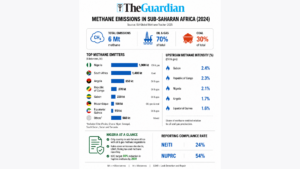
IMEO’s 21 clusters sit across just six oil blocks; AGIP (now divested to Oando) alone accounts for twelve, 57 per cent of everything detected, nine from its OML 61 block alone. Shell (now divested to Renaissance Africa Energy), Addax, Eroton, Midwestern and Sterling account for the rest.
Methane is more than 80 times as potent as carbon dioxide over two decades, and repeated detections over the same ageing assets point toward persistent leaks rather than one-off accidents. Other burning wells tell the same story from the ground. In Bille, Rivers State, residents reported gas bubbling through abandoned mono pumps in late 2025; it was only in July this year that the Federal Government visited the community to discuss and set up a committee to stop the gas leakage in Bille Kingdom, Degema Local Government Area of Rivers State. Off Awoye, Ondo State, the Ororo-1 well has burned for six years; near Okrika in Rivers State, another gas fire has raged for over two years. At Otuabagi, inside the Oloibiri field where Nigeria’s oil industry began in 1956, some of the country’s oldest wells are still leaking because they were never properly decommissioned.
That is not a marginal category because a study presented at the 2025 Society of Petroleum Engineers (SPE) Nigeria Annual International Conference and Exhibition found that Nigeria has drilled about 8,211 oil and gas wells, comprising 7,079 wells from the industry’s inception to 2011 and 1,132 additional wells between 2011 and 2023, showing the country’s vast and ageing well inventory as it faces growing decommissioning and well abandonment challenge. The wells are connected by 5,120 kilometres of pipelines that are facing serious corrosion. Previously, operators were required only to plug wellheads against water ingress.
Internal Shell documents disclosed this month in UK court proceedings, analysed by Amnesty International and partners in a report titled Lifting the Lid, put the company’s own Niger Delta clean-up liability at an estimated $10.9 billion and describe missing wells and decades of deferred maintenance. Shell says it does not recognise itself in that account.
Executive Director of Centre for Research on Multinational Corporations (SOMO), Audrey Gaughran accused Shell’s shareholders and the UK and Dutch governments of enabling the company’s misleading narrative by failing to scrutinise mounting evidence from civil society. She said the disclosed documents strengthen calls for full transparency, corporate accountability, and reparations for communities affected by decades of pollution in the Niger Delta.
New Decommissioning and Abandonment Regulations took effect in 2026, finally requiring a dedicated remediation trust, but Special Adviser to Bayelsa State government on environmental, Alagoa Morris, who calls the abandoned wells “ecological crimes,” notes operators have historically evaded the obligation through divestment, handing liabilities to smaller successor firms with less regulatory attention.
Non-disclosure, in that light, looks less like confusion and more like a rational choice. Reporting a leak triggers repair costs, remediation obligations and community claims; not reporting risks almost nothing, because no company has ever faced a documented consequence for withholding emissions figures. The Guardian asked NUPRC for records of such penalties since July 28th, but no response was received till this article was published.
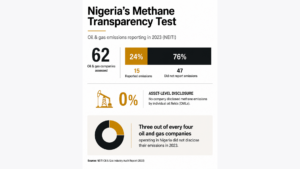
When NEITI published Nigeria’s first upstream greenhouse gas audit in September 2024, it sent a standardised template to 62 operators. Fifteen responded. Forty-seven said their data was “not available” despite NUPRC having issued a methane guideline in November 2022 and binding reporting regulations in 2023, and despite the NEITI Act already providing for fines and imprisonment against companies that withhold required data. None of the 47 has been fined or prosecuted.
How regulatory lapses aid poor compliance, environmental abuse
THE deeper problem is that Nigeria’s regulators cannot agree on the scale of the failure. NEITI’s audit puts sector-wide compliance at 24 per cent; NUPRC claims 54 per cent in its 2024 audit report.
This is a striking gap for a sector that earned Nigeria roughly $30.85 billion in 2023, with outstanding royalties and flare penalties alone amounting to $6.175 billion that year. Activists from groups such as Policy Alert and the Network Advancement Program for Poverty and Disaster Risk Reduction petitioned NUPRC in March this year for a further $270 million in unpaid gas-flaring penalties; a 2020 tally found that $280 million in flaring fines went uncollected that year alone, indicating that penalties exist only on paper. The collection does not follow. Data provided by NUPRC to the Federal Account Allocation showed that approved monthly revenue from gas-flared penalties in the 2025 budget stood at N58.324 billion, but despite a World Bank report that gas flaring rose by 8 per cent in Nigeria in 2025, collections stood between N42.992 billion and N30.405 billion. The average stood at N36 billion, with about 30 per cent of penalties unpaid.
That gap between public claim and private record runs through individual companies. When BudgIT matched NEITI’s anonymised audit to operators in 2025, the absentees included Aiteo (now Nembe E&P) and Seplat, both of which operate fields near LGAs that IMEO has independently flagged as hotspots. Seplat’s website describes it as a “responsible and accountable corporate citizen.” When asked on 28th of July why its emissions remain undisclosed to industry auditing agencies, the company’s Director External Affairs & Social Performance, Chioma Afe responded on August 2, saying: “Seplat Energy consistently complies with all applicable regulatory reporting and disclosure requirements and maintains a strong commitment to transparency and good corporate governance. For information relating to this subject, we respectfully refer you to our regulatory filings and our publicly available reports and disclosures.”
Heirs Energies, which is chaired by business tycoon Tony Elumelu, did report 217.4 million kilogrammes of methane in 2023 after acquiring OML 17, one of the country’s largest single-year pollutions, going by NEITI’s record, but supplied no comparable 2022 baseline for a mature asset that should have one.
Before publication, The Guardian emailed Heirs Holdings’ Head of External Relations, Chidimma Ugbojiaku, seeking clarification on the company’s reported 2023 methane emissions of 217.4 million kilograms (CH₄) and whether it had implemented methane leak detection and repair (LDAR) and other abatement measures required under the Petroleum Industry Act (PIA). Ugbojiaku acknowledged the enquiry, promised to respond, and reiterated that commitment during a follow-up call about 44 hours after the initial email. Despite further reminders, including through a mutual media colleague, no response was received before this report was filed.
Chevron reported a 99.8 per cent fall in emissions in a single year, from 173.6 million to roughly 266,000 kilogrammes, which NEITI itself says needs independent verification. Chevron’s Nigeria office referred The Guardian’s questions about that verification back to the regulator. NUPRC did not respond to a detailed list of questions, including one about Uzere, sent on July 28.
As international majors have divested Niger Delta assets to indigenous operators such as Heirs at OML 17, oversight has not kept pace with the shift in ownership. Of 153 companies worldwide belonging to the UN’s Oil and Gas Methane Partnership, only three are Nigerian, and neither NNPC nor Asharami has ever filed a report since joining. Chevron joined in 2024, filed nothing that year, and what it finally reported in 2025 was rated at the partnership’s lowest transparency tier. NLNG is the only Nigerian company with Gold Standard recognition, and it only operates in the midstream. None of the indigenous operators is part of the global reporting framework, which can map partner organisations’ assets and keep a close eye on them through live satellite monitoring, rather than mere voluntary or greenwashing reporting.
Nigeria faces a major challenge in meeting its methane-reduction commitments under the Global Methane Pledge, its Nationally Determined Contributions (NDC 3.0), and other energy transition goals. The country has pledged to cut fugitive methane emissions by 60 per cent by 2035 and eliminate routine gas flaring, but weak responses to methane leaks undermine these targets, signalling a lack of urgency in tackling climate change and protecting the health and environment of affected communities.
Nigeria’s upstream methane intensity stands at roughly 2.1 per cent of production, more than double the global industry average, which the IEA put at around one per cent in 2024. Norway records the world’s lowest upstream intensity, achieved through a national ban on non-emergency flaring and a venting-and-flaring tax introduced in 2015; Qatar has built OGMP 2.0 reporting and leak-detection-and-repair programmes into a national target of near-zero methane emissions.
The IEA finds the best performers now score more than 100 times better than the worst. Nigeria remains the only country in sub-Saharan Africa with methane-specific regulation covering leak detection, flaring taxes and mandatory reporting. The architecture exists, on both NEITI’s and NUPRC’s own numbers, but it is simply not being used.
Implications for host communities
FOR the communities living beside the leaks, the science is not abstract as a 2025 scoping review in Tropical Medicine & International Health found respiratory disorders present in 35–45 percent of exposed Niger Delta communities, alongside reproductive risks and elevated psychological distress; separate groundwater studies conducted by UNEP in Ogoni have recorded benzene concentrations up to 900 times WHO limits near extraction sites, a co-pollutant risk distinct from methane but released alongside it in the same leaks and flares.
Methane itself is not directly toxic at ambient concentrations; the acute harm at Uzere comes from the crude, water and volatile compounds accompanying the blowout, while methane’s damage compounds globally as a gas over 80 times more potent than carbon dioxide across two decades.
A medical scientist at Bremar Lab in Eleme, Rivers State, Mon Brandson, said laboratory records point to a sharp rise in respiratory illnesses and kidney-related conditions across his facilities in the region show he links to years of environmental pollution from oil exploration and refining.
He described the rise in kidney problems as particularly alarming, noting that cases once uncommon have become routine. His observations echo those of Ziga Mbanu, a senior medical officer at the Model Primary Health Centre, Agbonchia, who said six to seven out of every 10 newborns treated at the facility present with rashes, while typhoid cases remain persistently high.
Together, the accounts underscore growing concerns among frontline health workers over the potential public health impacts of chronic pollution and reinforce calls for a comprehensive investigation into methane emissions and other oil and gas-related pollutants.
That global-local split is what turns an environmental failure into an economic one. From 2027, EU rules will require oil and gas importers to demonstrate credible methane monitoring, and Europe is Nigeria’s largest market for crude and LNG. “With the EU as Nigeria’s highest trade partner on oil and gas, this has real implications for a country relying on those revenues to stabilise its currency,” said Country Director at Natural Resource Governance Institute, Tengi George-Ikoli, warning buyers could shift toward markets with stronger verification, like the US and Norway.
Petroleum Economist at the University of Ibadan and former President of the Nigerian Economic Society, Prof Adeola Adenikinju, said: ‘It is important for the regulators to ensure compliance with extant regulations in the industry. This will promote transparency and enhance the competitiveness of Nigeria’s oil and gas sector. It is also part of our net zero climate change commitments.’”
Seplat’s dual London-Lagos listing and Chevron’s global ESG commitments mean both answer to shareholders who price climate-verification risk into the cost of capital; gaps of this size typically mean higher premiums from financiers and insurers and less access to climate finance, the same risk the Executive Director of Policy Alert, Tijah Bolton-Akpan, flags for financing the Nigeria–Morocco Gas Pipeline.
NUPRC said Nigeria flared roughly nine billion cubic metres of gas in 2025, worth an estimated $888.2 million between January 2025 and June 2026, a value that, captured rather than burned, could instead ease domestic power shortages. IEA put the cost of eliminating 70 per cent of fossil-fuel methane at near-zero using existing technology.
Chief Executive Officer at London-based SOStainability, Oke Epia argues the missing ingredient is not more law but the will to enforce it, stressing that “The same thing happened with gas flaring, deadlines shifted several times, and a bare slap on the wrist for defaulting entities.”
None of that will refill Daniel Odorewu’s fishponds or restore Evevie Ajirioghene’s cassava farm. For them, methane accounting is an abstraction; crude oil in the water is not. But their losses sit at the exact coordinates satellites have quietly logged for more than a year, proof that came from two directions, yet failure persists. From orbit, UNEP can already see where the leaks are. On the ground, no Nigerian regulator has ever made a company answer for concealing them. Nigeria has, on paper, some of the most complete methane regulations in Africa; guidelines in 2022, binding reporting rules in 2023, a national audit in 2024, independent verification in 2025, and decommissioning funds finally operational in 2026. What it has never had, at any point in that timeline, is enforcement. Until it does, the country’s climate pledges, and export competitiveness will keep being measured against a baseline nobody not NEITI, not NUPRC, not the communities living beside the wells can confirm.
Way forward
TO make progress, Nigeria must make independent methane Measurement, Reporting and Verification (MRV) and yearly public disclosure of project-level emissions a mandatory licence condition for all upstream operators, while requiring quarterly Leak Detection and Repair (LDAR) programmes using satellites, drones and ground-based sensors, with priority given to high-emitting facilities. Regulators should strengthen enforcement by establishing a rapid-response methane unit under the Nigeria Methane Action Framework (NMAF), with access to UNEP’s IMEO data, mandatory 30-day remediation timelines and meaningful sanctions for non-compliance.
Greater transparency is also needed around methane-related revenues, gas-flaring penalties, outstanding liabilities, and the use of climate finance, while fiscal incentives should reward verified emissions reductions and support smaller operators in modernising equipment. Host communities and civil society should also be integrated into emissions monitoring to independently verify company-reported data and strengthen public accountability.
This report was supported by the Centre for Journalism Innovation and Development (CJID) as part of the Deepening Methane Emissions Transparency Initiative-Stream II, through funding support by the Natural Resource Governance Institute (NRGI).

