 Follow Us on Google News
 Follow Us on Google Discover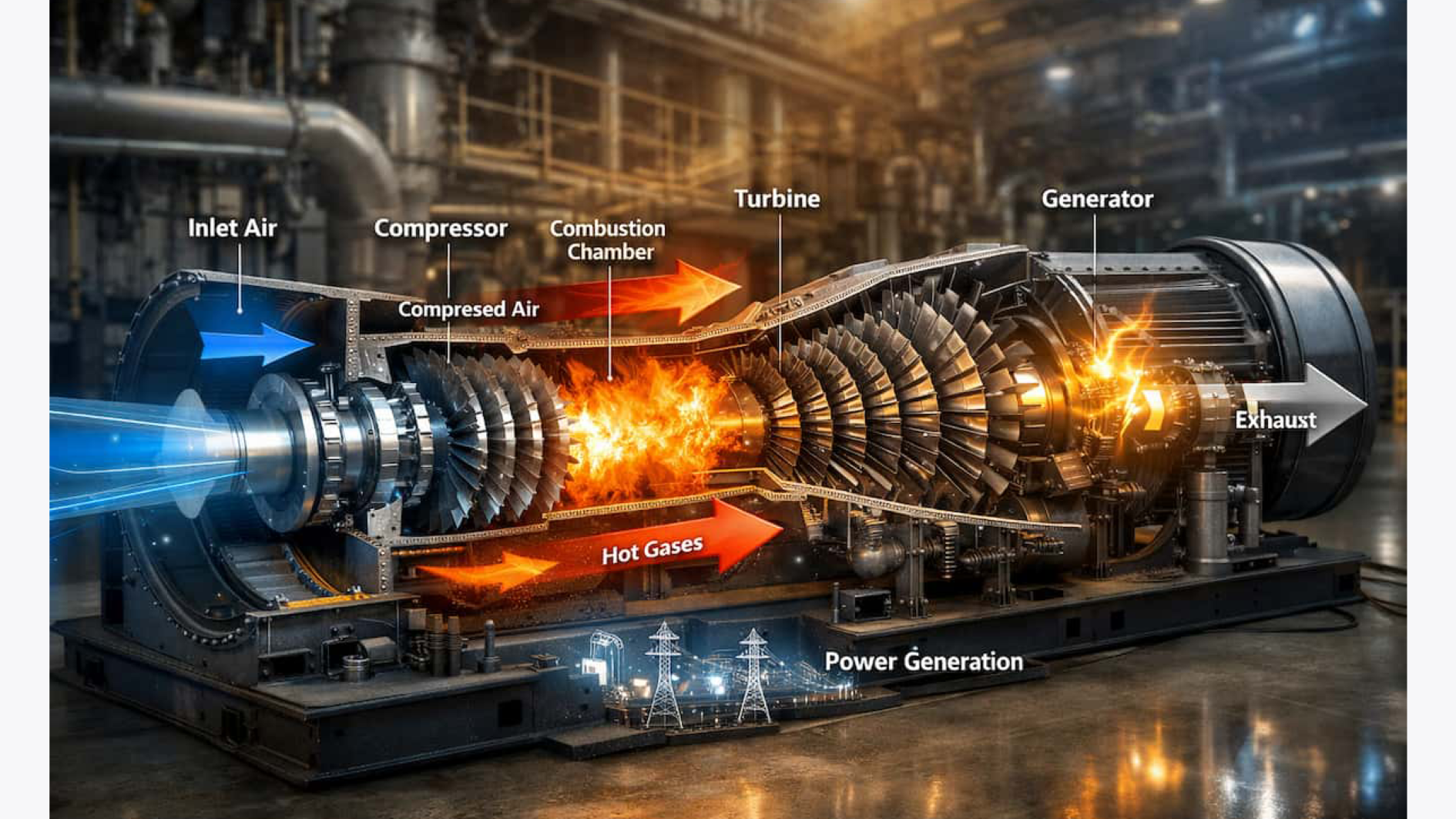
The global rush to build gas-fired power plants could create a major opportunity for Nigeria’s gas industry.
But the country risks exporting more gas while its own power plants are starved of the fuel needed to generate electricity.
Global orders for gas turbines reached a record 38GW in the second quarter, 29 per cent up from the previous quarter and a 71 per centyear-on-year increase, according to JP Morgan.
The surge reflects rapidly rising electricity demand, particularly from data centres and artificial intelligence (AI), as well as the reshoring of manufacturing.
For Nigeria, the development presents a familiar contradiction. The country has one of the world’s largest natural gas reserves, yet gas-fired power plants routinely struggle to secure sufficient supplies.
Worse, gas suppliers are increasingly bearing the financial burden of supplying the electricity market without being paid promptly.
Latest figures from the Nigerian Bulk Electricity Trading Company show that N81.67 billion of gas invoices remained unpaid in the first five months of 2026, representing about 57.3 per cent of the N142.6 billion gas invoices approved for payment. Only N60.93 billion had been settled.
While over 80 per cent of Nigeria’s power plants run on gas persistent debts continue to constrain supply and transport, thereby creating incentives for exporters.
When they are not paid by generators, their ability and willingness to maintain supplies can weaken as generating companies, in turn, cannot operate their plants consistently without fuel. With the development, countries like Nigeria have gas deposits and gas-fired power plants, but cannot consistently turn the resources into electricity because the commercial structure linking the two remains financially weak.
The international market, meanwhile, is preparing for a significant expansion of gas-fired generation with 38GW of turbine orders recorded in the second quarter; Siemens Energy accounted for 12.5GW, General Electric 11.3GW and Mitsubishi Power 5.3GW. The United States alone accounted for about half of the new orders, driven largely by
electricity demand from data centres.
The scale of the investment is exposing a supply constraint in the turbine industry itself. The lead time for new combined-cycle gas power plants increased to five years in 2025 from about three and a half years in 2023, while costs rose by 49 per cent, according to Bloomberg NEF.
Wood Mackenzie has projected that gas turbine prices could rise by as much as 195 per cent by 2027, reaching $600/kW, as demand for equipment outpaces manufacturing capacity.
At the end of 2025, global gas turbine orders stood at about 110GW, compared with manufacturing capacity of only 60–70GW, according to the consultancy. This is important for Nigeria because it points to a sustained international appetite for natural gas. Countries seeking reliable electricity to power AI infrastructure and manufacturing are increasingly turning to gas because it can provide firm power alongside renewable energy. For major gas producers such as Nigeria, this should translate into stronger export opportunities.
If Nigeria cannot establish a commercially viable domestic gas-to-power market, producers will naturally favour markets where they can secure payment. That could mean more gas being directed towards export projects, including LNG, while domestic power plants continue operating below capacity. Nigeria’s December 2025 generation data already demonstrate the scale of the problem. The Nigerian Electricity Regulatory Commission reported that only 5,151MW of the country’s 13,625MW installed generation capacity was available for dispatch, representing a plant availability factor of just
38 per cent.
In other words, 62 per cent of installed capacity was unavailable. Average hourly generation was 4,367MWh/h, while the average load factor of available plants was 85 per cent. This suggests that the central problem is not necessarily a shortage of demand for electricity or the inability of available plants to operate efficiently. Rather, too much generation capacity is simply unavailable in the first place.
Gas supply and payment challenges were listed as a major part of that structural weakness.
The 10 largest power stations accounted for 81 per cent of electricity generated in December, leaving the system heavily dependent on a relatively small number of plants.
The global gas turbine boom could force producers to reconsider supply, leveraging global demand for firm power increases. But exporting gas while domestic gas-fired plants remain under-supplied would expose a deeper policy failure. Nigeria would be monetising its gas abroad while it fails to convert enough of it into
reliable electricity at home.

