 Follow Us on Google News
 Follow Us on Google Discover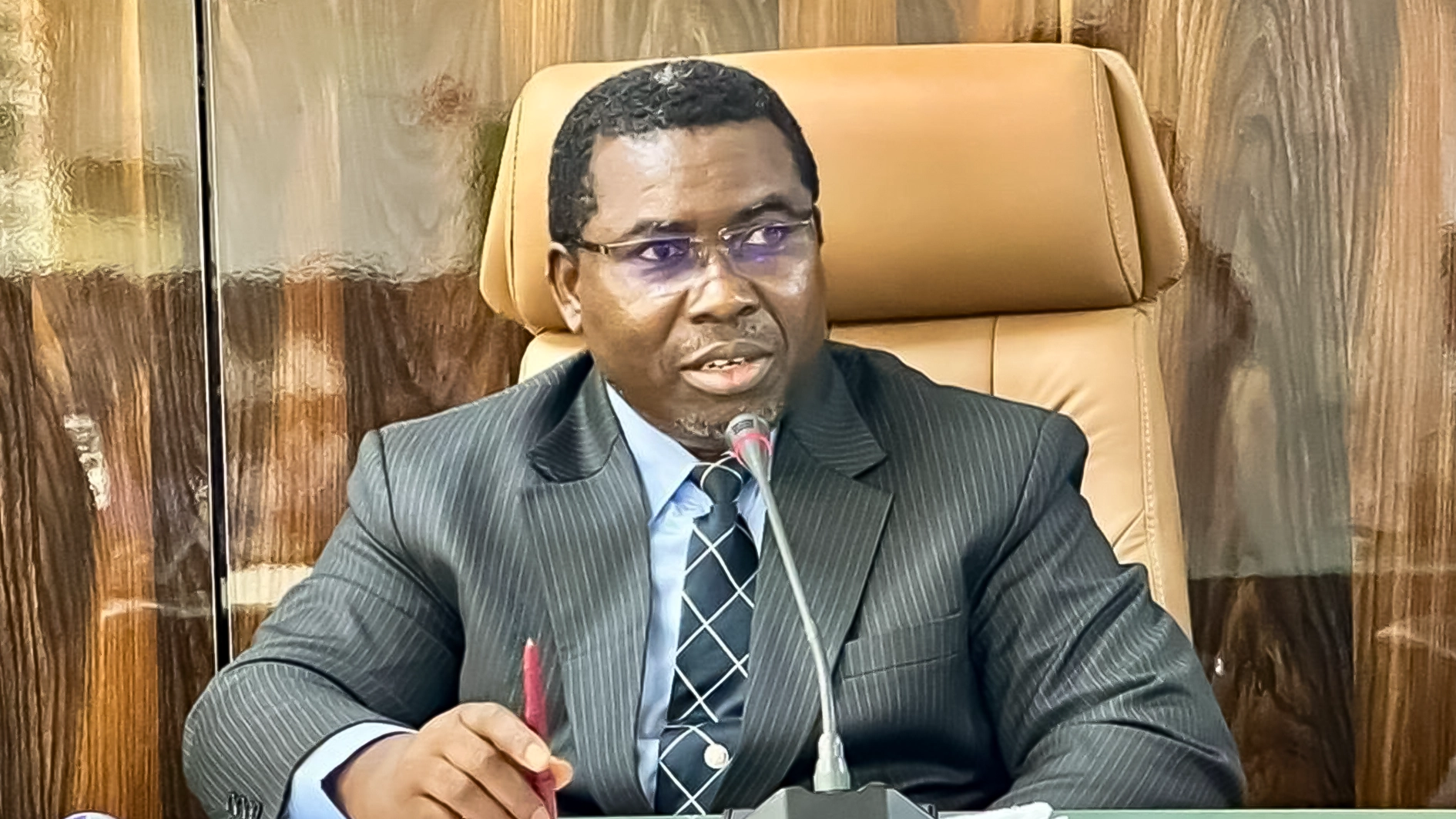
**PVC collection commences Friday
***Commission completes eight of 14 election milestones
More than 103 million registered voters are now on the national register ahead of the 2027 general elections, the Independent National Electoral Commission (INEC) has disclosed, as nationwide collection of Permanent Voters’ Cards (PVCs) is set to commence on Friday.
The figure followed the conclusion of a three-phase Continuous Voter Registration (CVR) exercise that produced 10,772,421 new registrations, subject to final biometric verification.
INEC Chairman, Prof. Joash Amupitan, disclosed this on Monday in Abuja while delivering a keynote address at a strategic workshop with media executives organised by the Nigerian Guild of Editors (NGE) in collaboration with the commission.
The workshop has the theme “Strengthening Democracy Through Partnership Among Editors, Civil Society and Electoral Institutions.”
Amupitan said the commission had completed eight of the 14 major statutory activities contained in its timetable for the 2027 elections and was advancing towards completion of the ninth.
He said the first phase of the CVR, conducted from August 25 to December 10, 2025, registered 2,611,266 voters, while the second phase, held from January 5 to April 17, 2026, produced 4,121,835 registrations.
The third phase, which ran from May 11 to July 26, 2026, recorded another 3,867,997 registrations, bringing the total number of new registrations to 10,772,421.
According to the chairman, the final figure is subject to the completion of the Automated Biometric Identification System (ABIS) verification.
He said INEC introduced an online registration portal during the third phase to reduce barriers associated with distance and time, while also introducing printable PVC technology in line with Section 18(1) of the Electoral Act 2026.
The initiative, he explained, was designed to eliminate prolonged waiting periods for the physical production and collection of voter cards.
Amupitan said the commission had also completed the public display of the Preliminary Register of Voters for claims and objections, as well as the final ABIS cleanup.
The INEC chairman said: “As you are aware, and in line with Section 10 of the Electoral Act 2026, the first Phase of the Continuous Voter Registration (CVR) commenced on 25th August 2025 and ended on 10th December 2025, registering a total of 2,611,266 voters; Phase II commenced on 5th January 2026 and ended on 17th April 2026, registering 4,121,835 voters; and Phase Ill commenced on 11th May 2026 and ended on 26th July 2026, registering 3,867,997 voters.
“The total new registration stands at 10,772,421, subject to the Automated Biometric Identification System (ABIS) verification currently being concluded.
“In the third phase, we introduced the Online Registration Portal technology to eliminate barriers of distance and time. Furthermore, we introduced Printable PVC technology in line with Section 18(1) of the Electoral Act 2026 to ensure that waiting months for a card becomes a relic of the past.
“Following the conclusion of our three-phase Continuous Voter Registration (CVR) exercise, which captured over 10.6 million new applicants and the completion of the public display of the Preliminary Register for claims and objections, our Voter Register Department has completed the final Automated Biometric Identification System (ABIS) cleanup. Nigeria’s National Register of Voters is now over 103 million.”
He disclosed that INEC had completed the processing and distribution of Phase One PVCs to all local government centres, urging the media to educate registered voters on where and how to collect their cards.
“We appeal to the Nigerian Guild of Editors and all media executives present to leverage your platforms to inform citizens, explain collection locations, and encourage registered voters to collect their cards promptly,” he said.
The chairman said the 2027 election timetable, revised on February 26, 2026, contained 14 critical statutory activities, which had been converted into an operational execution plan covering INEC’s 23 headquarters directorates, 36 state offices, the Federal Capital Territory and all 774 local government areas.
On operational preparedness, Amupitan said the commission had commenced nationwide zonal readiness assessments to identify vulnerabilities and address potential bottlenecks ahead of election day.
He said physical readiness audits and staff engagements had been completed in the South-West and North-West geopolitical zones, covering state office facilities, safe storage facilities, security command protocols and logistics deployment networks.
Amupitan also disclosed that INEC had commenced early procurement and delivery of non-sensitive election materials to state offices as part of measures to prevent delays in the distribution of election materials.
He said new operational pickup vehicles had also been procured and were being distributed to state offices and local government areas nationwide to improve logistics, particularly in difficult terrains.
The chairman said INEC had strengthened measures to ensure neutrality and discipline among its personnel ahead of the elections.
He said, pursuant to Section 26 of the Electoral Act 2026, all electoral officers and temporary personnel would be required to take an oath of neutrality.
“INEC has zero tolerance for partisanship, administrative negligence, or compromised ethics. Any official found wanting will face immediate administrative measures,” he said.
On staff welfare, Amupitan said the commission introduced the Consolidated Election Management Body Salary Structure (CEMBSS) on January 1, 2026, while state office operational overheads were increased by 150 per cent from July
The INEC chairman also warned political parties and their agents against vote-buying ahead of the elections, saying the commission was strengthening collaboration with the Economic and Financial Crimes Commission (EFCC), Independent Corrupt Practices and Other Related Offences Commission (ICPC) and Nigerian Financial Intelligence Unit (NFIU).
He said joint financial monitoring teams would be deployed to track illegal campaign spending and conduct surveillance at polling units.
“To the political actors and their agents: attempt to trade cash or material gifts for votes, and you will face immediate arrest and prosecution under the Electoral Act 2026,” Amupitan warned.
He said INEC was also upgrading its technological infrastructure, including the Bimodal Voter Accreditation System (BVAS), result-management systems and cybersecurity architecture.
According to him, the enhanced eEC8A system would ensure that polling unit result sheets were digitised, cryptographically authenticated and uploaded directly to the commission’s public result-viewing portal, IReV.
He further disclosed that the commission had integrated artificial intelligence-driven anomaly detection tools to monitor database traffic and protect its public portals from cyber intrusions and unauthorised alterations.
Amupitan expressed concern over the growing threat posed by disinformation, deepfakes, manipulated audio-visual content and premature declarations of unofficial election results.
He urged editors and news organisations to strengthen fact-checking and verification mechanisms ahead of the elections.
“Editors must insist on rigorous fact-checking, reject sensationalised clickbait, and cross-check unverified field rumours with our official channels before hitting the publish button,” he said.
Earlier speaking, President of the Nigerian Guild of Editors, Eze Anaba, said Nigerians should be able to determine election outcomes through their votes rather than leave the credibility of elections to prolonged legal disputes.
Anaba said elections were not merely about casting ballots but about building citizens’ confidence that their votes would count and that institutions responsible for conducting elections would act fairly and professionally.
He said democracy could not grow without a strong electoral body and an electoral process that was fair, transparent and seen by citizens to be fair and transparent.
Chief Press Secretary to the INEC Chairman, Adedayo Oketola, said the commission was seeking a stronger partnership with newsrooms to tackle fake news, deepfakes and other forms of information disorder ahead of the elections.
Oketola said editors were the “chief gatekeepers” of information reaching the public, making direct engagement with them a core operational priority for the commission.
He said the workshop was designed to rebuild institutional trust through open dialogue, establish seamless 24-hour fact-verification loops between newsrooms and INEC, and promote shared responsibility for protecting the integrity of the ballot.
The Executive Director, Centre for Media and Society, Akin Akingbulu, said verification was a two-way responsibility between newsrooms and institutions.
He said newsrooms could not verify what institutions failed to disclose, just as institutions could not sustain public confidence when newsrooms published unverified information.
The Executive Director, International Press Centre, Lanre Arogundade, said election integrity depended not only on the process that produced results but also on the information through which citizens understood the outcome.
INEC National Commissioner and Chairman of its Information and Voter Education Committee, Mohammed Haruna, said the commission’s recent elections under Amupitan had progressively improved, with the Osun governorship election widely adjudged the most successful.
He said the media remained crucial because it mediated how citizens observed and participated in elections.
Director, Voter Education and Publicity Department, INEC, Victoria Eta-Mesi, said stronger interaction between the commission and journalists would help combat misinformation and disinformation and improve citizen participation.

