 Follow Us on Google News


 Follow Us on Google Discover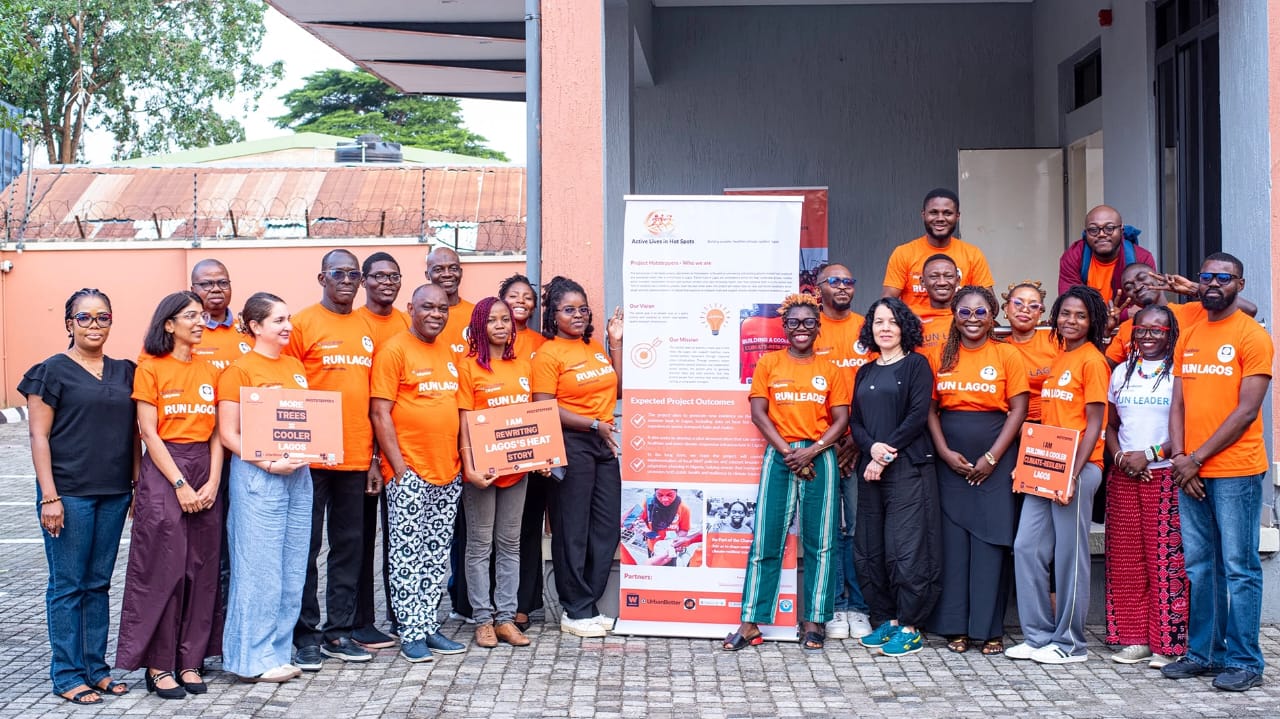
AS part of efforts to ensure equitable access to health-enabling, climate-resilient urban environments, UrbanBetter, has launched a project, Hotsteppers, seeking to address health risks associated with heat exposure in Lagos State.
It hopes to execute its plans through the 11 transport corridors in Lagos State that have been identified as prone to heat exposure in the first phase of its mobility mapping project.
Speaking during a media training, Hotsteppers Project Communications Lead, Abimbola Badejo, disclosed that Hotsteppers is a three-year climate and health research project which hopes to identify and address the health risks associated with heat exposure among people who walk, cycle, and use public transport in Lagos State.
Badejo noted that extreme heat remains one of the least reported consequences of climate change despite its growing impact on residents.
“When people hear of climate change, they immediately think about flooding or pollution. But heat is one of the invisible crises we must begin to report because its impacts on health are real and increasing,” she said.
She noted that prolonged exposure to high temperatures can lead to dehydration, heat exhaustion, cardiovascular diseases, worsening respiratory conditions, mental fatigue, reduced physical activity and declining productivity.

Badejo listed the 11 priority areas selected to include the Lekki-Epe/Green Line corridor, Idimu–Ikotun–Egbeda/Alimosho QBC corridor, Surulere BRT Barracks, Doyin/Odunade Corridor, Yaba–WAEC–Fadeyi Corridor, Ojota / New Garage axis, Berger/Grammar School Axis, Mile 2, Ikorodu Garage/Ikorodu Axis, Oshodi Interchange, and the Enu Owa/Oroyinyin/Marina-CMS axis.
She stated that the sites were picked based on high pedestrian activity, major transport interchanges, significant heat exposure, and opportunities for future heat-resilient interventions.
According to her, the locations will also serve as the foundation for understanding how heat affects everyday mobility and where future interventions can deliver the greatest impact.
She was optimistic that the project will build on existing transport, climate resilience, and urban development initiatives across the state rather than duplicate previous efforts.
“One of the project’s core aims is to generate evidence to support healthier, cooler, and more climate-resilient transport systems while elevating heat as a priority in urban planning and public health,” Badejo said.
Providing insight to the data collection, she said that a satellite image may show a bus stop, but it may not reveal that hundreds of passengers queue several metres away because the designated waiting area lacks shade.
“Traffic counts can estimate vehicle movement, but they cannot easily measure the physical strain of walking long distances under intense heat after leaving a crowded bus terminal.
“Community-generated information can help fill some of these gaps because residents often possess detailed knowledge about informal transport patterns that are invisible in official datasets.” Badejo stated.
She said that in gathering its data temperature-monitoring devices would be installed in communities including Yaba and Fadeyi to collect real-time environmental data that will support future urban planning and climate adaptation measures.
She also revealed that during the participatory mapping phase slated for September 2026, researchers drawn from the communities, who will be referred to as Citizen Scientists (Cityzens), will work alongside specific communities to document walking and cycling routes, public transport connections, heat hotspots, waiting areas and transport hubs, shade availability, public spaces, daily movement patterns, and community experiences of heat.
The workshop also introduced journalists to solutions journalism, urging them to investigate the effectiveness of climate interventions and highlight practical responses to rising temperatures.
Stakeholders said improved media coverage would be critical to increasing public awareness and ensuring extreme heat is recognised not merely as uncomfortable weather but as a growing public health challenge requiring urgent policy attention.
The Hotsteppers project is funded by the Wellcome Trust, a charitable foundation with a vision of a healthier future for everyone, and partners with the Lagos Metropolitan Area Transport Authority (LAMATA), Ruban Office, the University of Cambridge Institute of Metabolic Science, Lagos Urban Development Initiative (LUDI), and the University of Lagos Centre for Housing and Sustainable Development.

