 Follow Us on Google News


 Follow Us on Google Discover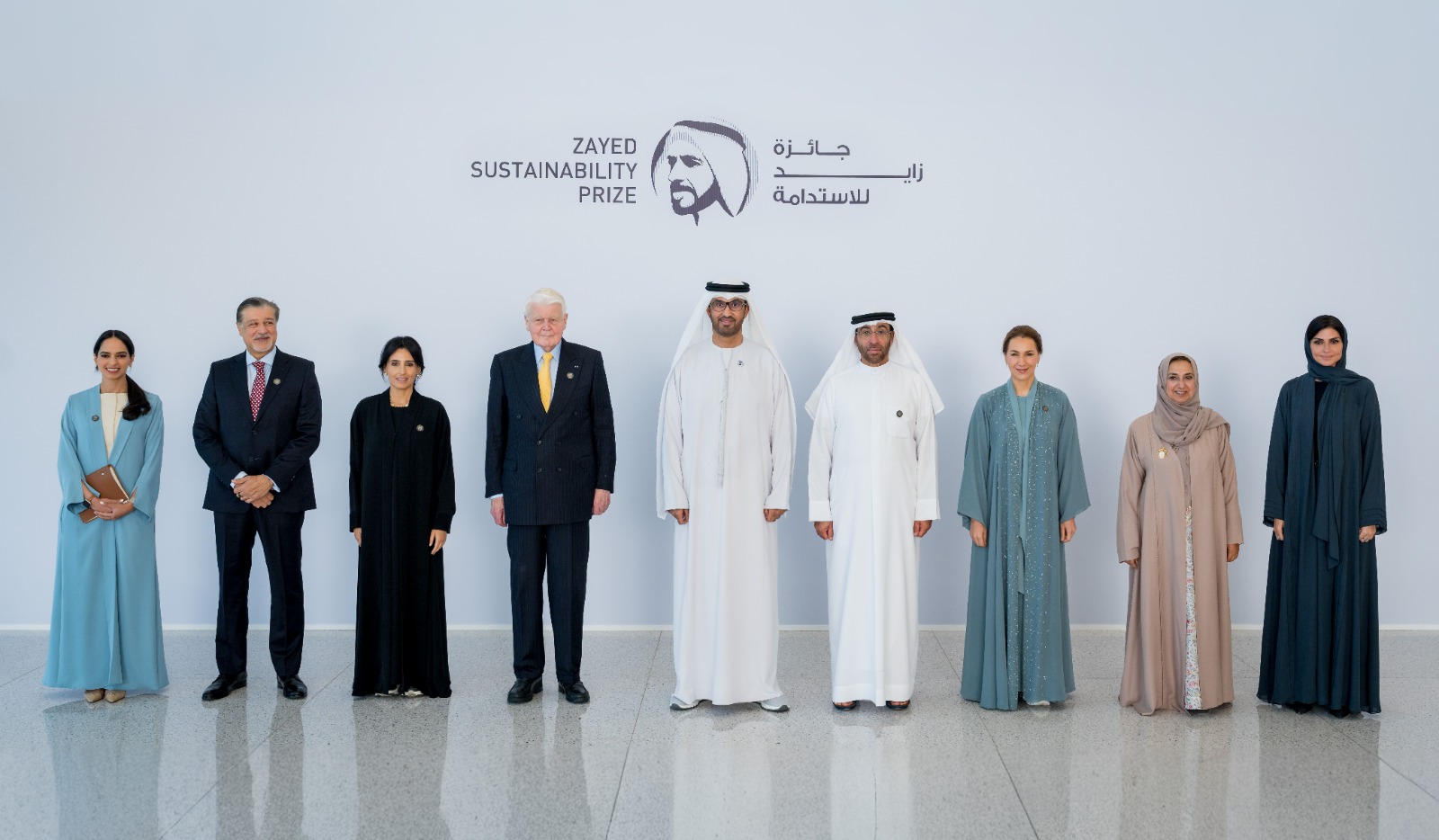
By Juliana Olayinka
Across Africa, some of the most consequential innovations are not being developed in gleaming technology campuses or backed by billion-dollar investment funds. They are emerging from a far more immediate understanding of how people live, work and earn.
It was a recent conversation on my programme, Channels Business Global, that brought this reality into sharper focus.
I was speaking with Ibrahim Aboki, founder and CEO of Energy Assured, a Nigerian clean-energy company recently named among the finalists for the 2027 Zayed Sustainability Prize. What struck me about his approach was how directly it responds to the financial pressures of everyday life. For households, reliable electricity can mean fewer evenings in darkness and less money spent on alternative sources of power. For small businesses, it can mean lower running costs. And for farmers, affordable solar-powered irrigation can make it possible to grow crops beyond the rainy season and earn an income for more of the year.
Rather than expecting people with limited incomes to invest in expensive equipment, Energy Assured is rethinking how they access and pay for energy, making it possible for households to spread costs over time and for farmers to share solar-powered irrigation systems.
What stayed with me after our conversation was not simply the technology, or even the scale of the company’s reported achievements. It was the understanding that affordability is often as important as invention.
A solution can exist, be technically impressive and have enormous potential, yet remain of little practical value to the millions of people who cannot afford to use it.
For farmers, access to irrigation can mean cultivating crops beyond the rainy season, while reliable electricity can reduce dependence on costly fuel. Energy Assured says its solutions have reached more than 4.6 million people, including 1.3 million smallholder farmers.

The value of what Africa grows
Consider the economics of a harvest. A farmer can spend months cultivating crops, absorbing the costs of labour, transport and increasingly unpredictable weather, only to discover that the greatest financial risk comes after the food has been grown.
Without adequate storage or preservation, time becomes an expensive commodity. The longer produce remains unsold, the greater the risk of deterioration. For many smallholder farmers, that means accepting whatever price is available rather than waiting for a better one.
It is a vulnerability that two recent Zayed Sustainability Prize winners are addressing in different ways.
In Kaduna, my reporting team explored the work of NaFarm Foods, a Nigerian company using locally manufactured hybrid solar dryers to preserve agricultural produce. The company won the Prize’s 2025 Food category for an approach that helps farmers reduce waste and retain more value from their harvests.
Near Abuja, the team examined another model involving BASE Foundation, a Swiss nonprofit developing ways to make sustainable technologies affordable. Working with Nigerian partner Leap Energy, BASE is helping farmers access refrigerated storage without having to purchase the expensive equipment themselves.
Farmers pay for the space they use, often by the crate, turning what would ordinarily require substantial capital into a more manageable operating expense. The approach helped BASE secure the Prize’s 2026 Energy award.
What interested me about both initiatives was less the machinery than the economic possibilities. Preserving a harvest gives a farmer something that is often in short supply: time. Time to find a buyer, negotiate a better price or reach a more profitable market.
Local ingenuity, international opportunity
The Zayed Sustainability Prize, established by the United Arab Emirates in honour of its founding father, Sheikh Zayed bin Sultan Al Nahyan, has become an international platform for recognising solutions to some of the world’s most pressing development challenges.
Across its history, the Prize has recognised 139 winners whose work has reportedly improved more than 411 million lives worldwide.
For organisations such as NaFarm Foods and BASE Foundation, the US$1 million award offers an opportunity to expand their reach. Energy Assured, meanwhile, is competing for the 2027 Energy award, with winners due to be announced in January. As a finalist, Energy Assured will receive US$100,000 in funding, or the US$1 million winner’s prize if selected. Introduced with the 2026 finalists cohort, this initiative provides financial support to all finalists, including those who do not ultimately win.
For innovators operating in markets where access to capital remains a considerable obstacle, international recognition can provide something equally valuable: visibility, credibility and the opportunity to attract new partnerships.
Yet recognition is only part of the story. The real test is whether these solutions can grow into sustainable businesses and services that continue delivering value long after the awards have been presented.
A different African narrative
For too long, conversations about Africa’s development have been dominated by what the continent lacks: infrastructure, investment, reliable electricity and access to essential services.
These challenges remain substantial, but they are not the whole story.
Across the continent, entrepreneurs are developing solutions shaped by an intimate understanding of the communities they serve. Their ingenuity lies not simply in inventing new technologies, but in rethinking how those technologies are financed, delivered and made affordable.
My conversation with Ibrahim Aboki reminded me why these stories deserve greater attention. They offer a perspective on Africa that is too often overlooked, one defined not simply by the scale of its challenges, but by the resourcefulness of the people working to overcome them.
And perhaps the most compelling part of Africa’s innovation story is not how far these ideas have travelled, but how deeply they are rooted in the communities that inspired them.

