 Follow Us on Google News


 Follow Us on Google Discover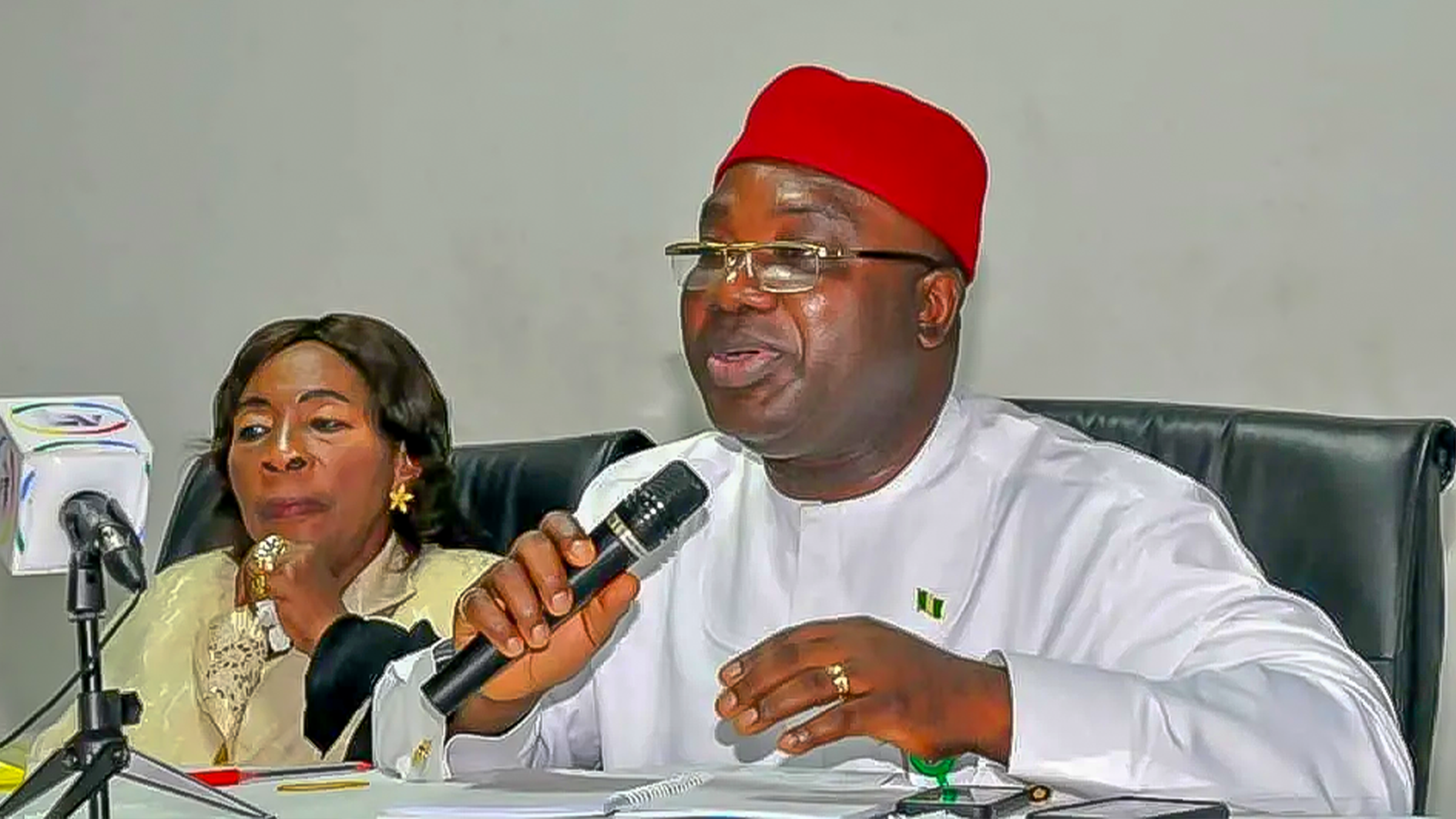
• Commission opens situation room, toll-free line to track incitement
• Panel seeks two-tier election litigation, limited S’Court appeals
• Kwankwaso urges Tinubu to protect opposition, democratic institutions
• Atiku challenges youths to demand accountability from political leaders
• APM re-elects Dantalle, names Bala Mohammed nat’l leader
• APC group launches grassroots drive for Tinubu, Shettima
As political activity gathers pace ahead of the 2027 elections, the National Human Rights Commission (NHRC) and ActionAid yesterday raised concerns over hate speech, intimidation and party disputes that can undermine peaceful elections and weaken confidence in democratic institutions.
The warnings came as voters in Osun State go to the polls tomorrow to elect a new governor.
The NHRC cautioned that elections could be imperilled by the growing weaponisation of hate speech, intimidation and divisive rhetoric, urging stakeholders to act before inflammatory political language translates into physical violence.
The commission said inflammatory statements by political, religious and other public figures should no longer be dismissed as mere political rhetoric, warning that sustained dehumanisation of individuals or communities could create conditions in which discrimination, intimidation and violence become socially acceptable.
The Executive Secretary of the NHRC, Tony Ojukwu, gave the warning yesterday in Abuja at a press conference convened ahead of the 2027 general elections.

Ojukwu said the commission had recently raised concerns over statements attributed to Sheikh Sani Yahaya Jingir and Senator Francis Fadahunsi, which, in its assessment, crossed the boundaries of responsible public discourse and had the potential to deepen social divisions and instigate violence.
He stressed that the commission was not targeting any political party, religious group, ethnic community or individual, but was making a human rights intervention aimed at protecting the dignity and equal worth of every Nigerian and preserving the conditions required for peaceful, credible and inclusive elections.
According to him, freedom of expression remains a fundamental right, but “it does not provide a licence to incite violence, promote hatred, dehumanise others or deliberately provoke hostility against persons or communities.”
The NHRC said the danger posed by inflammatory rhetoric extended beyond offensive speech, warning that unchecked hate speech could erode human dignity and equality, fuel violence, discriminate against communities, intimidate voters and political opponents, restrict political participation and undermine confidence in democratic institutions.
Ojukwu cited the 1994 genocide against the Tutsi in Rwanda as a warning of what could happen when societies ignore dangerous narratives until they translate into violence.
He stressed, however, that Nigeria was not Rwanda, adding that the lesson from history was universal: societies should not wait for inflammatory rhetoric to produce bloodshed before taking preventive action.
The commission also announced the establishment of a situation room, supported by a toll-free hotline, 6472, for citizens to report and monitor hate speech, incitement and other forms of divisive rhetoric ahead of the 2027 elections.
ActionAid urges INEC to resolve parties’ internal disputes
ALSO, ActionAid, during the fifth session of its Independent Judicial Accountability Panel (IJAP), urged the Independent National Electoral Commission (INEC) to take a more proactive role in resolving internal disputes within political parties ahead of the 2027 general elections.
The panel, comprising retired judges, academics, law reformers, media practitioners and civil society representatives, made the recommendation in Abuja.
Presenting the panel’s recommendations at a press briefing, its Chairman, retired Justice Adekunle Owoade, said the first level of resolution for internal disputes within political parties should be INEC, as the regulatory body.
Analysing the recent Supreme Court decision in Peoples Democratic Party (PDP) v. Alhaji Sule Lamido & 4 Ors., SC/CV/164/2026, IJAP said the majority decision reaffirmed the position established in Onuoha v. Okafor (1993) 14 NSCC 494 that courts should generally refrain from intervening in the internal affairs of political parties.
The panel, however, noted that such disputes become justiciable where there is a breach of a political party’s constitution.
It said Sections 83(5) and 83(6) of the Electoral Act 2026 appeared to have created uncertainty over the extent to which courts could intervene in internal party matters.
IJAP said strengthening INEC’s regulatory role would be consistent with Section 228(b) of the 1999 Constitution, as amended, and urged the commission to exercise its constitutional responsibilities over political parties more effectively.
The panel also recommended that election litigation involving the House of Representatives, Senate and governorship elections should be limited to two levels, terminating at the Court of Appeal before a five-member panel.
It proposed that, in exceptional circumstances, parties should be allowed to appeal to the Supreme Court with the leave of the Court of Appeal.
IJAP further called for an amendment to Section 156(1)(a) of the Constitution to bar political appointees and directorate-level staff who leave INEC from engaging in partisan politics for at least five years.
The panel also advocated constitutional recognition of independent candidacy, saying it could help reduce godfatherism and promote wider participation in the electoral process.
It recommended further constitutional amendments to allow citizens to institute public interest litigation over breaches of the Electoral Act and the Constitution in the conduct of elections.
Kwankwaso urges Tinubu to protect opposition, democratic institutions
VICE presidential candidate of the Nigeria Democratic Congress (NDC), Rabiu Musa Kwankwaso, urged President Bola Tinubu to safeguard the independence of democratic institutions and allow opposition parties to operate freely.
Kwankwaso made the call yesterday in Ibadan at the South-West Stakeholders’ Conference and inauguration of the Oyo State executive and South-West zonal executive of a pro-Obi/Kwankwaso presidential support group, “OKAY: A New Nigeria”.
Speaking through the member representing Tanami Federal Constituency of Kano State, Muktar Umar Zakari, Kwankwaso said democracy could not thrive without a viable opposition.
“From what we are seeing, we heard a rumour that he doesn’t want anybody to participate in the election except the All Progressives Congress (APC). So we are pleading with the president to allow the opposition to be. There is no democracy without viable opposition,” he said.
Kwankwaso urged Tinubu, who he noted had previously been in opposition, to allow democracy to thrive and leave a lasting legacy.
“Years back, he was in the opposition, and now he is the president; let him leave a lasting legacy. Let him allow democracy to thrive.
“He should not truncate democracy this time. So many leaders have come and gone; let him leave some good legacies. He should leave a legacy that Nigerians can be proud of,” he said.
The NDC vice presidential candidate also urged voters to reject sentiment and inducements during elections and instead vote for candidates they considered capable of providing effective leadership.
Kwankwaso criticised the use of food items and other gifts to influence voters, citing reports of the distribution of one kilogramme bags of rice to residents in Osun State ahead of the governorship election.
“During the election, politicians have a way of influencing the poor masses. APC has been able to frustrate everybody. I saw on social media that they were giving one kilogram of rice to people in Osun State ahead of the election; is that how bad we are?” he asked.
Atiku challenges Nigerian youths to hold him accountable if elected
PRESIDENTIAL candidate of the African Democratic Congress (ADC) and former Vice President, Atiku Abubakar, has challenged Nigerian youths to hold him accountable if he fails to improve the country’s economic situation if elected president.
Atiku also urged young Nigerians to take an active role in politics by voting for candidates with track records of honesty and accountability and rejecting leaders whose policies impoverish citizens.
He spoke yesterday in Abuja as a guest speaker at the ADC National Youth Leadership Summit, themed “Register. Organise. Lead.”
Atiku urged youths to seek leadership positions within the party and contest elections at various levels, including councillorship, legislative and governorship positions.
“Do not wait indefinitely for permission. Seek leadership positions within this party. Contest elections. Become councillors, legislators and governors. Become entrepreneurs who employ hundreds of Nigerians, journalists who demand accountability, technology founders who solve Nigerian problems, farmers who transform agriculture and teachers who shape the next generation.
“Whatever path you choose, prepare yourself and pursue excellence. I can help provide the platform and opportunity, but you must bring the competence.
“There is one other responsibility I place upon you: hold us accountable.
“Do not become a youth wing that applauds everything its leaders say. If this party deviates from its values, speak up. If people abuse positions entrusted to them, challenge them. If I, as your presidential candidate, fail to live by the commitments I make to you, remind me.
“A political party that demands loyalty without accountability will eventually reproduce the same failures it condemns in others.
“I want your support, but I also want your scrutiny. That is how democratic institutions become stronger,” he said.
Atiku said millions of young Nigerians were struggling with rising living costs under the current administration of the All Progressives Congress, while graduates continued to search for jobs and small businesses faced increasing operating costs.
He said many families were cutting back on necessities, while home ownership, business development and raising families in reasonable comfort had become increasingly difficult for millions of Nigerians.
According to him, citizens were repeatedly asked to endure hardship with assurances that conditions would eventually improve.
He said: “Leadership is not the art of explaining suffering. Leadership is the responsibility to reduce it.”
Atiku said that would be one of the choices confronting Nigerians at the next election.
He urged the youths to envision a country where electricity supply was reliable enough to reduce the burden of self-generation on young entrepreneurs.
“Now I want you to imagine the country we can build together.
“Imagine a Nigeria where electricity works reliably enough that a young entrepreneur does not spend a significant part of his income generating his own power,” he said.
APM re-elects Dantalle as chairman, appoints Bala Mohammed nat’l leader
THE Allied Peoples Movement (APM) has re-elected Yusuf Mamman Dantalle as its National Chairman for another term and appointed Bauchi State Governor, Bala Mohammed, as its National Leader.
The decisions were taken yesterday at the party’s convention in Bauchi, where delegates also adopted a new constitution as the party intensified preparations for the 2027 general elections.
The party’s presidential candidate, Governor Seyi Makinde of Oyo State, said the APM had emerged as a credible opposition platform capable of offering Nigerians an alternative at the polls.
Makinde said a credible opposition was essential to sustaining democracy, urging the new leadership to work with other opposition parties to provide Nigerians with meaningful choices in 2027.
He said the election should focus less on slogans, promises and political declarations and more on measurable outcomes and the impact of government policies on citizens.
According to him, Nigerians should assess political leaders based on changes in their lives rather than the number of policies or projects announced by governments.
He said farmers should assess agricultural policies by their impact on productivity and access to markets, while citizens should judge security by their ability to travel, farm and sleep peacefully.
Makinde said the central question for Nigerians in 2027 should be: “What has changed for Nigerians?”
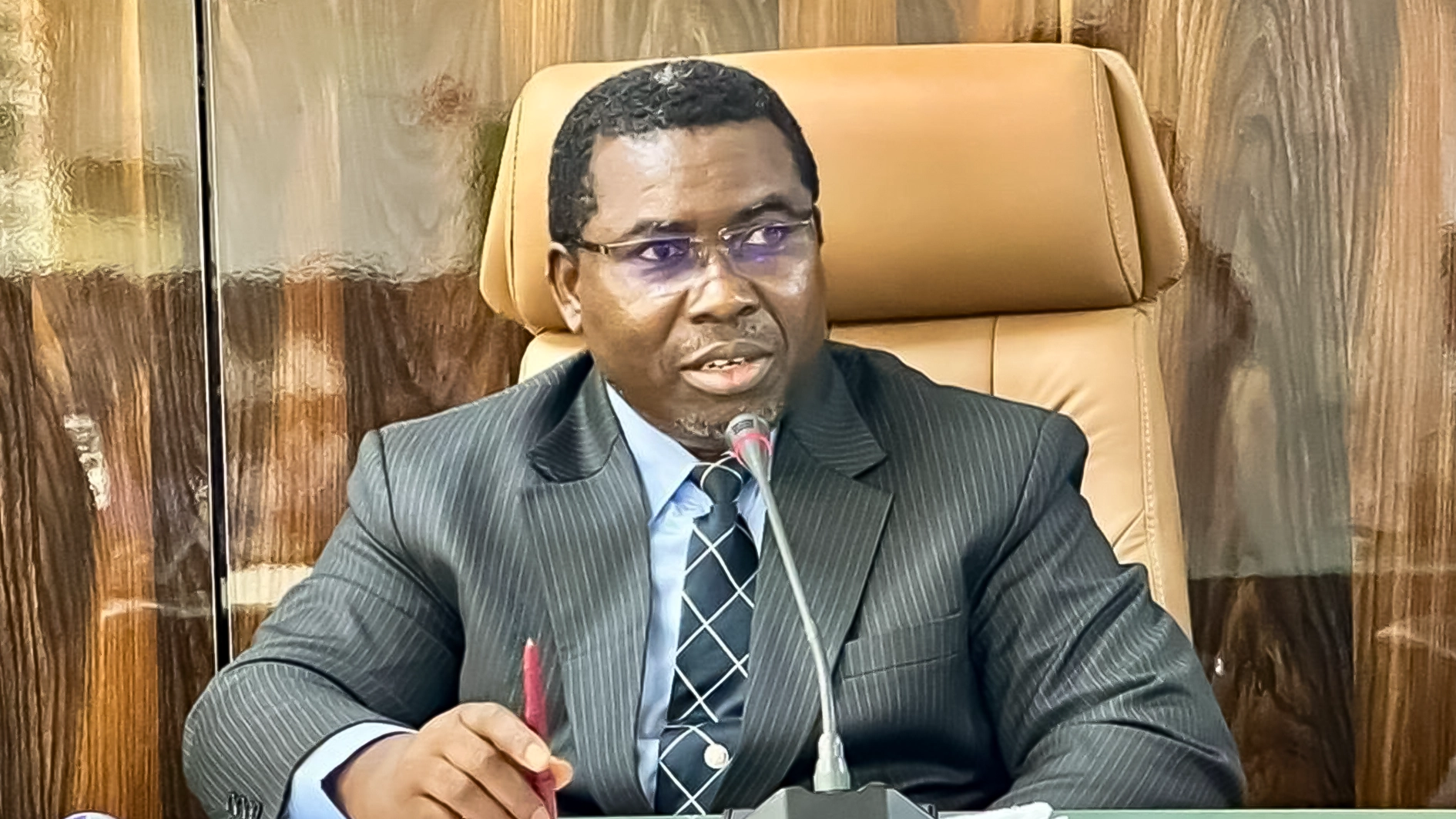
Also speaking, Mohammed expressed appreciation to the APM for entrusting him with the position of National Leader and pledged his support for Makinde’s presidential ambition.
He said the party had assembled a team capable of addressing Nigeria’s challenges, adding that Makinde’s engineering background would bring technical expertise to governance, while experienced administrators would provide political and administrative support.
Mohammed also endorsed former Director-General of the Department of State Services, Alhaji Lawal Daura, as Makinde’s running mate, describing the choice as appropriate for addressing the country’s security challenges.
In his acceptance speech, Dantalle pledged to build a stronger, more cohesive and disciplined APM capable of responding to Nigerians’ aspirations.
He said the party would expand its membership, strengthen its structures nationwide, deepen internal democracy and intensify grassroots mobilisation ahead of the 2027 elections.
Dantalle called on Nigerians across the six geopolitical zones to join the APM, popularly identified by its cassava symbol, saying the party was determined to become a formidable national political movement.
The convention unanimously adopted a new constitution, with delegates affirming their willingness to operate under the document.
Dantalle subsequently inaugurated Mohammed as the National Leader of the APM.
APC group begins grassroots mobilisation for Tinubu, Shettima’s re-election
THE Concerned National APC Stakeholders Forum has commenced a grassroots mobilisation campaign for the re-election of President Bola Ahmed Tinubu and Vice President Kashim Shettima in the 2027 presidential election.
The group unveiled its strategy yesterday in Abuja during the inauguration of state coordinators and Tinubu/Shettima Grassroots Canvassers, charging them to build structures capable of delivering polling units and wards for the All Progressives Congress.
The forum’s Convener and National Coordinator, Dr Dominic Alancha, said the initiative was designed to move political mobilisation beyond Abuja, state capitals and political rallies to communities where Nigerians live and vote.
Alancha said the group’s operational philosophy was captured in the slogan, “Deliver Your Unit, Deliver Your Ward”, stressing that the strength of a political organisation should ultimately be measured by its ability to mobilise genuine voters at the polling-unit level.
“Elections are won at the grassroots,” he said, urging the newly inaugurated coordinators to establish effective structures across states, local government areas, wards and polling units.
He charged the coordinators to understand their communities, identify residents’ concerns, recruit credible canvassers, communicate the administration’s policies and maintain regular contact with voters.
According to him, delivering polling units would translate into victory at the ward level, which would in turn strengthen the party’s prospects at the local government and state levels and ultimately improve its chances in the 2027 presidential election.
Alancha urged the canvassers to engage Nigerians respectfully and honestly, saying the campaign should be based on persuasion, ideas and performance rather than intimidation or abuse.
He also asked them to listen to dissatisfied voters, strengthen the confidence of those optimistic about the country and explain government policies to citizens who might not understand them.
The national coordinator warned the coordinators against spreading unverified information or insulting political opponents, urging them to build bridges and demonstrate that political mobilisation could be conducted with dignity and responsibility.

