 Follow Us on Google News
 Follow Us on Google Discover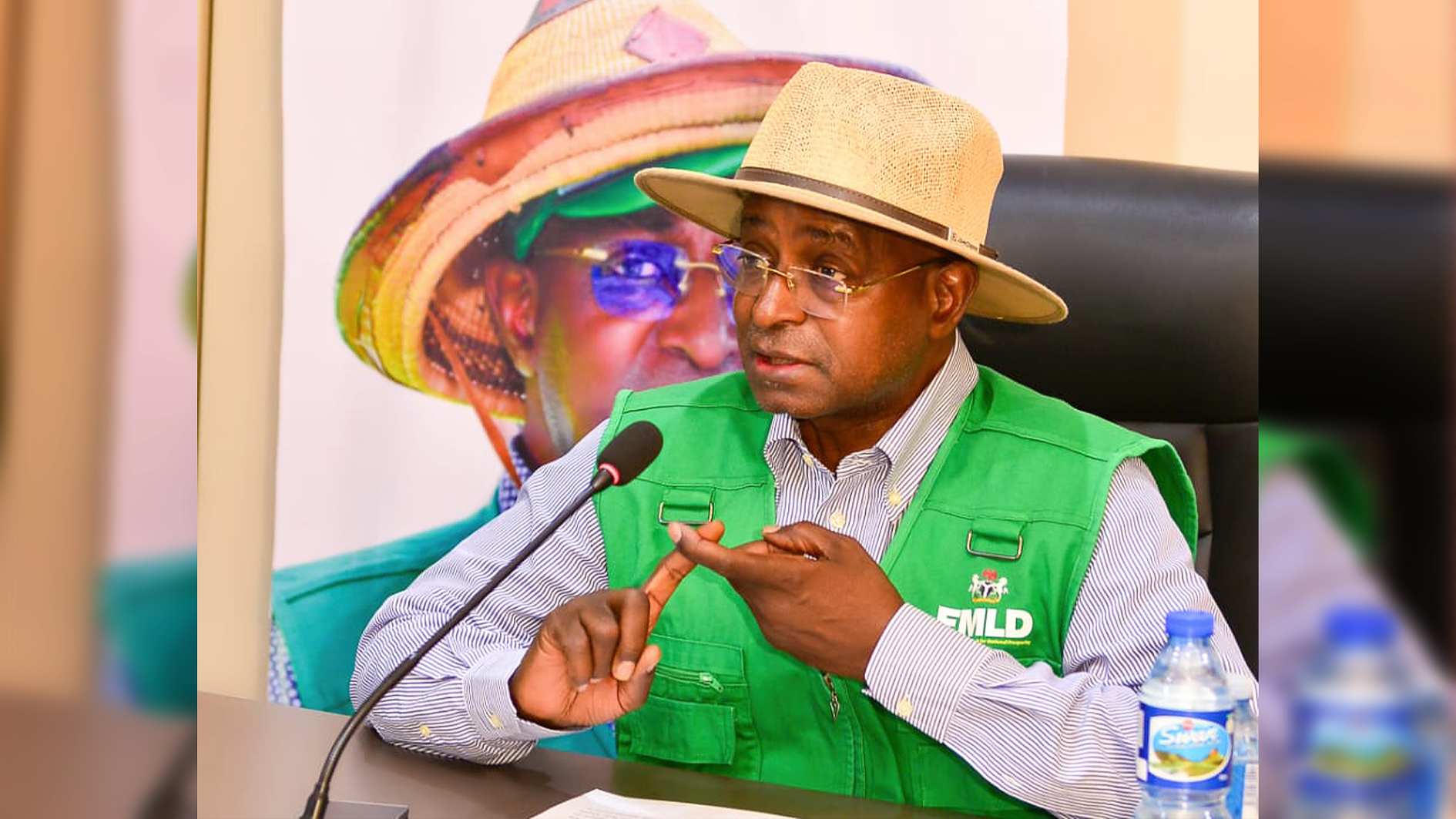
THE Federal Government has unveiled a strategic partnership with state governments and private investors to modernise Nigeria’s agricultural landscape and increase the livestock sector’s Gross Domestic Product (GDP) contribution from $32 billion to $74 billion by 2035.
The Minister of Livestock Development, Idi Maiha, disclosed this during a press briefing on the establishment of species specific Livestock Development Centres across the country, a model designed to drive inclusive rural transformation under the Renewed Hope Agenda.
The minister explained that the proposed centres are not isolated government farms but commercially oriented platforms meant to attract large-scale private investments in breeding, animal health, processing, and cold-chain storage.
He stressed that the success of the transformation relies heavily on collaboration, noting that while the Federal Government will set technical standards and food safety protocols, the states will handle land allocation and community engagement.
Maiha explained that “Nigeria’s livestock transformation will succeed only if the Federal Ministry of Livestock Development and state governments act as partners with distinct but complementary responsibilities,” Maiha stated.
“The states are indispensable because they possess the practical levers that determine whether investment reaches the farm: suitable land, local infrastructure, community legitimacy, local security coordination, and producer mobilisation.”
Highlighting the rapid institutional support for the sector, the minister revealed that since the creation of his ministry in July 2024, 20 states have established dedicated ministries or agencies for livestock, creating massive opportunities for institutional synergy.

Under the new framework, which operationalises the National Economic Council approved National Livestock Growth Acceleration Strategy (NL-GAS), participating states will consult with stakeholders to select livestock value chains that match their unique agro-ecology.
The chosen species could range from poultry, cattle, and sheep to pigs, snails, and honeybees.
The minister noted that while the states provide uncontested land and enabling infrastructure, private investors and cooperatives are expected to finance and operate the commercial components of the value chain.
Maiha also pointed out the systemic risks in the current livestock trade model, where live animals are transported over 1,000 kilometres from the North to the market basins in the South.
To address this, he said that the partnership empowers each state to develop investment plans based on its comparative advantage to supply local market demands safely and efficiently.
“This is a model in which a Federal-State-Private Sector partnership comes alive. The result would be a modern, sustainable, profitable, and globally competitive livestock sector that supports food and nutrition sovereignty, jobs, and shared prosperity,” the minister adds.

