 Follow Us on Google News


 Follow Us on Google Discover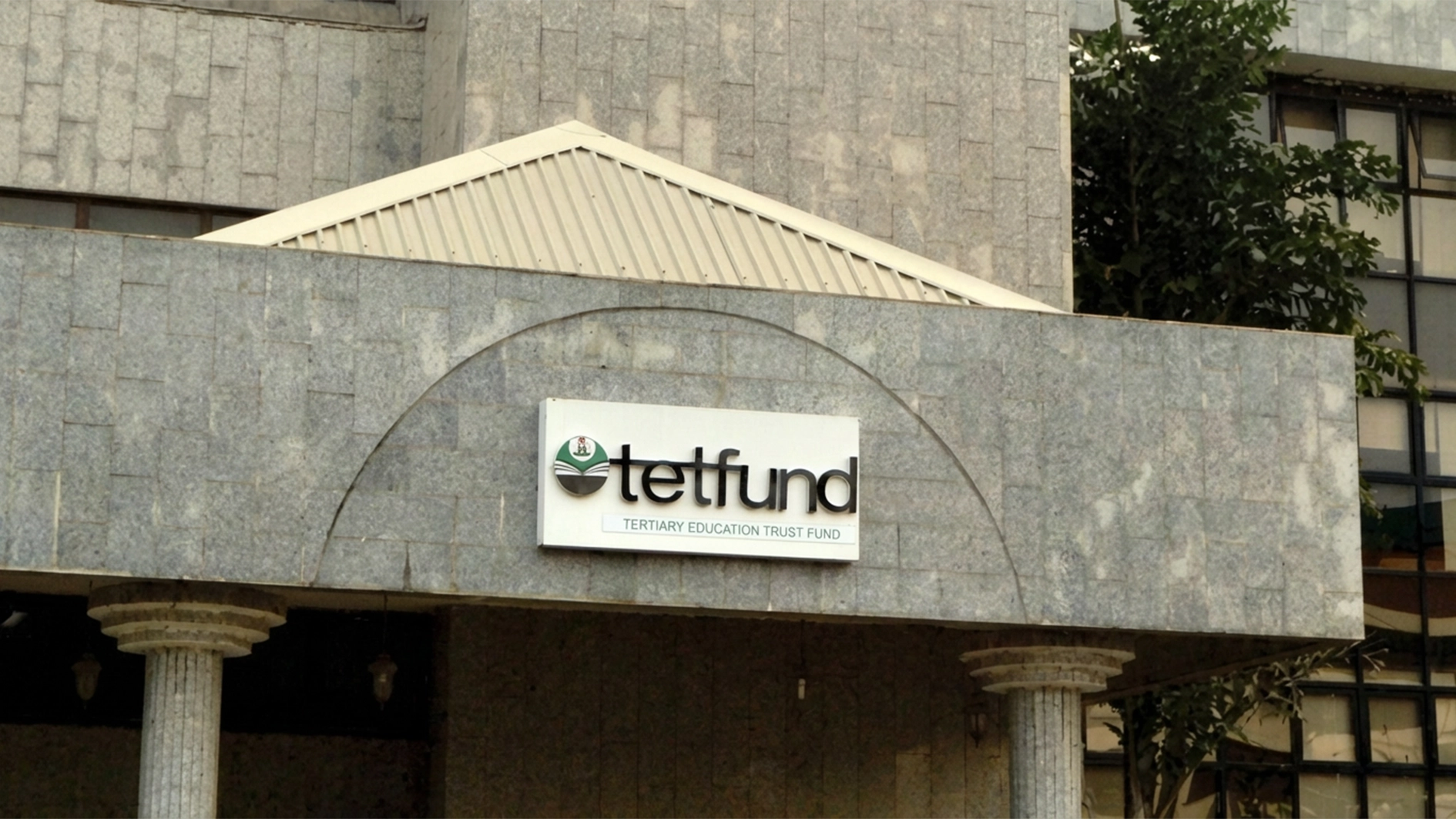
The decision by The Gambia to establish a higher education intervention fund modelled after Nigeria’s Tertiary Education Trust Fund (TETFund) is beyond diplomatic relation; it is an endorsement of an institutional model created out of necessity, but which has gradually evolved into a reference point for higher education financing across Africa.
When The Gambian Minister of Higher Education, Research, Science and Technology, Prof. Pierre Gomez, led a delegation to TETFund headquarters in Abuja and announced plans to send officials to Nigeria to understudy its operations, he effectively acknowledged an intervention mechanism worth exporting. Today, the country has established the Tertiary and Higher Education Trust (THET) Fund, drawing inspiration from TETFund.
This is significant considering that TETFund emerged out of the crisis in tertiary education financing. What began as the Education Trust Fund, financed through a dedicated education tax, eventually became TETFund, with a mandate covering universities, polytechnics and Colleges of Education.
Today, the Fund has become one of the most visible instruments for injecting resources into the tertiary education system. Its interventions cover infrastructure, instructional materials and equipment, research, academic staff training and development, conference sponsorship and other areas considered critical to maintaining standards. The fact that another African country has replicated the model suggests that the experiment has moved beyond the domestic policy space.
The Gambia was not the first country to look towards Nigeria for lessons in education administration and financing. Ghana had previously sent a delegation to understudy the workings of the National Universities Commission (NUC), with its National Tertiary Education Agency identified as broadly comparable to TETFund. Tanzania is also interested in the TETFund model for alternative approaches to financing tertiary education.
Recently, Sierra Leone provided another striking example of Nigeria’s growing influence in higher education administration when a delegation led by the country’s Deputy Minister of Education, Sarjoh Aziz Kamara and Vice Chancellors of Ernest Bai Koroma University of Science and Technology and Njala University, visited the country to understudy the centralised admission system operated by the Joint Admissions and Matriculation Board (JAMB) with the possibility of establishing a similar body.

For TETFund, The Gambian visit is a validation of its institutional maturity and a demonstration that the Fund is not merely a Nigerian agency dispensing interventions to public tertiary institutions, but also a repository of knowledge on how dedicated funding can be mobilised, administered and deployed to address structural deficiencies in higher education.
The significance becomes even greater under the leadership of TETFund Executive Secretary, Arc. Sonny Echono, who since assuming office, has pushed the agency beyond the traditional perception of an agency primarily concerned with physical infrastructure.
Echono’s international engagements have helped reposition the agency beyond traditional responsibilities. In 2023, Echono led a Nigerian delegation to the University of Maryland Eastern Shore in the United States to study models for innovation laboratories, innovation hubs and entrepreneurship centres that could be adapted for tertiary institutions. The engagement produced plans for regional centres of excellence, entrepreneurship and innovation cooperation and scholar exchanges.
Similarly, TETFund under Echono has deepened partnership with Brazil’s Federal University of Viçosa, the Forum for Agricultural Research in Africa and the Agricultural Research and Innovation Fellowship for Africa. The collaboration enabled Nigerian scholars to study Brazil’s agricultural research and innovation system, with the broader objective of using science and technology to address Nigeria’s development challenges.
This creates an interesting reversal as Nigeria is simultaneously sending its academics and researchers abroad to understudy successful models while foreign governments are increasingly coming to Nigeria to examine systems that have worked locally. This is arguably one of the strongest indicators of institutional credibility and the fact that an organisation becomes influential when it can learn from others while also becoming a source of lessons for others.
The Gambian study tour was beyond a ceremonial visit. It provides an opportunity for TETFund to codify and share the lessons accumulated over decades – how to mobilise dedicated education funding, establish intervention priorities, enforce accountability, monitor projects, support research and develop academic manpower.
For Echono, the development is an important addition to the growing international profile of the Fund under his watch. His emphasis on research, innovation, industry partnerships and international collaboration has increasingly positioned TETFund as more than a funding agency. The objective is to create an ecosystem, where intervention funds translate into knowledge, innovation, skilled manpower and ultimately economic development.
The growing interest in Nigeria’s education models is therefore a powerful affirmation of the country’s capacity to build institutions with continental relevance. From TETFund’s intervention model to JAMB’s admission system, the country is increasingly becoming a source of practical solutions for countries seeking to strengthen their education systems. The emerging pattern of African countries coming to Nigeria to learn is a significant boost to the country’s educational diplomacy and soft power.
For TETFund, it is an opportunity to consolidate its position as a continental reference point for sustainable tertiary education financing, research development and human capital investment. Under Echono, the Fund has continued to expand the frontiers of its interventions, with greater emphasis on research, innovation, entrepreneurship, technology and strategic partnerships. The Gambian study tour only represents another milestone in the Fund’s evolution from a national intervention agency into an institution whose experience is increasingly sought beyond Nigeria’s borders.
The strongest measure of TETFund’s story is not only the number of projects financed or institutions supported, but the growing recognition that its model offers valuable lessons for others – a positive reflection of what sustained investment, visionary leadership and strategic partnerships can achieve.

