 Follow Us on Google News


 Follow Us on Google Discover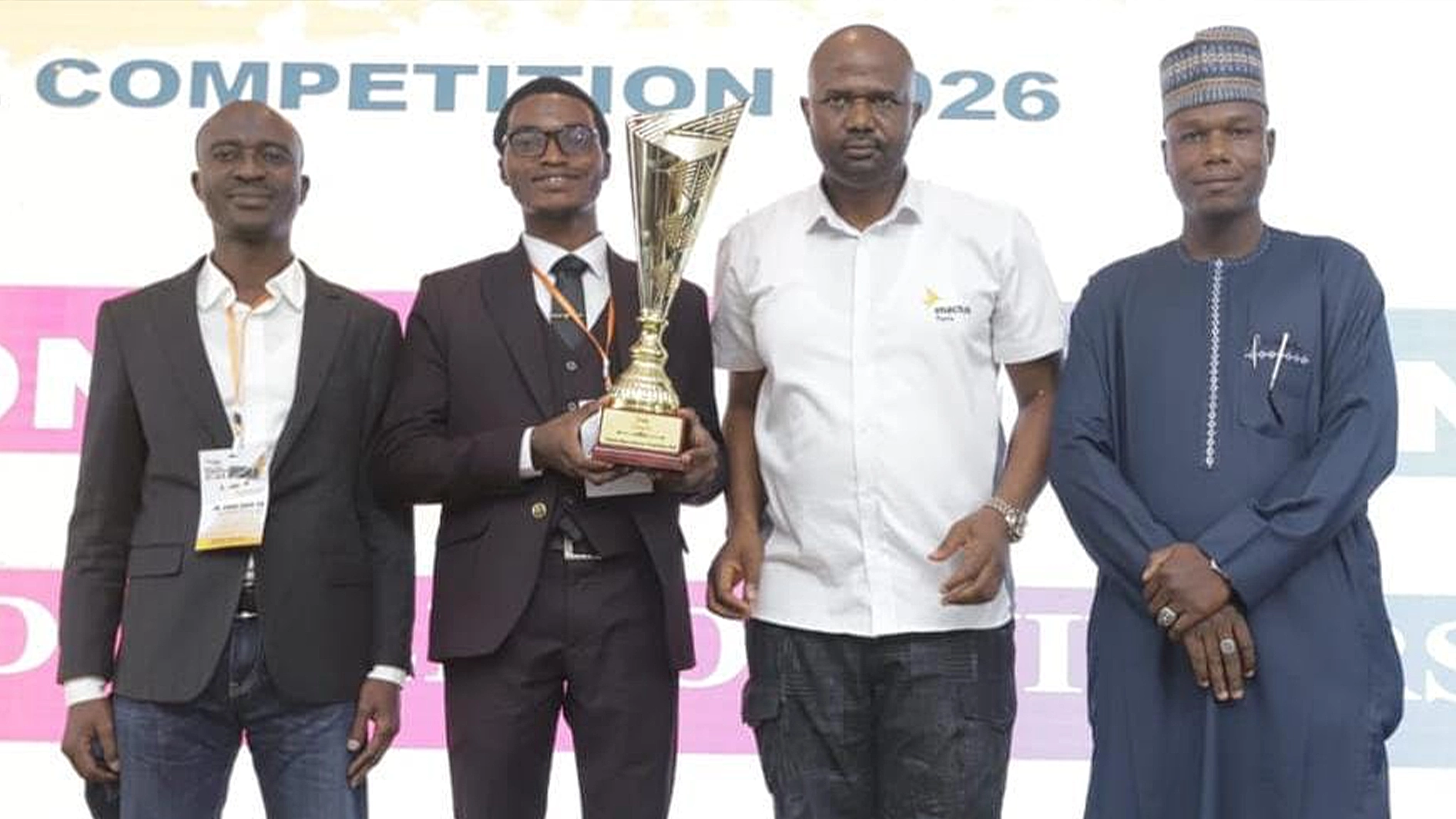
The Federal University of Technology, Owerri (FUTO) and Ahmadu Bello University (ABU), Zaria, have won the 2026 Enactus Nigeria National Competition, and by virtue of that emerged as Nigeria’s representatives at the Enactus World Cup in Brazil later this year.
Their emergence followed the presentation of projects on practical solutions to economic, environmental and social challenges by 35 tertiary institutions at the national final in Lagos.
FUTO won the Enactus Early-Stage Final with a biofuel project, and also the Julius Berger Innovation Challenge with ALTAR – a robot designed to detect structural and construction failures.
The project has potential relevance to Nigeria’s built environment, where building collapse and concerns over compliance with construction standards remain persistent challenges.
On their part, the ABU team won the Enactus Advanced Stage Competition Final with two projects: NeemPest, which is an IAR-certified biopesticide developed to eliminate the destructive Tuta absoluta pest within 48 hours, and TomPa – a tomato-processing venture that converts surplus tomatoes into powder and puree.
The projects address two long-standing challenges in Nigeria’s agricultural sector, crop losses and limited processing capacity, which contribute to post-harvest losses and weaken value creation along the food supply chain.

Beyond the competition, the projects raise questions about the ability of Nigeria’s tertiary institutions to move innovation from the classroom into practical applications that can support economic development.
Country Director of Enactus Nigeria, Michael Ajayi, said the projects presented at the final were developed over 12 months by students across 33 Nigerian tertiary institutions, who identified social and environmental problems in their communities and developed business models to address them.
He explained that the initiative was aimed at developing entrepreneurs, innovators and ethical leaders who could use their education to address societal problems.
Meanwhile, the Deputy Public Affairs Officer, United States Consulate-General in Nigeria, Casey Bonfield, stated that programmes that expose students to practical problem-solving could help prepare graduates for the global economy.
The Enactus competition evaluates student projects based on factors including relevance, innovation, scalability, profitability and sustainability, bringing students into contact with corporate partners and exposing them to the demands of developing market-ready solutions.
Also, their participation will provide an opportunity to test the competitiveness of Nigerian university-based innovations internationally.

