 Follow Us on Google News


 Follow Us on Google Discover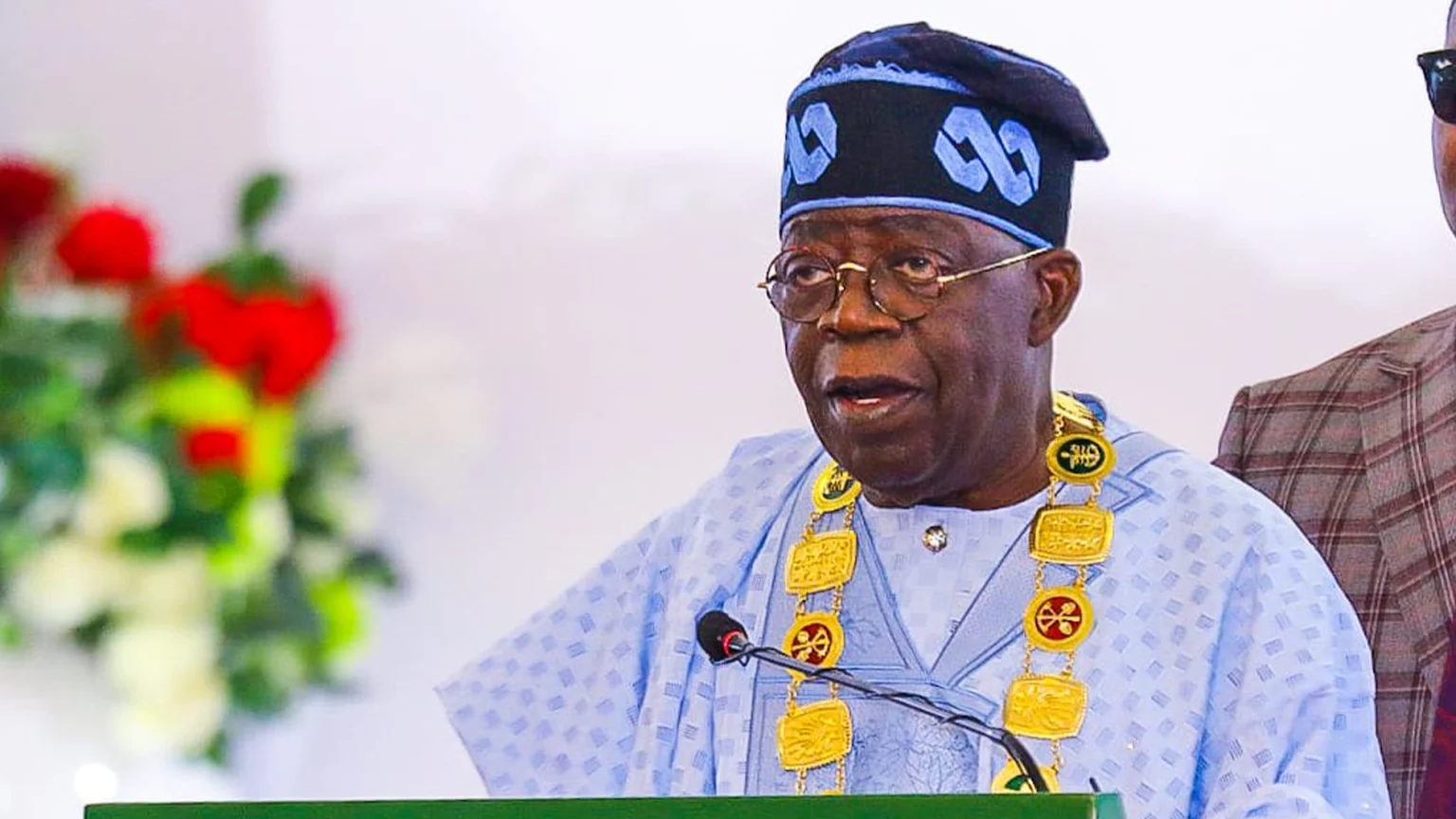
President Bola Ahmed Tinubu has described the nation’s universities as critical partners in the nation’s developmental agenda.
He has, however, charged them to produce graduates capable of responding to the realities of a rapidly changing global economy.
Tinubu said the country could not achieve sustainable economic transformation without corresponding investment in human capital.
“Universities are more than institutions where degrees are awarded. They are centres of knowledge creation, innovation, critical thinking, entrepreneurship, cultural development and national transformation,” he said.
He urged them to move beyond the traditional awarding degrees by turning centres of innovation, practical skills, research and national development.
Represented by the Minister of State for Education, Prof Suwaibat Saidu Ahmad, Tinubu gave the charge on Tuesday in Ilorin, Kwara State, while declaring open the 37th Annual Conference and General Assembly of the Committee of Vice-Chancellors of Nigerian Universities (CVCNU), at the University of Ilorin (UNILORIN) main auditorium.

According to him, Nigerian varsities must produce graduates who are not only academically certified but innovative, ethical, digitally competent, entrepreneurial, adaptable and capable of solving real-world problems.
Subsequently, he challenged university authorities to reconsider the quality and relevance of graduates particularly in an era dominated by Artificial Intelligence in, automation, biotechnology, data science, renewable energy and advanced manufacturing.
“The question before us is no longer simply whether our universities are producing graduates. The more foundational question is: ‘what kind of graduates are we producing; how effectively are our universities preparing them to contribute to Nigeria’s economic and social transformation?'” he asked.
Tinubu said his administration was pursuing reforms aimed at improving the quality, relevance, accessibility, affordability and accountability of tertiary education.
He disclosed the Federal Ministry of Education’s plan to implement the Education Sector Renewal Initiative, with particular focus on institutional governance, quality assurance, research and innovation, digital transformation, skills development and stronger university-industry linkages.
The President also called for stronger practical training, noting that academic knowledge must be complemented by hands-on experience.
He disclosed that the government had began to review curricula, particularly in agriculture, to shift emphasis from theory to practical training.
“We are moving away from 70 per cent theory and 30 per cent practical to a robust 80 per cent practical and 20 per cent theory,” he said.
He added that accreditation requirements would now compel universities, faculties and departments of agriculture to establish partnerships with relevant industries, while students would be expected to undertake industrial attachments throughout their academic programmes.
According to him, the same approach would gradually be extended to other disciplines through the review of the Core Curriculum and Minimum Academic Standards (CCMAS).
Tinubu further urged vice-chancellors to strengthen research partnerships with government, industry, development partners and communities so that research findings could be transformed into products, services, policies, technologies and practical solutions to national challenges.
“Nigeria cannot become a globally competitive economy by relying primarily on the consumption of knowledge generated elsewhere.
“Our universities must become powerful engines of research, innovation, technology development and entrepreneurship,” he said.
The President also emphasised the importance of effective university governance, urging vice-chancellors to strengthen accountability, improve institutional planning and deploy public resources prudently.
He noted that vice-chancellors were not only academic leaders but also managers, employers, financial stewards, community leaders and strategic partners in national development.
“Leadership, vice-chancellorship, is not about research. It is about administrative skills. It is about the ability to manage both research and humans at the same time,” he said.
On graduate employability, Tinubu said universities must ensure that their curricula reflected the changing demands of the labour market.
He urged institutions to strengthen internships, entrepreneurship programmes, work-based learning and university-industry partnerships, saying graduates should leave university not merely as job seekers but as value creators, innovators, entrepreneurs, professionals, researchers and responsible citizens.
The President also highlighted student welfare and access to education, saying government interventions, including the Nigerian Education Loan Fund, were designed to reduce financial barriers and expand access to tertiary education.
He, however, stressed that financial support must be accompanied by quality academic programmes, adequate infrastructure, effective student services and safe and inclusive learning environments.
Tinubu called for collective action among government, universities, students, academics, the private sector, development partners, professional bodies, regulators, alumni and communities to transform the nation’s university system.
He said the 37th CVCNU conference presented opportunity for university leaders to move beyond identifying challenges and develop practical solutions capable of strengthening Nigeria’s higher education system.
He commended the CVCNU for sustaining the annual platform for dialogue and collaboration and congratulated the University of Ilorin for hosting the conference.
He declared the conference officially open, urging participants to use the gathering to build a more competitive, innovative, inclusive and responsible university system.
Meanwhile, the Kwara State Government called for university reforms that would produce tangible benefits for communities rather than recommendations that would remain on government and institutional shelves.
Representing Governor AbdulRahman AbdulRazaq at the conference, the Commissioner for Education and Human Capital Development and Supervising Commissioner for Tertiary Education, Dr Lawal Olohungbebe, welcomed the vice-chancellors to Kwara State and described the University of Ilorin as one of the state’s greatest educational assets.
He said the state government recognised the importance of tertiary education but stressed that meaningful reform must begin from the basic education level.
Olohungbebe said the state introduced the KwaraLEARN programme to strengthen supervision and improve teaching and learning in public primary schools, particularly in rural communities.
“With KwaraLEARN, we are able to supervise every teacher in the class. Who is in the class, who is not in the class, and not just being in the class. What are you doing in the class?” he said.
The 37th CVCNU conference brought together vice-chancellors and other stakeholders in Nigeria’s university system to deliberate on the future of tertiary education and strategies for strengthening the sector amid rapid technological, economic and social changes.

