 Follow Us on Google News


 Follow Us on Google Discover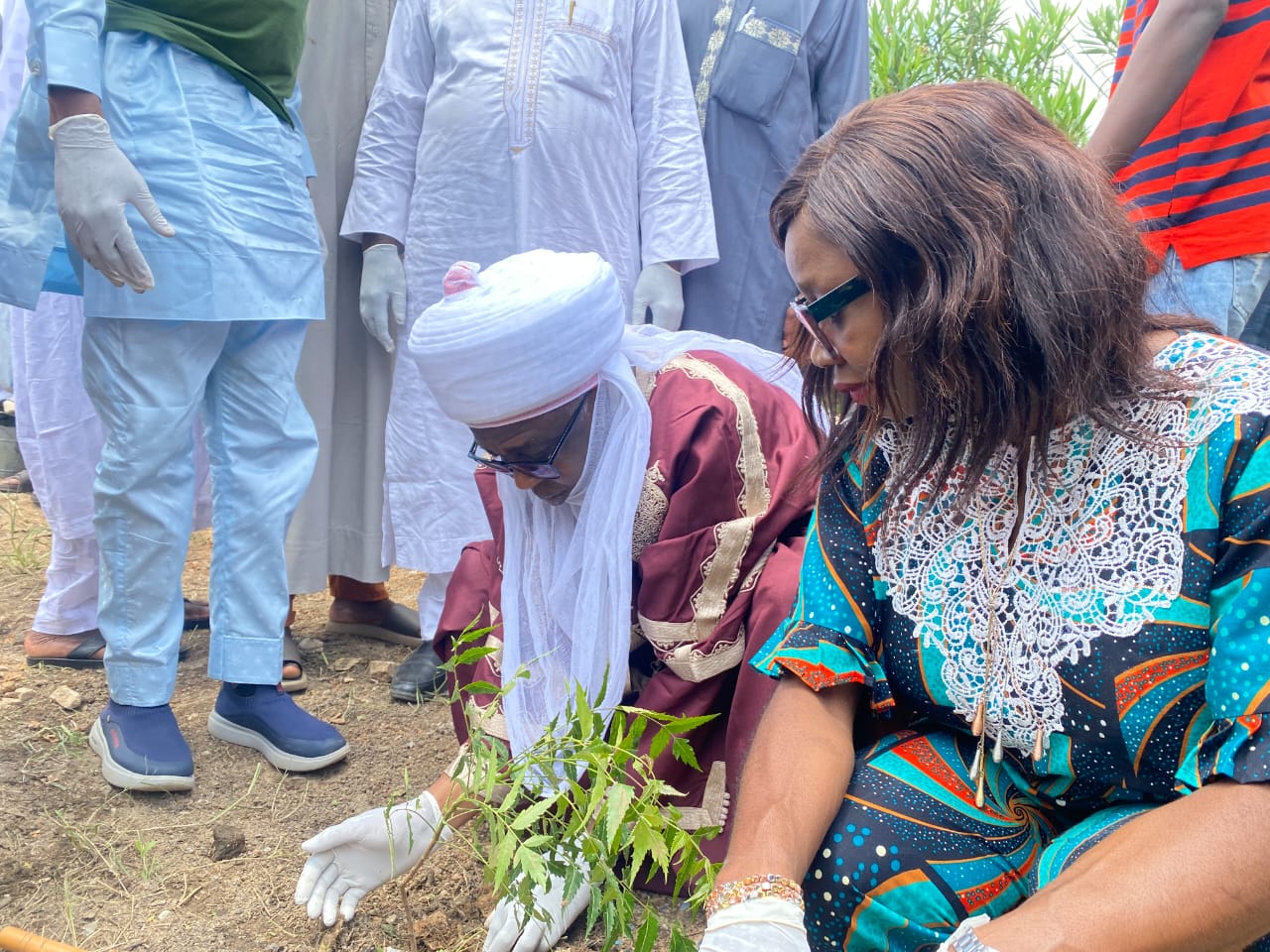
Determined to combat desertification and it’s impact on Climate in Kano and Jigawa states, the British American Tobacco Nigeria (BATN) Foundation on Wednesday flagged off a campaign of 22,000 trees planting to restore the degraded landscape in the region.
The initiative, which focus on afforestation and natural resource management, is being implemented in collaboration with the Federal College of Agricultural Produce Technology (FCAPT), Ahalson General Enterprises Ltd, a seed company and other stakeholders.
Unveiling the campaign on Wednesday in Kano, Director BATN Foundation Board, Ruth Owojarye, said the project was not merely about planting trees but a deliberate efforts to restoring the environment, strengthening rural livelihoods and protecting the nature.
Owojarye explained that the Foundation had invested over N4 billion in agricultural and rural development interventions over the past two decades for implementing more than 300 projects while reaching out to over 17 million beneficiaries across Nigeria.
According to her, the current intervention includes 22,000 trees to be planted across Kano and Jigawa States, with 2,000 seedlings contributed by FCAPT.
Owojarye said the project was designed to improve biodiversity, strengthen climate resilience and contribute to a healthier and more balanced ecosystem in the Northwest.

She noted that climate change was already affecting communities through changing weather patterns, declining soil fertility, desertification, reduced agricultural productivity and increasing pressure on natural resources.
She stressed that addressing the challenges required practical, collaborative and sustained interventions involving government, private organisations, institutions and local communities.
Owojarye said the Foundation commissioned a 20,000-litre solar-powered borehole in Yanfiki Community in 2025, providing access to clean and safe water for more than 4,000 direct beneficiaries after decades of water scarcity. He added that 200 vulnerable women in Jigawa State have been empowered through a poultry enterprise project, providing production assets, technical training and enterprise support.
On his part, the Provost, Federal College of Agricultural Technology (FCAPT), Dr. Salisu Salisu describing the initiative as a collective effort to combat desertification, restore degraded landscapes and strengthen climate resilience in the semi-arid region.
Salisu said the project was particularly important to Kano because of the increasing threat of desertification, stressing that forestation had become not only an environmental necessity but also a survival strategy for communities in the region.
He added that FCAPT had decided to support the initiative by providing an additional 2,000 tree seedlings, describing the project as an opportunity for public institutions, private foundations and community organisations to work together towards environmental sustainability.
The Provost emphasised that the success of the initiative would depend largely on community participation, noting that training, capacity building and the involvement of traditional leaders, youths and community volunteers would be central to ensuring the survival of the trees.
On his part, leader of Ahalson, Ali Ahmad Ali said to the project would be implemented across 11 local government areas in the two states, with Kano receiving about 65 per cent of the seedlings and Jigawa 35 per cent.
Ali explained that the seedlings comprised 10 and 12 varieties of trees, including dates, neem, tamarind, baobab, guava and mango added that the design will combines afforestation with a tree-planting campaign to enable communities without large parcels of land to participate.
He said communities with available land measuring between half and one hectare would establish concentrated forest areas, while farmers without such land would be encouraged to plant trees around their homes, communities and farmlands.
To ensure effective implementation, Ali said 22 forest ambassadors had been trained to work with participating communities, train farmers and distribute the seedlings.
He explained that the ambassadors would serve as community-level facilitators for the project, working with farmers and local authorities to ensure proper planting and maintenance of the trees.
He listed the areas to benefit transplanting includes Dambatta, Makoda, Tofa and Dawakin Tofa, while Rimin Gado and Kabo local government areas were expected to receive their seedlings.
According to him, the initiative is aimed at restoring soil value, controlling desertification and contributing to the reduction of greenhouse gas emissions responsible for global warming.

