 Follow Us on Google News


 Follow Us on Google Discover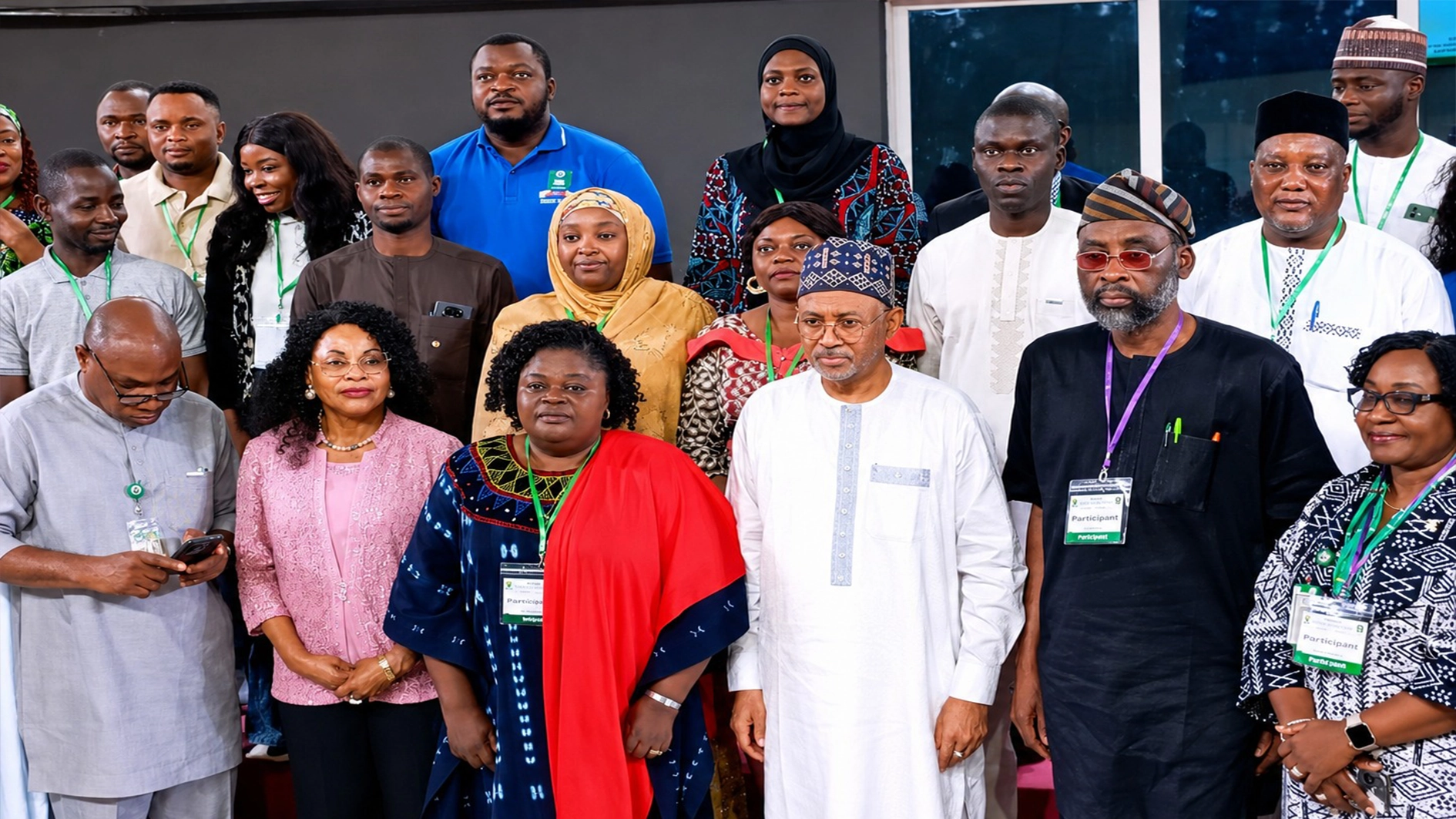
Experts in open and distance learning (ODL) have called for an urgent review and strengthening of quality assurance mechanisms to keep pace with rapid technological and educational changes, particularly the growing adoption of artificial intelligence (AI), micro-credentials, open educational resources and cross-border learning.
The academics made the call on Wednesday in Abuja at a regional workshop on “Quality Assurance Mechanisms for Emerging Issues in Open and Distance Learning”, organised by the Regional Training and Research Institute for Distance and Open Learning (RETRIDOL) and the National Open University of Nigeria (NOUN), in collaboration with the Commonwealth of Learning (COL).
Adviser on Higher Education at COL, Canada, Prof. Jane-Frances Agbu, said the rapid transformation of education had raised fresh concerns around standards, integrity, recognition, equity, learner protection and institutional responsibility.
Agbu, who addressed participants virtually, said, “AI is reshaping how we teach, learn and assess. Micro-credentials are challenging long-established ideas about qualifications, recognition and pathways through education.
“Open Educational Resources are widening access to knowledge and enabling new forms of collaboration. Cross-border provision is extending the reach of institutions beyond national boundaries.”
According to her, while the developments offered exciting opportunities, they also required quality assurance systems to evolve at the same pace as the learning systems they were designed to regulate.

“This brings us to the fundamental question: How do we ensure that quality assurance evolves as rapidly as the learning systems it is meant to assure?” she said.
Agbu stressed that quality remained central to building confidence in ODL, noting that learners, governments, employers and institutions must be able to trust the system for it to realise its full potential in West Africa.
“If open and distance learning is to realise its full promise for West Africa, then learners, government, employers and institutions must trust it. And trust is built on quality,” she said.
She explained that a status study had been commissioned ahead of the workshop to examine how quality assurance systems across the region were responding to emerging issues in ODL.
Agbu said the workshop provided an opportunity for participants to critically examine the findings, share experiences and develop practical, sustainable and regionally relevant responses.
She also described RETRIDOL as an important regional platform for dialogue, learning and action, stressing that its role extended beyond implementing programmes to ensuring that regional realities and priorities informed policy and practice.
Also speaking, the Director of RETRIDOL, Prof. Dorothy Ofoha, said the institute was established in 2003 through a collaboration between NOUN and the Commonwealth of Learning, with a mandate to advance open and distance learning in the West African sub-region.
Ofoha said RETRIDOL had consistently strengthened the capacity of higher education institutions through training and research initiatives while promoting regional collaboration.
She noted that the rapid integration of artificial intelligence, open educational resources, learning analytics and micro-credentials was reshaping quality assurance practices.
“These developments challenge us to reflect on whether our existing quality assurance systems remain responsive to the evolving realities and demands of contemporary ODL provision,” she said.
According to Ofoha, the workshop was designed to facilitate meaningful dialogue, collaborative problem-solving and practical sessions through which participants could develop actionable frameworks and policy recommendations.
“The overall goal of the workshop is to build participants’ capacity to develop and implement quality assurance mechanisms that effectively respond to emerging threats and challenges in open and distance learning,” she said.
Ofoha added that the workshop brought together senior academics, quality assurance practitioners, heads of institutions, directors of distance learning centres, policymakers, senior administrators and experts from across West Africa.
On his part, the Vice-Chancellor of NOUN, Prof. Uduma Oji Uduma, represented by the Deputy Vice-Chancellor, Administration, Professor Shehu Adamu, said quality assurance remained fundamental to the credibility, effectiveness and sustainability of ODL.
Uduma said the growing acceptance of ODL had demonstrated that the system had become an integral part of contemporary higher education, but stressed that its continued credibility depended on maintaining high standards.
“We have now realised that ODL is a system that must come to stay. However, in order to strengthen our quality assurance mechanism, we need to ensure that what we do is governed by quality. The theme of this workshop could not be more timely,” he said.
He noted that advances in AI, digital learning technologies, open educational resources, micro-credentials and data-driven learning systems were fundamentally changing the ODL landscape.
According to him, the challenges confronting quality assurance were regional and could not be addressed by individual institutions acting in isolation.
He therefore urged participants to actively engage in the discussions, share experiences and identify approaches that could be adapted to strengthen their respective institutions.
Uduma commended the Commonwealth of Learning for its continued partnership and support for capacity development, innovation and knowledge sharing in open and distance learning.
He also acknowledged the contributions of professionals and institutions working to advance ODL, stressing that stronger regional collaboration would be critical to developing quality assurance systems capable of responding to emerging realities.

