 Follow Us on Google News


 Follow Us on Google Discover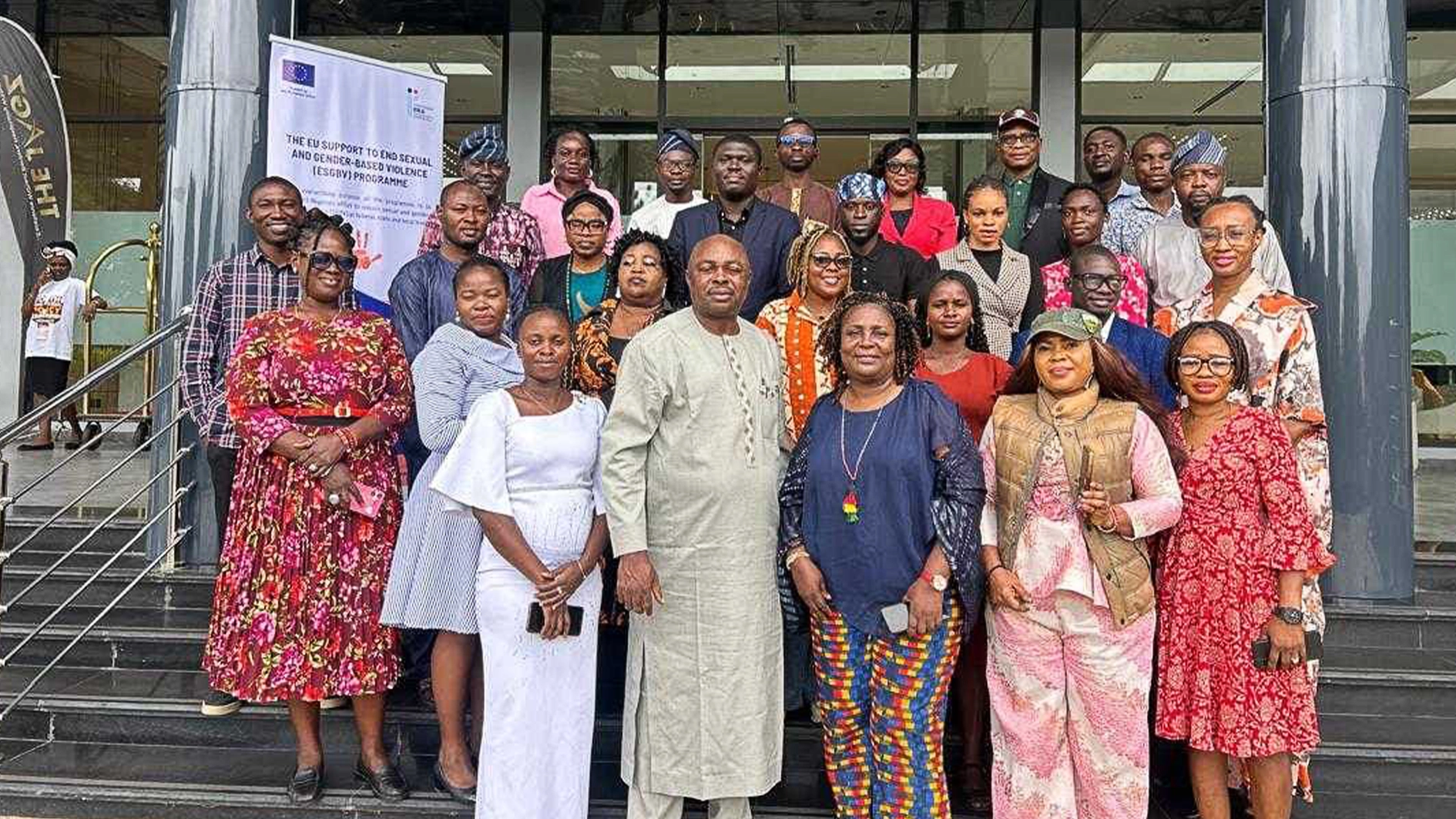
The European Union (EU), National Agency for the Prohibition of Trafficking in Persons (NAPTIP) and International Institute for Democracy and Electoral Assistance (International IDEA) have intensified efforts to strengthen reporting of sexual and gender-based violence (SGBV) in Nigeria through the establishment of a dedicated media corps.
The initiative is being implemented under the EU Support to End Sexual and Gender-Based Violence (ESGBV) Programme, with selected journalists in Oyo State undergoing a two-day capacity-building workshop designed to improve the quality, ethics and coordination of SGBV reporting.
The organisers said the proposed SGBV Media Corps would help shift coverage away from sensationalist and fragmented reporting toward professional, survivor-centred, evidence-based and action-oriented journalism.
The programme is also expected to improve public awareness of SGBV reporting channels and support services, strengthen implementation of the Violence Against Persons (Prohibition) Act (VAPP Act) and promote accountability through investigative journalism.
Declaring the training open, NAPTIP Director-General, Binta Lami Adamu Bello, whose address was delivered by the agency’s Director of Media and Publicity, Vincent Adekoye, described the initiative as timely, noting that the media remained a critical partner in the fight against SGBV.
Bello lauded journalists for supporting NAPTIP through investigative reporting, public education campaigns and efforts to expose hidden abuses.

She said the media was “not merely a channel for information,” but a partner in protection, prevention and justice, adding that responsible reporting had helped amplify survivors’ voices and influence public opinion and policy responses.
According to her, SGBV remained one of the most pervasive human rights violations in Nigeria, affecting women, girls, boys and men across age, class, ethnicity and geographical location.
She noted that the actual scale of SGBV was likely higher than available statistics indicated because many survivors still failed to report cases due to fear, stigma, lack of trust and economic dependence on perpetrators.
Bello said Oyo State was equally confronted with cases ranging from sexual assault and intimate partner violence to trafficking for sexual exploitation.
She identified the state’s youthful population, increasing internet access and growing social media use as factors presenting both opportunities and vulnerabilities in efforts to combat SGBV.
She added that cultural norms, stigma and limited awareness of legal rights and available support services continued to prevent many survivors from speaking out or accessing justice.
The NAPTIP director-general said the agency’s intervention was anchored on dignity, confidentiality and holistic care for survivors, noting that its mandate included investigating cases, rescuing victims, providing medical and psychosocial support, facilitating legal assistance and pursuing prosecution where appropriate.
Bello said NAPTIP had continued to implement the VAPP Act, resulting in increased prosecution and conviction of offenders, while also restrategising to tackle emerging forms of technology-facilitated SGBV.
She identified non-consensual sharing of intimate images, sextortion, cyberstalking, grooming of minors, deepfakes used for humiliation and blackmail, and coordinated online harassment as emerging forms of gender-based violence.
She said such abuses could be instantaneous and far-reaching, with harmful content remaining online long after the initial incident.
To address the emerging threats, Bello said NAPTIP had strengthened collaboration with technology-sector stakeholders and sister law enforcement agencies, while enhancing the capacity of its cyber response team.
She stressed, however, that ending SGBV could not be achieved by one government agency alone, calling for coordinated action involving government, law enforcement agencies, health and social services, educational institutions, civil society organisations, technology platforms and the media.
Bello urged journalists to raise awareness without sensationalising cases or retraumatising survivors, hold institutions and perpetrators accountable through rigorous reporting, inform the public about available support services and challenge harmful narratives that perpetuate stigma.
She also urged participating journalists to obtain informed consent, protect survivors’ identities where necessary, avoid victim-blaming language and work with service providers to ensure that media coverage did not compromise investigations or survivors’ safety.
She said the SGBV Media Corps would create a network of media practitioners equipped to report cases accurately, ethically and from a survivor-centred perspective.
Figures presented during the training, based on the 2024 Nigeria Demographic and Health Survey, showed that 21 per cent of women aged 15 to 49 had experienced physical or sexual violence, while 58 per cent of survivors never sought help.
The data also showed that only 24 per cent of survivors sought help to stop the violence, while 18 per cent did not seek formal help but told someone about their experience.
The presentation also revealed persistent harmful social norms, with 22 per cent of women aged 15 to 49 believing that a husband was justified in hitting or beating his wife or partner for at least one of several reasons, compared with 16 per cent of men.
The reasons included neglecting the children, going out without informing the husband, arguing with him, refusing sexual intercourse and burning food.
The Media Lead Facilitator and Resource Person, Mrs. Toyin Adewale Gabriel, highlighted significant gaps in access to justice and support services in Oyo State.
Gabriel said public awareness of GBV laws and policies stood at 41.8 per cent, while awareness of legal aid was 35.4 per cent.
She also disclosed that Oyo State had only one Sexual Assault Referral Centre (SARC), the Abiyamo Centre in Ibadan, limiting access to specialised support, particularly for survivors in rural communities.
According to her, awareness of the SARC stood at 25 per cent, while awareness of available support services was 30.3 per cent, with inadequate staffing and funding also affecting its operations.
Gabriel also disclosed that the Oyo State Rapid Response Team on Gender-Based Violence had recorded 692 reported cases involving abandonment, defilement, rape, rescued persons, child labour and intimate partner violence.
She said 418 of the cases involved persons aged between zero and 17 years, with most of the reported incidents occurring in rural communities.
She called for stronger collaboration with traditional and community leaders in sensitisation efforts and urged journalists to give greater attention to SGBV cases.
The media lead facilitator urged the media to use its platforms to expose perpetrators, educate the public, promote survivor support and demand accountability from institutions responsible for justice and protection.
The training was facilitated by Gabriel and Mrs. Wynyfred Achu-Egbuson, Civil Society and Community Mobilisation Specialist, ESGBV Programme, International IDEA.

