 Follow Us on Google News


 Follow Us on Google Discover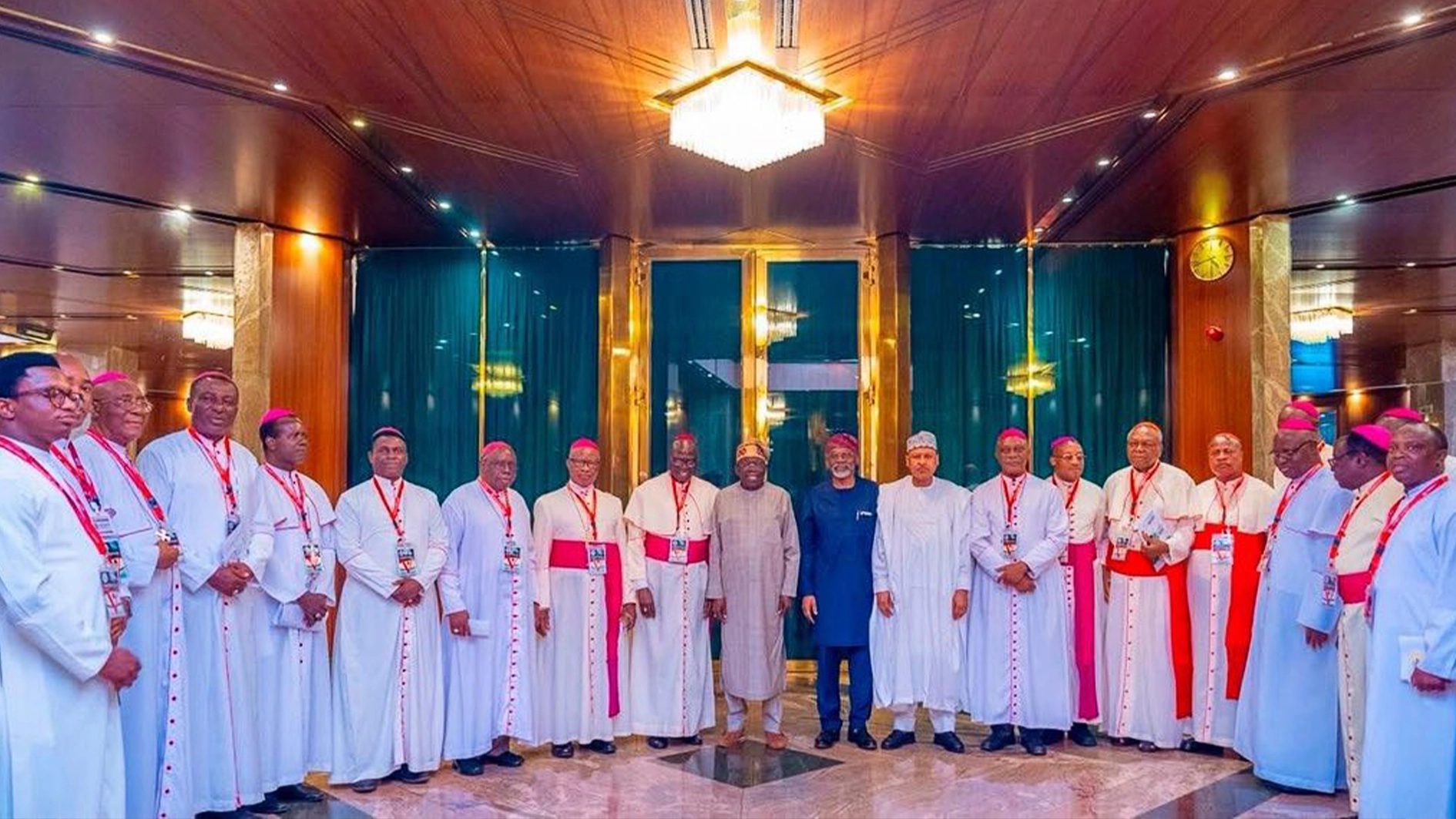
The controversy generated by the July 28 meeting between the Catholic Bishops’ Conference of Nigeria (CBCN) and President Bola Ahmed Tinubu at the Presidential Villa, Abuja, has raised an important question about the place of moral voices in a democratic society.
What should have remained a constructive engagement between the nation’s highest political authority and one of its most respected religious institutions unfortunately degenerated into needless controversy following the Presidency’s reaction to comments made after the meeting by His Eminence, John Cardinal Onaiyekan.
Cardinal Onaiyekan disclosed during an interview that the bishops had informed the President that Nigeria was “bleeding” under the weight of hunger, economic hardship and insecurity. He also reiterated the Church’s insistence that future elections in Nigeria must be free, fair, credible and transparent.
The Presidency’s response, through one of the President’s advisers, sought to portray the Cardinal’s remarks as unfair and merely his personal political opinion. That response has understandably attracted widespread criticism from political leaders, civil society organisations and many Nigerians who believe the bishops were simply performing their moral responsibility.
The Catholic bishops did not visit the President as politicians or opposition figures. They went to the State House as pastors burdened by the suffering of many Nigerians who are members of their congregation. Their message reflected what countless citizens experience every day in food inflation, persistent insecurity, unemployment, declining purchasing power and growing uncertainty about the future. Such observations deserve thoughtful engagement rather than political interpretation.
In every healthy democracy, religious leaders, like labour unions, professional associations, traditional rulers, civil society organisations and the media, have the constitutional right to express opinions on issues affecting the public. Democracies flourish when governments are willing to listen to dissenting voices, especially when those voices are motivated by concern for the common good rather than partisan interest.
The Catholic Church’s interventions in public affairs are rooted in a long-established tradition of social teaching which insists that the Church has a moral obligation to defend human dignity, justice and the welfare of society. This obligation follows the example of Jesus Christ, whose ministry embraced not only the spiritual needs of humanity but also the physical and social conditions of the people. He fed the hungry, healed the sick, comforted the afflicted and stood with the poor and the marginalised.

Concern for human suffering, therefore, lies at the very heart of Christian witness.
That explains why the CBCN has consistently spoken on national issues irrespective of the party or administration in power. During General Sani Abacha’s military regime, the bishops condemned repression, arbitrary detention and the denial of democratic freedoms. Cardinal Anthony Olubunmi Okogie was among the country’s most fearless critics of Abacha’s authoritarianism.
During the administration of President Olusegun Obasanjo, the Catholic bishops criticised corruption, persistent poverty, electoral irregularities and opposed constitutional amendments designed to prolong presidential tenure. Under President Umaru Musa Yar’Adua, they welcomed his acknowledgement that the 2007 elections were flawed while urging comprehensive electoral reforms.
The bishops similarly challenged President Goodluck Jonathan’s administration over insecurity, corruption and the Boko Haram insurgency, particularly after the abduction of the Chibok schoolgirls. Under President Muhammadu Buhari, they repeatedly warned that terrorism, banditry, kidnappings, economic hardship and national disunity threatened Nigeria’s stability.
Their interventions have continued under the Tinubu administration. They have expressed concern over inflation, worsening living conditions, insecurity and the hardship confronting ordinary Nigerians.
During their recent meeting with the President, they urged government to place the welfare of citizens at the centre of public policy while reaffirming their commitment to credible elections as the foundation of democratic legitimacy.
This consistency demonstrates that the bishops’ interventions are neither selective nor partisan. They have commended governments when commendation was deserved and criticised policies whenever justice, accountability or the common good required it. Their record has been remarkably consistent across military governments and democratic administrations alike.
Nor is this prophetic role unique to Nigeria. Across the world, Catholic Bishops have often emerged as courageous defenders of justice and human dignity. Archbishop Óscar Arnulfo Romero of El Salvador became the voice of the poor against military repression and ultimately paid with his life. Brazil’s Dom Hélder Câmara courageously challenged military dictatorship while defending the rights of the poor.
Cardinal Jaime Sin played a pivotal role in the peaceful People Power movement that restored democracy in the Philippines. Bishop Samuel Ruiz García spent decades defending indigenous communities in Mexico, while Cardinal Laurent Monsengwo Pasinya consistently challenged electoral fraud and authoritarianism in the Democratic Republic of the Congo. Their examples illustrate the Church’s enduring commitment to justice and human dignity beyond national boundaries.
Cardinal Onaiyekan himself belongs to this distinguished tradition. Throughout his public ministry, he has consistently spoken against corruption, electoral malpractice, insecurity and poor governance under administrations led by different political parties. His interventions have reflected moral conviction rather than partisan preference.
Against this background, personal attacks on the Cardinal are unfortunate and unnecessary. Nigeria’s political leaders should remember that constructive criticism is not an act of hostility. Governments are strengthened—not weakened—when they are willing to listen to uncomfortable truths. Indeed, one of the greatest tests of democratic leadership is the capacity to distinguish criticism from antagonism.
History also offers a useful lesson. During Pope John Paul II’s 1998 visit to Nigeria, he spoke candidly on democracy, justice and human rights in the presence of General Sani Abacha. His forthright message was received as the counsel of a moral leader rather than as partisan political interference. Following in the legacy of his predecessors in the papacy, Pope Leo XIV has been advocating for a new world order—one founded not on military might, economic domination or geopolitical rivalry, but on peace, justice, human dignity, solidarity and respect for the sovereignty of nations.
This moral mission of the Catholic Church should guide public reactions to the meeting between Nigeria’s Catholic bishops and President Tinubu. While the Presidency may disagree with the Bishops’ position on the state of affairs, it would do well to focus less on the messenger and more on the message. The concerns expressed by the bishops are neither imaginary nor isolated. They are realities or perception that cannot be wished away through political rebuttals.
The measure of democratic maturity is not the absence of criticism but the willingness of those in authority to listen. President Tinubu’s administration should regard the bishops’ intervention as an opportunity for reflection rather than a challenge to its legitimacy.
Nigeria stands to gain when government and moral institutions engage each other with mutual respect in the shared pursuit of justice, peace and the common good.

