 Follow Us on Google News


 Follow Us on Google Discover
If Nigerian football is to consistently compete at the highest level, the country must begin preparing its young players for the demands of international football much earlier, according to Fabio Abiola, founder of The Future Academy.
Abiola believes the quality of Nigeria’s future footballers will depend not only on the natural talent available across the country, but also on the environments created to develop that talent.
“I have always believed that the future of Nigerian football will not be determined only by the players we eventually produce. It will be determined by the environments we create for them while they are young,” he said.
That philosophy is central to The Future Academy and its TFA Future Liga, a youth football platform focused primarily on the U11 and U13 age groups.
Abiola said he does not see himself as someone who creates football talent, but as an enabler who creates opportunities for young players to discover and develop their potential.
“Nigeria has an incredible amount of natural football ability. My role, and the role of The Future Academy, is to create the environment, provide the platform and open the doors that allow that talent to develop,” he said.

Start development earlier
One of the biggest gaps in Nigerian football, according to Abiola, is the transition between grassroots football and the point at which players begin receiving serious attention.
While considerable attention is given to U15, U17 and U20 football, he believes greater emphasis should be placed on the U11 and U13 categories.
“These are not simply younger versions of the older age groups. They are foundational years,” he said.
At those ages, players begin developing football intelligence, learning to make decisions under pressure, understanding tactical concepts and discovering how they respond to competitive environments.
Abiola believes waiting until players reach U17 before exposing them to serious competition limits their development.
“If we want better U17 players, we cannot wait until U17 to start giving them serious experiences. We have to start earlier,” he said.
Taking young players beyond Nigeria
Abiola pointed to international exposure as another important part of youth development.
He cited the experience of Samson Azeez and some of his teammates, who travelled to Portugal at a young age and competed against academies and clubs connected to a different football environment.
The young players encountered teams and players associated with clubs including Atlético Madrid, Sporting CP and Benfica.
For Abiola, such experiences can fundamentally change how a young footballer sees the game.
“The game is faster. The decisions have to be quicker. The technical demands are different. The tactical understanding required is different,” he said.
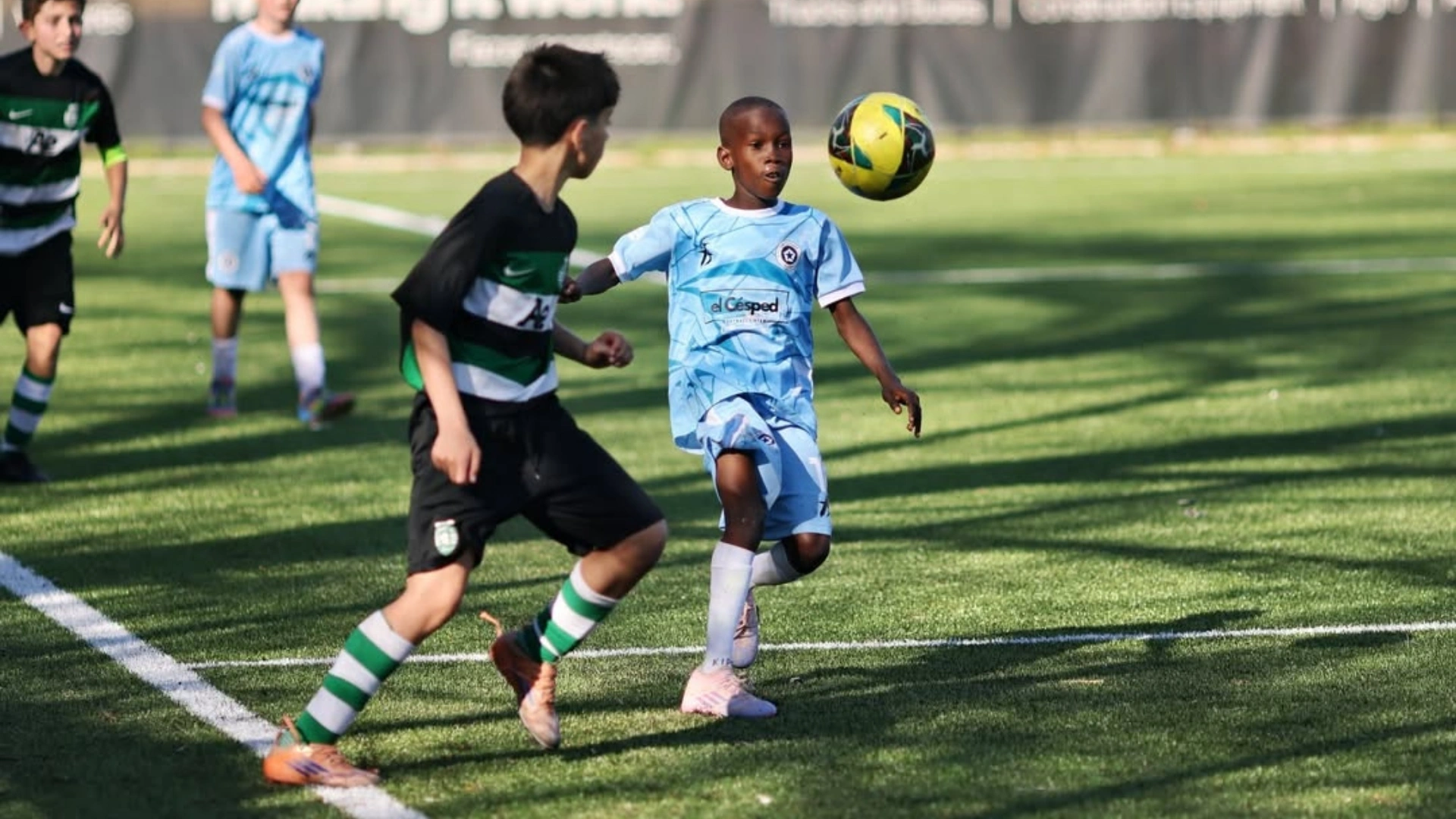
More importantly, he believes international competition helps young players understand that football can be approached through different styles and philosophies.
“That is development. And that is what I mean when I talk about being an enabler,” Abiola said.
“My job is not to tell a young player what his ceiling is. My job is to help create experiences that allow him to discover how high that ceiling can be.”
Lessons from Spain and Japan
Abiola said Nigeria could learn from countries such as Spain and Japan, where youth development has become part of broader football systems.
Spain’s success across youth competitions, he argued, has been supported by years of investment in coaching, competition, player development and a distinct football identity.
Japan, meanwhile, provides an example of how grassroots football, coaching education, youth development and the national-team pathway can be connected.
Abiola said Nigeria does not necessarily need to copy either model, but should examine what can be learned from their approaches.
“What are we building for our children at 10, 11, 12 and 13 that will make them better footballers at 17, 18 and 20?” he asked.
He believes that question should be central to conversations about the future of Nigerian football.
Why Future Liga was created
The TFA Future Liga is designed around that philosophy, providing competitive opportunities for U11 and U13 players.
Abiola said the tournament is intended to be more than a series of matches. It is designed to give young players the opportunity to compete against different academies, experience pressure, learn to deal with winning and losing, and develop relationships with other players.
It also gives coaches an opportunity to test ideas and academies a platform to establish relationships within the wider youth football community.
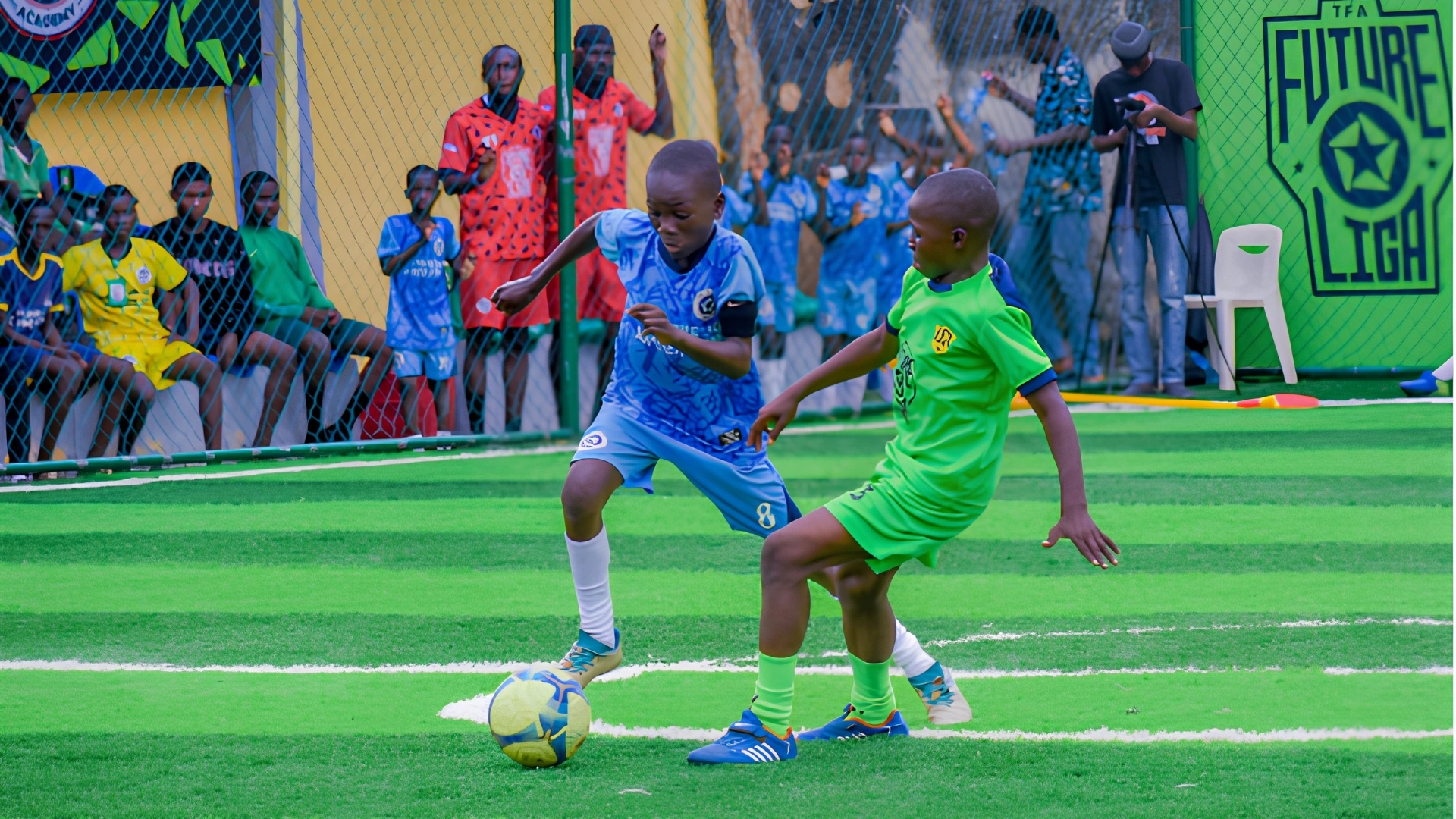
Abiola pointed to competitions such as LaLiga Futures as examples of platforms that demonstrate the value of giving younger age groups meaningful exposure.
“The message is clear: these players matter now,” he said.
“They don’t have to wait until they are 16 or 17 before their football becomes important.”
Building Future Liga 2026
The next stage of the project is the TFA Future Liga 2026, which Abiola said is being developed to provide a larger and more structured environment for young footballers.
The competition will continue to focus on U11 and U13 players while placing greater emphasis on competitive match environments, wider academy participation, scouting opportunities and engagement between coaches and participating academies.

The broader objective is to create a bridge between grassroots football and elite youth development.
“The goal is not just to host matches. The goal is to create a development ecosystem inside a competition,” Abiola said.
He wants players to compete in an environment that influences how they think, move and understand the game, rather than simply providing an opportunity to win a trophy.
Creating opportunities
For Abiola, the work extends beyond organising tournaments.
He describes his role as that of an enabler, creating access to opportunities, experiences, relationships and platforms that young players may otherwise struggle to find.
Sometimes that opportunity could be a tournament. At other times, it could involve travelling abroad, playing against a different academy, experiencing a new coaching approach or simply entering an environment that gives a young player greater belief in his ability.
“That is what we have tried to do with The Future Academy. And that is what we are scaling with Future Liga 2026,” he said.
Abiola hopes the Future Liga will eventually develop beyond an annual tournament into a wider youth football community that connects academies, coaches, players and parents while creating opportunities for learning, competition and talent identification.
He believes the long-term objective should be to strengthen the foundations of Nigerian football before players reach the age at which they traditionally begin attracting significant attention.
“We cannot wait until the player is 17. We cannot wait until a scout discovers him. We cannot wait until he leaves Nigeria. We have to start creating the experiences now,” he said.

For Abiola, the identity of the next major Nigerian football star is less important than ensuring that young players receive the opportunities required to develop.
“I don’t know which Future Liga player will become the next big Nigerian football story. And I don’t need to know,” he said.
“My job is to make sure that when that player is ready, we have given him the opportunity to prepare, to play, to compete, to learn, to experience, to dream and to be seen.”
That, he said, is what The Future Academy should represent and what the TFA Future Liga aims to become: not simply a tournament, but a platform and an enabler of the next generation of Nigerian football.

