 Follow Us on Google News
 Follow Us on Google Discover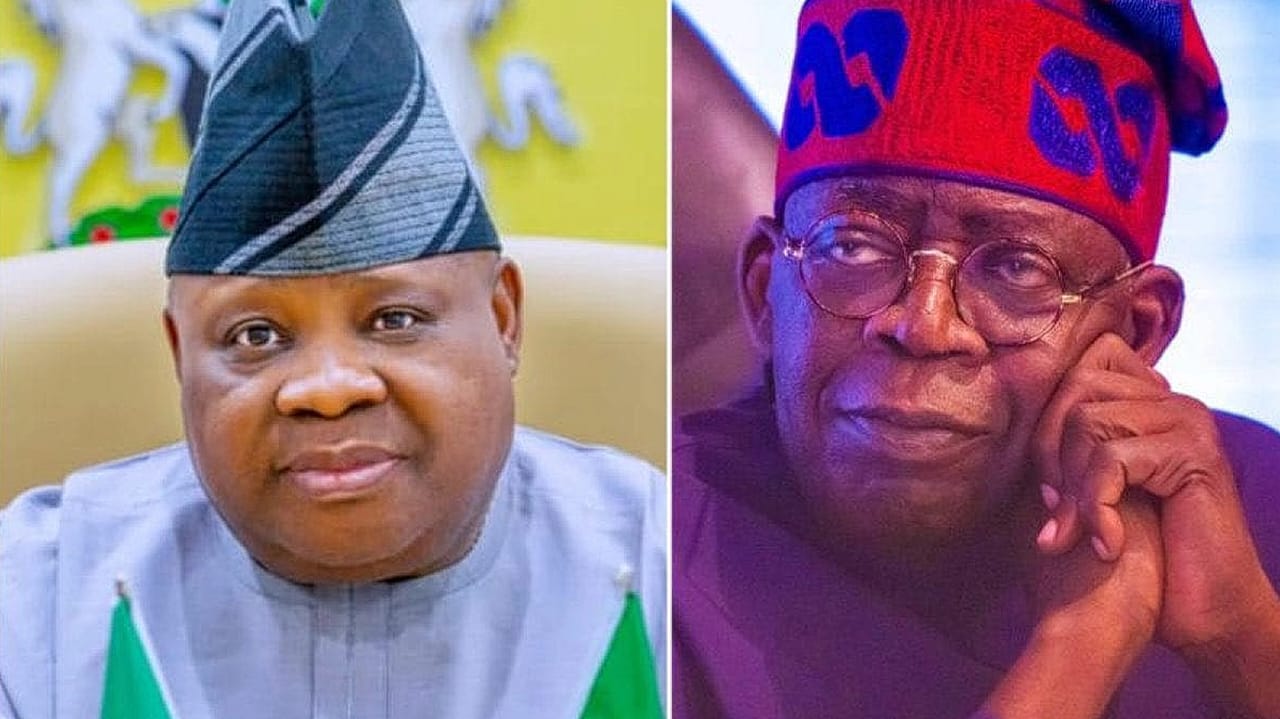
By Olufemi Aduwo
In the annals of Nigeria’s chequered political history, few episodes evoke greater horror and collective trauma than the sanguinary conflagration known as Operation Wetie. That apocalyptic interlude, which consumed the Western Region from 1962 to early 1966, remains a sombre testament to the catastrophic consequences of electoral brigandage, federal overreach and the reckless instrumentalisation of state power.
It is against this grim historical backdrop that one must situate the recent gubernatorial contest in Osun State and the exemplary restraint exhibited by President Bola Tinubu. His deliberate eschewal of the notorious “grab it, snatch it and run with it” formula, an ethos he himself once articulated with characteristic candour, constitutes a welcome departure from the politics of conquest and a potentially providential safeguard against the reignition of that infernal fire which once threatened to reduce the South-West to ashes.
Operation Wetie did not erupt spontaneously, it was the inevitable sequela of a protracted intra-party schism that metastasised into regional and national catastrophe. The Action Group, once the political vehicle of progressive Yoruba nationalism under Chief Obafemi Awolowo, fractured irreparably when Chief Samuel Ladoke Akintola, his erstwhile deputy, adopted a more accommodative posture towards the Northern-dominated federal governing coalition.
What began as ideological divergence rapidly degenerated into visceral personal enmity. In 1962, the Western House of Assembly became a theatre of physical combat as lawmakers hurled chairs and invective in a desperate bid to remove Akintola.
The federal government of Sir Abubakar Tafawa Balewa, perceiving an opportunity to humble the obstreperous West, declared a state of emergency, suspended the regional constitution, removed the Governor, Sir Adesoji Aderemi, the Ooni of Ife, and imposed an administrator in the person of Dr Moses Majekodunmi. Federal power was consequently perceived by its critics as having been deployed not as an impartial umpire but as a partisan instrument to entrench Akintola’s faction, which subsequently operated through the Nigerian National Democratic Party and remained aligned with the federal centre.
The 1965 Western Region elections merely poured petrol upon the already smouldering embers. Widely perceived as deeply flawed, amid allegations of manipulation, intimidation of opposition agents and the brazen declaration of results that bore little relation to the popular will, the polls ignited an orgy of retaliatory violence.
Wetie, the Yoruba imperative meaning “drench him,” became the grim battle-cry. Political opponents and their properties were doused with petrol and set ablaze; necks were ringed with tyres in the macabre ritual later termed “necklacing.” Houses, vehicles and entire neighbourhoods were reduced to charred skeletons. Large numbers perished, while many others were injured or displaced.
The federal authorities, having earlier intervened to impose their preferred order, now found themselves incapable of containing the anarchy they had helped precipitate. The Western Region descended into a state of near-total lawlessness, the so-called “Wild Wild West.”
This ungovernable chaos contributed to the circumstances that preceded and helped justify the military putsch of 15 January 1966, which terminated the First Republic and inaugurated decades of praetorian rule. The consequences were profound and enduring: the destruction of democratic institutions, the erosion of public trust, the militarisation of political competition, and the seeding of ethnic suspicions that continue to haunt the federation.
It is precisely against the possibility of such a historical nightmare that President Tinubu’s conduct in the Osun contest assumes considerable significance. Had the declaration of results been manipulated to favour the candidate of the ruling All Progressives Congress, the South-West could once again have stood upon the precipice of profound political conflagration.
The people of Osun, having expressed their democratic preference, would scarcely have acquiesced in the alleged theft of their mandate with the docility of a conquered populace. Fire might have burnt water; the flames of righteous indignation could have escalated beyond the boundaries of Osun, engulfing the wider Yoruba heartland and threatening the fragile equilibrium of the federation itself.
One may, without undue metaphysical extravagance, regard the moment as providential: President Tinubu’s restraint helped remove one potentially combustible ingredient from an already delicate political environment. Though possessed of the formidable apparatus of federal power, security agencies, electoral influence and the capacity to exert influence upon institutions, he refrained, so far as the available evidence indicates, from deploying such power to overturn the popular verdict. That forbearance is not merely political pragmatism; it is statesmanship of a high order.
Equally salutary is the President’s prompt telephone call of congratulation to Governor Adeleke. In an era when victors frequently treat defeated opponents with icy disdain or veiled threats, such an early acknowledgement of the people’s will constitutes a civilising gesture. It recalls the noble precedent established by former President Goodluck Jonathan, who, upon losing the 2015 presidential election, graciously telephoned General Muhammadu Buhari and thereby helped spare the nation the trauma of a contested succession.
That culture of magnanimity, once initiated, must not be permitted to atrophy. President Tinubu’s telephone call reaffirms it and sets a standard that political leaders across the federation would do well to embrace. Politics need not be a zero-sum blood sport in which the vanquished are humiliated into the wilderness it can and must, accommodate the possibility of graceful concession and constructive opposition.
Yet honesty compels the admission that the Osun election, notwithstanding the ultimate acceptance of the popular will, was not unblemished. Pre-election violence claimed lives, a tragic and wholly unnecessary toll that underscores the persistent pathology of our political culture. That citizens should forfeit their lives merely for the assertion of democratic choice remains a profound national tragedy, a stain upon the conscience of all who profess allegiance to constitutional order. One can only hope that the lessons of both 1965 and 2026 will finally impress upon the political class the imperative of demilitarising electoral competition and subordinating partisan ambition to the higher claims of peace and institutional integrity.
In the final analysis, President Tinubu’s refusal to “grab it, snatch it and run with it” in Osun represents more than a tactical calculation, it is a quiet repudiation of the very maxim that once defined the ruthless edge of his political philosophy.
By permitting the declared verdict of the electorate to stand, he has performed a signal service to the South-West and to the Nigerian federation. He has demonstrated that power, however intoxicating, need not always be exercised to its outermost limits that the preservation of social peace can, on occasion, take precedence over the short-term advantage of one’s party.
In so doing, he has helped close the door against the return of that petrol soaked horror which once turned the Western Region into a charnel house. For this act of restraint, history and the living generations of the South-West owe him a measured but sincere appreciation. May the culture of early congratulatory calls, respect for the ballot and the determination never to permit a recurrence of Operation Wetie become the settled norm rather than the exceptional aberration.
Nigeria must learn, at last, that political power is transient, partisan triumph ephemeral, but the Republic and its democratic institutions are enduring possessions of the people.
Aduwo is permanent representative of the Centre for Convention on Democratic Integrity (CCDI) to the United Nations Economic and Social Council (ECOSOC).
He can be reached via:Tel:+2348087047173 olufemi.aduwo @ccdiltd.org

