 Follow Us on Google News


 Follow Us on Google Discover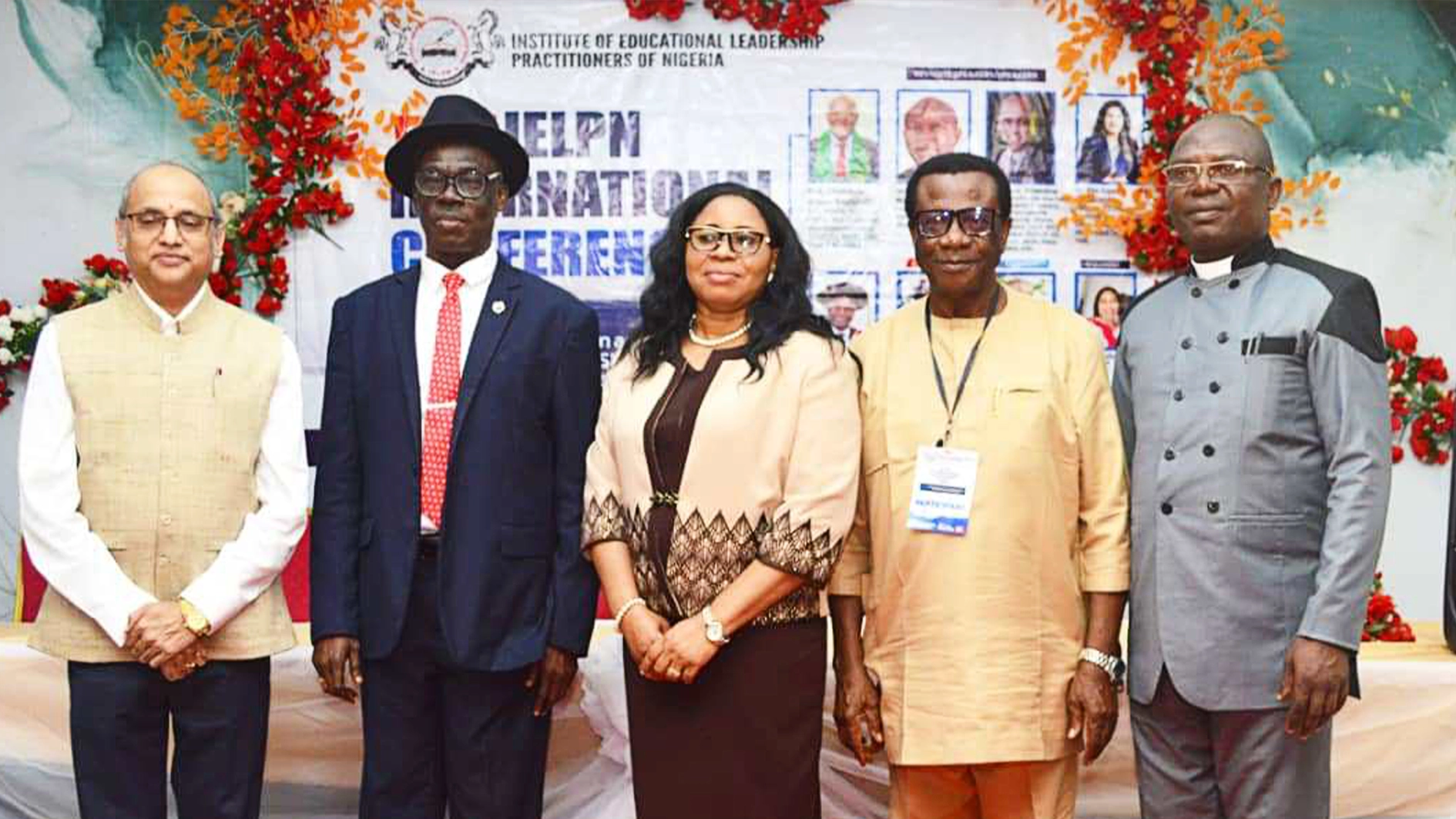
The Institute of Educational Leadership Practitioners of Nigeria, (IELPN), has charged education leaders to deploy Artificial Intelligence responsibly to improve learning outcomes, skills development, employability and sustainability.
Speaking at the Institute’s 2026 International Conference held at Imo State University, Owerri, the Registrar/CEO, Dr. Taiwo Olufunmilayo Olusa, FIELP said “Our task is to use AI responsibly and ethically to improve learning.
Speaking on the theme of the conference”Leading Education in an AI-Driven World for Skills, Employability, Ethics, and Sustainability”, she said the future of education depends on ethical and visionary leadership, not just technology”.
Also speaking President of IELPN, Prof. Sunday D. Osaat urged educational leaders to lead institutions that produce skilled, employable citizens with strong ethical values for both present and future generations.
He said the aim of the conference was to advance the performance of educational leaders and implement the goals of the Institute .He congratulated the new fellows, honorary fellows and awardees to be admitted into the Institute’s Board of Fellows, and appreciated the Vice Chancellor of IMSU Prof. Uchefula Ugonna Chukwumaeze, speakers, and all partners for supporting the conference.
The keynote speaker, Asheesh Srivastava, a Professor of Higher Education Policy and Dean, Academic & Research, Inter University Centre for Teacher Education, Banaras Hindu University (IUCTE-BHU), said that in the 21st century, technology should not be about competition and India and Nigeria should collaborate in advancing technology.

Prof. Chinedum Nwajiuba noted that
Other keynote Speakers include , and Dr. Ritu Chakravarty, while Prof. Cosmos O. Ujowundu was the guest speaker who all spoke on the centrality of AI and technology in education, saying that technology is just a means and not an end in itself, as teachers remain in the driving seat.
Prof. Nwajiuba warned that AI could deepen digital divide between Nigerian learners.
“Every generation experiences a technological revolution and in this AI era the youths are the beneficiaries because it is transforming every facet of human endeavours. Every student today requires digital competency. Students must have the ability to solve problems,” Prof. Nwajiuba said.
In his address, the Commissioner for Education, Imo State, Prof. Bernard Ikeagwuoha, said the state now produces both drones and Android phones at the Imo Digital City.
Prof. Ikeagwuoha, who represented the Imo State Governor, Sen. Hope Uzodimma, at the international conference, revealed that the Imo Digital City now produces drones and Android phones and that the government is currently building the largest computer village in Africa.
In his goodwill message, keynote speaker Sonny Iroche, Founder & CEO of GenAI Learning Concepts Ltd., said the conference came at a defining moment for education, leadership and human development.
“Across the world, Artificial Intelligence is reshaping how we learn, teach, work, govern and prepare the next generation for the future. For educational leaders, the challenge is no longer whether technology will transform education, but how boldly, ethically and strategically we shall lead that transformation,” Iroche said.
He stressed that education must move beyond memorisation and certification to become a platform for critical thinking, creativity, digital literacy, ethical judgment, innovation, employability and lifelong learning.
“Nigeria, and indeed Africa, stands at a major turning point. With our young population, growing digital talent and expanding innovation ecosystem, we have an opportunity to reposition education as the foundation for national competitiveness in the age of Artificial Intelligence,” he added.
Iroche said this would require visionary leadership, curriculum reform, teacher capacity development, responsible AI governance, and collaboration between schools, government, industry and tech partners.
He commended IELPN for placing educational leadership at the centre of national development and skills transformation, and urged leaders to combine Artificial Intelligence with Human Intelligence, Ethical Intelligence and Leadership Intelligence.
“I congratulate IELPN, Imo State University, the organisers, speakers, delegates and all participants. May this conference generate bold ideas, practical solutions and enduring partnerships that will help prepare our students, teachers and institutions for the opportunities and responsibilities of the AI-driven world,” he concluded.
Dr. Olusa acknowledged the Chief Host, IMSU Vice-Chancellor including Imo State Commissioner for Education, Prof. Bernard Ikegwuoha; IELPN Board Chairman, Prof. Afolabi Lesi; President, Prof. Sunday Daniel Osaat; and keynote speakers Mr. Sonny Iroche, Prof. Asheesh Srivastava, Prof. Chenedum Uwajiuba and Dr. Ritu Tripathi Chakravarty.
She noted that IELPN recorded significant progress in 2026 through CPD programmes, webinars, mentorship, research and strategic partnerships. The Institute also launched the International Journal of Educational Leadership Practitioners, with Prof. Ajuruchukwu Obi as Editor-in-Chief.
The conference featured tributes to outgoing President Prof. Osaat and to outgoing Official Ambassador, Dr. Bright Bethel. New inductees were urged to uphold IELPN’s core values of Leadership, Innovation and Sustainability.
Dr. Olusa also announced that preparations are underway for the 2027 Leadership Immersion Experience in Nairobi, Kenya, scheduled for 21st–26th February 2027.

