 Follow Us on Google News


 Follow Us on Google Discover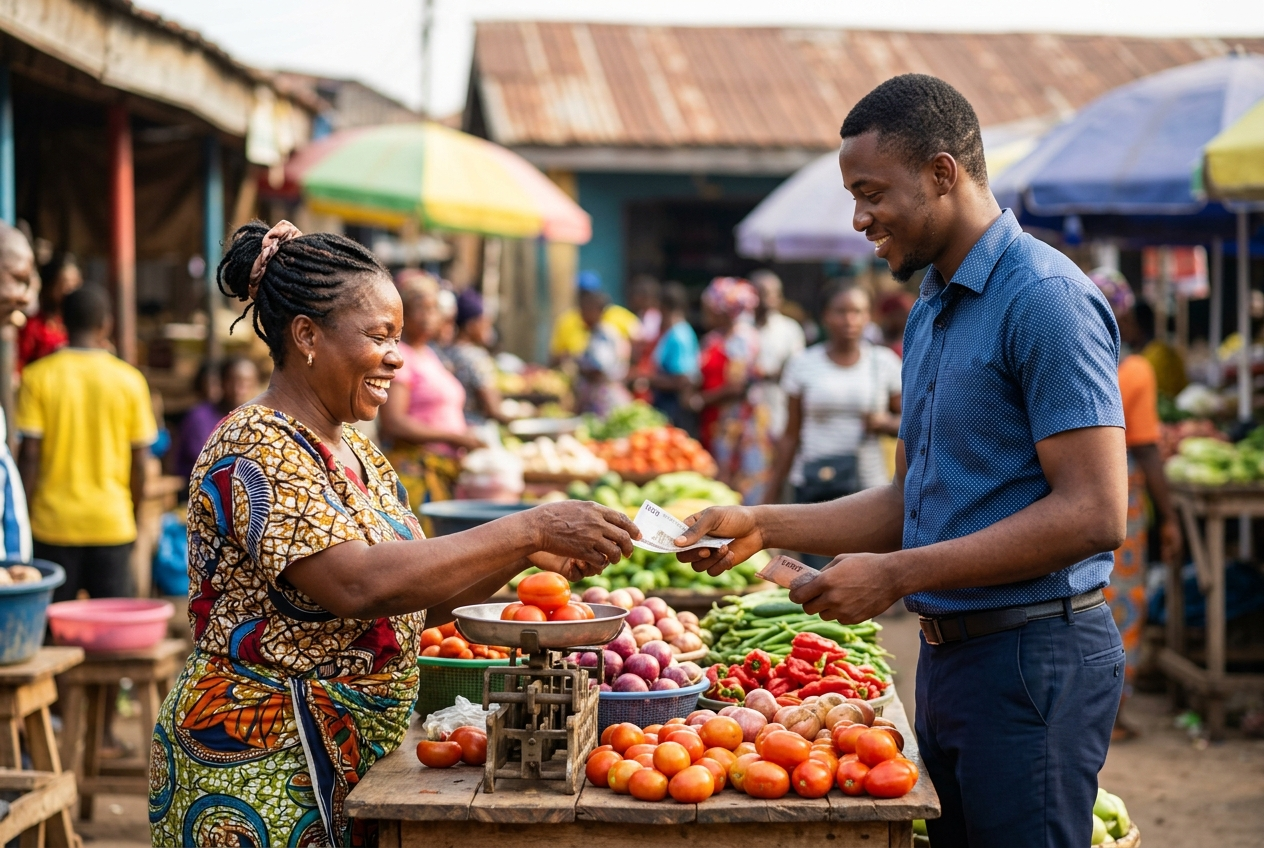
Welcome, and thank you for finding your way here. Is it expensive to live in Nigeria? I have been asked that question by a cousin in Manchester, by a Ghanaian colleague weighing up a Lagos posting, and by a young graduate in Enugu who simply wanted to know whether she could afford to move out of her mother’s house. This piece is the conclusion of months of research and years spent writing about money in this country, and it leans on the way economists compare prices across borders as much as it leans on the receipts I keep in a shoebox.
Here is the thing nobody tells you at the start.
The question has two completely different answers depending on which currency your salary arrives in. Ask a software engineer paid in dollars from a Berlin employer and she will tell you Nigeria is astonishingly cheap. Ask a secondary school teacher in Osogbo paid in naira and she will tell you, with some feeling, that the country has become unaffordable. Both of them are describing the same market, the same rice, the same danfo fare. They are simply standing on opposite sides of the exchange rate.
That gap is the whole story, and everything below is an attempt to map it honestly.
How Much Money Do I Need To Live In Nigeria Each Month?
Let me start with numbers, because vague reassurance helps nobody.
For a single person living modestly in a mid-sized Nigerian city, sharing or renting a small flat, cooking at home most nights and using public transport, a monthly budget of roughly ₦250,000 to ₦350,000 is realistic in 2026. In Lagos or Abuja, that same lifestyle climbs to somewhere between ₦450,000 and ₦700,000 once rent, fuel and the endless small leakages of city life are counted. A family of four in Lagos, including school fees, generally needs between ₦1.5 million and ₦3 million a month depending on which side of the lagoon they live on.

Those are not figures I invented over coffee. They sit within the range that international cost trackers report for Nigerian households, and they line up with what my own household spends.
The context that makes those numbers move is inflation, and here the news is genuinely mixed. Nigeria’s headline inflation rate stood at 15.43 per cent in July 2026, down from 15.91 per cent in June and a long way below the 24.94 per cent recorded a year earlier. That is real progress. But food inflation went the other way, climbing to 20.31 per cent year on year, the fifth consecutive monthly rise since March. The National Bureau of Statistics, whose team collects prices from all 774 local government areas and publishes them through its regular statistical releases, attributed the July jump to rising prices for crayfish, fresh pepper, onions, carrots, rice, water yam, tomatoes, garri, plantain, beef and eggs.
Read that list again. Every single item is something an ordinary Nigerian family eats every week.
So the headline number falls while the market stall gets dearer, which is precisely why so many readers feel that official statistics are describing a country they do not live in. They are not wrong. Four categories, food, transport, housing and restaurant services, together accounted for roughly 72 per cent of the July inflation figure. When your entire budget sits inside the categories that are still rising, a falling headline rate is cold comfort.
A recent Guardian column on the outlook for single digit price growth made the case that the reform programme is working its way through. I have some sympathy with that view over a three year horizon. Over a three month horizon, though, what matters to a household is the price of a paint of garri, and that has not fallen.
What Your Money Buys Across Six Nigerian Cities
The table below sets out indicative monthly costs for a single working professional in six cities, assuming a modest one or two bedroom flat, home cooking with occasional eating out, and a mix of public transport and shared rides. Figures are rounded working estimates drawn from current market ranges rather than published official averages, and they will shift by neighbourhood.
| City | Rent (₦/month) | Food (₦/month) | Transport (₦/month) | Power and water (₦/month) | Indicative total (₦/month) |
|---|---|---|---|---|---|
| Lagos (mainland) | 200,000 | 180,000 | 90,000 | 60,000 | 530,000 |
| Abuja (satellite towns) | 150,000 | 165,000 | 75,000 | 55,000 | 445,000 |
| Port Harcourt | 120,000 | 155,000 | 70,000 | 55,000 | 400,000 |
| Ibadan | 60,000 | 130,000 | 45,000 | 40,000 | 275,000 |
| Enugu | 55,000 | 125,000 | 40,000 | 38,000 | 258,000 |
| Kano | 45,000 | 115,000 | 35,000 | 35,000 | 230,000 |
The pattern is unmistakable. Rent, not food, is what separates an expensive Nigerian life from an affordable one, and a move from Lagos mainland to Enugu can halve a monthly budget without changing a single habit.
Two costs deserve special mention because newcomers always underestimate them.
The first is electricity. Nigeria bills households under a service band system, and the difference between bands is enormous. Under the framework set out by the Nigerian Electricity Regulatory Commission, customers are sorted into service bands from A to E according to how many hours of daily supply their feeder delivers. Band A customers, who are promised twenty hours a day, pay a rate several times higher than customers on frozen lower band tariffs. If you rent a flat on a Band A feeder in Lekki, your monthly power bill can rival your food budget.
The second is fuel, and it has been brutal this year. Petrol climbed to as much as ₦1,400 a litre in parts of the country in July 2026 after Brent crude crossed the hundred dollar mark, and transport fares followed immediately. On the Maiduguri to Kano route, fares went from ₦20,000 to ₦25,000 in a single adjustment. A barber I know in Yaba told a reporter what every small trader in Nigeria could have said: he now spends significantly more on fuel both to move himself and to run his generator.
That generator line is the quiet tax on Nigerian living. Nobody budgets for it and everybody pays it.
So, Is It Expensive To Live In Nigeria? The Honest Answer
Here is the direct answer, and I will give it plainly rather than hedging.
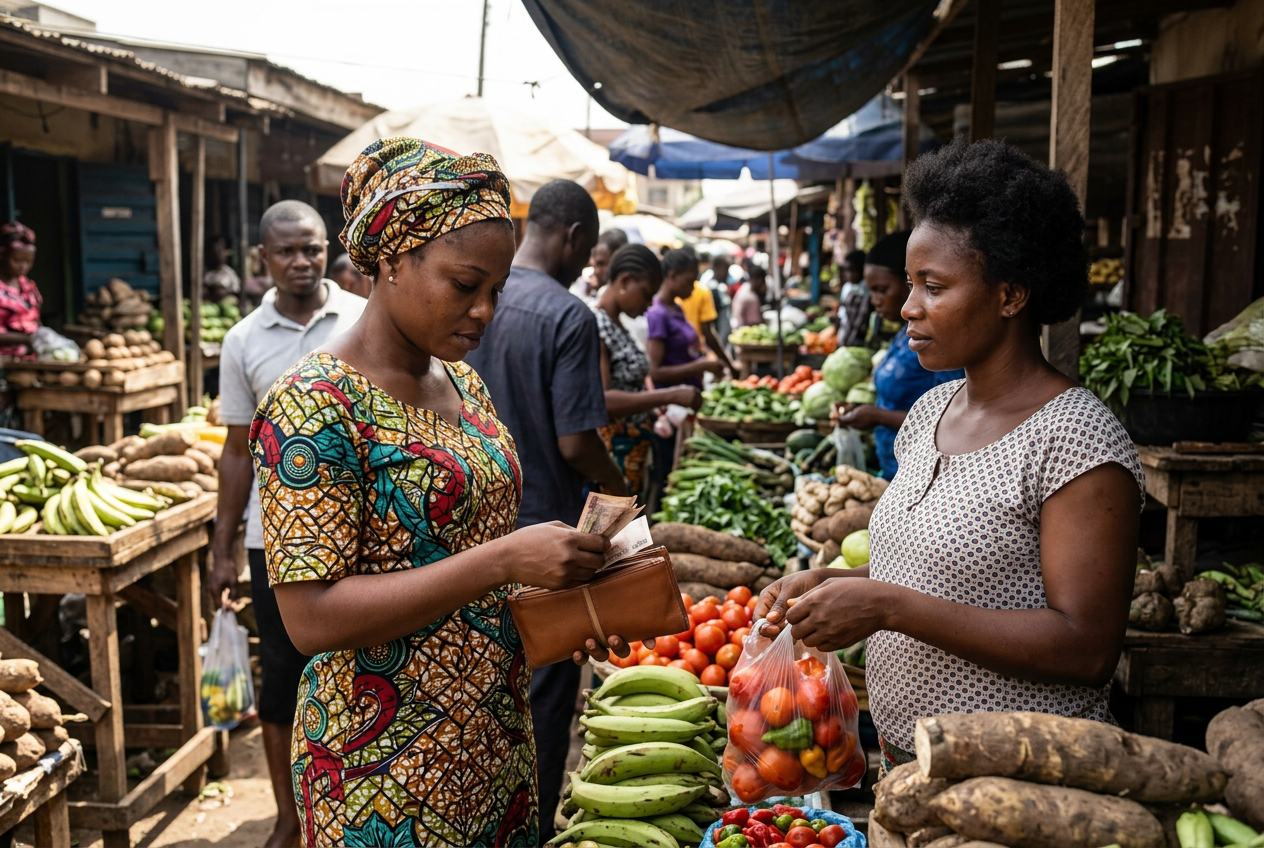
Is it expensive to live in Nigeria? Measured against the rest of the world, no. Nigeria remains one of the least expensive countries on earth by absolute price level, with living costs running roughly sixty to seventy per cent below United States equivalents on the main international comparison indices, and rents lower still. Measured against what Nigerians actually earn, yes, painfully so. The national minimum wage sits at ₦70,000 a month, which does not cover the food line for a single adult in any city in the table above, let alone rent. Nigeria scores near the bottom of global local purchasing power rankings, which is a technical way of saying that the basket of goods a family needs costs far more than a typical salary can carry. The World Bank reported that poverty rose to around 63 per cent in 2025, meaning roughly 140 million people living below the line. The related entities that drive this split are worth naming clearly, because each one moves the answer in a different direction:
- The naira exchange rate, hovering near ₦1,347 at the official window and around ₦1,410 on the open market in late August 2026
- Food inflation at 20.31 per cent, running well above the 15.43 per cent headline rate
- The ₦70,000 national minimum wage, unchanged since 2024
- Petrol at ₦1,100 to ₦1,400 a litre depending on state, which prices almost everything else
- Annual rent demanded upfront, a structural feature that turns a monthly cost into a lump sum
- Service band electricity tariffs, which vary by a factor of three between neighbours on different feeders
Put the two halves together and you get the real answer. Nigeria is cheap to buy and expensive to earn in. That is not a contradiction, it is an income problem wearing a cost of living costume.
I have watched this play out in my own extended family. My uncle retired from the civil service on a pension that seemed generous when it was set. Today it covers his medication and roughly half his food. He is not living beyond his means. His means simply stopped keeping pace with the market, which is the experience of tens of millions of people, captured well in one reader’s account of daily survival published in these pages earlier this year.
What Is The Cheapest Place To Live In Nigeria?
Now to the question I get asked most often by people planning a move.
There is no single cheapest state, but there is a consistent cluster. Analyses built on the state level inflation data show the same names recurring: Ebonyi, Katsina, Imo, Enugu, Kaduna, Abia, Gombe and Taraba. What they share is an agricultural base close to the consumer, which keeps staple prices low and stable. Benue, the food basket of the nation, belongs in the same conversation for the same reason. When yam, rice and vegetables are grown within an hour of your market, you are not paying for a thousand kilometres of diesel.
Among cities rather than states, my own shortlist for someone who wants urban amenities without Lagos pricing runs: Ibadan, Enugu, Ilorin, Kano and Abeokuta.
Ibadan deserves a special word. It is enormous, it has hospitals and universities and a growing technology scene, and it sits close enough to Lagos that a Friday evening drive is perfectly ordinary. Neighbourhoods such as Akobo, Challenge and Apata offer housing at a fraction of comparable Lagos rents. I know at least four families who made that exact move during the past two years and not one has regretted it, though every one of them complains about the Lagos to Ibadan expressway, which is a fair complaint.
Enugu is the other name I keep returning to. Rents are gentle, food is close, and the city is small enough that a commute is measured in minutes rather than hours.
A caution, though, and it matters. Cheaper is only better if the income follows you. A state can have low prices and very few jobs paying above ₦150,000, in which case your affordable rent is affordable relative to a smaller salary. Before you relocate, check the job market, the hospitals and the schools, not just the price of tomatoes.
The rent structure itself is the thing that catches people out most. Nigerian landlords typically demand a full year in advance, sometimes two, plus agency and caution fees that can add forty to sixty per cent to what you thought you were paying before a key changes hands. A ₦600,000 annual rent is not ₦50,000 a month in practice. It is ₦600,000 in one lump, and possibly ₦850,000 once the agent has finished. The property market’s mid year review of affordability noted that residential rents largely stabilised through the first half of 2026, though they remain at historically high levels after the sharp escalation of 2025.
Stabilised at a high level is still high. Ask anyone who signed a new tenancy last year.
Is 50,000 Naira A Lot Of Money In Nigeria?
Short answer, no. Not any more.
I want to be careful here, because there is a version of this question that carries genuine hope behind it, usually from someone abroad sending money home and wondering whether it will make a difference. It will make a difference. It will not, however, cover a month.
Fifty thousand naira in August 2026 converts to roughly thirty five to thirty seven dollars depending on whether you use the official or open market rate. Against the central bank’s published rate tables, the naira traded near ₦1,347 to the dollar at the official window in late August, with the parallel market closer to ₦1,410.
Here is what ₦50,000 realistically buys today:
It covers a 25kg bag of imported short grain rice with a little left over, roughly ₦25,500 in the Lagos market recently. It covers about forty litres of petrol, which is around two thirds of a tank for a saloon car. It covers a month of transport for one person in a smaller city, or perhaps two and a half weeks in Lagos. It represents about seventy per cent of the national monthly minimum wage. It will not cover a month of groceries for a family of four anywhere in the federation.
Fifteen years ago ₦50,000 was a respectable monthly salary for a graduate. Today it is a fortnight’s careful shopping. That erosion is the single clearest illustration of what inflation has done to Nigerian purchasing power, and it explains why so many households have layered a second and third income stream on top of a salary. The trader, the teacher who sells provisions after school, the banker with a poultry pen behind the house: these are not side hustles born of ambition. They are arithmetic.
Rather like trying to fill a bucket with a crack in it, adding more water helps only while you are pouring.
How Far Does $100 Go In Nigeria?
Now flip the currency, and watch the mood change entirely.
One hundred dollars converts to roughly ₦135,000 at the official rate and about ₦141,000 on the open market. For someone earning in naira, that is a meaningful sum. For someone earning in dollars, it is a very ordinary week’s spending money in London or New York.
What does it actually stretch to?
A hundred dollars covers a month of food for a single person eating mainly local staples in a smaller city, with change. It covers roughly two months of transport in Enugu or Kano. It covers a month’s rent for a modest room in many parts of Ibadan or Abeokuta. It pays for eight to twelve mid range restaurant meals for two in Lagos, or a great many more plates of amala and ewedu at a neighbourhood buka. It buys about a hundred litres of petrol. In Victoria Island, however, it might cover two dinners and the parking.
That last line is the point. Nigeria is not one price level, it is at least three stacked on top of each other, and a hundred dollars behaves very differently in Ikoyi than it does in Ilorin.
For diaspora readers sending money home, the practical implication is worth stating. A hundred dollars a month genuinely changes a household budget in Enugu. In Lekki it is a contribution towards the electricity bill. Know which Nigeria your recipient lives in before you set the amount, because families are too polite to tell you it was not enough.
I learned that one the hard way, sending what I thought was generous support to an aunt in Lagos and discovering months later that it had been quietly supplemented by her neighbours.
Seven Steps To Building A Nigerian Budget That Survives The Market
Practical advice now, drawn from watching plenty of households get this right and rather more get it wrong.
- Convert your annual rent into a monthly savings target and set that money aside the day your salary lands, before anything else, because the lump sum will arrive whether you have prepared or not.
- Find out which electricity band your prospective flat sits on before you sign anything, and ask a current tenant what they actually spend monthly rather than trusting the landlord’s estimate.
- Budget for fuel twice, once for movement and once for your generator, and assume the pump price will be higher next quarter than it is today.
- Buy staples in bulk at the start of the month when your cash position is strongest, because a 50kg bag of rice bought whole is meaningfully cheaper per meal than the same rice bought in paints across four weeks.
- Keep a written price diary for eight essential items, rice, garri, beans, tomatoes, eggs, cooking gas, petrol and transport, and review it monthly so you can see your own inflation rather than the national average.
- Hold a modest emergency reserve in a stable store of value if you can, since medical costs and school fee adjustments arrive without warning and borrowing at Nigerian consumer rates is punishing.
- Recalculate the whole budget every six months rather than every year, because a twelve month plan built on today’s prices will be badly wrong by month seven.
None of that is glamorous. All of it works.
The single most consequential decision on that list is the first, because rent timing destroys more Nigerian household budgets than rent level does. A family that can afford ₦900,000 a year comfortably in monthly slices can be sunk entirely by being asked for it in one November payment.
Design Context And Practical Styling For A Nigerian Home
A brief word on setting up a home, since cost of living is not only consumption.
Furnishing sensibly here means choosing for climate and power reality, not for a catalogue. Locally made hardwood furniture in iroko or mahogany costs less than imported flat pack, survives the humidity far better, and can be repaired by a carpenter down the road for a few thousand naira. Imported chipboard swells and dies within two rainy seasons. I have watched it happen in three different flats.
Light colours on walls reduce the felt heat of a room and cut the hours you run air conditioning, which is a direct saving on a Band A tariff. Cross ventilation, achieved by placing windows on opposing walls, does more for comfort than any appliance. Ceiling fans cost a fraction of air conditioning to run and, in the harmattan months, are all you need.
Aso oke cushions, adire throws and locally woven raffia mats give a room genuine character at a fraction of imported soft furnishing prices. Buy them at Balogun or Kurmi rather than in a mall and you will pay perhaps a third.
Budget guidance for a first flat: expect ₦450,000 to ₦900,000 to furnish two rooms decently with local craftsmanship, plus ₦200,000 to ₦400,000 for an inverter and battery setup that will spare you the generator on most evenings. That inverter pays for itself within eighteen months at current fuel prices, which is the sort of calculation every Nigerian household eventually learns to do.
Final Thoughts On Whether It Is Expensive To Live In Nigeria
If you take one idea away, let it be this. The cost of living question in Nigeria is really an income question in disguise.
Prices here are low by any international measure. Rent, food, domestic help, transport and services all cost a fraction of what they cost in Accra, Johannesburg, London or Houston. The difficulty is that Nigerian wages have not kept pace with the price rises of the past three years, so the same market feels cheap to a dollar earner and crushing to a naira earner standing beside them at the same stall.
That means your strategy depends entirely on which side you are on.
If you earn in foreign currency, Nigeria offers a standard of living that would be unreachable on the same money almost anywhere in Europe or North America, provided you choose your neighbourhood deliberately and do not import a lifestyle wholesale. If you earn in naira, the winning moves are location, bulk buying, income diversification and ruthless honesty about the rent lump sum. Neither situation is hopeless. Both reward planning far more than they reward luck.
And if you are weighing a move, go and stay for three weeks first. Shop in the market yourself, pay a transport fare yourself, sit through a power cut yourself. Three weeks of lived experience will tell you more than three months of spreadsheets.
Here is what to do next:
- Build a twelve month rent sinking fund before you commit to any tenancy, treating the annual lump sum as a monthly obligation from day one.
- Compare at least three cities on total monthly cost rather than rent alone, and weigh job availability and healthcare access alongside price.
- Track your own basket of eight essential items monthly, because your personal inflation rate is the only one that pays your bills.
Related Articles
Two earlier pieces sit naturally alongside this one. If health costs form part of your calculation, and for most families over forty they do, my examination of how care is delivered and paid for across the federation covers the gap between public provision and private bills that so often reshapes a household budget without warning. And if you are reading this from abroad while weighing up a first visit rather than a permanent move, my assessment of what visitors actually encounter on arrival deals with the practical texture of arriving here, which is a rather different question from affording to stay.
Key Takeaways
- Nigeria is inexpensive by global price comparison but expensive relative to local earnings, and both statements are true at once.
- Rent structure, not rent level, is the budget killer, because annual upfront payment turns a manageable monthly cost into a lump sum crisis.
- Moving from Lagos to a mid-sized city such as Ibadan, Enugu or Kano can roughly halve a household budget without any change in lifestyle.
Frequently Asked Questions About Whether It Is Expensive To Live In Nigeria
Is it expensive to live in Nigeria?
Nigeria is among the least expensive countries in the world by absolute price level, with living costs roughly sixty to seventy per cent below American equivalents. It is nonetheless expensive relative to local wages, since the ₦70,000 minimum wage covers only a fraction of a single adult’s monthly needs.
How much money do I need to live in Nigeria comfortably?
A single person can live modestly on ₦250,000 to ₦350,000 a month in a mid-sized city, rising to ₦450,000 or more in Lagos and Abuja. A family of four in Lagos generally needs between ₦1.5 million and ₦3 million monthly once school fees and rent are included.
What is the cheapest place to live in Nigeria?
Ebonyi, Katsina, Imo, Enugu, Kaduna and Abia consistently record the lowest inflation and cheapest staples, with Benue also very affordable thanks to its farming base. Among cities, Ibadan, Enugu, Kano and Ilorin offer urban amenities at a fraction of Lagos prices.
Is 50,000 naira a lot of money in Nigeria?
No, ₦50,000 is roughly thirty five dollars and represents about seventy per cent of the national monthly minimum wage. It will buy a 25kg bag of rice or about forty litres of petrol, but it will not cover a month of groceries for a family.
How far does $100 go in Nigeria?
One hundred dollars converts to roughly ₦135,000 to ₦141,000 depending on the rate used, which covers a month of local staple food for one person in a smaller city. In premium Lagos districts, however, the same sum might stretch only to two restaurant dinners.
Is Lagos more expensive than Abuja?
Lagos is generally the most expensive city in Nigeria overall, particularly on the island, though Abuja rents in the central districts can match or exceed Lagos mainland levels. Both cities are considerably dearer than Ibadan, Enugu or Kano across every major spending category.
Why do Nigerian landlords ask for a year’s rent upfront?
Annual advance payment is the long established norm across most of the country, driven by weak tenancy enforcement and landlords’ preference for certainty. Agency and caution fees typically add a further forty to sixty per cent to the initial outlay before a tenant receives keys.
How much does food cost for one person each month in Nigeria?
A single adult cooking mainly local staples spends roughly ₦115,000 to ₦135,000 monthly in smaller cities and ₦160,000 to ₦180,000 in Lagos. Adding imported items or regular restaurant meals can easily double those figures.
What is the national minimum wage in Nigeria?
The national minimum wage has stood at ₦70,000 a month since the 2024 review and remained unchanged through 2026. That sum sits below the estimated monthly food cost for one adult in every major Nigerian city.
Is electricity expensive in Nigeria?
It depends entirely on your service band, since Band A customers receiving around twenty hours of daily supply pay several times the rate charged to customers on frozen lower band tariffs. Households on lower bands also carry the hidden cost of generator fuel, which at current petrol prices often exceeds the electricity bill itself.
Can a foreigner live cheaply in Nigeria?
Yes, a foreigner earning in dollars, pounds or euros can live very comfortably in Nigeria on a budget that would be modest in Europe or North America. The main risk is importing a wholesale expatriate lifestyle, since imported goods and premium districts carry international pricing.
Does inflation still affect the cost of living in Nigeria?
Yes, though the picture is uneven, with headline inflation easing to 15.43 per cent in July 2026 while food inflation rose to 20.31 per cent. Because food, transport and housing dominate most household budgets, families continue to feel price pressure even as the national headline figure falls.

