 Follow Us on Google News


 Follow Us on Google Discover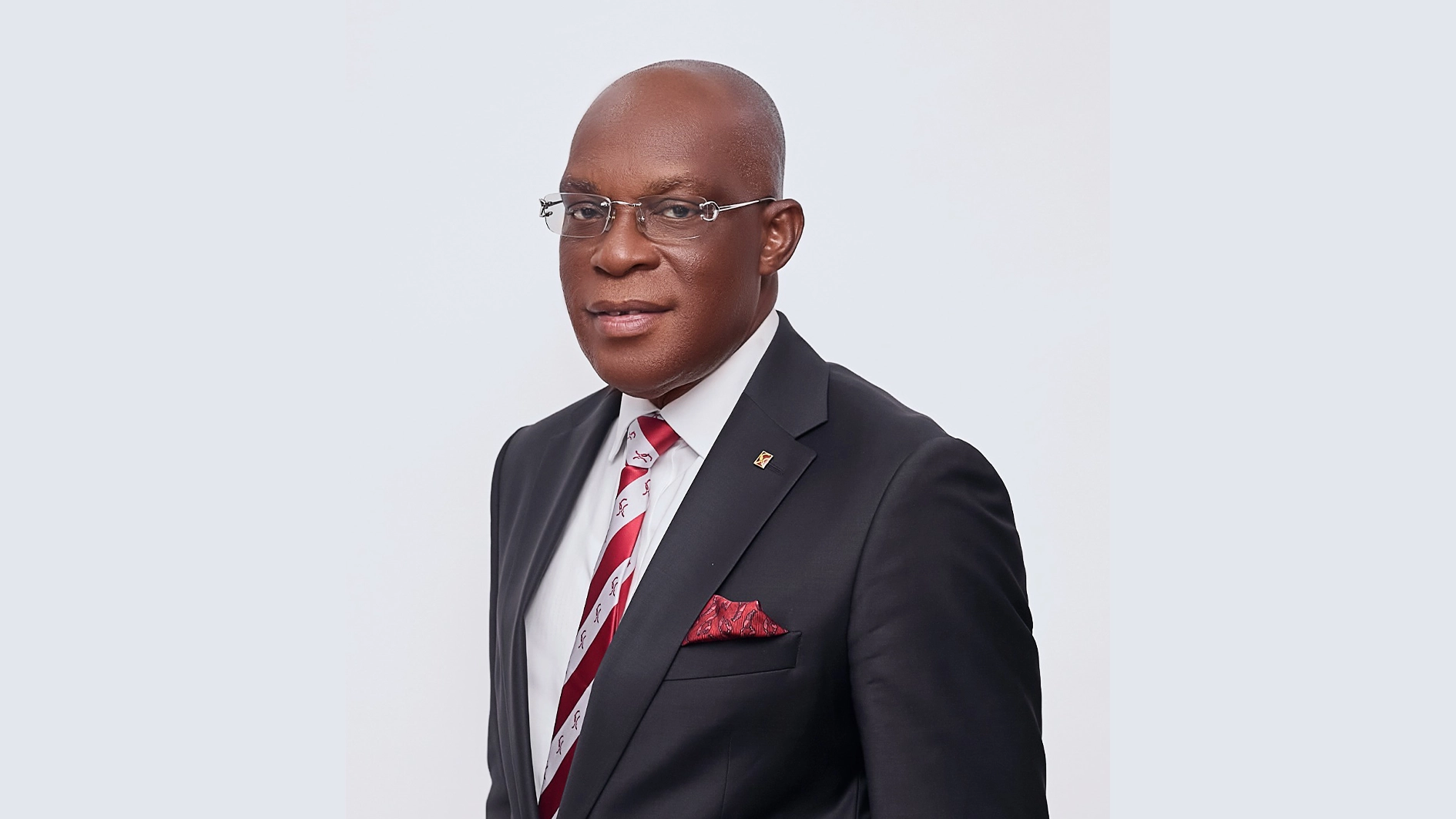
Eddie Agberia Efekoha’s story begins far from any boardroom, in Egbo-Uhurie in what is now Ughelli South LGA, Delta State, where hard work, discipline and respect were treated as everyday currency. That grounding led him into a classroom, then in 1979 onto the floor of Warri Refining and Petrochemical Company as a plant operator. While the refinery ran, he kept studying. A degree in Insurance and an MBA from the University of Lagos followed, alongside professional qualifications, and in 1985 he made the decisive shift into insurance. Today he is Group CEO of Consolidated Hallmark Holdings Plc, having retired from executive duties at Consolidated Hallmark Insurance Plc, and his influence runs across the profession. Since 1985 he has led in broking and underwriting houses, and at the peak of industry governance: as the 22nd Chairman of the Nigerian Insurers Association, the 49th President and Chairman of the Governing Council of the Chartered Insurance Institute of Nigeria between 2018 and 2020, and the 40th President of the West African Insurance Companies Association. He sits by law and by constitution on the governing councils of both the NIA and the CIIN, and serves on the Executive Committee of the African Insurance Organization where he now chairs the Capacity Building, Education and Partnerships Sub-Committee. A Fellow of the Chartered Insurance Institute of London and of Nigeria and of the Institute of Directors, with executive training at Lagos Business School and Harvard’s OPM, he also chairs Hallmark Finance Company Limited, Hallmark Health Services Limited and CHI Life Assurance Limited. It is this blend of grassroots formation, technical depth and stewardship that places him among Delta’s most impactful indigenes.
In response to his recognition, he reflects on Delta State’s creation and journey, Consolidated Hallmark’s growth and contributions and his perspective on leadership and service.
The Creation of Delta State in 1991
1991 was a very significant year for us. The creation of Delta State on August 27, 1991, out of the former Bendel State was not simply an administrative exercise. It represented the fulfilment of a long-standing aspiration by people who believed that a separate state would bring governance closer to the people and create greater opportunities for development. For me and many people from the old Delta Province, there was a strong sense of excitement and hope. There was also a feeling that our communities would now have a stronger voice in determining their own development priorities. However, the choice of Asaba as the capital was viewed by majority of Urhobo people as a sore point particularly given their population size relative to other tribes and economic contributions from Warri, Ughelli and Sapele. This seeming dissatisfaction has gradually died down with the election of an Urhobo man as the first civilian governor of the state. But 35 years later, I think the real measure of the creation of Delta State should not only be how happy people were in 1991. It should be what we have done with the opportunity since then. A state is ultimately not defined by the date it was created. It is defined by the quality of life it provides, the opportunities it creates for its young people, the strength of its institutions and the extent to which its people can look into the future with confidence.
Life Before 1991 and Development After State Creation
Before 1991, the areas that now constitute Delta State were part of a larger political structure, first within the former Midwest and subsequently Bendel State. Development certainly existed, but the scale, priorities and access to government varied considerably across communities.
The creation of Delta State gave the people a closer administrative structure and an opportunity to define development according to the peculiar needs of the state. Over the years, we have witnessed significant investments in roads, education, healthcare, urban development and human capital.
For instance, Delta has expanded its tertiary education infrastructure considerably, with the establishment of additional state-owned universities and investment in technical and vocational education. The state has also recorded substantial road and bridge development across urban, rural and riverine communities. Healthcare has also received greater institutional attention, while successive administrations have introduced different programmes aimed at youth empowerment, agriculture, skills development and entrepreneurship. The state’s development journey has not been perfect, and there is still a lot of work to do, but it is difficult to deny that the creation of the state provided a platform for more focused planning and development. The greatest achievement is that a generation of Deltans has grown up seeing possibilities that were not as visible to earlier generations. That is progress, but we must ensure that the next 35 years produce even greater opportunities.
Corporate Growth and Integrity at Consolidated Hallmark Holdings
We have tried to combine ambition with discipline. Consolidated Hallmark Holdings did not emerge overnight. Its evolution reflects years of experience in insurance, followed by deliberate diversification into other areas of financial services. The Group now operates across general insurance, life assurance, health management and financial services, with the holding company structure designed to create greater opportunities for diversification and long-term value creation.
But growth without governance can become a liability. Therefore, we place considerable emphasis on strong governance, regulatory compliance, prudent risk management, transparency and accountability. We also understand that the financial services business is fundamentally a business of trust. If customers do not trust you to keep your word, no amount of advertising can save you. Our recent performance demonstrates the importance of this approach. As of July 2026, our Shareholders’ Funds stood at ₦61 billion, Total Assets of ₦104.97 billion, Profit Before Tax of ₦27.9 billion, and market capitalization of ₦73.17 billion. Our GCR rating remains Stable – A. We are also ISO certified from the Standard Organisation of Nigeria, this reflects our commitment to quality and continuous improvement. For me, the real achievement is not simply growing the balance sheet. It is growing while remaining responsible to customers, shareholders, regulators, employees and the communities where we operate.
The 10-Year Vision for Consolidated Hallmark Group
I see Consolidated Hallmark Holdings becoming a much larger, more diversified and technology-driven African financial services group. The insurance business will remain an important foundation, but our ambition goes beyond insurance. We want to build a group that provides a connected bouquet of financial and risk management solutions to individuals, families, businesses and institutions. Technology will be central to that ambition. The customer of the future will expect insurance, healthcare and financial services to be accessible, simple and responsive from wherever they are. We therefore must continuously rethink how we distribute our products, process claims, understand customer needs and use data to make better decisions. But I do not want the next ten years to be defined only by size. I want them to be defined by relevance and impact. Our goal is to build an institution that can outlive individual personalities, develop the next generation of leaders, create wealth for shareholders, provide meaningful careers for employees and contribute positively to the Nigerian economy. If, ten years from now, Consolidated Hallmark is known not only as a successful company but as an institution Nigerians trust and young professionals aspire to work for, I would consider that a meaningful achievement.

Making Delta State Conducive for Private Sector Investment
Delta has something that many economies would consider a tremendous advantage: natural resources, a strategic location, a coastline, a strong human capital base and a long history of commercial activity. The challenge is how to convert these advantages into sustainable broad-based prosperity. First, the state must continue to make ease of doing business a practical reality rather than simply a policy statement. Investors want predictability. They want to know the applicable taxes and fees, how quickly they can obtain approvals, how secure their investments are and how disputes will be resolved. Second, infrastructure remains critical. Good roads and airports, reliable electricity, efficient water systems, telecommunications and modern logistics reduce the cost of doing business. Delta has made progress in road infrastructure, and the current emphasis on improving connectivity and the power environment is encouraging. Third, we need to deliberately move from an economy that is heavily associated with extracting resources to one that increasingly processes and adds value to those resources. Oil and gas should create opportunities in manufacturing, petrochemicals, logistics, technology, agriculture and other supporting industries. Fourth, the state should deepen public-private partnerships and make it easier for credible investors to work with government. Delta already has an Ease of Doing Business framework that includes measures such as automated billing, commercial dispute resolution and investor facilitation. The next step is to ensure that these initiatives are consistently implemented and experienced by businesses on the ground.
Finally, security and human capital are non-negotiable. Investors follow opportunity, but they stay where there are security, competent manpower and confidence in the institutions.
My dream is to see a Delta where oil wealth is no longer simply measured by barrels produced, but by the number of businesses created, young people employed, innovations developed and families lifted out of poverty. We are a State with the Big Heart.
Giving Back Through CSR and Philanthropy
I believe giving back should not be reduced to writing cheques or making donations. Sometimes, the most valuable thing you can give a young person is access, knowledge, mentorship or an opportunity.
Through Consolidated Hallmark and its broader corporate social responsibility initiatives, we have continued to invest in programmes that create meaningful impact in education, healthcare, youth development and community wellbeing. Earlier this year, we successfully held the 13th Annual Essay Competition Awards, recognizing and rewarding young talents while supporting educational development. We also recently concluded the 5th Hallmark Health Stakeholders Engagement Forum, which provided a platform to deepen health awareness, knowledge and engagement among stakeholders. For the Group, corporate citizenship goes beyond occasional acts of giving. It is about creating sustained opportunities, empowering communities and contributing meaningfully to a better society. Personally, I have also tried to support people and causes from my community and state whenever the opportunity arises. But I prefer to see these things as responsibilities rather than achievements to be advertised. There is also another way I believe I have given back: service to the professional community. I have had the privilege of serving the Nigerian insurance industry in several leadership capacities, including as President of CIIN and Chairman of the NIA, as well as at the West African level through the West African Insurance Companies Association. For me, contributing to the development of an industry that provides employment, protects businesses and families and supports economic growth is also a form of giving back.

