 Follow Us on Google News
 Follow Us on Google Discover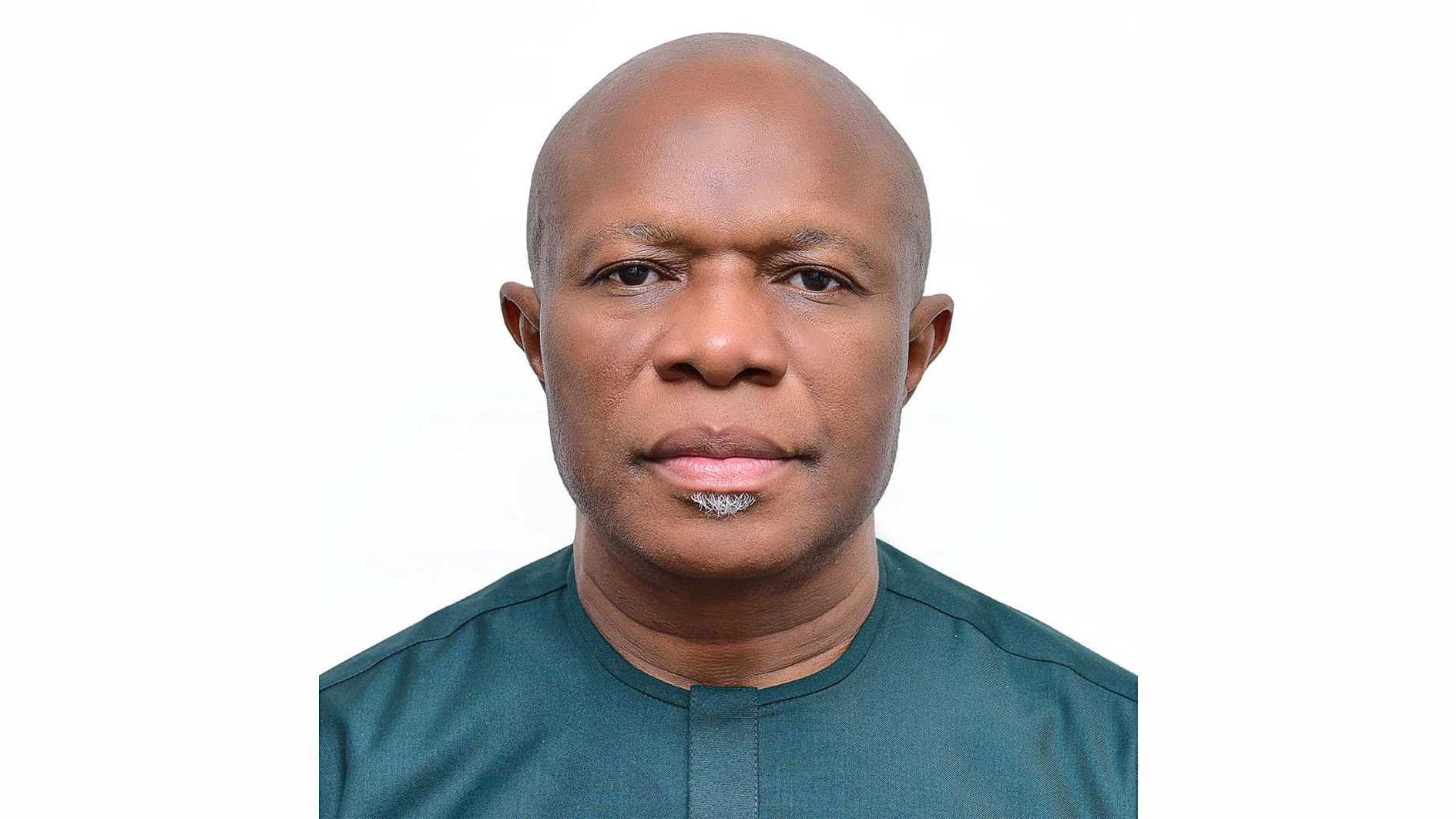
Few names in Delta State’s public service history embody continuity, discipline and unheralded transformation in the manner of Cyril Chima Agbele. Across three and a half decades he walked the corridors of government finance, from the old Bendel State through the creation of Delta State in 1991 to his retirement in 2020, and in doing so he became the longest-serving Accountant-General in Delta State and in Nigeria to date. His tenure spanned multiple administrations, each with different priorities and political currents, yet the machinery of the state’s accounts remained steady under his watch. That steadiness is why, as Delta marks 35 years, his record is being placed among the outstanding Deltans whose service helped define the Big Heart.
Agbele’s pubic service journey began in 1985 when he joined the civil service in what was then Bendel State. When Delta was carved out on 27 August 1991 he transferred his service in that same month, becoming one of only three officers tasked with setting up the new Office of the Accountant-General. Two of his pioneering colleagues have since passed on. He remains the sole surviving architect of that foundation. From those early days of building ledgers from scratch, he rose through the ranks on the strength of meticulous work, reliability and an appetite for learning that set him apart long before any title did.
By March 2004 he was appointed Accountant-General of Delta State, a role he would hold for 16 remarkable years before retiring meritoriously in March 2020. Reflecting on that period, he observed that it was “a journey that has its ups and downs, a lot of experiences,” and that working with politicians came with “the good, the bad and the ugly.” The interface between bureaucracy and politics tested his resolve, but what sustained him was a deliberate philosophy. “Prior to my appointment in 2004 as the Accountant-General, I have strengthened myself with discipline, humility, and selflessness and these help me in discharging my duties” he said, adding that continuous learning was essential so that his service to state and country “can always be at par with other services in the world.”
That commitment to learning became the backbone of his professional authority. He qualified first as an Associate of the Institute of Chartered Accountants of Nigeria and later advanced to Fellow status, the highest professional grade. He broadened his remit further with membership of the Chartered Institute of Taxation, and with certification from the International Institute of Certified Forensic Investigation Professionals. On why he pursued so much training, he explained: “If you look carefully through my CV, apart from my BSc and MBA degrees in Accounting and Business Administration respectively, I took advantage of several courses in finance, in leadership, in management, in bureaucracy, in different universities in the world so that I will always be ahead of my peers in the system.” While others chased personal acquisitions, he said, “I was more interested in knowledge acquisition, developing my own intellect and building my capacity for leadership.” His executive training took him from budgeting at Westminster University in London in 2003, to SAP in Johannesburg in 2004, financial management at Stanford in 2005, corporate performance at Harvard in 2006, value creation at Wharton in 2008, strategic leadership at Michigan in 2018, and further programmes at Wharton and Columbia in 2019. Mentored early by Chief Idahosa Solomon Ero, FCA and the late Sir John Uchenna Thomas Okolo, FCA, he institutionalised lessons in control and public trust when elevated to Permanent Secretary and Accountant-General.
Retirement did not close the chapter. In June 2021 he was appointed Chairman of the Delta State Bureau for Pensions, where he led a clean-up that recovered funds previously tied up with administrators and ensured pensioners were paid. Two years later, in November 2023, his expertise was called to national duty with his appointment as Special Adviser on Finance to the Minister of Aviation and Aerospace Development. Across every office he has occupied, from a Grade II Accountant in 1985 to adviser in 2023, the through-line has remained constant. As he put it, the work demanded discipline and selflessness, and his choice was to serve Delta for the fullness of a career built on expertise, leadership and vision.
When the military government announced the creation of Delta State on 27 August 1991, the announcement resonated across communities with pride and expectation. For Cyril Agbele, then a young civil servant, it marked the beginning of a defining assignment. “From my own personal perspective, it was an opportunity to help fast track the state’s development, and created itself for me to excel in my career as a civil servant,” he recalled. He was immediately drafted as one of the principal officers to set up the Office of the Accountant-General, working under military rule to build financial systems from scratch. “We were delighted that we were in a position to be of help directly to our people. So, it was an exciting journey,” he said. In his view, statehood was more than administrative restructuring. “The creation of the state was a blessing and has ever been a blessing and will continue to be to Deltans.”

Prior to 1991, the communities now in Delta had to compete for attention within the vast old Bendel, where decisions and resources were often distant. Statehood brought governance closer and unlocked a different pace of progress. Looking back at the civilian era from 1999 onward , through the tenures of Chief James Ibori, Dr Emmanuel Uduaghan, the brief stewardship of Prince Sam Obi, Senator Ifeanyi Okowa and Rt. Hon. Sheriff Oborevwori , Agbele pointed to a clear pattern. “I think the greatest benefit from the creation of state is rapid and huge infrastructural development of Delta state.” Alongside visible projects, he credits the emergence of a disciplined, well-trained bureaucracy. “Delta State civil service is one of the well-advanced in the country, not only in the infrastructure but also in the quality of the public service.” That institutional capacity made possible large-scale social programs: youth empowerment, insurance and pension reforms, and targeted support for vulnerable groups. “Development couldn’t have reached this point if we were still in Bendel State,” he concluded, describing 35 years as proof that proximity to government translates into tangible outcomes for the people.
The early years of Delta State were defined as much by scarcity as by ambition. With revenue streams thin and infrastructure nearly nonexistent, Agbele and his fellow pioneers faced a civil service that was understaffed and under-skilled, while navigating the rigidities of military rule where democratic process counted for little. “Revenue and infrastructure were the major challenges at the beginning,” he recalled, noting that between 1991 and 1995 the state had to radically rethink how it raised money. As Accountant-General of the state, Agbele turned those lessons into institutional reform. His first move was to professionalize the office itself. He assembled a cadre of qualified, chartered accountants and economists, and created the Management Accounting Department — still active today — as an in-house think tank of the state’s best financial minds. He made training and retraining compulsory, pushing staff into IT, MBAs and specialized certifications so the office could function less like a bureaucracy and more like a consultancy.
To restore confidence in salary and pension payment, he pioneered the Pre-Payment Audit Unit while serving as Director of Treasury, backed by an IT infrastructure and staffed by accountants of impeccable record. That unit became the clearing house for all salaries and pensions, cutting fraud and leakages at the source. He also drove the computerization of Final Accounts, the rollout of Treasury Single Account consolidation, the migration to IPSAS cash-basis reporting, and the creation of Finance & Accounts departments in major MDAs. Underpinning it all was a simple doctrine he still preaches: serve the political leadership, but never without reminding them of the rules. The result is a financial architecture that has blocked leakages and improved efficiency.
To further unlock the state potential, Agbele argued Delta State must first make a decisive shift in mindset, away from waiting on Abuja and toward self-driven, investment-led growth backed by political will and leaner government. “With the resources of Delta State, what we need is political will, selfless leadership and a drastic reduction in the cost of governance,” he said, urging leaders to look beyond party circles and convene Deltans of global stature into a brain trust for policy and execution. He envisions the state building and operating its own deep-sea port to rival any on the West African coast, a network of roads reaching every local government, independent power generation, upgraded airport with international status, and a private-sector-driven refinery on the scale of Dangote. Those anchors, he contends, would create jobs for the thousands graduating yearly from universities, polytechnics and other institutions. Targeted public investment in world-class public hospitals and a structured social safety net for documented Delta State indigenes aged 60 and above, vulnerable widows, orphans and people with disabilities would also reduce medical tourism and better empower the populace. He also emphasized the need for the state to refocus on providing solution-driven tertiary education that produces graduates who can compete favourably in today’s world and help provide innovative solutions to contemporary challenges. This, according to him, “will bring about inclusive and responsive governance and enrich the state’s human resources pool.”
For young people eyeing public service, his counsel is blunt and forward-looking: the civil service of the future will be smaller, driven by IT and AI, where quality outweighs headcount. He challenged government in turn to create the enabling environment so that entrepreneurship, not bureaucracy can become the engine of a prosperous Delta.
The honours accorded him over the years speak to the weight of his professional achievements and service to Delta State. From the Delta State Government’s Award for Excellence in Service to the Merit Award as Distinguished Alumnus of the University of Benin, Cyril Agbele’s achievements have been acknowledged by various stakeholders. His inclusion in The Guardian’s 50 Outstanding Professionals in Nigeria and the Award of Excellence from the Nigeria Civil Service Union further underscore his reputation as a dedicated public servant. Beyond these accolades, the distinguished Deltan also holds the traditional title of Ekwa Chukwu Pa Eka 1 of Ute-Okpu Kingdom, Delta State — a distinction that reflects his esteemed standing in his community.

