 Follow Us on Google News
 Follow Us on Google Discover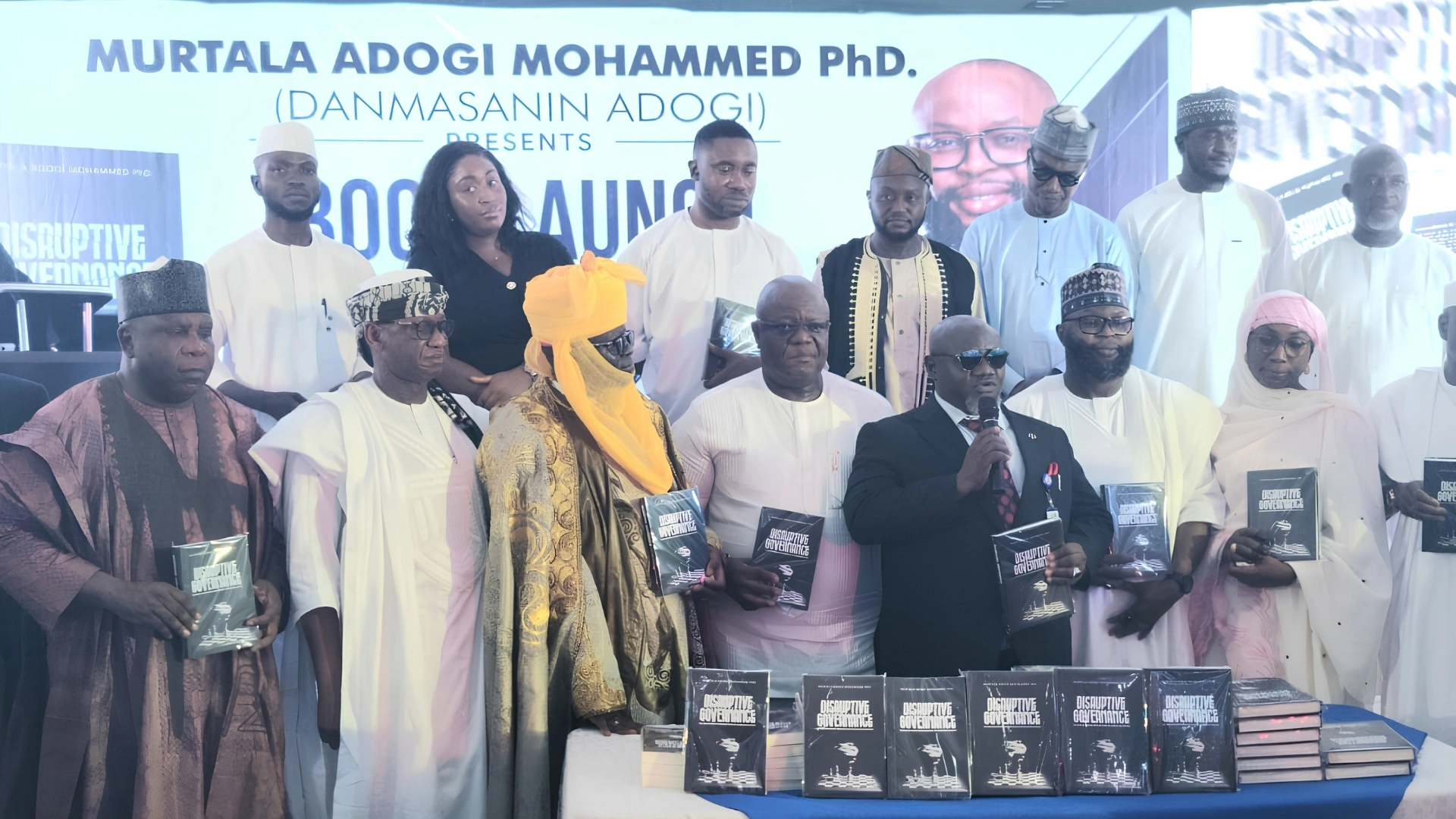
Policy entrepreneur and governance strategist, Murtala Adogi Mohammed, has called on governments at all levels to shift their attention from producing policies and development plans to delivering measurable improvements in the lives of citizens.
Mohammed made the call in Abuja during a fireside chat organised to mark his 50th birthday and the presentation of his book, Disruptive Governance, published by Clasier Publishing.

He said the existence of well-written policies was not enough to guarantee development, arguing that effective governance depended on the ability of institutions and leaders to turn plans into outcomes that could be measured.
According to him, governments need strategic planning, capable leadership and institutions with the systems and resources required to implement their decisions.
Mohammed pointed to the COVID-19 pandemic as an example of the weaknesses that can emerge when governments are not adequately prepared for major disruptions.
He recalled that during the pandemic, state governors had to seek financial assistance from the Federal Government to respond to the emergency.
View this post on Instagram
“I began to think that if we’re going to have another COVID-19, it means governors may likely run back to the president again,” he said.
The experience, he said, should encourage governments to examine their capacity to respond independently to future emergencies and other major challenges.
Mohammed also outlined three priorities for newly elected governors at the beginning of their tenure. He advised them to develop a strategic plan, review the budget and build a competent technical team capable of implementing their programmes.
He said governors should first determine what resources are available to their administrations and compare them with the demands of their development plans.
Where there are funding gaps, he said, governments should consider appropriate options, including supplementary funding, loans or public-private partnerships, depending on the circumstances and viability of the proposed projects.
Chairman of the organising committee for the event, Dr Edwin Edeh, said the problem facing Nigeria and other African countries was not necessarily a shortage of development plans.
He cited initiatives including Vision 2020, the Nigeria Development Agenda and the African Union’s Agenda 2063 as examples of plans and strategies that have sought to provide long-term development direction.
Edeh said the more difficult challenge was converting such plans into tangible changes in people’s lives.
“An average Nigerian, an average African wants real leadership, not by speeches, but by results,” he said.
He argued that governments needed strong institutions, evidence-based decision-making and clear systems for measuring performance if development plans were to produce meaningful outcomes.
“Good ideas alone cannot produce results. For results to be produced, institutions and systems must work. Decisions must be evidence-based, and every performance must be measured,” Edeh said.
The Vice-Chancellor of Baze University and lead reviewer of Disruptive Governance, Professor Abiodun Adeniyi, also identified institutional coordination, leadership, measurable performance and resource mobilisation as critical to improving policy implementation.
Adeniyi said Mohammed’s idea of disruption was not about creating disorder but about deliberately challenging established practices that prevent institutions from functioning effectively.
“The author’s conception of disruption is fundamentally reformist rather than anarchist,” he said.
He said the approach was particularly relevant to Nigeria, where attempts to reform public institutions can be affected by political, administrative, financial and organisational constraints.
According to him, strategic leaders can identify points within such systems where targeted interventions could produce wider improvements.
The Minister of Women Affairs, Hajiya Imaan Sulaiman-Ibrahim, drew attention to another aspect of the implementation problem, saying outdated policies and inadequate funding were affecting programmes designed to protect women, children and families.
She said some policies underpinning the ministry’s work no longer adequately reflected present realities, while limited resources had also restricted implementation.
“These are policies that are meant to protect our children, our women, the families that are not existing. Most of them are outdated. They spend most of their time with little or no resources,” she said.
Also speaking at the event, Nasarawa State governorship aspirant, Senator Ahmed Wadada, commended Mohammed for his work on governance and economic development.
Wadada, who has declared his intention to contest the 2027 governorship election in Nasarawa State, urged public officials and other aspiring leaders to engage with the ideas contained in the book.
He also called for Disruptive Governance to be made available in public and educational institutions, saying its lessons could be useful to future generations of leaders.
The discussions at the event centred on a recurring challenge in public administration: how governments can move from policy announcements and development plans to implementation, measurement and demonstrable results.

