 Follow Us on Google News



 Follow Us on Google Discover

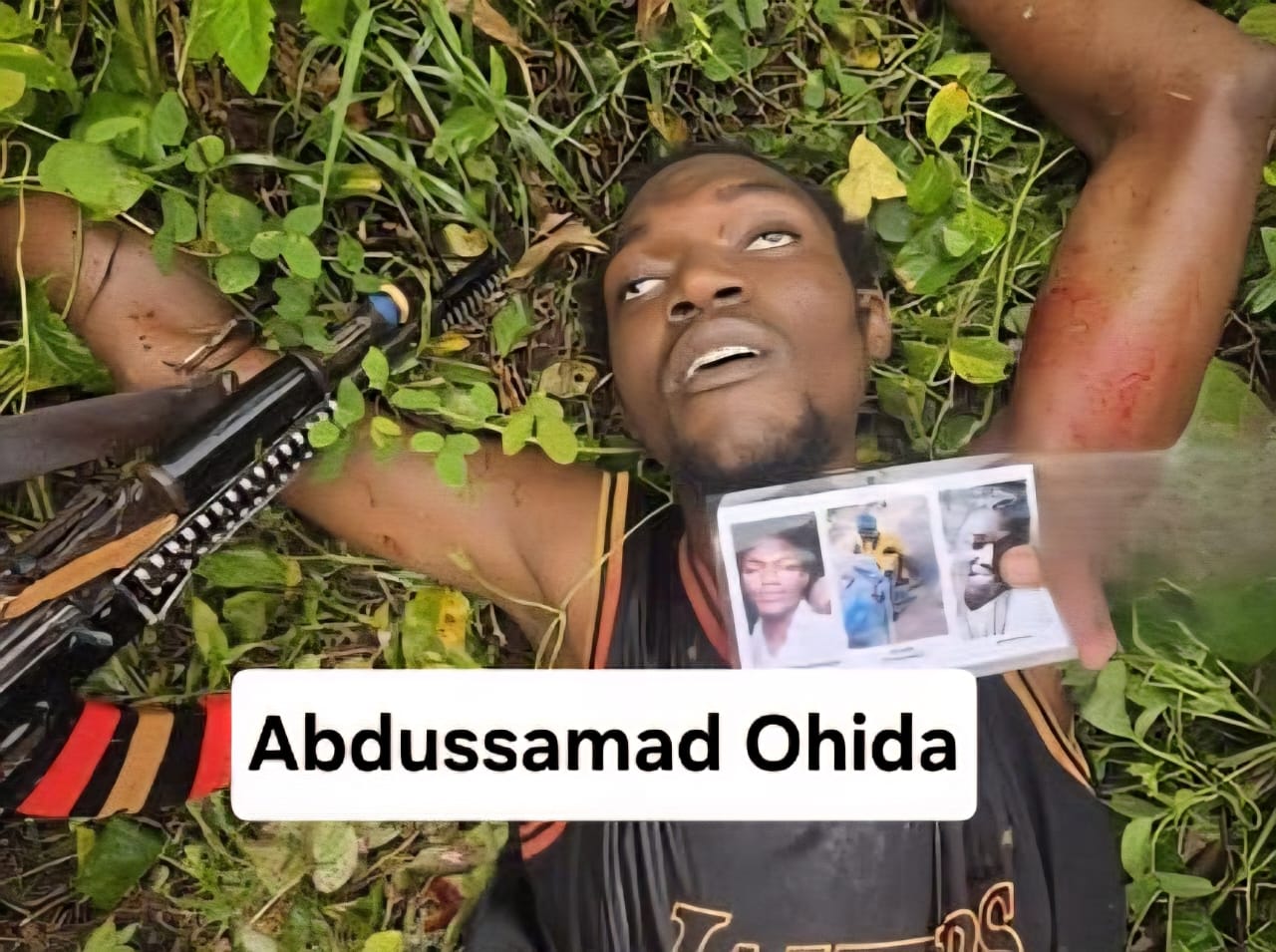
In October, Nigerian authorities killed Abdussamad Ohida, a senior commander of the Islamic State West Africa Province (ISWAP), who they say oversaw the terror group’s strategic operations across Nigeria’s north-central and southern regions. Who was he? HumAngle Isah Ismail in collaboration with The Guardian reports
Abdussamad Ohida, also known as Anwar, died in October during a joint security operation in Owo Forest, Ondo State, southwestern Nigeria. His death has renewed attention on a figure Nigerian authorities have described as instrumental in helping the Islamic State West Africa Province (ISWAP) expand its operational base beyond the group’s traditional strongholds. An intelligence operation involving Nigerian Army officers, secret service operatives, and Amotekun, a state-backed local security network in the southwestern region, ended Abdussamad’s reign as a criminal mastermind. The operatives killed him and other ISWAP-linked terrorists involved in the group’s expansion campaign into the South West and North Central regions.
In March 2024, the Nigeria Sanctions Committee had previously designated Abdussamad on its sanctions list, identifying him as a senior ISWAP commander in Okene, Kogi State, and the mastermind behind several attacks in the state. Before his death at a hideout in Owo Forest, an intelligence report indicated that he was planning a major terrorist attack in parts of the South West, particularly during the end-of-year celebrations in 2026.
Abdussamad became a key ISWAP figure after the secret service operatives nabbed his immediate superior, Abu Ikirimah, also known as Abu Uwais, in 2023.
HumAngle traced his path from a quiet schoolboy in Kogi State to a senior ISWAP commander. Drawing on government records, security accounts, and interviews with former classmates, we examine his rise through the terror group and how extremists exploit local knowledge and relationships to establish footholds in new territories.
Unassuming, but dangerous
Nigerian government records reveal very few details about his person. The Nigeria Sanctions Committee identifies him simply as a national from the Okene Local Government Area (LGA) in Kogi State.

He was a young man like many others, but his ideology and beliefs differed. One former classmate revealed that even as a student, Abdussamad listened to radical jihadi songs. Although not all such songs are radical in form, those that are have been proven to serve as an alternative voice for extremists or fundamentalists due to their short and easy-to-memorise sentences, serving as a form of psychological warfare.
“We were just kids in 2011-2014 when this idiot liked listening to jihad songs,” the former classmate added.
When news of his death broke, social media pages reported it alongside his photograph. One of them was Ebira4Real, a news and entertainment page on Facebook covering Ebira land and Kogi Central. Many of the more than 400 comments on the post came from people who said they had known him, including former secondary school classmates.
Abdussamad attended National Iron Ore Mining Company Staff School (NIOMCO) in Itakpe, Kogi State. The school was established for children of Iron Ore Mining Company staff members and those from neighbouring communities. Sources who spoke with HumAngle recalled attending the same school as Abdussamad from SS1 to SS3, although they were in different academic streams: science, arts, and commercial studies. The sources asked not to be named because they feared being associated with a terrorist. One former classmate said they were in the commercial stream while Abdussamad was in the science stream in the same academic years.
They said he was gentle, shy, and quiet in secondary school and posed no threat at the time. “When I saw the news, I couldn’t recognise his face. I had to read our school magazine before I realised it was actually him. We weren’t really close,” the classmate said. “But from what I knew of him back then, he was a cool, gentle, and shy type, and we were about the same age.”
Another Facebook user also identified Abdussamad as a former secondary schoolmate, claiming they used to play football and dine together. “This guy right here is my proof that people can be brainwashed,” he wrote. “I can’t explain how this news ruined my day yesterday.” The user seemed shocked that Abdussamad could become a terrorist, killing and maiming people.
“We graduated from the same school in 2015, and I heard he joined Boko Haram around 2016. I didn’t believe it; I thought maybe he was an informant for them. So, Samad wey I de follow drink garri, play ball with for school, get mind to even kill fowl? Not to talk of human beings.”
What influenced Abdussamad to join the terror group remains unclear, but he graduated from secondary school in 2015, while security sources say he joined the group the following year, when he was about 16 or 17. His age suggests he may have been recruited as a child soldier. HumAngle has reported on how terrorists use food and other basic amenities to lure young boys into their ranks.
From schoolboy to terrorist masterminder
According to security sources, Abdussamad’s role in ISWAP went beyond participating in attacks. He was alleged to have coordinated some of the deadliest attacks in the region, including assaults on security formations, while helping to advance the terror group’s expansionist campaigns.
On July 28, 2022, a military checkpoint along the Suleja-Zuba Road in Niger State came under severe assault by terrorists. The incident, now attributed to Abdussamad, resulted in the deaths of several soldiers, security personnel, and civilians. In Kogi State, his state of origin, the attack on the Ogaminana Police Station in the Adavi LGA, where five police officers were killed and the police facility suffered significant damage, was attributed to him. He has also been linked to the Feb. 7, 2022, attack on the Okene Area Command of the Nigeria Police Force. Security operatives said he coordinated with other terrorists to invade a naval checkpoint in Okene, Kogi State, in which two personnel were killed on Dec. 24, 2020. These incidents formed part of a broader pattern of violence targeting security facilities in the state. The Nigeria Sanctions Committee identified him as a suspected perpetrator of some consequential terrorist incidents in recent years, including the Owo Catholic Church attack and the Kuje prison break.

The contrast between the recollections of a reserved secondary school student and the profile later painted by security agencies underscores the difficulty of identifying pathways into radicalisation. His trajectory reflects a broader pattern across extremist movements in the Sahel and the Lake Chad region, according to security experts. While terror groups such as ISWAP derive ideological direction from larger transnational networks, their operational success often depends on individuals who possess intimate knowledge of local communities.
Research suggests that terror groups such as Boko Haram and ISWAP sustain their relevance and operations by strategically recruiting members in an existential reality through a combination of structural, social, political, and religious factors that create pathways into violent extremist groups to sustain their survival. A study led by Kangdim Dingji Maza, a Nigerian researcher in security studies, identifies a range of recruitment methods, from forced recruitment and intimidation to voluntary enlistment driven by ideological appeal, social influence, or perceived economic opportunities. In some cases, the promise of financial rewards and material support is a major incentive, especially in communities affected by poverty and limited livelihood options.
These dynamics, according to the study, are further reinforced by the manipulation of religious narratives by radical clerics who promote extremist ideologies and facilitate indoctrination. Perpetrators like Abdussamad understand the terrain, language, transport routes, social relationships, and local grievances, allowing them to navigate environments outsiders may struggle to penetrate.
“This local embeddedness enables extremist groups to establish safe houses, identify possible recruits, move resources, and conceal activities,” Yahuza Getso, a security expert, told HumAngle.
In North Central Nigeria, where communal, political, and economic complexities intersect, security analysts like Getso have, until now, warned of the gradual spread of jihadist cells beyond the northeastern region.
“The information surrounding Abdussamad confirms what we have been saying about ISWAP and how they are cultivating precisely this kind of regional foothold through individuals with local roots and community familiarity,” Yahuza noted. “And while not every resident from affected communities becomes sympathetic to extremist causes, terror groups often rely on a small number of trusted insiders to open pathways into new territories.”
While authorities may have eliminated a key figure in ISWAP’s efforts to expand its base, security experts say the broader lesson extends beyond one individual.
“Understanding how extremist groups identify, cultivate, and deploy people from their own communities may be just as important as disrupting attacks themselves. It is often within these local networks that insurgencies find their strongest foundations and, ultimately, their greatest vulnerabilities,” Yahuza added.
One former classmate of the deceased ISWAP commander said, “If someone had told us back then that this quiet boy would one day be linked to terrorism, I don’t think many people would have believed it.”
NOTE: This is the original work of HumAngle

