 Follow Us on Google News


 Follow Us on Google Discover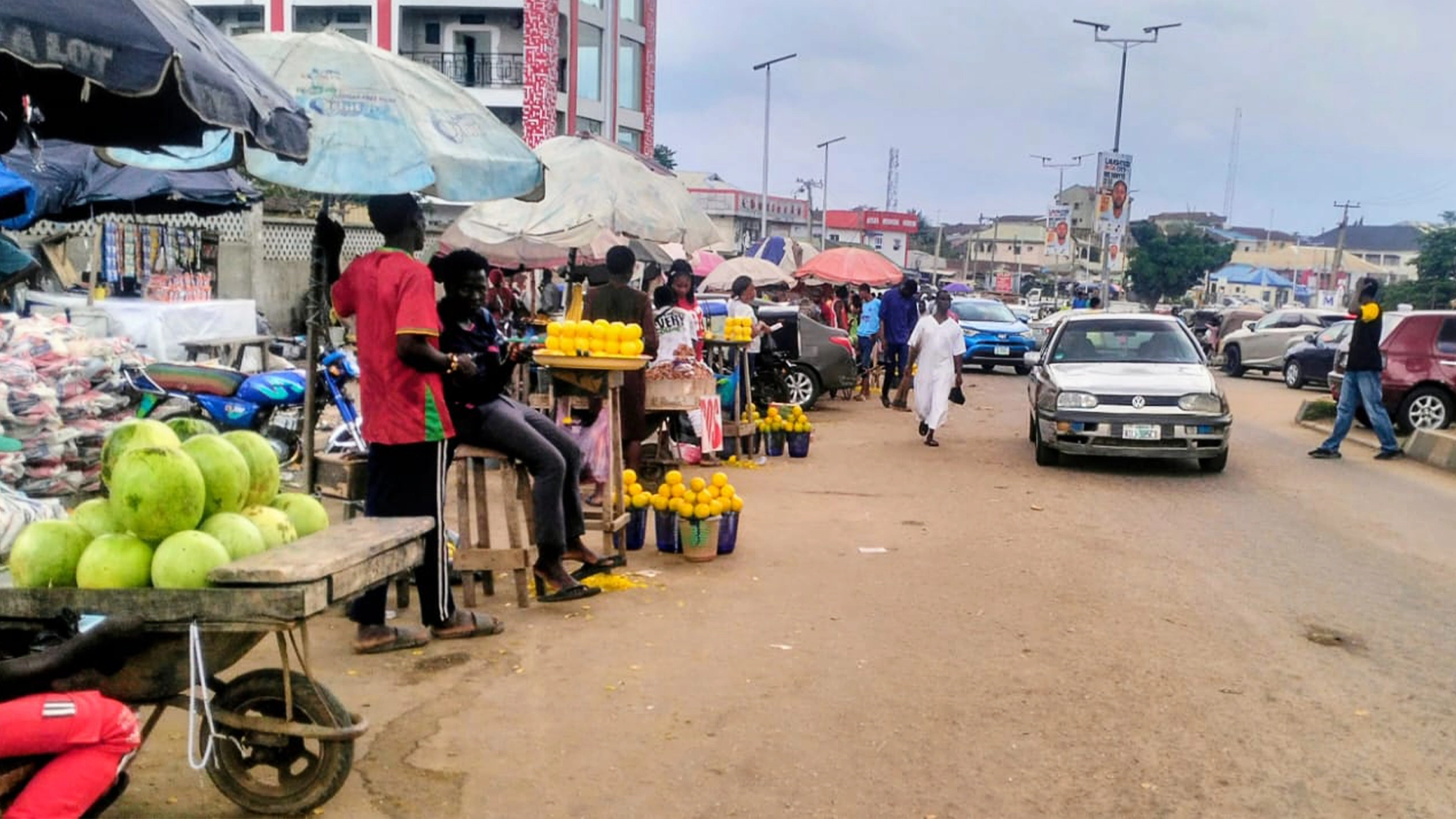
• Commuters spend hours in gridlocks as traffic indiscipline hobbles road expansion benefits
For commuters travelling into Abuja’s suburbs after work, the promise of wider roads and improved infrastructure is increasingly colliding with an old problem: traffic indiscipline.
At Jikwoyi Junction along the Nyanya-Karu corridor, what should be a relatively straightforward journey can stretch into an hour or more during the evening rush.
Commercial buses stop on the highway to pick up passengers.
Pedestrians weave across busy roads, while traders occupy road shoulders with goods displayed for motorists and passers-by.
Vehicles park indiscriminately, forcing motorists to make sudden lane changes as traffic builds up behind them.

For regular commuter Innocent Oweh, the situation is frustrating because the roads are no longer as constrained as they once were.
He said motorists travelling towards CBN Junction could spend one or two hours negotiating the stretch during peak periods, arguing that the problem was increasingly about how available road space was being used rather than a lack of infrastructure.
Oweh called for the construction of a pedestrian bridge at Jikwoyi Junction to separate pedestrian and vehicular movement and reduce congestion and safety risks.
His experience reflects a wider concern across the Federal Capital Territory (FCT), where a massive road renewal programme has changed the appearance and connectivity of several communities but is being challenged by poor traffic management.
Three years after President Bola Tinubu appointed Nyesom Wike as FCT Minister, the administration’s investment in roads has become increasingly visible.
Major highways have been expanded or rehabilitated, bridges restored, drainage infrastructure upgraded and abandoned projects revived.
From Nyanya, Karu and Orozo to Lugbe, Kubwa, Gwagwalada, Kuje and Bwari, improved roads have enhanced connectivity and eased movement in several parts of the territory.
But on some of the newly improved corridors, roadside trading, illegal parking, indiscriminate passenger loading and pedestrian encroachment are steadily taking back road space.
The irony is becoming difficult for commuters to ignore: Abuja is building wider roads, but motorists are finding some of them narrowing again.
The problem becomes particularly severe in the evening when thousands of workers return to the suburbs.
Along the Nyanya-Karu-Orozo corridor, traders display food, clothing, electronics and other goods close to the highway.
Road shoulders designed to provide safety buffers and emergency access are used for trading and parking, while motorists stop to patronise businesses.
Commercial vehicles also pick up and drop off passengers at unauthorised locations, disrupting the flow of traffic.
The result is a combination of reduced road capacity, sudden lane changes and long queues.
Similar challenges have been reported around parts of the Kubwa Expressway and the Lugbe-Airport Road, particularly near busy communities and junctions.
For residents, the situation is particularly disappointing because some of the affected roads were recently expanded or rehabilitated precisely to ease congestion.
A senior official of the FCT Development Control Department, who spoke on condition of anonymity because he was not authorised to speak publicly, acknowledged the challenge.
He said enforcement had become more difficult partly because of the approaching political season, with authorities wary that aggressive action against roadside traders and informal operators could generate public resentment as election activities intensify.
The official also linked the situation to the withdrawal of a task force previously deployed to enforce traffic and development-control regulations.
The Federal Road Safety Corps (FRSC) has equally expressed concern over the growing encroachment on improved road corridors.
Its Corps Commander, Tijjani Iliyasu, commended the FCT Administration for its infrastructure programme but warned that traders and commercial transport operators were increasingly occupying spaces intended to improve traffic flow.
According to Iliyasu, roadside trading, illegal parking and indiscriminate passenger loading are major contributors to traffic bottlenecks, particularly during evening peak periods.
He said the FRSC had engaged the National Union of Road Transport Workers over the practice of commercial vehicles stopping on carriageways and had established a task force to tackle the problem.
However, he noted that roadside trading presented a more complicated regulatory challenge because the FRSC does not license markets or determine where traders operate.
The Corps, he explained, can alert relevant authorities when trading activities obstruct traffic and recommend relocation to appropriate commercial areas.
Iliyasu identified Kabusa and the area around Nyanya Bridge as locations requiring intervention and said he would personally inspect Jikwoyi.
Other residents also want stronger enforcement.
Femi Akande complained about dangerous driving, including vehicles travelling against traffic on Airport Road, while Baba Martins blamed recurring congestion around Dantata Bridge and Berger in Lugbe largely on indiscriminate passenger loading.
Yemi Adebayo called for the restoration of sustained enforcement teams, arguing that roadside trading and traffic obstruction had reduced significantly when such operations were active.
Beyond the frustration of commuters, the consequences have broader safety and economic implications.
Blocked road shoulders can delay emergency services, while illegal parking and pedestrian encroachment increase the risk of crashes. Prolonged traffic jams also mean lost working hours, higher fuel consumption, greater vehicle wear and additional costs for businesses and commuters.
Urban management experts say enforcement alone will not solve the problem.
They advocate designated markets and vending areas, properly located bus stops, public parking facilities, pedestrian bridges and walkways, backed by consistent enforcement.
They also point to the potential of technology, including CCTV surveillance, intelligent traffic management systems and automated parking enforcement, to improve compliance and monitor traffic violations.
For the FCT Administration, the challenge is therefore no longer simply to build more roads, but to protect the infrastructure already delivered.
Abuja’s road renewal programme may have transformed the capital’s physical landscape, but its long-term success will ultimately depend on disciplined road use, effective enforcement, proper urban planning and cooperation among government agencies.
For commuters like Oweh, the measure of success is much simpler: whether they can get home without spending hours trapped in traffic on roads that were built to set them free

