 Follow Us on Google News
 Follow Us on Google Discover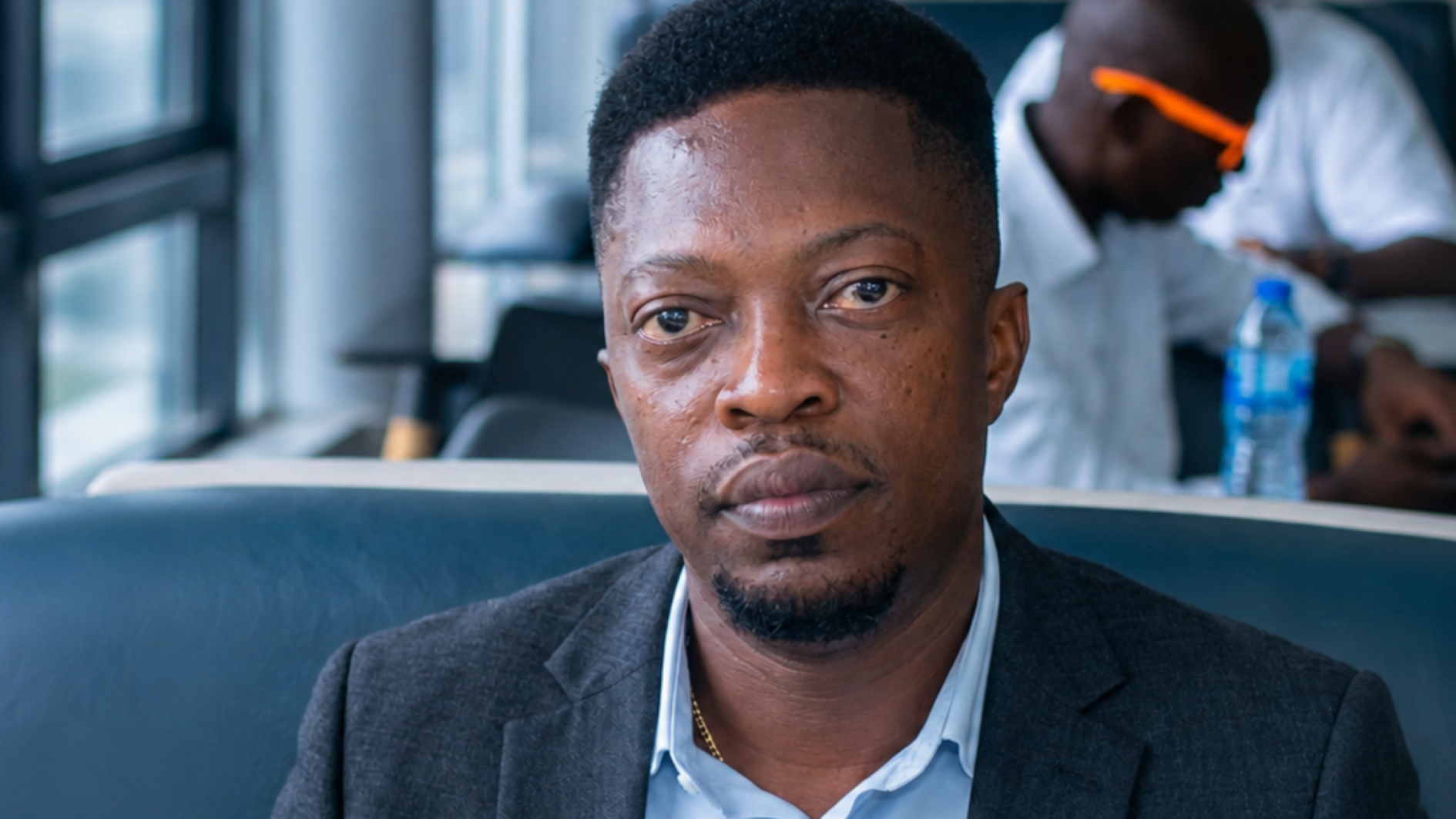
Dr Opeyemi Abraham Ojeyinka is a data scientist and software/ Enterprise architect. In this interview with Guardian newspaper, he shared his perspectives on the transformative power of data in shaping Nigeria’s technological future.
With years of experience at the intersection of data, software, and product innovation, Ojeyinka emphasized how data-driven solutions are helping businesses, startups, and government institutions make smarter decisions. He speaks on the importance of data science, its role in Nigeria’s growing tech ecosystem, the challenges facing professionals in the field. Excerpt.

How did you first fall in love with computers or building software, and what led you to specialize in the massive scale of enterprise architecture?
My passion for technology stems from an innate drive for automation and logical problem-solving. Early in my career, I realized that monotonous, repetitive tasks represent inefficiencies; if a process has a predictable pattern, it should be automated. This mindset naturally drew me to software engineering, where my curiosity quickly shifted from simply writing code to understanding the macro-level systems engineering behind it, specifically, the strategic decisions governing how complex components interface to deliver seamless, end-to-end solutions. This curiosity drove me to master the disciplines required for large-scale enterprise resilience, ultimately earning certifications in both enterprise architecture (TOGAF) and business analysis (CBAP). My transition into enterprise architecture was a direct response to a critical industry gap, I frequently witnessed large-scale projects fail or become unsustainably costly to maintain post-production. These failures almost always trace back to a lack of holistic visibility into business requirements, scope, and deployment environments. By bridging the gap between business strategy and technical execution, I specialize in architecting scalable, production-ready ecosystems that eliminate technical debt and drive long-term organizational value.
If you had to explain your job to a ten-year-old or someone who has never used a computer, how would you describe what an enterprise architect does all day?
I usually tell people to imagine they are building a giant, bustling city from scratch. If you don’t have a master plan, a city gets chaotic very quickly. Someone might build a school right next to a noisy factory, or build thousands of houses but forget to connect them to the water main. As an enterprise architect, my job is essentially to be the Ultimate City Planner for a massive company. Instead of planning roads, bridges, and power grids out of concrete and steel, I plan them using technology. I don’t look at just one computer program or one department; I look at the whole company like a giant, interconnected map. On any given day, my job boils down to three things:
Drawing the Master Map. I map out how every part of the business, from human resources to manufacturing, talks to each other through technology.
Consulting with City Leaders, I sat down with the company’s executives to understand where they want the business to go in five or ten years, so we can start building the infrastructure to support that growth today.
Setting the Building Codes, I create the rules for how new software must be built. This ensures that when a team introduces a new tool, it plugs into our existing system perfectly without breaking the rest of the city.
Ultimately, I make sure the entire organization can grow safely, smoothly, and never suffers a black
What is the most exciting or surprising part of designing systems that millions of people rely on without realizing it?
Is incredibly rewarding to watch someone use an app or service in public, completely relaxed, knowing that your architecture is seamlessly handling millions of logics and calls under the hood to make their life easier. The surprising thing is that the end user cannot understand the magnitude of work that went into delivering the solution and ensure the application scales seamlessly without anyone noticing a blink.
How is artificial intelligence changing the way large companies build and design their core software systems right now?
Artificial intelligence is fundamentally shifting our engineering paradigm from manual code authorship to AI-assisted system synthesis and orchestration. As engineering leaders, we are seeing the classic agile squad structure compress and evolve. The availability of sophisticated LLMs means we can now offload the heavy lifting of boilerplate creation, initial documentation, and boilerplate backend/frontend generation to AI. This changes the day-to-day reality for development teams in several major ways: Scaffolding and Rapid Prototyping: We can now prompt LLMs to generate initial system architecture blueprints, sequence diagrams, and end-to-end flows. This allows product owners and developers to align on technical design and validate system constraints much earlier in the cycle.
The Rise of Code Synthesis: AI tools generate clean frontend components and robust backend endpoints in seconds. This drastically shrinks time-to-market and allows teams to operate with fewer heads while maintaining or even increasing velocity.
The “Senior Integrator” Paradigm: The role of the developer is rapidly changing. Instead of spending hours writing syntax, senior engineers are transitioning into system integrators and code reviewers. The core responsibility is shifting to orchestrating these AI-generated modules, ensuring proper edge-case handling, and fusing components together securely into the existing pipeline.
Ultimately, every role in the modern sprint team now has an AI copilot that helps with faster delivery. For team leads, the challenge is no longer just managing capacity, but shifting our focus toward high-level governance, robust code-review practices, and ensuring that AI-generated velocity doesn’t turn into architectural technical debt
With cyber-attacks and data privacy in the headlines constantly, how do you balance the need for extreme security with the need for companies to move fast and innovate?
The secret to balancing security and speed is shifting security from a gatekeeper to a foundation. Before now, security was like a traffic cop standing at the end of the highway, stopping software deployments to run audits and slowing everything down. Today, that approach is dead. To move fast without breaking things, modern enterprise architecture relies on three core pillars:
DevSecOps (Security as Code): We build automated security testing directly into our continuous integration and deployment pipelines. Every time a developer writes a line of code or an AI tool synthesizes a component, automated tools scan it instantly for vulnerabilities, compliance issues, and data privacy leaks before it ever reaches production. Security happens in real-time, not at the end of a sprint.
Guardrails over Gates: Instead of blocking developers with endless approval meetings, we build predefined, highly secure infrastructure templates. Developers have the freedom to innovate rapidly inside this “sandbox,” knowing the guardrails prevent them from accidentally exposing sensitive data or violating privacy regulations.
Zero-Trust Architecture by Default: We design systems under the assumption that a breach can happen anywhere. By isolating data, encrypting everything in transit and at rest, and enforcing strict identity verification for every single system micro-component, we limit the blast radius. This gives the business the confidence to launch new features quickly, knowing a vulnerability in one area won’t compromise the entire enterprise ecosystem.
Ultimately, robust security doesn’t slow innovation down, it accelerates it. When developers know the underlying architecture has a built-in safety net, they can experiment and deploy with absolute confidence
Can you tell us about a time a massive system you designed or oversaw failed, what went wrong, and how you fixed it under pressure?
One of the most significant challenges in my career occurred during a large-scale migration of a FinTech wallet platform from one core banking system to another. I led the engineering and technology oversight for a transformation initiative that required extensive redesign of our central transaction services, integration layers, reconciliation processes, and operational workflows. The project involved close collaboration with a team of domain experts from India and multiple internal stakeholders across technology, operations, and business units.
Following a successful cutover and production go-live, our post-deployment smoke testing uncovered a critical issue. We observed a scenario where certain transactions were being automatically reversed by the system despite customers already receiving the intended value. While transaction volumes impacted were still limited, the issue represented a significant financial and reputational risk if left unresolved.
As the technology leader overseeing the implementation, I immediately activated our incident management process. We made the difficult but necessary decision to temporarily suspend transaction processing and take the affected services offline to prevent further exposure. Under significant time pressure, we assembled a cross-functional war room comprising application engineers, solution architects, integration specialists, operations teams, and vendor experts.
We conducted a detailed root cause analysis and discovered that a transaction state management defect introduced during the migration was causing inconsistencies between the wallet platform and the new core banking system. This led to certain transactions being incorrectly flagged for reversal even after successful customer fulfillment.
Fortunately, our controlled go-live strategy and rigorous smoke-testing framework proved highly effective. We had intentionally limited early production transactions to a small group of trusted corporate customers, enabling us to detect the issue before broader customer rollout. This containment strategy significantly minimized financial exposure and customer impact.
The team worked around the clock to implement a permanent fix, validate transaction integrity, reconcile all affected records, and strengthen the transaction lifecycle controls. We successfully recovered all exposed funds and ensured that no financial loss was incurred by either the institution or its customers. After completing extensive validation and regression testing, we safely restored the platform to full production service within a few hours.
The key lesson from this experience was that success in large-scale transformation programs is not measured by the absence of issues, but by the effectiveness of governance, risk controls, incident response, and team collaboration when challenges arise. The incident reinforced my belief in phased deployments, robust observability, comprehensive testing strategies, and strong crisis leadership. Ultimately, the platform stabilized, the migration achieved its business objectives, and the organization emerged with a more resilient architecture and improved operational procedures.
As an architect, you often have to tell business executives “no” or push back on a flashy idea because it will break the infrastructure. How do you handle those high-stakes disagreements?
As an Enterprise Architect, I have learned that my role is not simply to say “no”, but to help the business achieve its objectives in a way that is sustainable, secure, and aligned with the organization’s strategic and operational capabilities.
When I need to challenge a proposed initiative or a high-profile idea, I rely on facts, data, and architectural evidence rather than opinion. I engage stakeholders early, conduct a thorough enterprise readiness assessment, evaluate the technical, operational, security, compliance, and support implications, and perform a detailed cost-benefit and risk analysis. This helps ensure that decisions are based on measurable outcomes rather than enthusiasm alone.
In high-stakes discussions with executives, I focus on understanding the underlying business objective behind the request. Rather than simply rejecting an idea, I explain the potential risks, constraints, and long-term consequences to the organization. I then present alternative approaches that achieve the same business outcome while maintaining system stability, scalability, resilience, and regulatory compliance.
For example, if a proposed solution could introduce unacceptable operational risk, overwhelm existing infrastructure, or create technical debt that would be expensive to maintain, I would demonstrate the impact using architectural models, performance projections, risk assessments, and implementation roadmaps. Executives respond better when they can clearly see the trade-offs and business implications.
I also believe in balancing innovation with execution capability. Before recommending any major change, I ask critical questions such as:
Do we have the necessary skills and resources to implement it successfully?
Is the current architecture capable of supporting it?
What are the operational and support requirements after deployment?
What risks does it introduce to customers, revenue, security, and service availability?
What is the total cost of ownership over time?
Ultimately, my goal is to be a trusted advisor to the business. There have been instances where I have recommended postponing or redesigning an initiative because the organization was not yet ready to support it. In most cases, by presenting objective evidence and proposing viable alternatives, I was able to gain executive alignment and guide the organization toward a solution that delivered business value without compromising architectural integrity.
I believe the best Enterprise Architects don’t block innovation; they enable it responsibly by ensuring that ambition is matched with capability, governance, and long-term sustainability.
What has been your proudest professional moment—a project where you looked at the finished result and thought, “We really changed how this organization works for the better”?
I have had the privilege of leading and contributing to several transformational technology initiatives throughout my career, but one project stands out as my proudest professional achievement because of the lasting impact it had on the organization.
Early in my career, I was part of the pioneering engineering team that established the technology foundation for a new FinTech subsidiary within an IT company specializing in networking and bespoke solution delivery. This was not simply a technology implementation project; it was the creation of an entirely new digital financial services business from the ground up.
As a member of the special projects team, I was responsible for designing and delivering the central services platform, which became the backbone of the entire ecosystem. My area of responsibility included the integration layer that connected multiple business applications and channels to the core banking platform, while also managing critical financial processes such as General Ledger (GL) postings, transaction orchestration, reconciliation, and service interoperability across the enterprise.
One of the defining milestones of the initiative was the successful implementation of a new core banking system and the migration of critical business operations to the new platform. This was a highly complex undertaking involving multiple interconnected applications, integrations, customer-facing channels, and operational processes. The challenge was not only to migrate technology but also to ensure seamless continuity of business operations with minimal disruption to customers and internal users.
Working closely with engineers, architects, vendors, and business stakeholders, I helped ensure that every component of the ecosystem functioned cohesively from end to end. The successful go-live represented the culmination of extensive planning, system integration, testing, risk management, and stakeholder coordination.
What makes this achievement particularly memorable is the measurable business value it delivered. The new platform fundamentally changed how the organization operated by:
Significantly reducing system support and maintenance overhead.
Improving platform stability, reliability, and service availability.
Reducing operational downtime and incident frequency.
Enhancing transaction processing efficiency and system performance.
Accelerating the organization’s ability to introduce new products and respond to changing market requirements.
Providing a scalable architecture capable of supporting future business growth.
The project transformed technology from being a potential operational constraint into a strategic business enabler. It established a modern foundation that allowed the organization to innovate faster, improve customer experience, and scale its FinTech operations with confidence.
Looking back, what gives me the greatest sense of pride is not the technology itself, but the fact that the solution changed the way the organization worked. It enabled the business to operate more efficiently, become more agile, and create a stronger platform for future growth. Seeing a system I helped architect and deliver become a critical component of the organization’s success remains one of the most rewarding moments of my professional career and reinforced my passion for building technology solutions that create lasting business value.
Look into your crystal ball: what will our digital infrastructure look like ten years from now, and will it make our lives calmer or more complicated?
Ten years from now, I expect our digital infrastructure to be significantly more intelligent, automated, scalable, and resilient. Much of the effort currently required to design, deploy, monitor, maintain, and support infrastructure will be automated through AI-driven operations, self-healing platforms, intelligent observability, and infrastructure-as-code.
Infrastructure provisioning and service delivery will become almost seamless, with organizations able to scale resources dynamically based on real-time business demand. Systems will increasingly be designed to anticipate failures, identify performance issues, and resolve incidents proactively before they significantly impact users. This will also allow organizations to respond much faster to changes in business requirements, technology trends, and customer expectations.
I believe this evolution will ultimately make our lives calmer rather than more complicated. By removing repetitive manual activities and reducing operational firefighting, technology teams will have more time to focus on innovation, architecture, cybersecurity, and strategic business outcomes. Users, in turn, will experience more reliable and responsive digital services with less disruption.
That said, the complexity will not disappear, it will shift. As infrastructure becomes more distributed, autonomous, and interconnected, governance, cybersecurity, data privacy, and technology risk will become even more critical. The organizations that succeed will be those that combine automation and innovation with strong governance and human oversight.
In short, the digital infrastructure of the future should make life calmer by making technology more intelligent, predictable, resilient, and largely invisible to the end user. The real measure of success will be when technology simply works securely and reliably, without requiring people to constantly think about what is happening behind the scenes.
If you could wave a magic wand and instantly fix one major frustration in modern enterprise software or corporate technology, what would it be?
If I could wave a magic wand and fix one major frustration in modern enterprise technology, it would be the entire process of requirements elicitation, documentation, validation, and continuous management.
A significant number of challenges in enterprise technology projects can be traced back to requirements that are incomplete, ambiguous, poorly documented, or not fully validated with the business. Too often, teams begin implementation based on assumptions, only for gaps or differing interpretations to emerge during testing, user acceptance, or production. This leads to rework, scope creep, delays, increased costs, and unnecessary friction between business and technology teams.
I would establish a more intelligent and disciplined requirements management process where business needs are clearly elicited, properly documented, challenged, verified, and validated by all relevant stakeholders before development begins. Requirements should also be traceable from business objectives through design, development, testing, deployment, and ultimately into production.
Most importantly, I would make living documentation a standard part of the technology lifecycle. Every system change, enhancement, configuration update, or new functionality should automatically trigger an update to the relevant documentation, ensuring that system specifications, processes, integrations, and operational procedures remain current.
With modern AI and automation, I believe much of this can be significantly improved. AI-assisted requirements gathering could identify ambiguities, highlight conflicting requirements, generate documentation, maintain traceability, and even detect when system changes are not reflected in existing documentation.
Ultimately, my goal would be to eliminate the gap between what the business wants, what was documented, what was built, and what is actually running. Getting that alignment right from the beginning would eliminate a tremendous amount of waste and make enterprise technology delivery faster, more predictable, and far more successful.

