 Follow Us on Google News


 Follow Us on Google Discover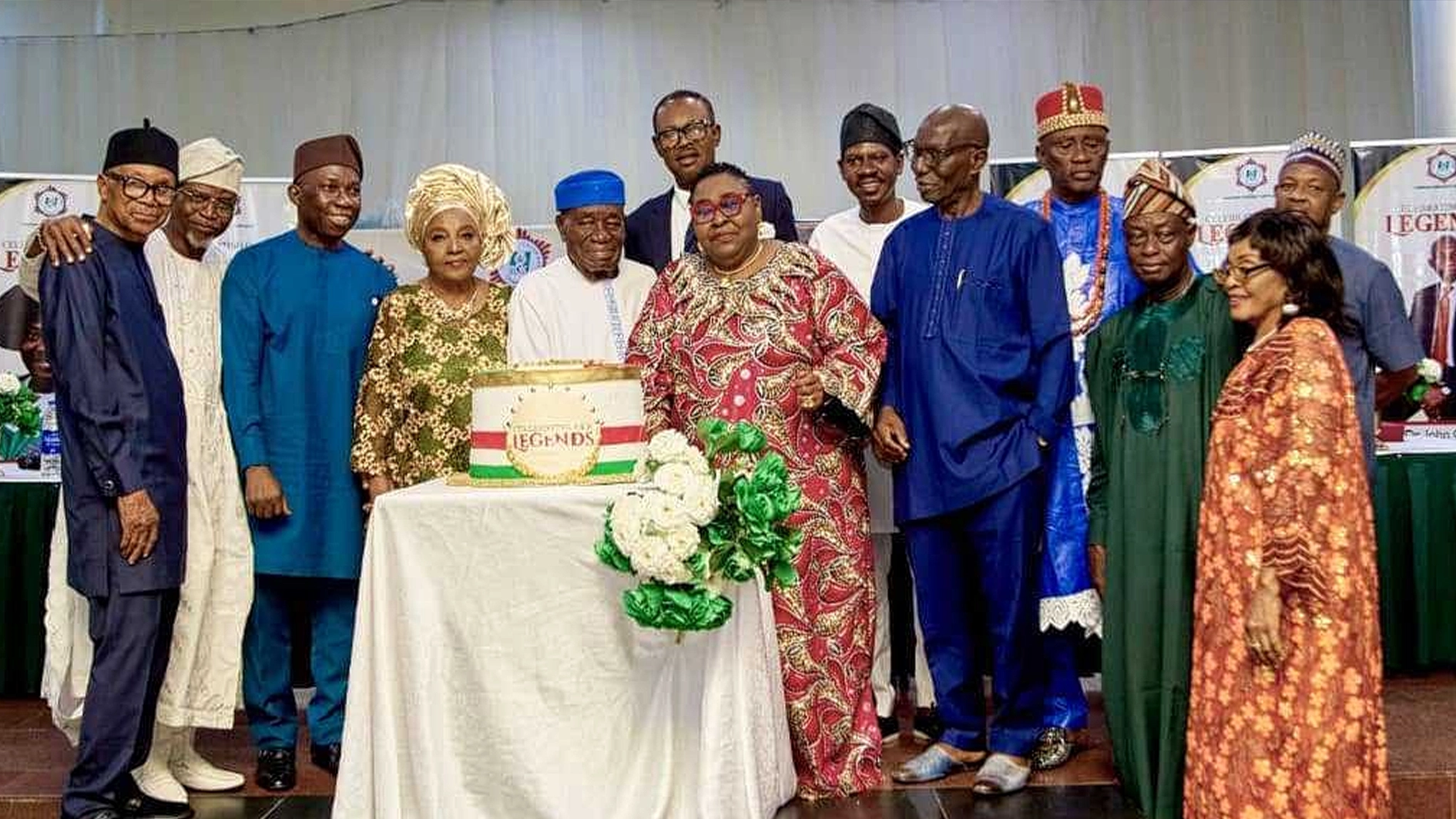
It was long in coming, but it finally came. The ‘Thank You’ that took over 20 years to come. It came on a night many of the recipients believe was one of the most important nights in their lives; it is something they had long looked forward to, straining their ears for years to hear. And when it came, it was refreshing like the morning dew.
For a few hours, the files could wait; there were no memoranda demanding attention, no official letters to sign and no copyright disputes to settle.
The atmosphere was filled with music, laughter, handshakes, embraces and memories. It was a reunion of some sort.
For some of the people gathered in that room, it was a rare opportunity to sit back and look at an institution they had helped build from its uncertain beginnings into one of the most important pillars of Nigeria’s creative economy.
The event aptly christened a ‘celebration of legends’ was organised by the Nigerian Copyright Commission (NCC) as a special send-off party for its former Directors General and retired directors to mark the Commission’s 37th anniversary.
In all, five former Directors General, including the pioneer Director General, Mr Moses Frank Ekpo, Sylvester O. Williams, Prof Enyinna Nwauche, Prof Adebambo Adewopo, and Mr Afam Ezekude, as well as 13 retired directors, were honoured.

Although it was billed as a send-off party, for many of the honourees, it was a homecoming.
The NCC was finally showing those who spent decades serving the commission that their sacrifices had not gone unnoticed.
For Mr. Olatunji Babatunde Adetula, who retired as a director nine years ago, the emotion was difficult to conceal.
He retired in 2017 after 35 years in public service. Nine years after leaving the commission, he finally received what he described as institutional appreciation he had long waited for.
“This month”, according to him, “nine years ago, I retired. “Yes, my colleagues organised a farewell party for me at the time, but there had been no institutional send-off.”
For him, that distinction matters because a staff farewell is just a show of appreciation by colleagues, but an institutional send-off says something bigger…the organisation remembers your contributions.
“This means a lot to me on a personal level, and I can tell you it is the same with all of us who are here today,” Adetula said in an interview.
For years after retirement, he said he and others could not help asking themselves whether their decades of sacrifices had truly been appreciated.
For a man who spent 35 years in service, the absence of formal recognition had left a lingering sense of disappointment.
“It is almost like someone who offended you and didn’t quite say sorry,” he said.
The ceremony mattered not because of the plaque, the photographs or the applause. It is about knowing that the years spent building an institution had not simply disappeared.
Beyond that, Adetula had another reason to feel fulfilled. Many of the people he trained rose to the position of directors, as he proudly recounted, “Most of the people I trained have retired as directors.” Those who are still in service, I’m sure, will rise to that position too.”
As he rightly said, that is his real legacy, not the number of years he spent in service, but the people that took over from him and continued the journey.
The story of the NCC cannot be complete without the story of those who worked before the institution became what it is today.
Pioneer Director General of the commission, Moses Ekpo, who is now in his eighties, in an emotion-laden story, recalled how he was drafted to head the new agency, then called the Nigerian Copyright Council. For him then it was like a leap into the dark, unsure of what the future holds.
He recalled how he was brought in to lead an institution about which he had little or no prior knowledge, but he accepted the challenge. His confidence was bolstered by the brilliance of the young men that worked with him. The people he described as the real eggheads.
That was how the journey began 37 years ago. At the time, there were no guarantees that the commission would become the great institution it is today.
Matters of copyright were not yet widely understood by Nigerians, enforcement was difficult, resources were limited and the creative industry itself was still evolving.
The pioneers had to build from scratch while learning, creating systems where they barely existed, explaining copyright to a people who barely understood and enforcing laws in an environment where piracy was becoming increasingly sophisticated.
That generation, as the current Director General of the commission, Dr John Asein, rightly captured it: “broke the ground, planted the seed and nurtured it, and the people presently working at the commission are standing in the shade of the tree.”
Dr Asein did not hide the fact that the ceremony was late in coming. According to him, the five Directors General honoured at the event left office between 2000 and 2018. None of them received a formal send-off from the Commission. A similar fate that befell several retired directors.
“That should not have been,” Asein apologised. “Your service deserved timely recognition, and I regret that we did not provide it. Nevertheless, it is better late than never.”
Those words appeared to carry unusual weight.
Administrations change. Officials retire. New priorities emerge. Files are transferred. Offices are occupied by new people.
“Public service can be demanding and impersonal,” Asein said. “Files move, officers move, administrations change and people retire. But no institution should become so focused on moving forward that it forgets those who carried it forward.”
That may have been the most important message of the evening.
Then came a moment of gloom and silence.
The celebration was interrupted by the memory of a man who could not be there.
Dr Sylvester O. Williams, one of the former Directors General, being honoured, died while still in office after years of service to the Commission. He did not retire. He did not get to sit among his former colleagues.
He did not receive the applause, plaque or embrace reserved for the evening’s honourees.
Death took that moment from him.
But the Commission chose not to allow his absence to become forgetfulness.
Asein specifically remembered him.
Williams had served during the Commission’s formative years, when the agency was still “finding its feet”.
He was one of the people who worked the difficult ground and helped nurture the institution.
“He is not here to receive our applause, to accept a plaque or to share in the warmth of this occasion,” Asein said.
“But he is very much present in our memory.”
It was a poignant reminder that institutional legacy is not only about those who live long enough to receive recognition. It is also about those whose work survives them.
The Commission that Ekpo and his colleagues helped build now operates in a dramatically different world.
Thirty-seven years ago, piracy was often associated with physical markets and locations such as Alaba International Market Lagos.
Today, much of the battle has moved online.
Asein said the Commission’s enforcement strategy has evolved accordingly.
“We don’t make so much noise again about our operations,” he said in an interview after the ceremony.
But that, he explained, does not mean enforcement has weakened.
Rather, the Commission has moved to where piracy has moved.
“With more pirates now online, we have found that we are able to disrupt many activities online,” he said.
Some operators, he disclosed, have complained that their businesses are becoming more expensive because platforms and sources where they previously obtained pirated materials for free are being shut down.
The message from the Commission is straightforward: users must learn to pay for creative works.
The measure of success is therefore changing.
It is no longer simply about how many physical piracy raids are conducted.
It is about how effectively illegal online operations can be disrupted.
In some cases, prosecution is not even the immediate objective.
According to Asein, disruption can be more important because online pirates may operate anonymously, outside Nigeria or without easily traceable physical addresses.
But the Commission has also pursued difficult cases through to the courts.
He cited one case in which investigators spent more than three years tracking an alleged pirate whose physical location was difficult to establish from his online presence.
Eventually, intelligence and assistance enabled the Commission to track him down.
The suspect is now being prosecuted at the Federal High Court in Abuja.
For Asein, that represents the changing face of copyright enforcement.
The battlefield has moved.
The tools have changed.
But the mission remains.
For stakeholders in Nigeria’s creative economy, the changes at the Commission have become increasingly visible.
Chief Executive Officer of the Musical Copyright Society of Nigeria (MCSN), Mayo Ayilaran, said the industry had witnessed important progress over the past 37 years.
He particularly credited successive NCC leaderships with pushing for stronger copyright legislation.
The Copyright Act 2022, he noted, represented a major development.
This was followed by the review of the Collective Management Organisation Regulations in 2025.
Then came another development that had been discussed for years but struggled to move from policy to implementation: the copyright levy.
Ayilaran said the levy had existed since 2012 but had not been effectively implemented until the persistent efforts of the current Commission leadership began to produce results.
“It has started,” he said, even while acknowledging that implementation was not yet complete.
For an industry that has long complained about the weak monetisation of creative works, such developments represent more than bureaucratic reform.
They could determine whether creators can earn a sustainable income from their intellectual property.
The President of the Association of Nigerian Authors, Dr Usman Ladipo Akanbi, similarly said Nigerian authors had never had it so good.
The optimism reflects a broader transformation in Nigeria’s creative economy, where music, film, literature and other creative works are increasingly recognised not merely as cultural expressions but as economic assets.
Yet the celebration was not an excuse to look only backward.
The future presents a new set of challenges.
Streaming platforms have transformed how music and films are distributed. Artificial intelligence is creating new questions about authorship, ownership and the use of copyrighted material. Digital platforms have made creative works easier to distribute and easier to pirate.
The Attorney-General of the Federation and Minister of Justice, Lateef Fagbemi, represented at the event by the Director of Legal Drafting at the Federal Ministry of Justice, Dr Patrick Etta Oyong, reminded the Commission that the work of institution-building never ends.
Public service, he said, should be measured not merely by the number of years spent in office, but by the institutions strengthened, policies advanced, systems developed, people mentored and legacies left behind.
That is the challenge now confronting the current generation of copyright administrators.
They have inherited an institution built by others.
Their task is to make it stronger.
Fagbemi warned that the rapidly changing copyright environment would require strong institutions, forward-looking laws and policies, effective enforcement, innovative regulation and sustained engagement with creators, investors and users.
In other words, the pioneers may have planted the tree, but the present generation must keep it alive.
As the evening drew to a close, the meaning of the celebration appeared to stretch beyond the people receiving honours.
It was also a message to those still working.
Asein put it simply: those currently in office are custodians for a time.
They inherited the Commission from those who came before them.
Eventually, they too will hand it over.
The question is what they will leave behind.

