 Follow Us on Google News


 Follow Us on Google Discover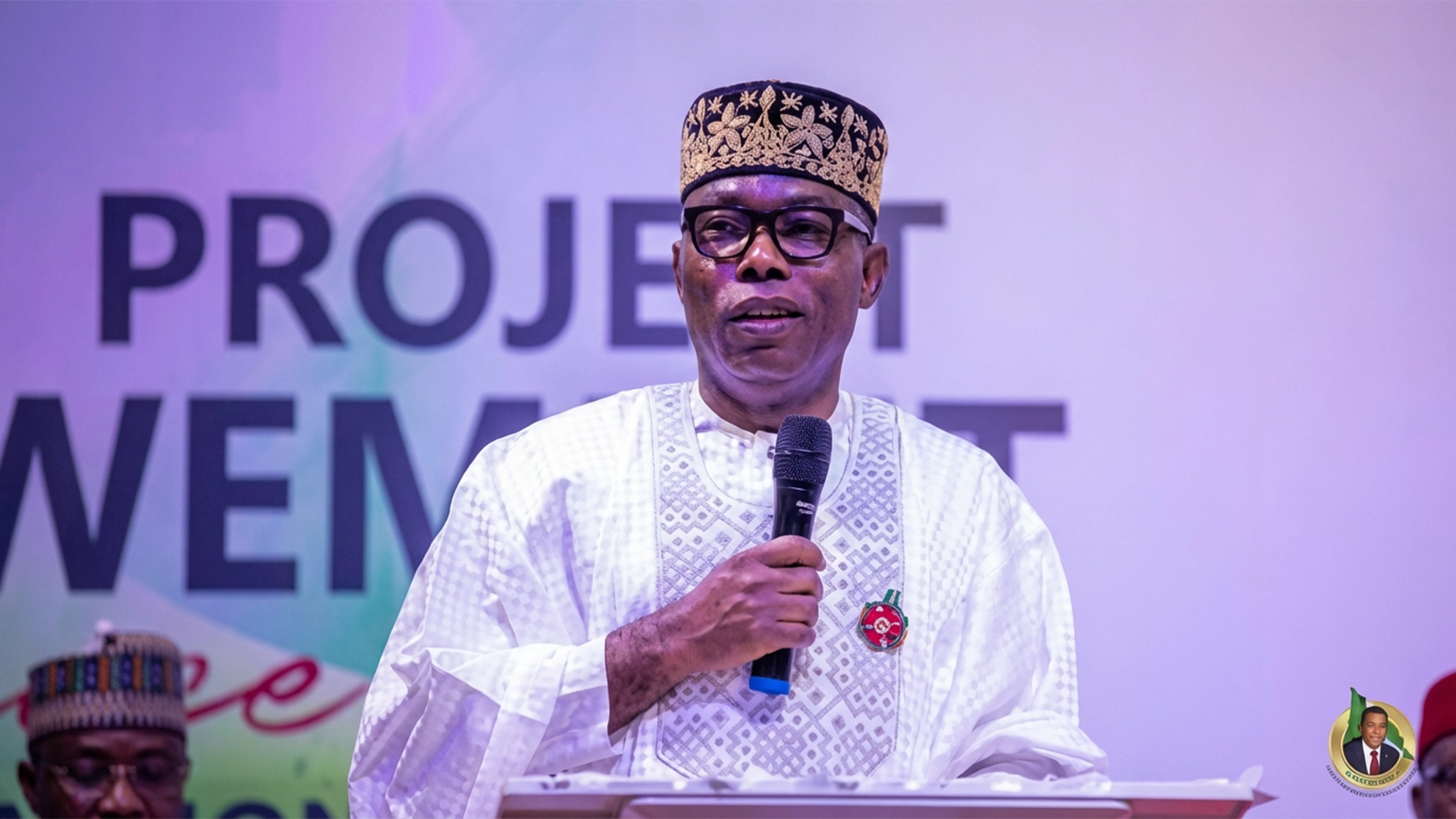
…Says four years enough to transform Nigeria
The presidential candidate of the Social Democratic Party (SDP) in the 2027 general elections, Prince Adewole Adebayo, has challenged President Bola Ahmed Tinubu to a public debate, declaring that four years is enough for a determined government to transform Nigeria.
Adebayo made the declaration on Tuesday in Abuja while unveiling the SDP’s 2027–2031 policy document, titled Farewell to Poverty and Insecurity.
The SDP candidate urged Nigerians to reject what he described as the country’s “politics of comedy and clowning,” insisting that Nigeria’s challenges were largely man-made and could be tackled through competent leadership, purposeful governance and policies that promote production.
“Four years is enough for a determined leader to help his people,” Adebayo declared, challenging Nigerians to scrutinise the SDP manifesto and hold the party accountable for its promises.
“We are trying to tell Nigerians that we are beyond sloganeering. We are saying to you: here is our farewell to poverty and insecurity.
We have submitted our thesis to Nigerians. Mark us. Evaluate us. Contradict us,” he said.

Adebayo subsequently challenged Tinubu to explain his administration’s record since assuming office, particularly the utilisation of funds associated with the removal of the petrol subsidy.
“The first challenge is thrown to President Bola Ahmed Tinubu: come out of hiding. Come and debate,” he said.
He questioned government spending on security, compressed natural gas (CNG) and electricity, asking where the resources from subsidy reforms had gone.
“Where have you been in the past four years? What have you been doing? Where is the money?
“Where is the money you saved from subsidies that never existed? Where are the trillions for security? Where is the CNG? Where is the electricity?” he asked.
The SDP candidate also criticised the Central Bank of Nigeria’s management of the economy, alleging that the apex bank had failed to adequately protect the naira, stimulate productivity and create employment.
“The Central Bank of Nigeria is not protecting our currency. It is not creating productivity and employment. It has become a warehouse for thieves. We must kick the thieves out of the team,” Adebayo alleged.
He further alleged that revenues from petroleum, solid minerals and taxation were being mismanaged, describing the alleged diversion of public resources as “stealing in broad daylight.”
On the economy, Adebayo promised a major expansion of Nigeria’s electricity generation capacity, targeting 75,000 megawatts by harnessing the country’s available energy resources.
He also pledged to establish four functioning public refineries and 36 modular refineries, while creating an enabling environment for private investors to build additional refineries and export petroleum products.
Adebayo said an SDP administration would also review petrol pricing, arguing that Nigerians should not be subjected to international fuel prices while earning wages that remain substantially below international standards.
“That is why we calculated it and concluded that ₦200, at the current rate, is the price at which petrol can be sold without pushing the people further into poverty,” he said.
On insecurity, Adebayo said an SDP government would combine military operations with political, economic and social measures aimed at addressing the underlying causes of crime and insurgency.
He attributed much of the insecurity to what he described as government failure and argued that voting for a change of government in 2027 would be a major step towards confronting banditry.
“Since the majority of insecurity is caused by government failure, when you use your vote in 2027 to change the government, you have already gone 60 per cent of the way towards chasing away the bandits,” he said.
He also pledged to promote national unity and confront what he called “internal colonialism”, which he said had contributed to ethnic, religious and regional divisions.
Adebayo said the SDP manifesto would prioritise human development, dignity of citizenship and affordable infrastructure funded from Nigeria’s resources.
He lamented the erosion of workers’ purchasing power, noting that previous generations were able to build houses and educate their children on incomes that would no longer support the same standard of living.
“We are 26 years late. We need to be in government now,” he said.
Earlier, the SDP National Chairman, Prof. Sadiq Umar Gombe, said the manifesto was anchored on three interconnected pillars: security, productivity and prosperity.
Gombe said the party intended to secure lives and property while addressing economic and social conditions that contribute to crime, extremism and instability.
According to him, an SDP administration would strengthen the armed forces, police, intelligence agencies, border control and justice system while combining kinetic and non-kinetic approaches to insecurity.
He said the party’s economic programme would promote self-reliance, productive employment, poverty reduction, balanced regional development and social inclusion.
“We do not believe that poverty should be managed in Nigeria. We believe poverty must be eliminated through production, employment, opportunity and responsible social protection,” he said.
Gombe also emphasised accountability in public office, declaring that citizens must be empowered to demand answers from their leaders.
“Accountability is not an inconvenience to governance. Accountability is governance itself,” he said.
He said the SDP envisioned a Nigeria where farmers could cultivate their land without fear, traders could move goods safely, businesses could invest confidently and citizens could live, work, worship and travel without fear.
The SDP vice-presidential candidate, Dr Usman Bugaje, said Nigeria’s fundamental problem was not a shortage of capable people but poor leadership.
Bugaje cited the performance of Nigerians in the diaspora as evidence that the country possessed the human capacity needed to build a prosperous nation.
“If you look at Nigerians in the diaspora, they are doing very well. Go to any country and you will find Nigerian professionals performing at par with their counterparts. In many cases, they are excelling in their chosen fields.
“That tells us something very important: the problem is not the Nigerian people. The problem is leadership,” he said.
Bugaje described the manifesto as a commitment to Nigerians and a “living document” that would continue to evolve through engagement with citizens.
He identified insecurity, low agricultural productivity and high energy costs as major obstacles to national development.
According to him, Nigeria could substantially increase food production by adopting proven agricultural methods and developing stronger agricultural value chains, while reducing energy costs to boost transportation, farming and manufacturing.
“We know precisely where the problems are, and I think we will, with the support of Nigeria, address them,” he said.
Bugaje acknowledged that the SDP agenda would face opposition from entrenched interests benefiting from the existing system.
“They are going to fight. But we shall fight. And we shall win. And we shall deliver, God willing,” he declared.

