 Follow Us on Google News
 Follow Us on Google Discover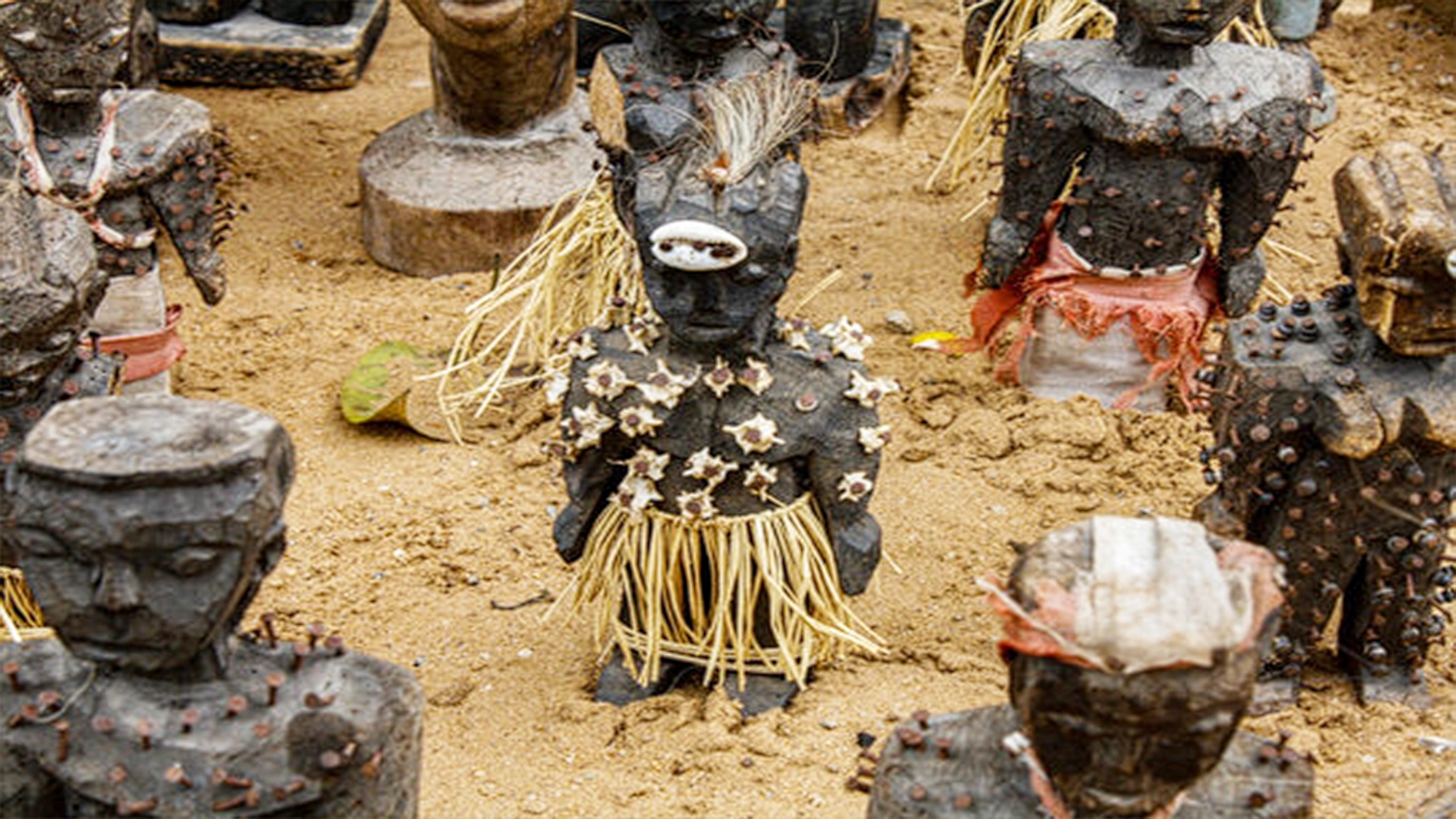
By Godwin Sogolo
This article is a slightly modified version of my contribution to the Toyin Falola Interviews, held on Sunday, August 30, 2026. Following the announcement of the event, many Nigerians questioned the relevance of discussing witchcraft in Nigeria, given the enormous challenges confronting the country.
Others asked whether witches truly exist and possess the powers attributed to them.
My response to the question of relevance is that witchcraft has been, and remains, one of the most pervasive and consequential features of life in Africa, both traditional and contemporary.
As for the question of whether witches actually exist and possess the powers attributed to them, I urge a critical distinction between the reality of belief in witchcraft and the objective existence of witches as supernatural agents. The former is beyond dispute: belief in witchcraft is deeply embedded in virtually all African communities and significantly shapes how people interpret experiences such as misfortune, illness, death, conflict, and other events of everyday life. Whether witches objectively exist and possess the supernatural powers attributed to them is a different metaphysical question that belongs primarily to the realm of metaphysics and, as such, is not amenable to empirical verification or to logical reasoning in the conventional sense.
Indeed, attempts to prove or disprove the existence of supernatural beings – including God – through empirical procedures are theoretically and practically misguided. It is a historical fact that scholars, especially philosophers, have sought in various ways to establish or refute the existence of God, but their efforts have yielded no conclusive result.

Thus, the more productive question is not whether witches exist, but whether the powers and activities attributed to them are logically coherent and empirically possible. The same reasoning applies to miracles. Rather than attempting to establish the existence of God by appealing to alleged miraculous events, the more appropriate question is whether such events are themselves logically coherent and empirically possible.
My concern, therefore, is not to prove or disprove the existence of witches, but to examine the concept of witchcraft, the claims associated with the phenomenon, and its explanatory and practical significance. This is particularly important in Nigeria because witchcraft beliefs can – and do – have grave social consequences, including the accusation, persecution, torture, and killing of innocent persons.
Every culture in the world has its own explanatory models through which it interprets experience and constructs meaning – a distinction Robin Horton describes as being between “the world of commonsense and the world of theory.” Although human beings share broadly similar sensory experiences, they do not necessarily interpret or explain those experiences in the same way, even when their explanatory approaches have much in common. For example, all cultures employ both naturalistic (scientific) and supernatural modes of explanation; the difference lies largely in the relative dominance of one over the other.
In a predominantly scientific thought system, events tend to be explained in terms of impersonal natural laws, processes, and mechanisms, with little or no recourse to supernatural agencies. In an African thought systems, by contrast, natural and mechanistic explanations tend to be overshadowed by an emphasis on spiritual, personal, and supernatural agencies.
The differences among explanatory models become particularly evident in the interpretation of extraordinary events – events that appear to violate normal expectations or established patterns of experience. Events such as sudden death, an unexpected recovery from a seemingly terminal illness, and other inexplicable occurrences may prompt people to seek explanations beyond those ordinarily invoked.
Orthodox religions, especially in the Western world interpret extraordinary events as miracles. Christianity, for example, attributes miracles to God or His agents for divine purposes, as in the parting of the Red Sea (Exodus 14:21-22) and Peter’s healing of the lame man (Acts 3:1-9). In African thought, extraordinary events may likewise be attributed to witchcraft.
Furthermore, every human culture is a morally polarised space. Just as the devil represents evil in Christianity, so too is witchcraft commonly associated with evil in many traditional African thought systems. There are, however, exceptions. According to anthropological accounts, in some communities – for example, in Benin Republic, Ghana, and Cameroon – witches are believed to use their powers for both malevolent and benevolent purposes.
It is important to emphasise that beliefs in witchcraft are found in almost all cultures, particularly in Africa, although their modes vary considerably from one culture to another. There are, yet again, exceptional cases such as the one reported by James Brain, about the Korongo community of Sudan, where the concept of witchcraft is reportedly absent.
Witches are commonly believed to possess extraordinary powers, including the ability to transform themselves into animals, travel through the air or across great distances, assume spiritual forms, cause illness and death, induce infertility or impotence, and bring about various forms of misfortune. Thus, the dominant activities attributed to witches are evil.
A typical scientific inquiry involves mechanisms, causal connections, prediction and control.
Witchcraft, on the other hand, brings in the person: human actions, spiritual agencies, reasons, attitudes, social and moral relations. A useful illustration is the familiar contrast between “how” and
“why” questions: “How did it happen?” is primarily a scientific question, whereas “Why did it happen to this particular person?” is the kind of question addressed by a witchcraft explanation.
Neither science nor witchcraft can adequately answer questions that properly belong to the conceptual domain of the other, because they operate within fundamentally different explanatory frameworks.
Consider the following practical examples: the sudden death of a child; the Ebola outbreak in the Democratic Republic of the Congo, and a fatal motor accident.
Sogolo is an Emeritus Professor who has taught and conducted research in Philosophy for over five decades – at the University of Ibadan, Cardiff University of Wales and currently at the National Open University of Nigeria. He also served as a member of the Editorial Board of The Guardian Newspapers in the 1980s and 1990s.

