 Follow Us on Google News
 Follow Us on Google Discover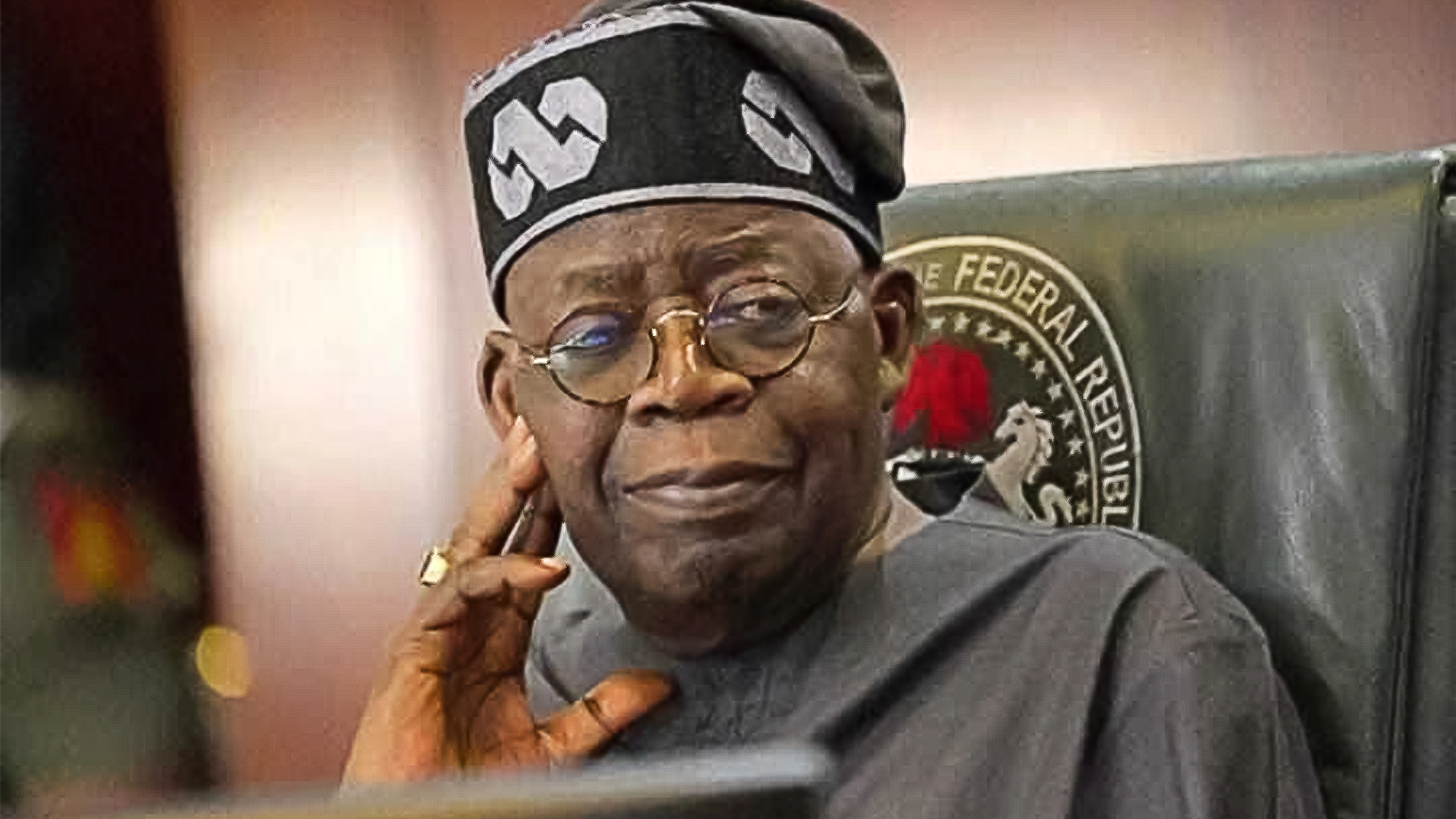
** First Lady: Endorsement significant, coming from former presiding officers
*** Anyim: Tinubu thinking beyond 2027, planting reforms for next generation
**** Mamora: Courage, vision, strategy distinguish President
***** Lalong: Reforms must translate economic gains into shared prosperity
The Forum of Former Presiding Officers of State Houses of Assembly of Nigeria (FOPSHAN) has endorsed President Bola Tinubu for a second term in the 2027 general elections, pledging to mobilise their supporters and take the campaign for his re-election to the grassroots.
The former Speakers and Deputy Speakers, who adopted the endorsement as part of the resolutions of their national summit in Abuja on Thursday, also commended the Tinubu administration’s economic reform programme, particularly the removal of petrol subsidy, describing it as a difficult decision taken at a critical point in the nation’s economic history.

The endorsement came as former President of the Senate, Anyim Pius Anyim, declared that Tinubu was not merely taking decisions for immediate political gains but was implementing reforms aimed at shaping Nigeria’s future.
Senator Anyim, who chaired the occasion, said the President was “thinking beyond 2027” and “planting” for the next generation, citing the removal of petrol subsidy, student loan policy and proposed state police initiative as examples of reforms with long-term implications.
First Lady Oluremi Tinubu, who was Special Guest of Honour at the summit, described the endorsement as significant, saying it came from men and women who had themselves presided over legislative institutions and understood the complexities of governance and policymaking.
She, however, urged the former lawmakers not to withdraw from public service after leaving political office, charging them to deploy their experience, networks and institutional knowledge to strengthen democracy and mentor younger legislators.
“This summit is a celebration of service, leadership, experience and sacrifice. Leaving political office should never mean leaving public service,” she said.
The First Lady said Nigeria still needed the wisdom and experience of former presiding officers, urging them to use the forum to preserve institutional memory, promote democratic stability and contribute to development in their respective communities.
On the endorsement of Tinubu, she said: “I especially acknowledge and appreciate your endorsement of His Excellency, President Bola Ahmed Tinubu, GCFR, for his second term in office.
“Coming from men and women who have themselves presided over legislative institutions, your endorsement carries special significance. You understand the demands of governance, the difficulty of making critical decisions, and the courage required to pursue reforms in the national interest.”
According to her, the administration had since its inception worked to reposition the economy and establish what she described as a foundation for sustainable national development.
“Nation building is a continuous process and the gains already recorded must be consolidated for the benefit of the present and future generations,” she added.
Anyim: Tinubu thinking beyond 2027
Anyim, in his assessment of the administration, said reforms were rarely popular at the point of introduction because their benefits often took time to become evident.
“I rarely talk about iconic leaders. I rather observe them because most of the time they are not defined by the projects they do. They are rather defined by their vision and reforms to implement,” he said.
He argued that societies periodically required fundamental political, social and economic changes, adding that such reforms could only be pursued by leaders willing to make difficult decisions without being driven solely by immediate popularity.
“Reforms at every time had never always been very popular, but only courageous leaders who are not thinking about today but tomorrow actually embark on reforms,” Anyim said.
He added: “I have observed the political trajectory of President Bola Tinubu, and I am to say he was never a politician of today, but a statesman of the moment and the next levels.
“He is far-sighted and visionary, but above all, he is courageous and strategic in planning as well as in execution.”
The former Senate President said the administration’s student loan programme was targeted at producing the next generation of leaders, while the state police initiative was aimed at addressing long-term challenges associated with Nigeria’s security and social environment.
Former Plateau State Governor and former Speaker of the Plateau State House of Assembly, Senator Simon Lalong, acknowledged the economic hardship associated with the reform programme, but said the country must now move from macroeconomic stabilisation to shared prosperity.
Lalong examined subsidy removal, foreign exchange reforms, fiscal consolidation, debt management, revenue generation and tax reforms as major components of the administration’s economic programme.
He noted that subsidy removal had contributed to higher transportation and living costs and exerted pressure on households and businesses, but said the issue had been deferred by successive administrations despite its fiscal implications.
While citing assessments indicating movement towards macroeconomic stability, Lalong stressed that poverty remained high and household incomes had yet to fully recover.
He therefore urged the government to ensure that macroeconomic improvements translated into tangible benefits for Nigerians.
According to him, infrastructure, agriculture, human capital development, security, social protection and youth empowerment were critical to achieving shared prosperity.
He called for sustained investment in roads and bridges, insisting that infrastructure projects must be delivered with quality and value for money.
On agriculture, the former governor said government must move beyond input distribution to investments in irrigation, mechanisation, technology, storage, processing, transportation and marketing.
Lalong said the Renewed Hope Agenda should be approached as an interconnected framework covering food security, poverty reduction, economic growth, job creation, infrastructure, security, human capital development, governance and the rule of law.
“President Tinubu has done his part by taking the bold decision. Our part is to help our people understand that the pains of today are the gains of tomorrow,” he said.
“We must tell Nigerians that bold leadership is not about being popular today, it is about being right for society.”
Earlier, Ebonyi State Governor and Chairman of the Board of Trustees of FOPSHAN, Rt. Hon. Francis Ogbonna Nwifuru, stressed the importance of cooperation between the executive and legislature, drawing from his experience as a former Speaker.
“Those years taught me an enduring lesson. Governance is not the responsibility of the executive alone; it is a partnership between institutions,” Nwifuru said.
He urged greater investment in agriculture, manufacturing, infrastructure, education, energy and technology, saying economic reforms must ultimately expand productive capacity and create opportunities for Nigerians.
“We must invest in agriculture, manufacturing, infrastructure, education, energy and technology. We must create an environment where Nigerians can produce more, businesses can grow and young people can find meaningful opportunities,” he said.
Nwifuru also advocated stronger legislative oversight, fiscal responsibility, democratic institutions and devolution of powers.
“We have occupied the chambers where laws are made, scrutinised and voices of our constituents were amplified. We therefore cannot afford to be spectators in the journey of national development,” he added.
The National Chairman of FOPSHAN, Senator Wasiu Eshilokun Sani, said the summit was convened to enable former legislators to assess the consequences of major policy decisions and contribute their experience to national development.
He identified petrol subsidy removal, changes in federal allocation and efforts to strengthen local government financial autonomy as consequential decisions requiring “thoughtful, honest and constructive engagement.”
According to him, the success of the reforms would ultimately depend on effective implementation, strong institutions and the extent to which Nigerians experience measurable improvements in their lives.
He urged participants to identify unintended consequences and areas requiring improvement rather than merely praising government policies.
Eshilokun Sani also called for stronger collaboration among the three tiers of government, saying increased public revenue must be reflected in responsible governance and improved public services.
At the end of the summit, the forum adopted resolutions endorsing Tinubu for a second term.
The resolution stated: “In recognition of the President’s colourful, visionary leadership and commitment to national development, FOPSHAN unanimously endorses President Bola Ahmed Tinubu, GCFR, for a second term in office in the 2027 general elections.”

