GDN SIDEBAR
By 10 p.m., Lagos is still wide awake. By 11 p.m., Abuja is beginning to reveal its other self. Across both cities, music spills from lounges, restaurants fill up, friends gather, bottles arrive with sparklers, and the night stretches into a lively mix of pleasure, performance, networking and business. This is the thriving and unmistakably Nigerian culture of going out.
At 10 p.m., Lagos is not winding down. It is warming up.
As some people settle in for the night, others are choosing outfits, calling friends, ordering rides and making their way towards the city’s restaurants, clubs, lounges, concerts, raves and late-night food spots. Music travels through the streets. DJs take over rooms. Tables fill up. Groups of young people move from one plan to the next, often with no intention of going home early.
In Abuja, the evening follows a different rhythm. At about 11 p.m. on a Friday night, the capital begins to reveal the part of itself that daylight carefully conceals. Ministries and government offices are mostly dark. The convoys have thinned out. The men and women who spent the day discussing policy, contracts, budgets, elections, diplomacy and the affairs of state have exchanged formal workwear for something less bureaucratic.
Then the music begins.
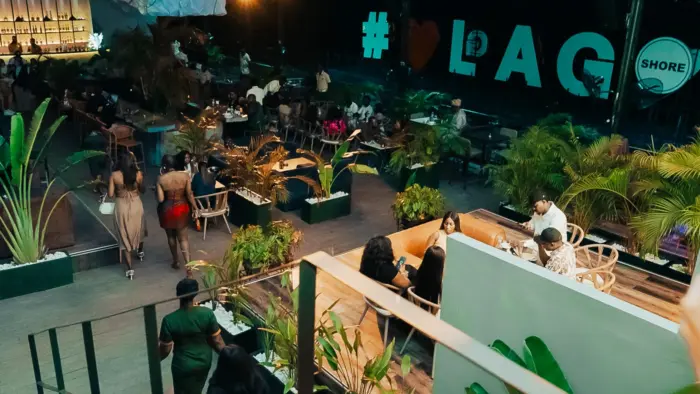
From Wuse 2 to Jabi, Garki, Maitama and the Central Area, lounges glow against the night. Cars pull up. Security personnel take their positions at entrances. Waiters move between tables. DJs work the room. Bottles arrive with sparklers. Friends embrace. Strangers become temporary companions.

Abuja is awake.
For two cities known for their relentless energy in different ways, nightlife has become a vital part of everyday life. It is where people relax after a long week, celebrate birthdays, listen to their favourite artists, meet friends, make professional connections or simply step outside the routines of work and home.
The night is bubbly, but it is not without its complications. There is traffic, the cost of transport, rising menu prices, expensive tables, concerns about safety and the pressure to look as though one is having the best time possible.
Still, people continue to go out. They buy tickets, book tables, order drinks, dance until late and find new reasons to gather.
Lagos: A city that does not clock out
Lagos nightlife is as varied and fast-moving as the city itself.
There are high-end clubs where table reservations can cost hundreds of thousands of naira, intimate lounges designed for drinks and conversation, live-music venues, concerts, beach parties and raves where the dance floor is the main attraction. Different parts of the city have developed their own identities. Victoria Island and Lekki are associated with some of the city’s larger clubs and nightlife venues, while Ikeja, Yaba and other parts of the mainland offer their own crowds and more affordable options.
Music sits at the centre of it all.
Afrobeats, Amapiano, house and other sounds move through clubs and parties, while DJs and live performers have become essential to Lagos’ entertainment economy. A night out may begin with dinner, continue at a lounge and end with a late-night meal. A concert can lead to another venue. A birthday celebration can stretch into a full weekend itinerary.
For Shadrach Agbebaku, who has worked as an artist, artist manager, event organiser and consultant to clubs and lounges, one of the biggest changes has been the evolution of the industry itself.
“One of the biggest differences I see between the nightlife I was heavily involved in from around 2012 to 2022 and what exists today is scale and sophistication.”
The modern nightlife venue is increasingly concerned with more than music and drinks. Ambience, branding, positioning, content and customer experience have become central to the way businesses present themselves. Clubs and lounges are being run less like standalone entertainment spots and more like structured businesses.
That sophistication can be seen in the way venues build their identities, curate their interiors and use social media to turn a night out into a visual event. A table, a bottle-service moment, a performance or a crowded dance floor can quickly become content on Instagram or TikTok, extending the life of the night beyond the venue itself.
But the traditional club experience is becoming harder for some people to justify.
A 2026 Associated Press report on Lagos rave culture highlights the growing appeal of events that do not revolve around expensive tables and bottles. At Group Therapy, a rave in Lekki, thousands of young people reportedly gathered without the usual emphasis on table reservations and bottle service.
The appeal is that people want somewhere they can dance, meet others and have a good time without feeling pressured to spend hundreds of thousands of naira.
The rise of raves does not mean that Lagos has abandoned its clubs. It suggests that the city’s nightlife is broadening. There is room for a table at a major venue, a smaller party, a house gathering, a live-music show and a rave where the only essential purchase is the ticket.
The price of a night out
In Lagos, the cost of going out begins before the actual fun.
There is transport to the venue, the entry fee in some cases, food, drinks and the journey home. For those visiting clubs, table reservations and bottles can quickly raise the bill. Even a casual night can become expensive when several small purchases begin to add up.
But spending in nightlife is not always simply about buying a drink.
Fiyin Audu, who has worked in and around the alcoholic beverage and nightlife industry, describes visibility as an important part of the spending culture. “In Nigerian nightlife, recognition is the product. Visibility is the currency.”
To be seen in the right place, with the right people and at the right table can carry its own social value. The bottle may be consumed, but the moment it creates can travel much further: into photographs, videos, conversations and online posts.
The rising cost of living has changed how many people approach that experience. A 2024 Financial Times report cited in the source material described hospitality businesses in Lagos dealing with lower customer spending as people became more careful about what they ordered. Rather than buying bottles, some customers were choosing individual glasses of wine or less expensive meals.
That shift is also visible in the growing interest in raves and other events where people pay an entry fee and spend the night dancing, rather than sitting around a table.
People have not stopped going out. They are becoming more selective about how they spend.
For one person, a good night may still mean a table with friends. For another, it may mean buying a rave ticket, dancing for hours and finding an affordable meal afterwards. Someone else may prefer dinner, live music and a ride home before midnight.
There is no single way to experience Lagos after dark.
People who keep Lagos moving
Behind every busy night is an entire network of people whose work depends on the city leaving home. DJs, singers, bartenders, waiters, security personnel, event organisers, photographers, makeup artists, drivers, food vendors and other workers all benefit from the movement that happens after dark.
Drawing from his years in entertainment and nightlife, Agbebaku sees this as one of the less obvious sides of the industry. “A functioning nightlife ecosystem creates work for DJs, hype men, promoters, bouncers, waiters, bartenders, photographers, videographers, content creators, marketers, designers, security personnel, transport providers and even fashion businesses.”
A busy weekend can therefore mean income for more than the venue hosting an event. Drivers pick up late-night trips. Food vendors serve customers looking for something to eat after dancing. Entertainers find spaces to perform. Event organisers, decorators and sound companies depend on the steady demand for parties and celebrations.
Nightlife is not simply leisure. It is part of Lagos’ wider entertainment and hospitality economy.
The same pressures affecting customers also affect businesses. Venues must cover the costs of staff, security, electricity, rent, performers and other operations, even as customers become more cautious about how much they are willing to spend.
That tension is one of the defining features of Lagos nightlife: the demand for a memorable experience remains high, but the money available to create or enjoy it is under pressure.
Abuja: Where the night carries status
Abuja’s nightlife is shaped by the city’s unusual mix of people and possibilities.
The capital houses politicians, senior civil servants, diplomats, expatriates, business executives, creatives, young professionals and thousands of people drawn to the city in search of opportunity. After dark, these worlds often meet in restaurants, lounges and clubs.
A Friday night can produce an unusual social tableau. A diplomat may be discovering amapiano. An expatriate may be singing along to an Afrobeats chorus. A Nigerian banker may be explaining the cultural significance of a song to a foreign colleague. A government official may be seated at the next table. Young Nigerians may be dancing without giving a second thought to the diplomatic credentials of anyone around them.
The music becomes the common language.
This is one of Abuja’s most underrated cultural assets: the city consumes Nigerian popular culture alongside global culture in real time. Its nightlife offers a place where diplomacy, business, entertainment and social life can overlap without requiring a formal introduction.
But the capital’s night comes with a distinct price tag.
The Abuja price tag
There may be no better way to understand Abuja’s nightlife economy than to follow the price of a bottle.
Outside the premium nightlife circuit, a bottle of beer might sell for around ₦1,100. Walk into a beautifully designed Abuja lounge, however, and the same beer can command about ₦5,000.
Nothing about the liquid inside has changed. What has changed is the environment surrounding it: the lighting, furniture, architecture, music, service, security, location and, perhaps most importantly, the feeling that comes with consuming it there.
The economics of Abuja nightlife is therefore not only the economics of drinks. It is the economics of ambience and status.
A bottle of water offers an even more striking example. Ordinary bottled water that might sell for about ₦250 elsewhere can reportedly appear on a premium lounge table at around ₦2,000.
The lounge sells more than drinks. It sells atmosphere. It sells exclusivity. It sells comfort. It sells access. Sometimes, it sells the feeling that the person sitting at the table has arrived.
Wine offers another glimpse into the peculiar mathematics of the Abuja night. A bottle that might retail for ₦10,000 in an ordinary setting can command substantially more in a premium entertainment venue. Depending on the brand, establishment and level of service, a bottle that might normally cost ₦50,000 can be marked up considerably, sometimes several times the retail price. In some clubs and lounges, the final price can run into millions of naira.
This is where Abuja nightlife begins to resemble theatre.
The bottle arrives. The lights change. The music rises. The table cheers. A phone comes out. Someone records. The bottle becomes content.
And the price disappears into the performance. Food is not exempt. Grilled fish, one of Nigeria’s enduring nightlife favourites, can become a surprisingly expensive item on Abuja menus. Depending on its size, preparation, location and establishment, it can cost between ₦10,000 and ₦15,000, rise to ₦20,000 and, in some premium settings, approach ₦30,000.
The supplied material also points to a wide spending spectrum across Abuja venues, from establishments positioned around ₦10,000–₦20,000 per person to others listed in the ₦30,000–₦40,000, ₦50,000-plus and higher ranges. Blake Resort, Restaurant, Live Music Lounge and Bistro, Garki, Abuja; Sofa Lounge; and Tokyo Nightlife Abuja are among the venues referenced in that material.
There is the ₦10,000 Abuja and the ₦100,000 Abuja. Both exist in the same city. Both are part of the same nightlife economy. But they offer very different versions of a night out.
More than bottles and tables
Not every Abuja night is built around conspicuous spending.
Karaoke has become part of the city’s entertainment culture, offering an experience in which patrons are not merely spectators but performers. The microphone moves around the room. Someone sings brilliantly. Someone else sings terribly. Everybody laughs. Someone demands another song. Someone records the moment.
The night becomes less about how much money a person can spend and more about how much fun a group can create.
For Harrison Idara, a DJ, the energy of Abuja nightlife is tied to the changing musical preferences of the crowd. Different days and occasions call for different sounds, and finding the balance between current hits and beloved classics is part of creating an unforgettable night.
That balance matters because Abuja’s audience is diverse. A room may contain people seeking the latest Afrobeats release, others waiting for a familiar classic and still more interested in the communal energy of amapiano, karaoke or live performance.
For Sarah Femi, a club-goer and banker, nightlife can function as a form of therapy after the pressures of work. Aesthetically pleasing venues, creative cocktails and vibrant atmospheres draw her in despite the costs. The same spaces can also become informal networking rooms, where friendships and professional connections begin over music and conversation.
Night’s necessary caution
The freedom of the night comes with responsibilities for venues and patrons. People may want to party until 3 a.m. or 4 a.m., but they also want to get home safely. That makes security personnel, surveillance, controlled entrances, parking arrangements and reliable transportation part of the nightlife infrastructure.
The concern extends beyond the club. It includes late-night movement through the city, drink-driving, fights, street crime, harassment and the vulnerability that can accompany intoxication.
Musa Tijani, a security personnel, says the hours between 11 p.m. and 4 a.m. are particularly busy, with incidents ranging from drunk driving to conflicts. He also observes a positive shift, with clubs increasingly collaborating with security teams to help ensure that patrons have a safe experience. Challenges remain, including underage drinking and drug use, but the broader aim is to keep the fun alive while helping everyone get home safely.
Danladi Jabbal, a club bouncer, has worked across several clubs and understands the atmosphere from the entrance. The nightlife crowd includes influential individuals and people simply looking for somewhere to celebrate. While tips can be generous, bouncers also carry the responsibility of managing capacity, assessing situations and preventing trouble before it starts, all while maintaining a welcoming environment.
Tayo Akinyemi, a club owner, describes Abuja nightlife as dependent on both security and spending power. Busy nights can bring significant sales, but annual rents and operational costs add to the pressure. A single incident, such as a police raid or a fight, can damage a venue’s reputation. Investing in security measures and maintaining strong relationships with local authorities are therefore essential to surviving and thriving in the sector.
The risks are not limited to Abuja. In Lagos, customers worry about phones and bag theft, particularly in crowded environments. Transportation is another concern for people leaving venues late at night. Audu points to street-level harassment and extortion, particularly when people visibly appear to have money.
“If the street between the car park and the club door becomes a place where that same visibility gets you flagged, followed or shaken down, the incentive structure starts working against itself.”
The observation reveals a contradiction at the heart of modern nightlife. The same car, outfit or public display of wealth that can signal status inside a venue may attract unwanted attention outside it.
Drink safety is another concern. In April 2026, a social-media user and his friends became ill after visiting a club in Lagos. The club denied the allegation and requested evidence. The allegation, as presented, does not establish that counterfeit or adulterated drinks are commonly served in Lagos clubs. It does, however, show why such complaints require serious attention from businesses and customers.
A popular club, Quilox, partnered with the National Agency for Food and Drug Administration and Control (NAFDAC) in December 2024 to raise awareness about counterfeit drinks in nightclubs.
For people going out, safety often comes down to ordinary decisions, including keeping an eye on personal belongings, being careful about accepting drinks from strangers and arranging reliable transportation before the night gets too late.
Chris Eze, a vigilante patrolling the area, highlights the sense of community that can exist in Abuja’s nightlife despite safety concerns. The transitions from clubs to streets can be precarious, but there is also a strong instinct among people to look out for one another. His advice: “Stay in groups and remain discreet with valuables.”
A cultural economy in the making
Nightlife is often described as consumption: drinks, food, music, tickets, tables and transport. But it is also creation.
Rowland Yohanna Goyit, a curator and cultural development practitioner, believes Abuja’s nightlife should be understood as part of a broader cultural economy. The city, he argues, has the potential to grow beyond its administrative roots into a vibrant hub for diplomacy, business and culture.
That future could include more than restaurants, clubs and luxury lounges. It could make room for theatre, galleries, live music and festivals, contributing to the city’s identity after dark.
The nightlife economy already supports a wide range of careers, from musicians and artists to event producers and hospitality workers. Its chain of activity extends beyond the venue: into fashion, photography, transportation, food, design, security, marketing and content creation.
Goyit sees an opportunity to make that ecosystem more connected. “Abuja has an extraordinary opportunity. Because its contemporary identity is still evolving, the city can deliberately decide what kind of cultural capital it wants to become. The future should not simply be another collection of restaurants, clubs and luxury lounges competing for the same audience. The more ambitious possibility is an interconnected ecosystem where art, music, food, fashion, technology, heritage, performance and conversation coexist”
It is an ambitious vision, but it speaks to a truth already visible in both Lagos and Abuja: nightlife is no longer only about where people go to drink. It is about who performs, who creates, who serves, who documents, who connects and who gets to participate.
Two cities, one appetite for the night
Lagos and Abuja do not party in the same way.
Lagos is vast, restless and constantly in motion. Its nightlife reflects the city’s scale: major clubs, packed concerts, beach parties, raves, mainland gatherings and a stream of new events competing for attention. It is expensive, social, energetic and increasingly cost-conscious. The city’s nightlife is learning to accommodate both the luxury table and the ticketed dance floor.
Abuja, by contrast, carries the influence of power, diplomacy, status and ambience. Its nightlife is shaped by the people who live and work in the capital, as well as by the city’s premium lounges, international connections and appetite for polished experiences. Yet beyond the price of drinks and tables, there is also karaoke, live music, networking and the possibility of a richer cultural scene.
In both cities, nightlife is a release from the pressures of the day. It is a place for celebration and escape, but also for work, visibility and connection.
For one person, a night out is an expensive indulgence. For another, it is a shift at work. For a DJ, artist, photographer or promoter, it may be an opportunity. For a banker, civil servant, diplomat or creative, it may be a chance to meet someone new. For a club owner, it is a carefully managed business. For friends, it may simply be the first time all week that everyone is in the same room.
That is the real life of the night.
It is exciting, expensive, social, unpredictable, and constantly changing. It is the glow of a lounge in Wuse 2, the pulse of a rave in Lekki, the cheer that follows a karaoke performance, the arrival of a grilled fish, the sparkler on a bottle, the late ride home and the conversation that continues long after the music stops.