 Follow Us on Google News
 Follow Us on Google Discover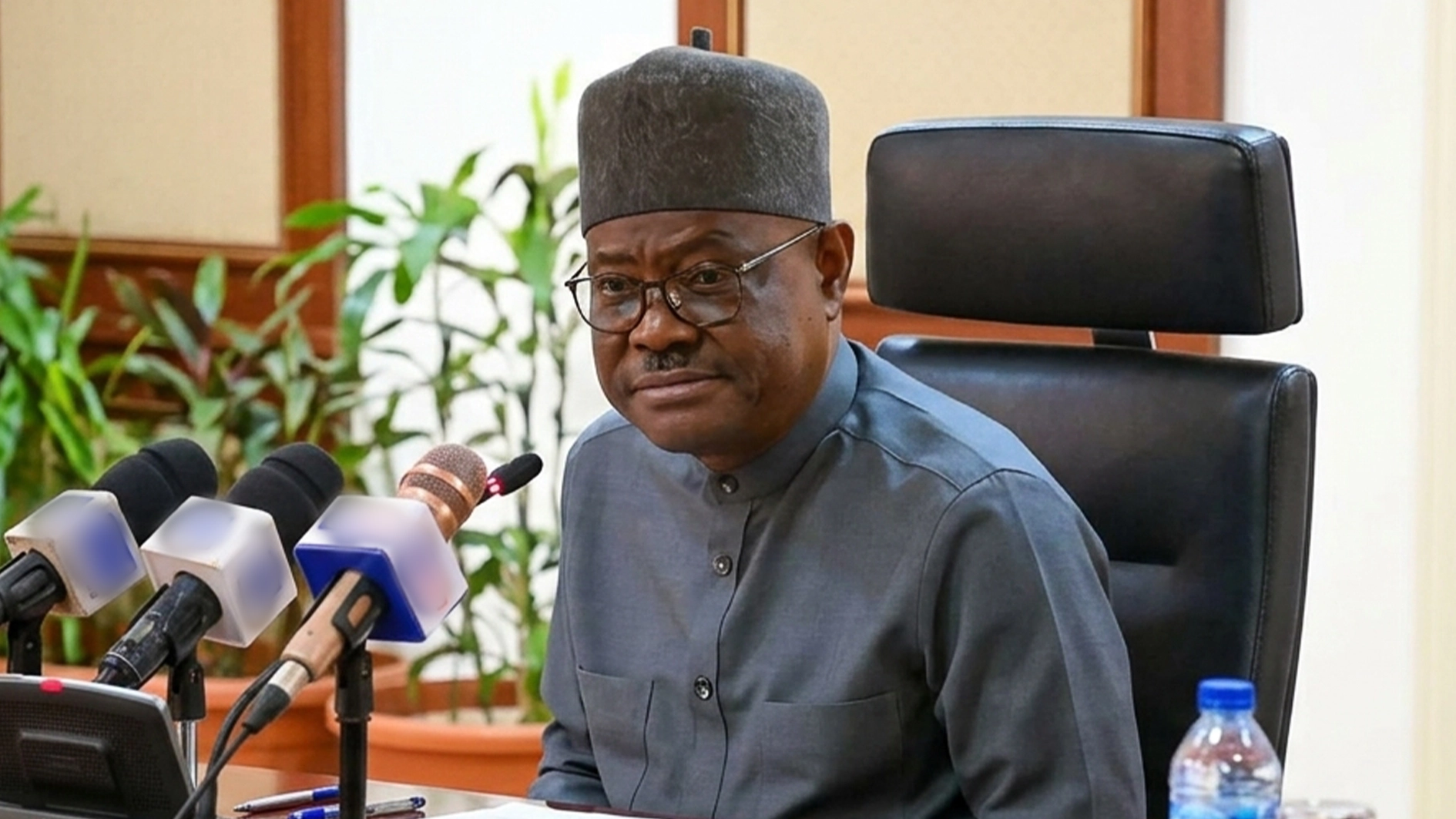
• No cause for alarm, says APC chairman
• APC govs should focus on re-election, leave Wike alone, Tella
• Current scenario differs from Obasanjo-AD alliance of 2003
• ADC: We are discussing with groups, serving, former govs
• Wike: G5 backed Obi to weaken Atiku, Makinde aide, Yesufu disagree
The political disagreement between governors elected on the platform of the All Progressives Congress (APC) and the Minister of the Federal Capital Territory (FCT), Nyesom Wike, over the emerging Rainbow Coalition has widened into a contest over the political machinery for President Bola Tinubu’s 2027 re-election campaign.
At the centre of the dispute is Wike’s insistence that politicians can support Tinubu for president while retaining the freedom to support or field candidates on other platforms for governorship and legislative elections.
The APC governors, through the Progressive Governors’ Forum (PGF), have taken a different position, declaring that they would not support any political arrangement capable of weakening the party, undermining its candidates or adversely affecting its electoral interests.
The disagreement has exposed competing interests between two political structures that both support Tinubu’s re-election but have different objectives in the governorship and legislative contests.
The PGF, led by Imo State Governor Hope Uzodimma, announced after a closed-door meeting in Abuja that APC governors would not participate in, support or endorse any alliance or political arrangement capable of undermining Tinubu’s re-election, weakening the APC or adversely affecting its candidates at any level.

According to him, it is a multi-party platform designed to mobilise support for Tinubu’s re-election.
“The coalition is a platform for other political parties that are pleased with the good works of Tinubu and are supporting his re-election. It has nothing to do with APC,” Wike said through his media aide, Lere Olayinka.
The distinction is significant because the 2027 elections will involve presidential, governorship, National Assembly and state assembly contests taking place within the same electoral cycle.
While Wike’s coalition is focused on the presidential contest, the APC governors are responsible for protecting their party’s interests across all levels of the election, particularly in states where their political futures are tied to the performance of APC candidates.
Battle over split loyalty
A renowned journalist and APC stakeholder in Osun State, Alhaji Liadi Tella, has described the controversy as a “storm in a teacup”, urging APC governors to concentrate on winning their respective states.
“Let everybody concentrate on their state and win their state. That is the goal of this election,” Tella said.
He also questioned the electoral significance being attached to the Rainbow Coalition, arguing that its impact should be measured by its actual presence and organisation across the states rather than by political speculation surrounding it.
“Is there a Rainbow Coalition in any other state? It is only when you find the Rainbow Coalition in a large number of states that it becomes worrisome,” he said.
Tella also challenged claims that politicians who failed to secure APC tickets during the primaries and subsequently moved to opposition parties were being encouraged or financed by Wike.
“Let any journalist provide me with the statistics of those defectors and what they have done between the period of the primaries and now that warrants the governors and legislators to be jittery, if they have truly done their due diligence,” he said.
His position reflects the view within some APC circles that the political influence of the Rainbow Coalition should not be exaggerated without evidence of a substantial grassroots structure capable of affecting electoral outcomes.
But the concerns expressed by the governors go beyond the present size of the coalition.
The apprehension is that a cross-party organisation capable of mobilising politicians and voters independently of APC structures could eventually become an alternative centre of influence during the 2027 election.
That possibility becomes more significant because governors remain central to the mobilisation of party structures at state, local government and ward levels.
But Wike’s position is built around the separation of the presidential contest from other elections.
The former Rivers State governor remains a member of the Peoples Democratic Party (PDP), even though he serves in the APC-led Federal Government as FCT minister.
His political relationship with Tinubu became particularly significant during the 2023 presidential election when Wike and the other members of the G5 governors declined to support the PDP presidential candidate, Atiku Abubakar.
For 2027, Wike has again declared support for Tinubu.
He has, however, made it clear that his support for the President does not mean that the PDP or other parties participating in the Rainbow Coalition must abandon their candidates in governorship and legislative contests.
For the APC governors, however, such competition could directly affect their candidates, political structures and, in some cases, their own succession plans.
The tension is therefore not necessarily over Tinubu’s candidacy but over the political consequences of supporting the President while opposing members of his party in other contests.
APC National Chairman, Prof Nentawe Yilwatda, has also sought to play down the suggestion that the disagreement could derail Tinubu’s 2027 project.
Speaking through his media aide, Abimbola Tooki, Yilwatda argued that politicians could support Tinubu at the presidential level while pursuing their interests in governorship and legislative elections.
“Support Mr President for his re-election, but in the governorship and legislative elections, go your own way. It is a win-win situation for us,” he said.
The position provides an important distinction between the party’s presidential objective and the individual electoral interests of politicians contesting other positions.
It also suggests that the APC leadership does not necessarily regard every political arrangement outside the formal APC structure as a direct threat to Tinubu’s re-election.
But the governors’ position demonstrates that the distinction becomes more complicated when the same political actors are seeking to retain control of state and legislative structures.
The current dispute has inevitably revived memories of the 2003 political experience involving the Alliance for Democracy (AD) governors in the South-West and former President Olusegun Obasanjo.
An APC member who was involved in the political structure affected by the 2003 experience said the circumstances surrounding the present disagreement were substantially different.
The party member, who asked not to be named, said the 2003 arrangement was essentially between the AD as a political party and Obasanjo, who was then president on the PDP platform.
The AD had no presidential candidate of its own. According to him, the current situation is different because Wike has not announced an alliance between the PDP and APC. Instead, he has declared support for Tinubu’s re-election while maintaining that other parties should remain free to contest governorship and legislative elections.
“Wike cannot be blamed for that because he is not a member of the APC. He has opted to work for President Tinubu’s re-election.
“The onus is on the APC governors to mobilise and work for their own victories in their respective states and constituencies,” he said.
The APC member, however, acknowledged that the arrangement could still create political complications if the competing structures become deeply involved in state and legislative contests.
Governorship and legislative candidates remain important building blocks of party organisation because they help sustain political structures beyond the presidential election.
That makes the contest between the APC governors and the Rainbow Coalition more than a disagreement over campaign rhetoric.
It is also a contest over political organisation.
From Rainbow to ADC
The dispute has also opened another front around possible conversations across party lines.
Former National Chairman of the African Democratic Congress (ADC), Ralph Nwosu, disclosed that several groups, as well as former and serving governors across party lines, were discussing with the party how to move Nigeria forward.
Although Nwosu declined to disclose the names of the governors, he confirmed that some serving APC governors were holding discussions with the ADC.
The claim has not, however, been independently established as evidence of impending defections or a coordinated plan by APC governors to abandon the ruling party.
Tella dismissed reports that APC governors were negotiating with former Vice President Atiku Abubakar and the ADC, describing such reports as part of the political narratives surrounding the 2027 election.
The competing claims illustrate the fluid nature of political alignments ahead of the general election, but they do not by themselves establish the emergence of a new political bloc within the APC.
As the 2027 campaigns move closer, the size, spread and effectiveness of the Rainbow Coalition, the response of APC governors and the ability of the Tinubu administration to accommodate both political networks will determine whether the coalition remains an additional presidential support platform or develops into a parallel force with wider consequences for the ruling party.
For now, the APC and Wike’s Rainbow Coalition are operating around the same presidential objective but with different political structures and interests.
Wike: G5 backed Obi to weaken Atiku, Makinde aide, Yesufu disagree
FORMER Rivers State governor and Minister of the Federal Capital Territory (FCT), Nyesom Wike, has disclosed that the five aggrieved Peoples Democratic Party (PDP) governors, popularly known as the G5, adopted a strategy during the 2023 presidential election to allow the Labour Party (LP) candidate, Peter Obi, to gain votes in parts of the South-South and weaken the chances of the PDP candidate, Atiku Abubakar.
Wike, who spoke with journalists yesterday after inspecting ongoing projects in Abuja, said the strategy was based on the assessment that Atiku posed the greater threat to the political interests of the G5 in the election.
He said the South-South had traditionally been regarded as a PDP stronghold, making the voting pattern in the region significant to the outcome of the presidential election.
According to him, the G5 therefore encouraged voters in certain areas to support Obi to prevent Atiku from benefiting from the region’s traditional PDP support.
Wike, however, said Rivers State was treated differently because of its political dynamics, dismissing claims that the state’s presidential election results were manipulated to favour Obi.
His comments have drawn criticism from Aisha Yesufu, a chieftain of the Nigerian Democratic Congress (NDC), who accused the FCT minister of lying about the claim.
Reacting in a post on X yesterday, Yesufu questioned Wike’s claim of political influence, citing the 2023 senatorial elections involving three members of the G5 governors.
“If Wike was that powerful, how come he couldn’t give them a win in an election that was on the same day and time!
“Wike is petrified of life outside of government!!!! E don dey clear for him eye!”
Also yesterday, the Special Adviser on Media and Digital Communications to Oyo State Governor Seyi Makinde, Anthony Ehilebo, criticised Wike’s Rainbow Coalition initiative, describing it as a self-serving and power-grab plan.
Speaking in Abuja, Ehilebo said the initiative had failed to address the economic hardship facing Nigerians.
Reacting to the ongoing political disagreement between Wike and Imo State Governor Hope Uzodimma, he said political alliances would have little significance unless they addressed the challenges confronting citizens.
“If the rainbow coalition can proffer a solution to feeding the hungry Nigerians or put money into the pockets of Nigerians, that will be nice; otherwise, I don’t see any importance in the so-called coalition,” he added.

