 Follow Us on Google News
 Follow Us on Google Discover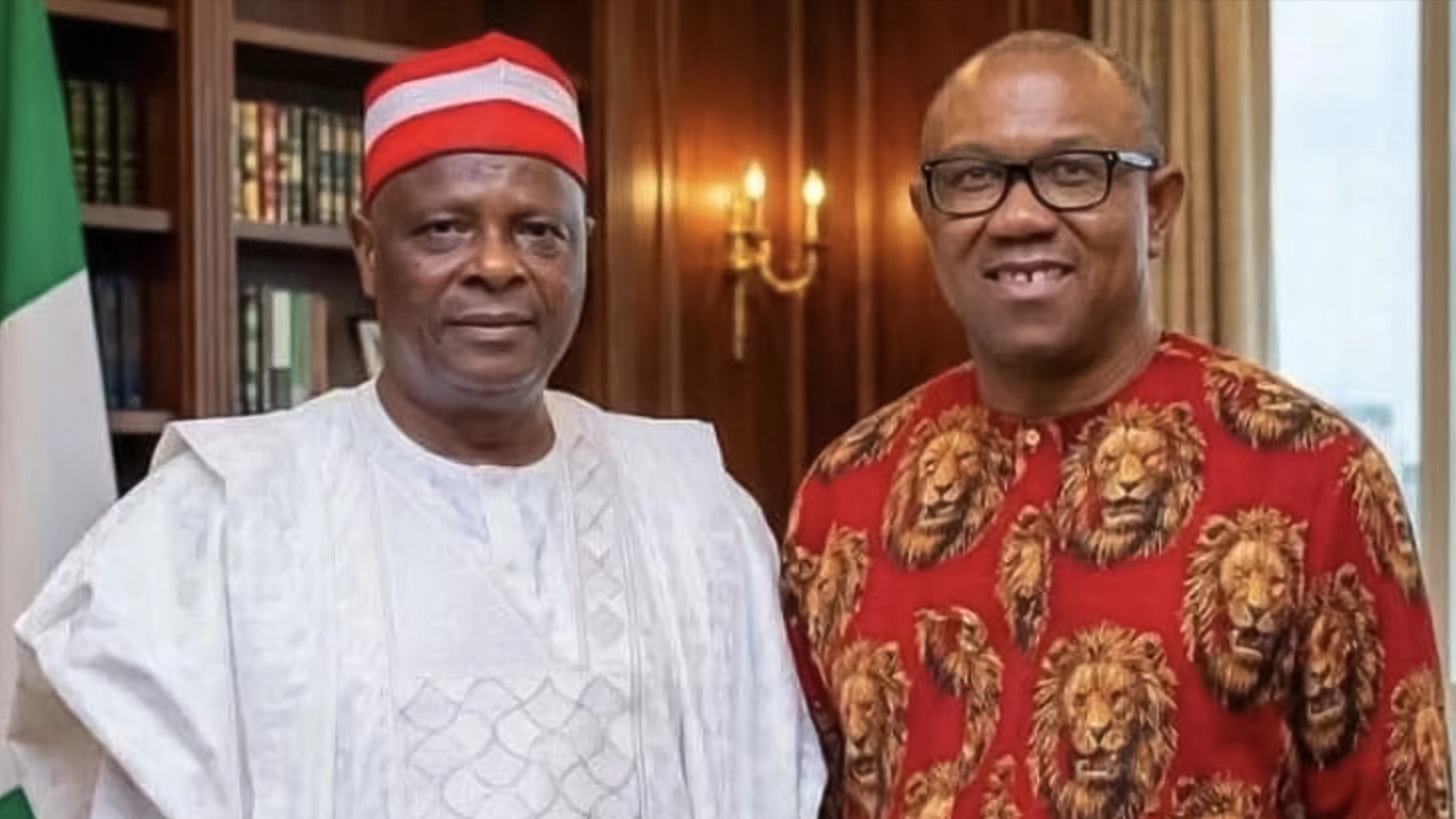
The Obidient/Kwankwasiya (OK) Movement has challenged the National Leader of the Nigeria Democratic Congress (NDC), Senator Seriake Dickson, over the control of its political structure ahead of the 2027 general elections.
The movement, formed around the mobilisation of supporters of Peter Obi and Senator Rabiu Musa Kwankwaso, has emerged as a grassroots political organisation within the wider political structure backing the Nigeria Democratic Congress, NDC.
The movement insisted that its Presidential Campaign Council remains intact, despite opposition from sections of the NDC leadership.
Recall that Senator Dickson had clarified that the party’s recognition of political support groups does not extend to allowing them to operate as parallel structures to the party.
Dickson explained further that support groups backing the NDC’s presidential candidate, Peter Obi, and his running mate, Rabiu Kwankwaso, have an important role in grassroots mobilisation but cannot assume the functions of the political party or its official campaign organisation.
His clarification followed the controversy generated by the 59-member Presidential Campaign Council announced by the Obi-Kwankwaso (OK) Movement.

But the OK Movement, in a statement signed by its National Director General, Hon. John Ozyl Ughulu, declared that its structure did not require the approval of Dickson or any other NDC leader.
The movement maintained that it was an independent political organisation with its own leadership, principles and organisational structure.
It said its independence predated the announcement of its Presidential Campaign Council.
The group argued that the NDC could establish and manage its own campaign structures but could not automatically determine the internal structure of an organisation it described as independent.
The OK Movement also rejected any suggestion that it was trying to establish superiority over the NDC.
It said the party and the movement were separate entities with different organisational structures.
The group further maintained that its grassroots mobilisation structure was not created through financial support from NDC presidential candidate, Peter Obi, or the party.
According to the movement, every candidate contesting on the NDC platform could benefit from its grassroots mobilisation.
It therefore said no candidate should consider himself or herself superior because of political office or proximity to the party leadership.
The OK Movement warned against any attempt to “undermine, appropriate, dissolve or otherwise interfere” with its leadership and organisational structure.
It said such attempts would be resisted.
The group, however, said the dispute was not about confrontation but about what it described as institutional respect and organisational independence.
The movement said it remained open to working with the NDC, provided its principles and organisational identity were respected.
It added that it would not abandon its structure to satisfy the preferences of any individual or group.
The OK Movement ended its statement with a firm declaration that its Presidential Campaign Council remains as announced, while its principles and mission remain unchanged.

