 Follow Us on Google News
 Follow Us on Google Discover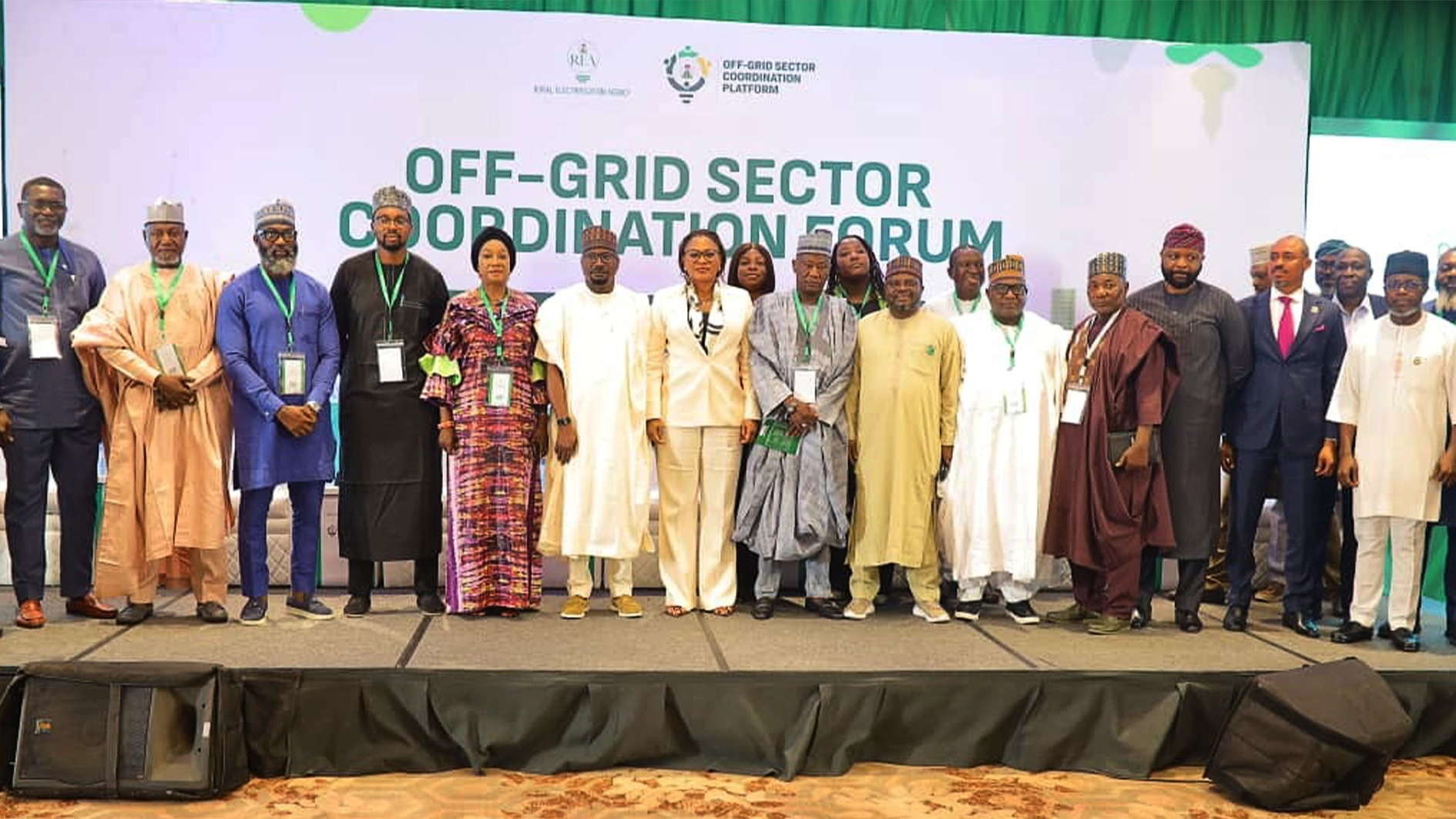
Stakeholders in Nigeria’s renewable-energy sector, on Monday, called for stronger coordination among government agencies, state governments, development partners and private-sector operators to end duplication, reduce waste and accelerate the development of sustainable off-grid electricity markets.
The stakeholders spoke in Abuja during the relaunch of the Off-Grid Stakeholder Coordination and Partnership Forum, noting that an analysis of government-funded power projects for 2024 and 2025 showed several institutions, including agencies outside the conventional power sector structure, were implementing electricity projects.
Speaking at the forum, the Minister of Power, Chief Joseph Olasunkanmi Tegbe, said the Federal Government considered energy access a critical foundation for job creation, industrialisation and inclusive economic growth.
The forum was organised by the Rural Electrification Agency (REA) with the theme, “Repositioning Sector Coordination for Strategic Growth, Partnership and Delivery.”
Tegbe, represented by his Chief of Staff, Doyin Adelabu, said Nigeria’s off-grid and distributed renewable energy sector had become central to the country’s strategy for expanding electricity access, alongside grid expansion and reforms.
Tegbe warned that the scale of ambition would not automatically translate into scale of delivery without effective coordination.

He said: “Fragmentation is the quiet tax every under-coordinated sector pays: in duplicated effort, missed investment opportunities, and slower delivery of power to the Nigerians who need it most.”
In his remarks, the Managing Director/Chief Executive Officer of REA, Abba Abubakar Aliyu, said poor coordination had become a major challenge in the power sector, resulting in overlapping projects and inefficient deployment of scarce financial resources.
He said the findings underscored the need for stakeholders to know who was implementing what, where projects were located and the resources committed to them.
According to him, duplication was occurring even within the rural electrification agency, with instances where different programmes selected the same project locations.
He said: “If coordination is challenged at the micro level of the Rural Electrification Agency, just imagine what it is at the sector level. One critical point raised by one of the speakers is that funding to the sector is shrinking, which means we have to be innovative and efficient in deploying the scarce funds we have.
“One thing that will drive that efficiency is coordination, knowing who is doing what, at what level, and what needs to be done.”
He also stressed the need for greater involvement of state governments, following the expanded role of states in electricity-market development under the Electricity Act.
The REA boss warned that without effective coordination among the Federal Government, states and other stakeholders, the emergence of multiple state electricity markets could make national electrification programmes more difficult to implement.
Aliyu also said stakeholders would be given access to sector data being developed, with plans to eventually make the platform available through an application.
Speaking earlier, Executive Director, Rural Electrification Fund, Engr. Doris Uboh-Ogunkoya, said Nigeria’s off-grid sector had grown from a relatively small ecosystem of pilot projects into an expanding market involving government institutions, development partners, financiers, private operators, manufacturers and industry associations.
She said the next phase required stronger collaboration because financing constraints, state-level participation, local-content priorities and the need to mobilise private capital were reshaping the sector.
Uboh-Ogunkoya said the coordination forum would operate as a continuous platform anchored by a dedicated Off-Grid Coordination Secretariat, issue-based working groups, action tracking, knowledge management and shared sector intelligence.
She said the objective was to move beyond meetings and ensure that stakeholders agreed on specific priorities, assigned responsibilities and tracked implementation.
Also speaking, Heinrich Böll Nigeria representative, Ikenna-Donald Ofoegbu, said Nigeria needed to move beyond measuring off-grid development by the number of mini-grids installed or connections delivered.
He said the focus should increasingly be on how electricity was improving livelihoods, supporting enterprises and transforming local economies.
Ofoegbu called for greater use of electricity in agriculture, agro-processing, cold storage, irrigation, milling, welding and digital enterprises, saying productive use of energy could translate electricity access into jobs and income.
He also advocated patient and innovative financing to attract commercial investment while reducing risks for underserved communities.
According to him, stakeholders must ensure that mini-grid investments remain viable through effective operations and maintenance, sustainable tariffs, equipment replacement, consumer protection, developer viability and community participation.
He said the country must also develop local capacity in renewable-energy manufacturing, technology, financing, research and entrepreneurship.
Ofoegbu said: “The question now is how we move from successful interventions to scale; from connections to productive use; from donor-supported projects to investable markets; and from individual programmes to a coordinated national ecosystem.”
The forum brought together representatives of government, state authorities, development partners, financial institutions, private-sector developers, civil society organisations and renewable-energy industry groups to discuss financing, policy, investment, data sharing and the future of Nigeria’s off-grid energy market.

