 Follow Us on Google News
 Follow Us on Google Discover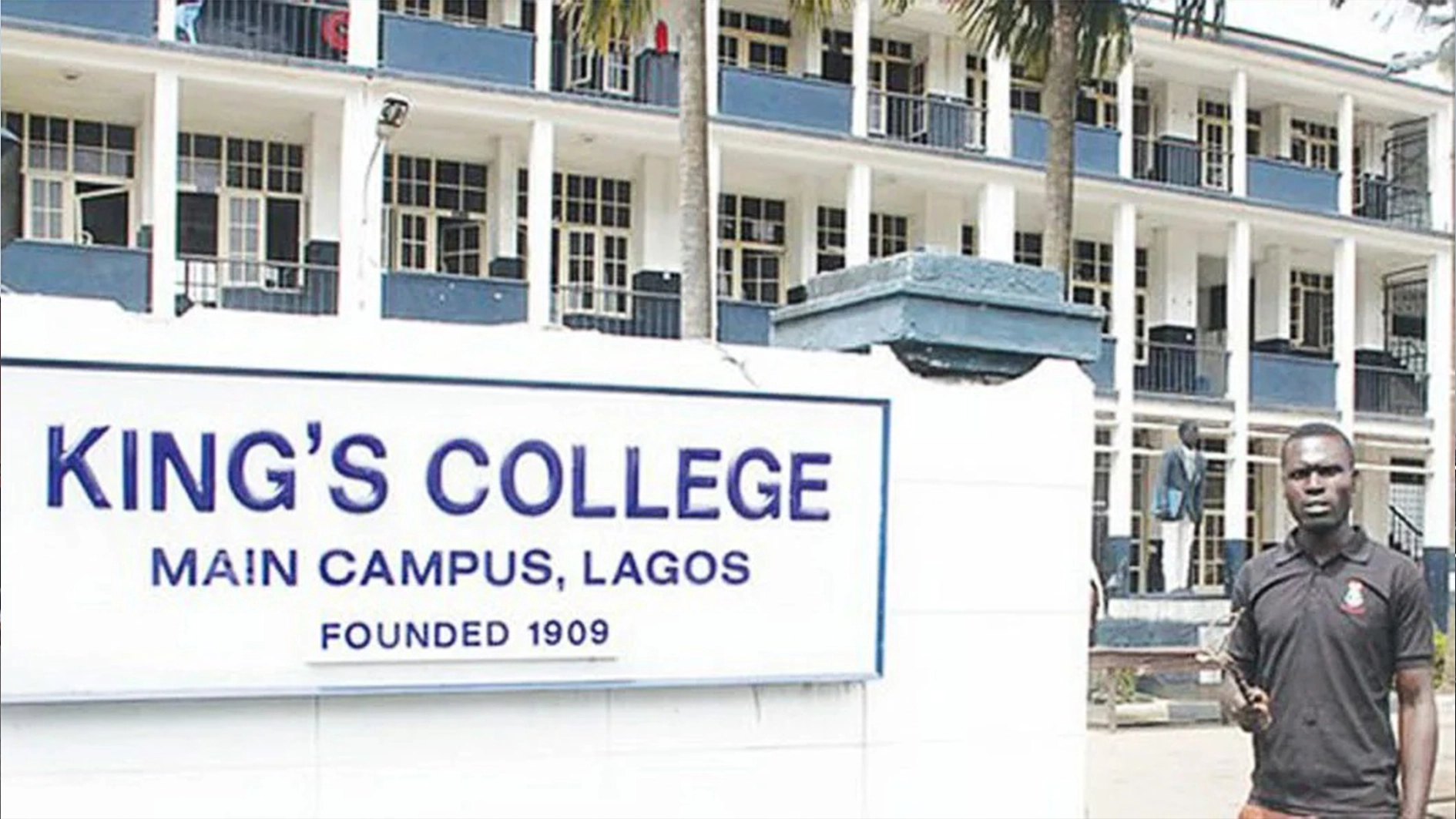
***Committee may seek extension
The seven-member committee reviewing the controversial concession of the 117-year-old King’s College, Lagos, is yet to sit, with its two-week deadline ticking and the panel now likely to seek an extension after its inaugural meeting was postponed from Monday to Wednesday.
The delay comes just days before the expiration of the two-week window agreed by the Federal Government, labour and the King’s College Old Boys’ Association (KCOBA) to resolve the dispute, raising questions over whether the panel will have sufficient time to examine the contentious agreement and submit its recommendations.
The committee was originally scheduled to begin sitting in Abuja on Monday, but the meeting was postponed to Wednesday, leaving the panel with only a few days to consider a wide range of issues surrounding the concession before the agreed timeline expires.
A member of the committee who spoke to our correspondent, revealed that the inaugural meeting was earlier slated for 10am on Monday, shifted to 2pm before it was postponed to Wednesday.
She said the union representatives were asked to submit a position paper on the King’s College concession as a condition precedent to convening the meeting.

“We were asked to come with a position paper on concession. And they just informed us today (yesterday). We were still waiting for details of other documents as no annexures were attached to the concession agreement” the source said.
She also disclosed that although the 38-page document contained details of the concession, other crucial aspects like strategic funding & sustainability plan as well as staff transition and protection framework were conspicuously missing.
At the heart of the dispute is the concession agreement between the Federal Ministry of Education and King’s College Education Trust Limited, the special purpose vehicle established by KCOBA to manage the arrangement.
While the concession was initially presented publicly as a 35-year deal, documents obtained by The Guardian show that the agreement signed on August 7 provides for an initial 50-year term, potentially running to 2076.
The discrepancy is expected to be one of the issues before the panel, alongside questions over government funding, staff welfare, school fees, operational control, KCOBA’s financial obligations and the future management of the historic institution.
The delay in commencing the review has also heightened expectations that the committee may seek an extension of the two-week timeline to enable it to properly interrogate the agreement and reconcile the sharply divergent positions of the parties.
The panel emerged from a two-week truce reached after weeks of escalating disagreement, protests and disruption of academic activities in the Federal Unity Colleges.
Under the agreement, implementation of the King’s College concession was suspended for two weeks to allow the contentious issues to be examined. The parties also agreed to suspend industrial action, redeploy police personnel from King’s College and establish the seven-member committee.
With academic activities in the Unity Colleges having resumed on Sunday, September 27, the panel is now racing against time to complete its assignment while the deadline for its report approaches.
The committee comprises two representatives of the Federal Ministry of Education, including the Minister of State for Education and the Acting Permanent Secretary; one representative of the Federal Ministry of Labour and Employment; two senior-level representatives of the Trade Union Congress (TUC); and two representatives of KCOBA.
Beyond the duration of the concession, the panel is expected to confront the more fundamental question of whether the arrangement should proceed at all.
The Innocent Bola-Audu-led faction of the Association of Senior Civil Servants of Nigeria (ASCSN), backed by the Joint Workers Council (JWC) of unions at the Federal Ministry of Education headquarters, is calling for the complete reversal of the arrangement.
The faction maintains that the Federal Unity Colleges are national heritage institutions that should remain under direct government control, potentially putting the basis of the King’s College concession before the panel.
That position could test the scope of the committee’s mandate, particularly whether it is limited to reviewing and possibly amending the terms of an existing concession or whether it can recommend that the agreement itself be reconsidered.
The Guardian reports that another major issue awaiting the committee is the future financing of the institution.
The Federal Government has indicated that its funding would cease after the transition to the concession arrangement, raising questions about how the school would finance its operations, maintenance and future development once KCOBA assumes responsibility.
Although the government has maintained that it retains ownership of King’s College, the agreement places responsibility for financing, rehabilitating, operating and maintaining the institution on King’s College Education Trust Limited.
The panel will therefore have to define the boundaries between government ownership and concessionaire control, particularly over admissions, fees, staffing, infrastructure, procurement and general administration.
Staff welfare is also expected to feature prominently in the negotiations, with workers seeking guarantees on employment, salaries, pensions and other accrued rights during and after the transition.
Questions remain over which employees will retain their status under the Federal Civil Service Commission, who will employ and pay workers under the concession and what happens to staff who are unwilling to transfer to the new arrangement.
School fees are another contentious issue, particularly amid concerns that substantial investment in rehabilitation and modernisation could make the institution less affordable to ordinary Nigerian families.
The committee is also expected to scrutinise KCOBA’s financial obligations under the agreement.
The association has said it has invested more than N2 billion in the school and pledged over N100 billion for its development. The panel will need to establish which of those commitments are contractually enforceable, the timelines for delivery and the consequences of failing to meet agreed targets.
The agreement’s termination, dispute-resolution and government step-in provisions are also expected to come under scrutiny, particularly given the proposed 50-year lifespan.
Stakeholders are expected to seek clear safeguards enabling the government to intervene or terminate the arrangement in the event of serious default by the concessionaire.
Transparency is another unresolved issue. Labour and other stakeholders had complained that they were not given access to the full concession agreement, while the emergence of the complete document has brought previously unclear provisions, including the 50-year tenure, into sharper focus.
The committee is therefore under pressure not only to resolve the substantive disagreements but also to ensure that any amendments to the agreement and its final recommendations are clearly communicated to affected stakeholders.
Beyond King’s College, labour is concerned about the precedent the concession could create for other Federal Unity Colleges.
Although the Minister of Education, Dr Tunji Alausa, has said there are no plans to concession other Unity Colleges, the unions want assurances that the King’s College arrangement will not become a template for transferring the management of other public schools to private or alumni-backed entities.
With the panel yet to hold its inaugural meeting and its two-week window already nearing its end, the immediate question is whether it can complete a review involving the concession’s tenure, funding, control, workers’ rights, fees and investment obligations within the remaining days.
The postponement of Monday’s meeting to Wednesday means the committee will have even less time to reconcile the divergent positions and produce a report capable of addressing the dispute rather than merely extending the truce.
With the concession potentially running until 2076, the committee’s handling of the compressed timeline could become as consequential as the recommendations it eventually makes.

