 Follow Us on Google News
 Follow Us on Google Discover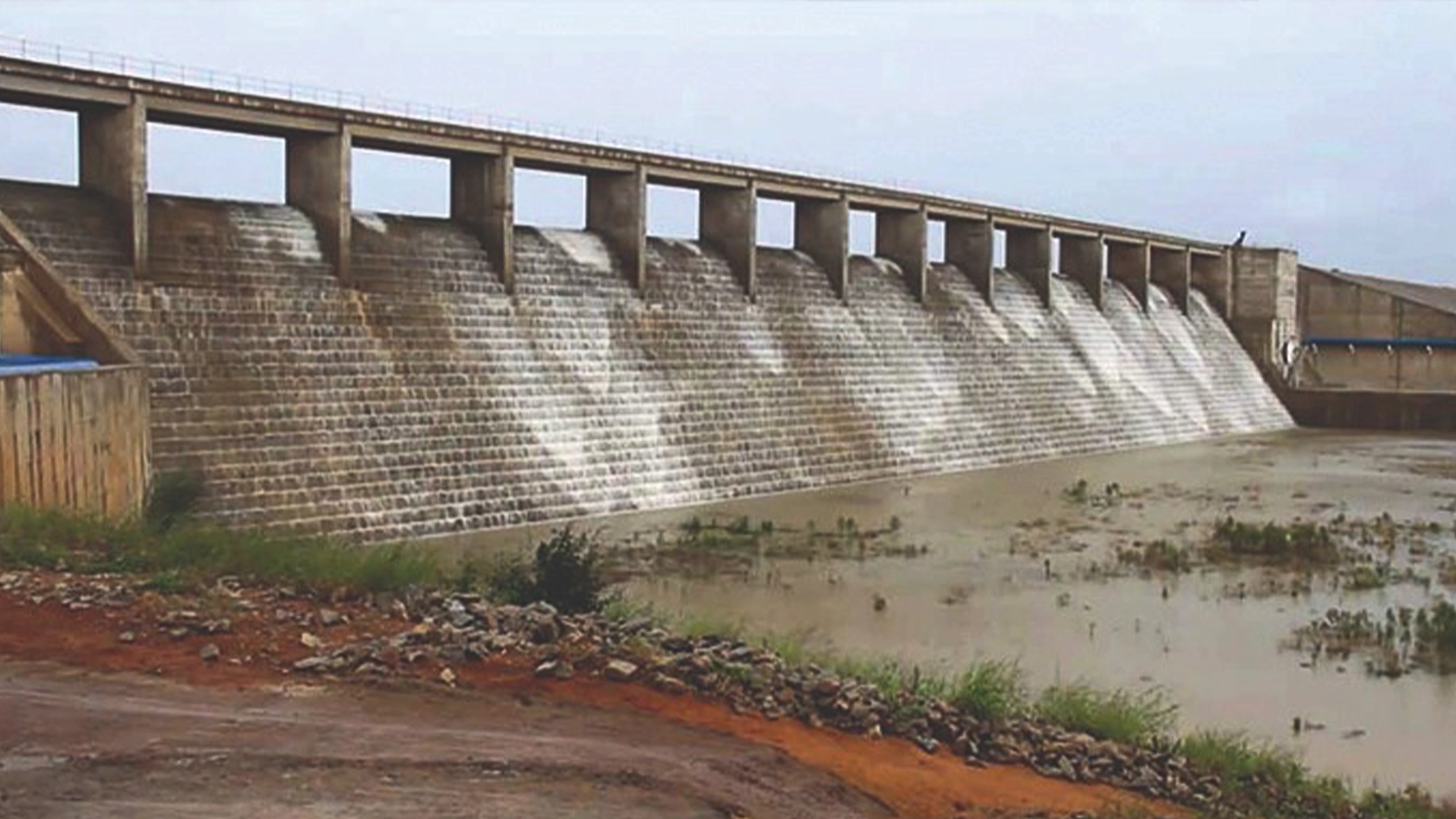
As concerns over abandoned and slow-paced dam projects intensify, AMEH OCHOJILA juxtaposes the federal government’s blame on funding, engineering and resettlement challenges with the implications of the delays on national food security and the wider economy.
As Nigeria grapples with food insecurity, there is a compelling reason to look beyond this.
One such area identified as a major constraint to improved agricultural productivity is inadequate water infrastructure resulting from unfinished water projects.
This is particularly significant for the President Bola Ahmed Tinubu-led administration, which has made food security a central focus of its economic agenda and has further declared a state of emergency on food security.
Yet, several strategic dams countrywide, conceived to expand irrigation, provide water and generate electricity, have remained under construction for years, delaying the productive capacity they were designed to unlock.
When the Kafin Zaki Dam project was launched in the early 1980s, the promise of a new future stirred hope across communities in Bauchi State. For people who had endured years of water scarcity and uncertainty, the prospect of a major dam came with great expectations of relief from decades of scarcity.

Hundreds of kilometres away in Benue State, the story was not fundamentally different. For residents of Otukpo and surrounding communities, the proposed Otukpo Dam carried the same promise – an end to the daily struggle for water, and the prospect of a project that will support agriculture and improve livelihoods through government intervention.
But years after the promises were made, frustration has replaced the earlier hope.
Over four decades after the commencement of work on Kafin Zaki, the dam remains one of the country’s longest-running uncompleted water projects. Otukpo Dam also symbolises a project whose promises have outlived successive administrations.
According to records, about 50 dams have been listed as ongoing or uncompleted, raising accountability questions considering billions of naira earmarked for them.
For communities waiting for Kafin Zaki, Otukpo and other uncompleted dams across the country, Nigerians are concerned that projects conceived to solve water challenges have become symbols of delay and weak accountability.
Other similar projects include the Mangu Dam in Plateau State, the Adada Dam in Enugu, the Ogbesse Dam in Ondo, the Otukpo Multipurpose Dam in Benue, and the Farin Ruwa Multipurpose Dam in Nasarawa State, alongside major reservoirs undergoing rehabilitation, including the Tiga and Challawa Gorge dams in Kano State and the Alau Dam in Borno State.
These projects were conceived not only as water-retention structures but also as economic infrastructure expected to support irrigation, potable water supply, hydropower, agricultural production, and rural economic activity.
For instance, Ogbesse and Farin Ruwa are designed as multipurpose projects for irrigation, domestic water supply, and power generation; Tiga and Challawa Gorge dams are closely linked to irrigation and water supply in the state, while Alau Dam aims to restore water storage capacity, irrigation, and potable water supply.
The Mangu Dam in Plateau State was originally awarded at N5.66 billion but later reviewed upward to N13.2 billion following a N7.66 billion contract augmentation.
The Adada River Dam in Enugu State was originally awarded at N2.58 billion, while the Otukpo Multipurpose Dam in Benue State was awarded at N17.18 billion in 2010 alongside a proposed 3.3MW hydropower component.
The Farin Ruwa Multipurpose Dam in Nasarawa State has also undergone a significant cost revision of N8.14 billion for its completion.
In the 2011 budget, the federal government earmarked N2 billion for the Otukpo Multipurpose Dam and N460.29 million for the Ogbesse Dam and Irrigation Project.
The 2013 budget also allocated N529.77 million for the Otukpo Dam, N134.31 million for the Adada River Dam in Enugu State, N517.91 million for the Mangu Dam in Plateau State, and N327.55 million for the Ogbesse Dam and Irrigation Project.
In 2014, Otukpo Dam received an additional N550.51 million, while N378.35 million was provided for Ogbesse Dam and Irrigation.
The pattern continued in 2017, with N461 million allocated for construction works at the Ogbesse Earth Dam, including the embankment, spillway, and inlet and outlet structures.
Therefore, it is not only about how much has been appropriated for the projects but also about the losses resulting from their incompletion. A dam designed to irrigate thousands of hectares of land cannot contribute to food production until its reservoir, irrigation network and associated infrastructure become operational.
Every year of delay, therefore, represents not only deferred infrastructure spending but also another agricultural cycle in which farmers remain dependent on increasingly unpredictable rainfall.
A development expert, Victor Idaji of Socio-Economic Research and Development Centre (SERDEC), believes the debate should move beyond the neglect of individual projects to the wider consequences of prolonged delays.
He said that every unfinished dam represents lost irrigation opportunities, unrealised hydropower, interrupted water supply schemes, and billions of naira lost to the economic value chain.
Idaji insisted that in a country where agriculture remains the largest employer of labour, delayed water infrastructure translates directly into lower food production, fewer rural jobs, and slower economic growth.
Responding to public concerns, the director overseeing the Office of the Permanent Secretary, Federal Ministry of Water Resources and Sanitation, Ali Ibrahim Dallah, maintained that the claim that several dam projects have been abandoned is inaccurate.
Although he admitted that work had been slower than originally projected, he blamed it on technical, financial and social challenges.
He also stated that considerable progress had been made on some strategic projects, including Mangu, Ogbesse and Farin Ruwa dams.
As food prices rise and farmers face erratic rainfall, insecurity and climate change, citizens demand accountability for infrastructure projects that have allegedly consumed huge public resources over the years.
In response, the ministry also disclosed that Mangu Dam was between 88 and 90 per cent complete, with contractors still working on site. It also said that construction was progressing at Ogbesse and Farin Ruwa dams, contrary to claims that the projects had been abandoned.
A water engineer and principal consultant with J. Waters Consult, James Alom, argues that, beyond geological challenges and project rescoping, dam construction requires a diligent, time-consuming process.
An agricultural economist, Akanu Ude, however, stressed the relevance of the projects to farmers, while also expressing concern that, despite vast surface and underground water resources, farming remains overwhelmingly dependent on seasonal rainfall, leaving millions of farmers vulnerable whenever rain arrives late, ends prematurely, or fails altogether.
“There is no doubt that reduced harvests lead to lower farm incomes, tighter food supplies and rising prices, worsening inflation and increasing pressure on household incomes”, Ude said.
As climate change makes rainfall patterns less predictable, irrigation is becoming less of an option and more of an economic necessity. Completing strategic dam projects can therefore alter the country’s agricultural outlook.
Reliable irrigation will equally enable farmers to cultivate crops during and outside the rainy season, increase cropping intensity, improve yields and reduce weather-related production losses. It will equally encourage commercial agriculture by making year-round farming more predictable and profitable.
The economic benefits of dams extend beyond crop production. Multipurpose dams support fisheries, livestock production, industrial water supply, tourism and small-scale manufacturing, while reservoirs can stimulate transportation, agro-processing, commerce and other activities that transform surrounding rural communities into productive economic hubs.
Beyond agriculture, the Ogbese and Farin Ruwa dams are expected to contribute about 20 megawatts of electricity upon completion.
But Dallah insisted that dam construction is fundamentally different from conventional infrastructure projects, and that engineers often encounter unforeseen geological conditions after excavation begins, requiring additional investigations, redesigns, and project rescoping to ensure structural integrity and long-term safety, which inevitably extend construction timelines.
“Ignoring such technical realities in the interest of speed could create even greater safety and financial risks,” he said.
Another significant challenge, according to him, is the resettlement of communities affected by reservoir development. Unlike road or public building projects, dam projects frequently require the relocation of entire settlements within reservoir catchment areas.
“Such exercises involve compensation, housing, schools, healthcare facilities, roads and other social infrastructure that require careful planning and collaboration with state governments.
“Funding is also a major constraint. Large dams require sustained financing over several years, but fluctuating annual budgetary allocations, inflation, exchange-rate volatility and rising construction costs have repeatedly slowed implementation,” Dallah said.
Recognising these realities, the ministry says it is diversifying funding sources beyond annual budgetary appropriations through the World Bank, Sukuk instruments and Public-Private Partnerships to bridge funding gaps and accelerate project completion.
For the President Tinubu-led administration, the successful completion of these projects will demonstrate tangible progress towards delivering one of its most important economic promises – food security.
Reliable irrigation has the potential to increase domestic food production, stabilise prices, strengthen climate resilience and reduce Nigeria’s dependence on imported food.
Consequently, the government’s assurances will ultimately be judged not by official statements but by completed dams delivering measurable benefits to farmers, businesses and communities.
Until the projects become fully operational, their enormous economic promises will remain largely unrealised.

