 Follow Us on Google News
 Follow Us on Google Discover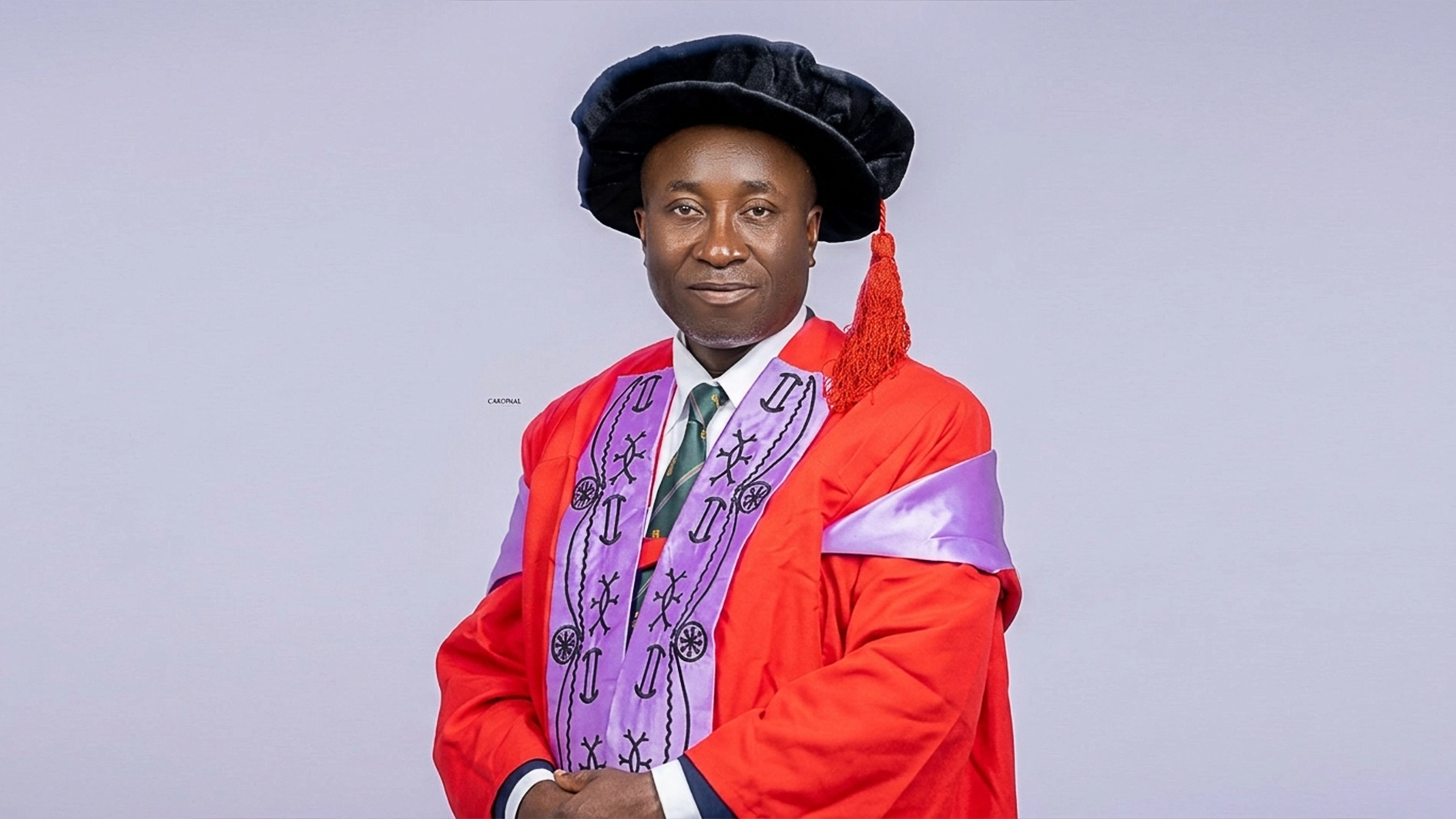
The strength of any health institution rests on leadership that can align clinical excellence with an ethical culture and sustain harmony among diverse professional interests. It was on this understanding that the appointment of Professor Emmanuel Chino Iyidobi as Medical Director of the National Orthopaedic Hospital Enugu attracted quiet confidence rather than doubt among those who had followed his professional journey. To them, his antecedents spoke clearly. Four years in that office, he has not only justified that confidence but surpassed it.
Prof. Iyidobi stands as one of the most accomplished orthopaedic and spine surgeons of his generation, a scholar whose depth extends beyond the theatre into research, teaching and institutional reform. Across a career spanning 27 years, he has distinguished himself through a blend of surgical precision, academic rigour, innovative thinking and selfless service. His story is one of disciplined excellence translated into transformative leadership, a profile that continues to raise the bar for professional standards in Nigeria’s tertiary healthcare sector.
His foundation remains firmly rooted in rigorous training. After obtaining his MB;BS from the University of Nigeria in 1998, he advanced into demanding postgraduate work in Orthopaedics and Traumatology and secured not only the Fellowship of the West African College of Surgeons but also the prestigious Fellowship of the National Postgraduate Medical College in Orthopaedics, a dual recognition that underscores the depth of his clinical grounding. A natural pace setter, he ranks among the leading indigenous Professors of Orthopaedics and Traumatology of Enugu State origin and belongs to the first set of Nigerian orthopaedic surgeons to earn a Ph.D. in Neurophysiology. Yet his conception of mastery was never confined to the operating theatre. To strengthen clinical judgement with scientific insight, he pursued advanced degrees in Human Physiology, earning both an M.Sc. and a Ph.D., while an MBA in Healthcare Financing later broadened his perspective to the economics and governance that sustain modern health systems.
That academic range has been matched by a clinical exposure that spans continents. His expertise has been sharpened through AOSpine and AO Trauma programmes in Africa, through advanced fellowships and specialist courses in Germany and the United Kingdom and through further training in North America. It is a formation that stretches from the Niger to the Nile and across Europe and the Americas, producing a surgeon who blends global best practice with an intimate understanding of local realities.
His scholarly footprint is both prolific and purposeful. With more than 50 peer-reviewed publications, Prof. Iyidobi has expanded understanding of trauma, spinal disorders, arthroplasty, musculoskeletal infections, biomechanics and surgical outcomes within low- and middle-income settings. His work has found space in respected outlets including The Lancet Global Health, International Orthopaedics (SICOT) and SICOT-J, a marker of its scientific credibility and international relevance. What distinguishes his research is its character: rigorous in method, clinically anchored and consciously tailored to improve outcomes where resources are constrained.
Beyond the written page, his influence circulates through discourse and direct mentorship. He has presented his findings at national and international fora, translating data into practice and helping to shape professional debate. As a supervisor of at least 20 postgraduate dissertations for fellowships and Ph.D., he has guided specialist trainees through complex clinical inquiry and quietly strengthened Nigeria’s orthopaedic workforce. Many of those he trained now serve as consultants and leaders in their own right, an enduring testament to his role as a builder of people.
That commitment extends into the classroom and the wider public sphere. Prof. Iyidobi has served across institutions as lecturer, adjunct faculty, visiting professor, postgraduate trainer and examiner, teaching anatomy, physiology, orthopaedics, trauma and reconstructive surgery and bridging basic sciences with advanced practice. Both the West African College of Surgeons and the National Postgraduate Medical College of Nigeria engage him as a resource person, reflecting the trust reposed in his judgement at the highest level of postgraduate medical education in the region. Outside academia, he has delivered 17 invited public lectures on subjects ranging from trauma prevention and arthritis to spinal injuries, surgical ethics and quackery, driven by a conviction that medical knowledge must serve society rather than remain enclosed within hospital walls.
Leadership, in Prof. Iyidobi’s hands, has translated into tangible goodwill for the National Orthopaedic Hospital Enugu. His credibility and public trust as Medical Director have attracted significant donations and grants that extend far beyond routine administration. These interventions, ranging from financial support for indigent patients to medical equipment, books, transport vehicles and welfare materials, have fed directly into patient care and institutional capacity.
His stewardship as Chief Medical Director rests on a clear tripod of service delivery, human resource development and infrastructural renewal. This framework reflects Prof. Iyidobi’s coherence of vision, where reform is measurable and outcomes are verifiable. Under his leadership, service delivery expanded across radiology, anaesthesia and neurosurgery, while utilisation surged in outpatient departments, specialty clinics, surgical operations, laboratory services, and prosthetics and orthotics. Radiology exemplifies this shift, with access more than doubling in four years — utilisation rising from 15.1 per cent at inception in 2022 to 64.7 per cent in 2025 — alongside similar trajectories in surgeries and satisfactory patient- and clinician-reported outcomes.
Excellence under his watch earned external validation that was impossible to ignore. In 2024, SERVICOM conferred on the hospital its award for best institution with service innovation, a direct recognition of systems Prof. Iyidobi instituted to prioritise responsiveness and patient experience. It shows a leader for whom innovation is not performative but rooted in improved access, reduced waiting times and stronger clinical pathways.
Industrial harmony has been sustained not by chance, but by deliberate and proactive leadership. Through strategic staff engagements and welfare programs, his administration has maintained stability throughout the period, addressing long-standing grievances through the promotion of due and long-stagnated staff and expanding the workforce by about 50 per cent. The restoration of staff bus services and conversion of qualified personnel to higher, more productive positions further reinforced morale, ensuring no local industrial action in the hospital in the past four years.
Investment in welfare was matched by bold expansion of training and career pathways.Training opportunities for resident doctors were broadened to include additional specialties in radiology, anaesthesia and neurosurgery while the Institute of Orthopaedics and Plastic Surgery was established to curb internal brain drain among doctors. Under Prof. Iyidobi, consultants rose from about 18 in 2022 to 50 in 2025. In response to ministerial directives to address national health workforce shortages, the College of Nursing Sciences was established, now hosting about 1,200 native students in addition to about 5,000 visiting orientation students.
Infrastructure tells its own story of revival and forward planning. Several ageing buildings were renovated while new ones are at different stages of completion, notably the completed accounts and audit building and the ongoing 10-suite theatre and students’ hostels. The hospital was equipped with fluoroscopic machines, a 32-slice CT scan, multiple X-ray machines and novel ultrasound machines alongside critical ICU and theatre equipment. Each acquisition reflects a competence that understands diagnostic accuracy and operative capacity as inseparable from orthopaedic outcomes.
Power, long a constraint in public hospitals, during his administration, was stabilised through strategic engineering. New 250KVA and 110KVA generators were installed and solar infrastructure of various capacities was deployed across all wards, theatres and some offices, securing supply while significantly reducing diesel costs. In collaboration with the Rural Electrification Agency, a Federal Government allocation of a 1MW solar installation was secured, with all solar panels already delivered to site by the contractor. It is the kind of foresight that positions the Prof. Iyidobi’s led National Orthopaedic Hospital Enugu for sustainable energy independence.
Security, digital systems and environment received equal and deliberate attention under his stewardship. Prof. Iyidobi installed CCTV monitors with real-time surveillance across the hospital, deployed street lights for night visibility, cleared bushes that once provided cover for criminal activity and promptly repaired fallen segments of the perimeter fence. He deployed Electronic Medical Records to most service points to ensure security and authorised access to patient information while preserving green areas through regular mowing and trimming, strengthening the environmental health department to optimise cleanliness and prioritising water supply through reactivation of reservoirs and strategic rainwater collection, storage and reticulation.
What places Prof. Iyidobi among Nigeria’s most visionary and impactful professionals today is not just what he has built, but how he has chosen to lead. His appointment as Medical Director represents the culmination of decades of dedicated service within the National Orthopaedic Hospital Enugu, yet his leadership is defined by strategic foresight and uncommon accountability. He engages directly with both clinical and administrative challenges, chairing and serving on numerous committees for clinical governance, protocol development, digital health deployment, essential drug management, patient safety and residency training. Through these roles, he has institutionalised standards, systems and processes that will outlast individual tenures, transforming episodic improvements into enduring organisational culture.
His legacy is also etched in operating theatres and wards where innovation meets local reality. Under his leadership, the hospital has witnessed unprecedented infrastructural growth, from modern operating theatres, a spinal injury ward complex, a 10-bedded intensive care unit, isolation facilities and molecular laboratories to a modern outpatient complex. The establishment of the Institute of Orthopaedic and Plastic Surgery stands as a landmark achievement that has strengthened training, research and service delivery. Driven by a natural instinct for innovation, he has pioneered novel surgical approaches including the use of triceps fascia for interposition elbow arthroplasty and axillary tourniquet placement for upper limb surgeries, problem-solving grounded in local clinical realities with findings disseminated through reputable scientific platforms.
Beyond the hospital gates, Prof. Emmanuel Iyidobi has defined service as duty without expectation of reward. His record of community service and pro bono engagement is compelling, marked by voluntary service as visiting consultant to mission and community hospitals, free teaching and mentorship and active involvement in faith-based and community development initiatives. As Founder and Chairman of the Iyikoshimri Development Foundation, he has facilitated educational scholarships and supported indigent students, translating professional success into tangible social impact. It is this fusion of surgical excellence, institutional leadership and selfless community service that completes the portrait of a leader whose competence is matched only by his commitment.

