 Follow Us on Google News
 Follow Us on Google Discover
A woman can feel perfectly healthy while abnormal changes are taking place in her cervix and by the time symptoms appear, the disease may have progressed beyond the precancerous stage. Thus, early detection creates an opportunity to treat abnormal cells before they develop into invasive cancer.
Cervical cancer remains one of the most preventable cancers affecting women, yet it continues to claim thousands of lives in Nigeria.
According to UNICEF, in Nigeria, cervical cancer is the third most common cancer and the second most frequent cause of cancer deaths among women aged between 12-44 years.
The International Agency for Research on Cancer estimates show that in 2023, Nigeria recorded about 13,676 new cases of cervical cancer and 7,093 deaths.
The figures are striking because the country already has several of the tools needed to prevent many of these cases.
Public Health Leader, Cancer Advocate and Founder of the ‘Call Off Cancer Initiative’, Ummi Musa Umar said, the problem goes beyond individual choices but more about how cervical cancer prevention has been treated as a screening exercise without enough health-system continuum in Nigeria.
Umar said: “Nigeria has the essential tools for prevention, including HPV vaccination, high-performance HPV testing, treatment for precancerous lesions and treatment for invasive cancer. However, the challenge is ensuring that women can access these services and move through the system without falling out of care.
“Early cervical cancer and, particularly, cervical precancer may have no symptoms at all. That is precisely why screening matters because by the time symptoms appear, the disease may have progressed beyond the precancerous stage. Thus early detection creates an opportunity to treat abnormal cells before they develop into invasive cancer,” Umar said.
HPV Vaccine
The Human Papillomavirus (HPV) according to UNICEF, is a leading cause of cervical cancer. The vaccine is a safe and effective protection against HPV infection which is the most common sexually transmitted infection (STI) in the world.
UNICEF research report states that the HPV Vaccine is most effective when given to girls and boys before they become sexually active which is why it is recommended for girls aged 9-14.
The vaccine protects against infection with high-risk HPV strains, the main cause of cervical cancer, while screening can identify abnormal changes in the cervix before they become cancerous.
Nigeria introduced the HPV vaccine into its routine immunisation programme in 2023, targeting girls aged 9-14 with a single-dose schedule. The vaccine is given before exposure to HPV because it is most effective when administered before a person encounters the virus.
NIgeria also adopted national guidelines for cervical cancer screening in 2025, establishing a framework for prevention, early detection and management.
Cervical Cancer Ignorance syndrome
Although the tools are available, most women and parents are either not aware or just feign oblivion.
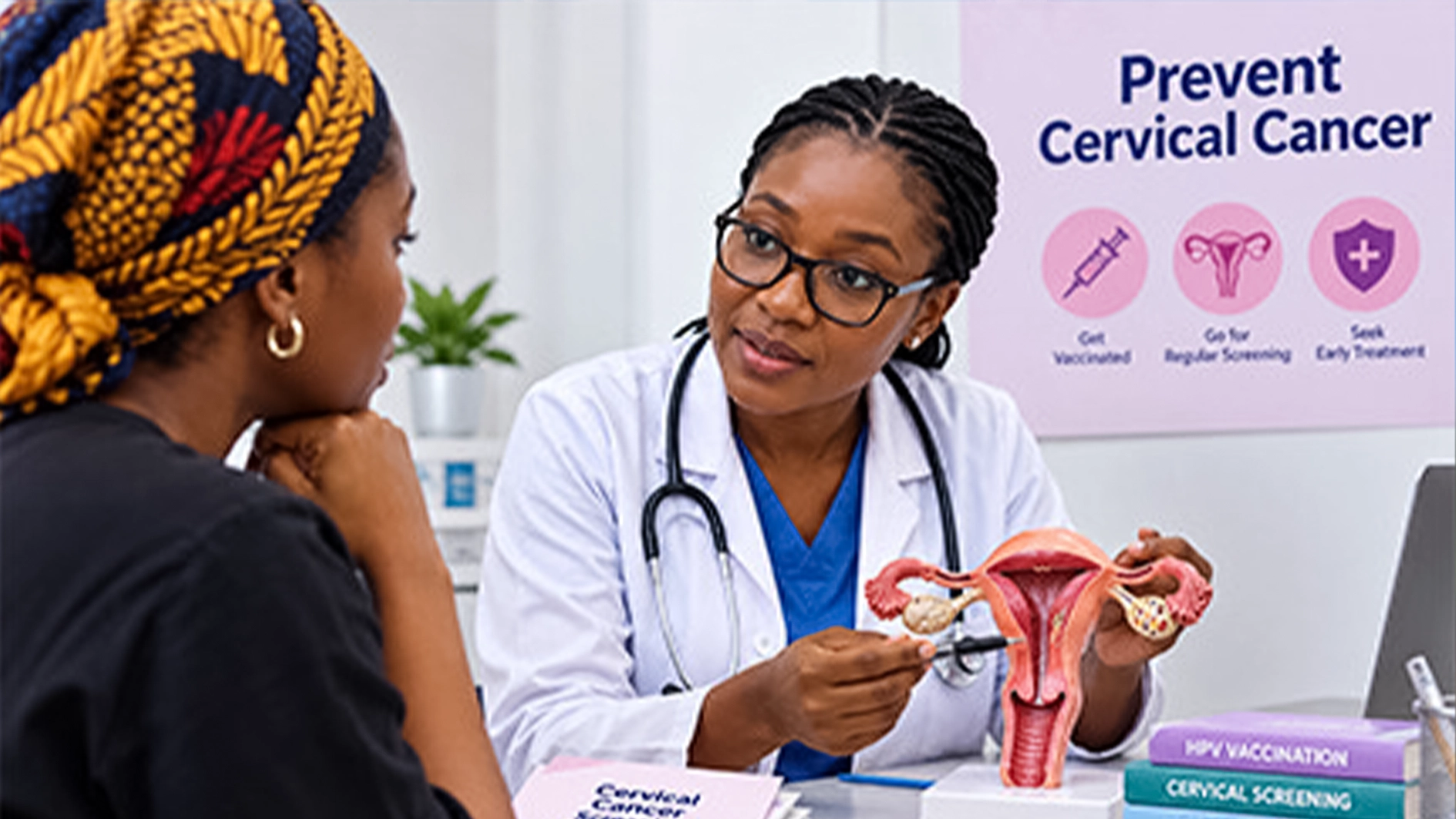 For middle age Iyabode Olaniyan, the knowledge of cervical cancer prevention has not translated into action. She said: “I actually know about Pap smear, and I have been hearing about the HPV vaccine campaign, but I have not gone for either of them.”
Olaniyan’s hesitation is not because she does not know about screening but more about how she imagines the experience. She said: “The reason I have not gone for the Pap smear is because I feel like it’s invasive. I can’t just sit there and allow them to insert something in me. The process seems uncomfortable from my point of view but at some point, perhaps I would give it a shot just to be safe.”
On her part, Victoria Onome, has undergone a Pap smear before but said she does not intend to repeat it. “I have actually gone for the Pap smear, but I don’t think I am going back. From what I heard, cervical cancer is caused by having several sexual partners. I am not about to start having different sexual partners, so I don’t think there will be a need to go back.”
The experiences of the two women point to a problem. Knowing that cervical cancer exists is not necessarily enough to make women seek screening. Fear, misconceptions, discomfort and concerns about the procedure can all influence whether a woman takes the next step.
This is why Umar, the Cancer advocate states that “a woman should not screen today and then disappear into the system. There must be a clear pathway from screening to results, from an abnormal result to treatment, and from treatment to follow-up.”
Understanding What Screening Is Designed To Do
While the Pap smear has long been associated with cervical cancer screening, the approach is changing.
Umar explained that HPV-based screening is now the preferred high-performance approach in World Health Organisation (WHO) guidance, while Nigeria’s national screening guidelines also establish HPV testing as the primary screening method.
For the general population, WHO recommends beginning regular cervical cancer screening at age 30, while women living with HIV should begin at 25 because of their increased risk. The appropriate screening interval depends on the test being used and the national programme.
The important message, Umar said, is that women should not wait for symptoms before considering screening. “Feeling healthy is not evidence that your cervix is healthy,” she said.
Symptoms can include unusual vaginal bleeding, particularly bleeding after sex, between periods or after menopause. Other warning signs include unusual or foul-smelling vaginal discharge, persistent pelvic, back or leg pain, discomfort during sex and, in more advanced disease, weight loss or swelling of the legs.
The Danger
The danger is that early cervical cancer and, particularly, cervical precancer may have no symptoms at all. “This is precisely why screening matters,” Umar said.
For women who have avoided screening because of fear or embarrassment, Umar said the first step is to understand what the procedure is intended to achieve. “Cervical screening is not a test for women who are sick. It is a preventive service for women who may feel perfectly well,” she said.
She also acknowledged the concerns that can make women reluctant to undergo the procedure. “Many women are worried about pain, embarrassment or what the result might say. But avoiding a test does not remove the possibility of disease; it only removes the opportunity to detect it early.”
Umar advised that women should ask questions before screening, including the type of test and why it is recommended, how the sample will be collected and when the result will be available.
An abnormal screening result, she stressed, does not automatically mean cancer. Screening is intended to identify women who need further assessment or treatment before cancer develops. Prevention also begins before a woman reaches the age for routine screening.
Umar said parents should understand that the vaccine is about cancer prevention not a vaccine that encourages sexual activity. “It is about protecting a child before she is exposed to a virus that can cause cancer years later.”
Vaccination, however, does not eliminate the need for screening later in life. “Vaccines prevent HPV infections, but vaccinated women will still need to follow the recommended screening programme when they reach the appropriate age,” she said.
Responsible Health System Beyond National Policy
Beyond national policy, cervical cancer vaccination and screening require women to trust the services, find them accessible and be able to complete the process when a problem is detected.
This is where Umar believes the health system must take greater responsibility. “Sometimes we describe this as a problem of ‘women not coming forward, when the real question should be: have we designed services that make it easy for women to come forward?”
Cost, distance, fear and misinformation can all become barriers. So can concerns about privacy, embarrassment, pain and what an abnormal result might mean.
But Umar said health-system problems are equally important.
The availability of services, trained healthcare workers, screening commodities, quality assurance, turnaround time for results, referral systems, and the cost of treatment after an abnormal result can determine whether a woman completes the prevention pathway.
“You cannot successfully scale screening without scaling follow-up and treatment alongside it,” Umar said.
For a woman who receives an abnormal result, the process should not end there.
Depending on the result, she may require further testing, triage, colposcopy, biopsy or treatment for a precancerous lesion.
Nigeria’s national screening guidelines provide pathways for women who test positive for HPV, including further assessment and treatment where required. The objective is to identify and treat precancer before it becomes invasive cancer.
“An abnormal result should never be treated as the end of screening; it should trigger the next step in the care pathway. The important message to women is: do not postpone follow-up,” Umar said.
She described precancer as the window of opportunity in which intervention can prevent progression to cancer. “Precancer is exactly the window of opportunity we want. These lesions can often be treated before they progress to invasive cancer.”
The concern about women being lost to follow-up also returns to the wider health-system problem. Screening a woman is only one part of prevention. She must receive her result, understand it and have somewhere to go if further care is needed.
At the same time, public concern has recently extended beyond screening and vaccination to the safety of menstrual products, following reports about chemicals detected in some sanitary products.
Umar said the concerns should be investigated but warned against making unsupported claims about cancer. “At present, there is no established causal link showing that the use of sanitary pads causes cervical cancer.”
Can Sanitary Pads Cause Cancer?
Umar’s response to this is that the established cause of cervical cancer is persistent infection with high-risk HPV. “Studies have detected chemicals, including phthalates, parabens and phenols, in some menstrual products, and research into possible health effects is continuing. However, the detection of a chemical in a product does not by itself demonstrate that using the product causes cancer. So women should not be frightened into believing that their sanitary pad is giving them cervical cancer.
“However, manufacturers and regulators have a responsibility to ensure that products used regularly by women meet appropriate safety and quality standards,” Umar noted.
From Prevention To Treatment
In Nigeria, the challenge also goes beyond convincing women to screen, vaccinate or seek medical attention but creating a system in which prevention is accessible and the journey from prevention to treatment is clear.
Nigeria’s national screening guidelines adopted in 2025 are intended to provide a standardised framework for cervical cancer screening, while efforts are also underway to expand high-performance screening and strengthen referral systems.
The country’s efforts are aligned with the WHO’s global cervical cancer elimination targets: vaccinating 90% of girls by age 15, screening 70% of women with a high-performance test by ages 35 and 45, and ensuring 90% of women identified with cervical disease receive appropriate treatment.
Umar said the real measure of progress should be what happens after a policy is announced. “The real test is whether a woman in a low-income community, a rural area or an underserved population can actually access vaccination, screening, receive her result, get treatment when needed and complete the pathway without catastrophic financial or logistical barriers.”
Isolated Campaigns To Sustained Prevention
For Umar, the solution lies in moving away from isolated campaigns towards sustained prevention. “If I could change three things about Nigeria’s approach to cervical cancer prevention, I would make prevention and screening truly population-based and equitable.
“Nigeria must also strengthen the entire continuum of care so that screening, diagnosis, treatment, referral and follow-up operate as one system.
“We should measure not only how many women were screened, but how many received their results, how many needed treatment, how many received it and how many were successfully followed up.”
Umar also called for continued investment in HPV vaccination, community engagement and public education, involving parents, adolescents, women, men, community leaders and health workers.
Her message is: vaccinate eligible daughters, get screened when eligible, do not ignore warning signs and complete follow-up after an abnormal result.
But the responsibility, Umar stressed, cannot rest on women alone. “Women should not be left to carry this responsibility alone. Government, health systems, communities, providers and partners all have a role to play in making prevention genuinely accessible.”
Cervical cancer prevention, she said, is ultimately about more than telling women to protect themselves. “It is about building a system that makes prevention possible.”

