 Follow Us on Google News
 Follow Us on Google Discover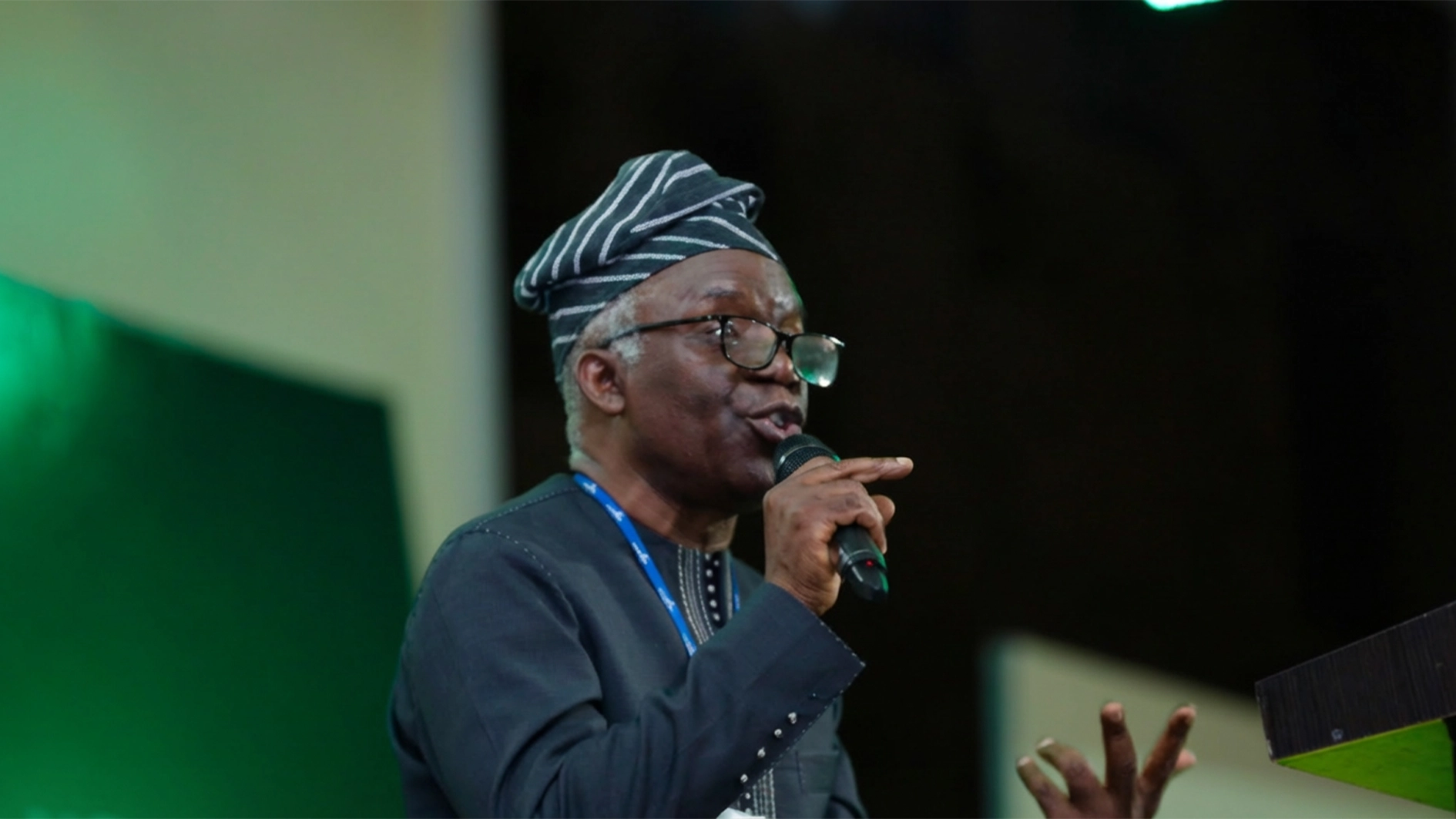
• Personal interests threaten Nigeria’s progress – Olujobi
Nigerian lawyer and human right activist, Femi Falana (SAN), has highlighted Nigeria’s difficult struggle for independence and underscored Edo State’s pivotal role in producing legendary freedom fighters like Chief Anthony Enahoro and Mike Imoudu.
This came as the Artistic Director of DOK Productions Limited, Segun Olujobi, has said that personal interests and individual ambitions that conflict with the collective good remain a major obstacle to Nigeria’s progress,
Speaking at the 2026 ITV and Radio Pre-Independence Lecture, titled ‘The Nigerian Dream: Still Valid or Dead on Arrival,’ held under the theme ‘From Ballot to Better Life, What Should 2027 Actually Deliver,’ Falana reminded the audience that Nigeria’s freedom was hard-won, noting that Edo State stands out historically for its pivotal role in the anti-colonial struggle before questioning the current viability of the Nigerian dream.
Falana said: “The independence of Nigeria’s struggle was not won on a platter of gold. Today, I am going to channel such meaningful knowledge of the struggle to our people. And no other city in Nigeria, from my study, can boast of having produced freedom fighters as much as Edo State that led to our demand for independence before 1960.
“What is the Nigerian dream? For some people, it is the hope of owning a house. For others, it is the opportunity to secure good education, obtain gainful employment, establish a successful business, raise a family in safety and dignity, or simply live a life in which hard work is rewarded with a reasonable standard of living.
“For the young Nigerian, it may be the hope of building a successful career without having to leave the country in search of opportunity. For the farmer, it may mean having access to land, infrastructure, markets and security so that you can go to your farm without kidnappers harassing you in the land.
“For the entrepreneur, it may mean operating a business without having to navigate unnecessary bureaucratic obstacles. On film, the success of a business depends more upon political connections rather than enterprise. The Nigerian dream is the belief that Nigeria can become a country in which citizenship is not a disadvantage as it is now.
“It is the belief that a young Nigerian can wake up in the morning and believe that peace or a future is not predetermined by corruption, insecurity, poverty, unemployment, discrimination or political connections. It is ultimately a dream of dignity, opportunity, justice and accountable government. And that dream is not an unreasonable one.”
Falana urged Nigerians to ask questions, stressing that those in government have no right to keep or hold on to information.
“You must have the right to ask questions, and if anyone does not allow you to ask questions, let us know,” he said.
Olujobi spoke while reflecting on the message of ÀJÀNÀKÚ: The Musical, a fictional historical drama staged to mark Nigeria’s 66th Independence anniversary.
Set against the backdrop of the ancient Oyo Kingdom and the transatlantic slave trade, the musical tells the story of Àjànàkú, a warrior who returns victorious after rescuing members of his kingdom, only to be betrayed, captured and sold into slavery alongside his pregnant wife, Ademonwura.
Olujobi said the setbacks suffered by the characters in their struggle for freedom reflected the consequences of allowing individual interests to undermine collective objectives.
He said the production demonstrated how efforts to achieve a common goal could be frustrated when individuals pursued personal gains at the expense of the wider group.
“When you have a mission, and your mission has to do with you also working with other people, there’s what we call personal interest,” he said.
In the musical, enslaved Africans devise an escape plan by digging a tunnel, but their effort is compromised when one of them chooses to align with the other side in pursuit of a better position.
“For me, I would say personal interest is always a conflict when it comes to the collective. And that’s exactly what we have been able to see on stage today,” Olujobi said.
He said the lesson was relevant to Nigeria, where divisions based on religion, ethnicity and other interests could weaken efforts towards national development.
Olujobi said Nigerians needed to set aside their differences and work towards a common purpose, stressing that unity was one of the central messages of the production.
“I think if there’s something we need as a nation in this period, it is for us to be united as one,” he said.
He also urged Nigerian youths to harness their talents and apply them to promoting the country’s resources, identity and culture.
According to him, Nigerian youths have continued to demonstrate their capabilities globally, but their talents should also be deployed towards advancing the country.
“For the future of Nigerian youth, of course, I’m not a prophet. But I think that the youth of this nation, we are blessed with talent. We function well even when we go abroad. But I feel we need to harness those talents to push the nation, our resources, our brand, our identity, our culture,” he said.
The production also examines Nigeria’s historical and contemporary relationship with the United Kingdom through the themes of trade and partnership.
Olujobi, who also works with the Nigerian-British Chamber of Commerce, said the musical sought to contrast legitimate trade and partnership with conflict and human trafficking.
“You can’t tell the story of Nigeria without mentioning the United Kingdom,” he said, noting that the relationship between both countries had produced significant trade and economic ties.
He said the production carried a broader message of global cooperation, encouraging countries and organisations to pursue partnerships and trade rather than conflict.
Olujobi said the production required significant financial resources and could not have been staged without partnerships and sponsorship.
According to him, the Nigerian-British Chamber of Commerce supported the production from inception to completion by providing resources and facilitating partnerships.
He added that plans were underway to take the musical to the United Kingdom, which he identified as its first targeted international destination.

