 Follow Us on Google News


 Follow Us on Google Discover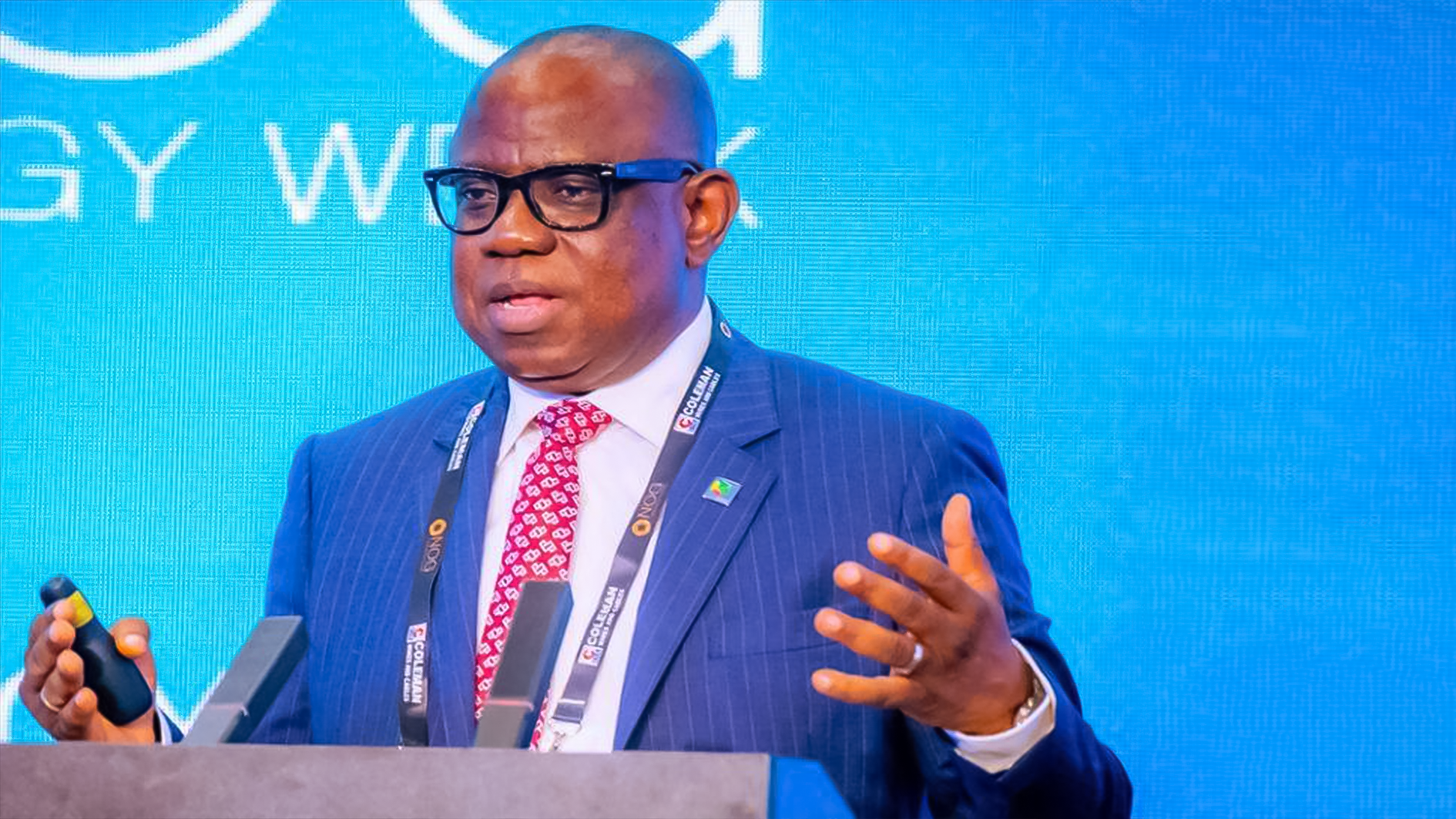
• Engages With Ogun Govt On Revival Of $10b Ogun LNG Project
• Abiodun Links Project To $7b Deep Sea Port, Blue Marine SEZ
The Nigerian National Petroleum Company Limited (NNPC Ltd.) reduced its general and administrative expenses by 28 per cent to N2.6 trillion in 2025, as part of a sustained cost-optimisation drive aimed at protecting profitability amid a softer global oil price environment.
This is even as the company is set to invest an initial $10 billion in the development of the OgunLNG project in Ogun Waterside, Ogun State, as the long-delayed gas project enters a fresh phase of revival.
Group Chief Executive Officer of NNPC Ltd., Bashir Bayo Ojulari, disclosed the cut in administrative expenses while presenting the company’s annual financial performance, saying the reduction reflected greater utilisation of internal resources and tighter control of the company’s cost base.
According to Ojulari, the company’s cost structure remained broadly aligned with activity levels despite a lower revenue environment, helping to preserve profitability during the year.
“General and administrative expenses declined by 28 per cent to N2.6 trillion, driven by sustained cost optimisation and greater utilisation of internal resources,” the GCEO said.

He said the cost discipline formed part of a broader strategy focused on factors within the company’s control, including operational reliability, capital discipline and execution excellence.
Ojulari said NNPCL’s performance in 2025 was achieved against a mixed global and domestic economic backdrop.
Globally, geopolitical tensions, trade frictions and increased supply from both OPEC+ and non-OPEC+ producers contributed to a softer oil price environment.
Despite the headwinds, global economic growth remained resilient at approximately three per cent, supported by a more accommodative monetary policy environment as inflation pressures eased across major economies.
In Nigeria, however, Ojulari said macroeconomic conditions improved during the year, with steady GDP growth, moderating inflation, a stronger and more stable naira and increased foreign capital inflows, which he attributed to the impact of ongoing reforms.
He added that oil and condensate production continued to recover as improved operational efficiency and asset reliability strengthened the sector’s contribution to economic growth.
Against this backdrop, NNPCL maintained its focus on operational factors within its control, helping to underpin its 2025 performance.
The company recorded broad-based volume growth across most of its core businesses during the year.
Oil and condensate production increased by five per cent, while natural gas production grew by nine per cent. More significantly, NNPCL’s equity volumes increased by 11 per cent across oil, condensate and natural gas, allowing the company to capture a greater share of production and associated value.
The gas business recorded particularly strong growth. Gas transmission volumes rose by 18 per cent, sales volumes increased by 12 per cent, while LNG volumes grew by 11 per cent.
Ojulari said the performance demonstrated the growing contribution of gas to the company’s integrated portfolio.
Production growth in oil and condensate was driven primarily by new well additions, targeted interventions at OML 13 and improved asset integrity. These interventions contributed approximately 32,400 barrels of oil per day.
Natural gas production growth, meanwhile, reflected stronger performance from projects including Uzu field gas and Agbada NAG Train 1, as well as major well interventions.
The company also adopted a more proactive approach to asset maintenance, which Ojulari said improved reliability and uptime across the portfolio.
The major exception to the volume growth was white products sales, which declined by 60 per cent. The GCEO linked the decline to the structural change in NNPCL’s downstream market role following gasoline price deregulation in 2024.
The improvement in operational performance translated into stronger financial results, according to the GCEO.
Profit after tax increased by 33 per cent to N7.2 trillion, while dividends rose by 35 per cent year-on-year to N5.8 trillion.
Operating cash flow also increased by 16 per cent to N12.8 trillion, strengthening the company’s cash-generating capacity and providing greater flexibility to fund strategic priorities.
Return on equity increased by 200 basis points to 16 per cent, reflecting higher earnings generated from the company’s equity base.
Ojulari said the results demonstrated the strength of the business and the company’s focus on sustainable growth and shareholder returns.
The company also reported progress across its environmental, social and governance agenda.
During 2025, it expanded access to cleaner energy through the delivery of nine new compressed natural gas (CNG) sites, taking its total network to 19 stations.
Its social-impact programmes included the facilitation of more than 6,000 cataract surgeries and financial literacy and workforce-readiness training for more than 300,000 National Youth Service Corps members.
The company also supported more than 15,000 farmers with climate-smart agriculture and market-readiness training.
On the environmental front, NNPC Foundation planted 80,000 trees through its afforestation and reforestation initiative, while NNPCL developed a Net Zero 2050 strategy to guide its longer-term decarbonisation efforts.
Ojulari said women accounted for 23 per cent of the company’s leadership, above the stated global industry average of 17 per cent.
Looking ahead, the company is targeting further growth across its integrated value chain.
In the upstream business, it is targeting three million barrels per day of oil and condensate production and 12 billion standard cubic feet per day of natural gas.
The strategy includes lowering unit operating costs, rationalising the portfolio and increasing deepwater production.
In gas, power and new energy, the company is targeting annual gas transmission of 960 billion standard cubic feet and gas sales of 1.4 trillion standard cubic feet.
It plans to expand gas monetisation through investments in infrastructure, LNG and gas-based industries, while repositioning its power business.
In downstream, the company plans to increase annual crude trading volumes to 430 million barrels. The company also intends to transform its trading business, expand CNG and cleaner-energy infrastructure, reposition its shipping business and progress Technical Equity Partnerships to restore refinery operations.
Ojulari said the company would continue to strengthen ESG performance, improve contracting-cycle efficiency and advance its Talent-to-Value initiative.
He said the Petroleum Industry Act had provided the legal foundation for the company’s transformation and sharpened its commercial focus.
According to him, NNPCL is now concentrating on improved operational performance, greater accountability, stronger governance, financial discipline and transparency.
The company also plans to rationalise non-core and underperforming assets, strengthen strategic businesses such as power and trading, and optimise ownership and operating models for key assets, including its refineries.
Ojulari said these measures were intended to improve returns, enhance capital efficiency and support sustainable long-term growth.
Speaking to journalists after a meeting with officials of the company led by its Chief Financial Officer, Mr. Adedapo Segun, in Iperu, Ikenne Local Council of Ogun State, Governor Dapo Abiodun disclosed that NNPCL had commenced discussions with the state government on the revival of the OgunLNG project, which has remained on the drawing board for more than three decades.
The development comes barely a week after the Ogun State government signed agreements with global ports and logistics giant, DP World, for the development of the Gateway Deep Sea Port and the 10,000-hectare Ogun State Blue Marine Special Economic Zone, in a deal expected to attract more than $7 billion in initial investment.
Abiodun described the renewed interest in OgunLNG as a significant development for Ogun State and Nigeria, noting that the project has the potential to strengthen the country’s energy supply while providing gas for industries and supporting large-scale industrialisation.
“Today, we just received members of the Nigerian National Petroleum Company who have come to meet with us on behalf of the Group Chief Executive Officer. They have come to discuss with us the LNG plant that was originally designed and called OKLNG, which was meant to be situated on our coastline. Now they have brought the project back to life,” the governor said.
According to him, the discussions focused on land requirements, incentives and other arrangements necessary to facilitate the smooth take-off of the project, with the state government assuring NNPCL of its full cooperation.
He said the project would have significant multiplier effects, particularly in employment generation and the provision of gas to industries within the economic zone, Ogun State and the wider South-West region.
The Governor cited the NNPCL’s facility in Bonny, Rivers State, where he said about 14,000 people are employed, as an indication of the potential employment impact of the OgunLNG project.
Abiodun said the revival of OgunLNG immediately after the signing of the DP World agreements was particularly significant, as the LNG project, deep seaport and Blue Marine Special Economic Zone could collectively create an integrated ecosystem linking energy, manufacturing, maritime trade, logistics and exports.
The governor said the development would further reinforce Ogun’s position as an industrial centre while positioning Ogun Waterside as an emerging energy and maritime hub.
Speaking on the NNPC engagement, Segun said the company was undertaking a comprehensive assessment of the factors that stalled the project in the past, with a view to finding lasting solutions and resuscitating it.
“We are here to engage with the government of Ogun State on the project we are looking to site along the coastline of the state,” Segun said.
NNPC’s Executive Vice President, Gas, Power and New Energy, Mr. Lekan Ogunleye, disclosed that the company would require approximately 1,728 hectares for the LNG plants, utilities, storage facilities and associated infrastructure.
He added that approximately 2.5 kilometres of dedicated Atlantic frontage would be required to support marine traffic and safety requirements for up to three LNG jetties.
Ogunleye congratulated the people of Ogun State on the proposed development, saying the project could significantly change the economic fortunes of the area.
The renewed Ogun LNG initiative comes against the backdrop of the agreement signed by Ogun State and DP World in Paris for the Gateway Deep Sea Port and Ogun State Blue Marine Special Economic Zone.
The agreement provides for a $7 billion-plus initial investment, with the proposed economic zone covering approximately 10,000 hectares and expected to create more than 50,000 direct jobs. The Gateway Deep Sea Port is planned with a four-kilometre berth and an 18-metre draft.
The revival of OgunLNG also aligns with NNPCL’s broader push to expand Nigeria’s gas production, utilisation and export capacity, leveraging the country’s gas resources to support domestic industrialisation and strengthen its position in the global LNG market.

