 Follow Us on Google News


 Follow Us on Google Discover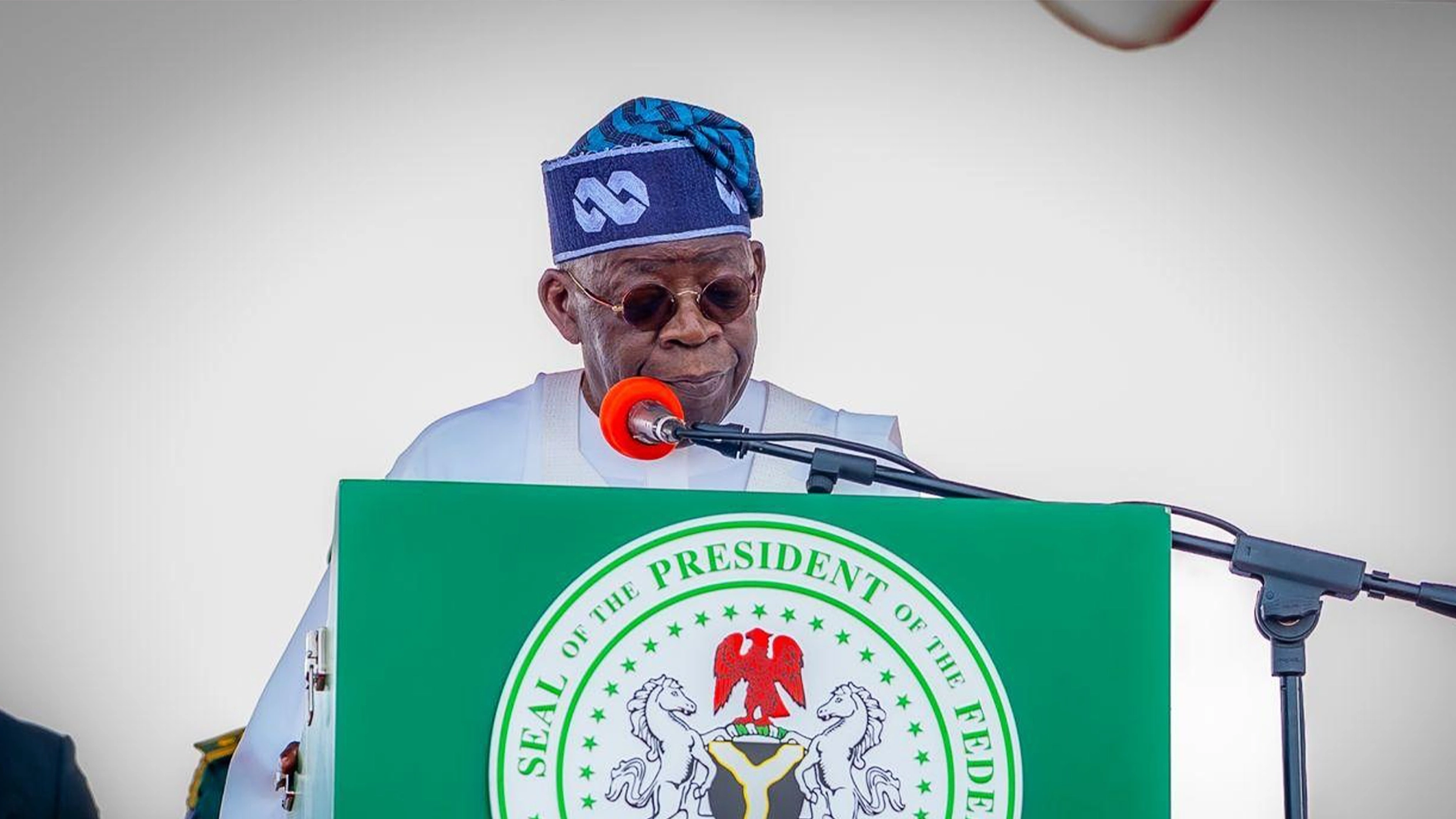
Tinubu Urges Youths To Speak Freely At National Youth Confab
The Presidency has ordered the establishment of a quarterly government-civil society policy dialogue forum to institutionalise citizens’ participation in policy formulation, implementation and evaluation.
Meanwhile, President Bola Tinubu has urged Nigerian youths participating in the National Youth Confab 2026 to freely express their views on national issues, including disagreements with government policies.
Tinubu made the call on Friday while declaring the National Youth Confab 2026 open, saying young Nigerians should have more than a symbolic presence in discussions on the country’s future.
“When I proposed this Confab, I wanted young Nigerians to have more than a seat in the room. Your experience and ambition should help shape the decisions that affect your lives,” the President said.
He urged the participants to speak honestly about their concerns and accompany criticism of government policies with alternative proposals.
“Say what you think. Where you disagree with us, say so, and bring the alternative with you. Our job as a government is to listen and act on what deserves action,” Tinubu said.
The President said the virtual consultation phase would run for two weeks and remain open to young Nigerians in the country and in the Diaspora.
He said he looked forward to receiving recommendations from the consultations and promised that proposals considered worthy would receive serious consideration.
The National Youth Confab, themed ‘Next Gen Nigeria: Crafting Solutions, Owning the Future,’ is designed to provide young Nigerians with a platform to articulate concerns and develop policy proposals on issues including governance, economic transformation, education, technology, climate change and security.
The opening ceremony was held on Friday, October 2, while the virtual zonal sessions are scheduled to continue from October 5. The physical national conference in Abuja is scheduled for October 26 to 30.
The Secretary to the Government of the Federation, Senator George Akume, who represented President Tinubu at the 2026 National Civil Society Organisation Summit in Abuja on Friday, said the forum would provide a structured platform for evidence-based advocacy and ensure that community-level concerns were reflected in government decisions.
The President also pledged to expand civic space for social accountability, including greater collaboration with accredited civil society organisations (CSOs) on public finance transparency, budget tracking and monitoring of humanitarian and grassroots interventions.
Tinubu said the initiative was part of efforts to strengthen public trust and institutional accountability as his administration pursued its reform agenda.
He said the summit, coming shortly after Nigeria’s 66th independence anniversary, represented a reaffirmation of the social contract between the state and citizens.
According to him, civil society had historically played a critical role in Nigeria’s democratic development by giving voice to vulnerable groups, influencing policy and advocating social justice, human rights, poverty reduction and anti-corruption.
“My administration firmly believes that no nation can achieve inclusive, equitable and sustainable development without a vibrant, credible and responsible civil society operating within an open and enabling civic space,” he said.
Tinubu acknowledged the difficulties created by the economic reforms embarked upon by his administration since 2023, but said the country was moving from reforms towards prosperity.
He said economic growth must translate into social inclusion, adding that the government alone could not achieve the objective.
“Hence, we are reaching out to the left out,” he said, stressing the need for stronger partnerships among government, civil society and other stakeholders.
The President identified four areas for deeper government-CSO collaboration, beginning with the quarterly policy dialogue forum to be established by the SGF.
He said the forum would facilitate evidence-based advocacy and enable community insights to feed into policy formulation, implementation and evaluation.
Tinubu also pledged to strengthen accountability and transparency by expanding civic space for social accountability and working with accredited CSOs on public finance transparency, budget tracking and monitoring of humanitarian and grassroots interventions.
He said CSOs would also be repositioned as key drivers of efforts to localise the Sustainable Development Goals, with government, the United Nations system, development partners and the private sector supporting capacity building, institutional sustainability and access to technical and financial resources.
The areas identified include poverty reduction, youth and women empowerment, health, education, climate resilience and peace-building.
On national cohesion, the President urged CSOs to remain a stabilising force by countering false information, promoting interfaith dialogue and advocating inclusive governance.
He also urged the organisations to play a prominent role in preparations for the 2027 general elections through voter education, election monitoring and advocacy for electoral reforms.
Tinubu said the credibility of the electoral process would require coordinated efforts involving civil society, law enforcement agencies, the judiciary, the media and citizens.
The Presidency’s proposed dialogue mechanism effectively gives civil society a more formal channel for taking community-level evidence and policy concerns into government decision-making, while assigning CSOs a broader role in monitoring public spending, development interventions and the electoral process.
At the summit, however, CSOs demanded a formal mechanism for feeding grassroots intelligence, community concerns and early-warning signals into government policy and budget decisions.
The National Convener of the National Civil Society Organisation Summit, 2026 and the Director-General of the Civil Society Organisations on Community Advancement and Humanitarian Empowerment Initiative (CSCHEI), Ambassador Kunle Yusuff, said CSOs had extensive grassroots information that could help the government identify emerging problems and design more responsive interventions.
Yusuff said CSCHEI was working with about 3,700 accredited civil society and community-based organisations across 485 areas, describing the network as a potential bridge between communities and government.
He said the network provided access to community-level data and early-warning information that could support national planning and interventions.
“For too long, policy has been formulated for people without people,” he said.
Yusuff said the summit was proposing a sustainable partnership compact through which the government, civil society and the private sector could work jointly on national priorities rather than operating from positions of suspicion.
He said the proposed framework would provide a mechanism for monitoring government policies, budgets and electoral promises, while ensuring that information generated from communities reached relevant authorities.
“We are not here to complain. We are here to make a positive contribution that will make Nigeria a better place to live,” he said.
Yusuff disclosed that civil society leaders had previously submitted nine recommendations to the Presidency, with three already receiving government attention.
He also urged the private sector to align its corporate social responsibility programmes with national development priorities.
Representing the Director-General of the National Institute for Policy and Strategic Studies (NIPSS), Ambassador Lawrence Olufemi said the institute remained committed to strengthening democratic and political institutions.
He said NIPSS had developed programmes aimed at improving inter-party democracy, promoting political stability and strengthening peace, equality, diversity and transparency within political parties.
Olufemi said stronger political institutions were essential to sustaining democratic development and ensuring that national priorities were effectively translated into policy.
The summit brought together government officials, civil society leaders and other stakeholders to discuss national development, skills development, technology, traditional institutions and governance.
Participants included the Senior Special Assistant to the President on Industrial Training and Development, Adamson Oluwatosin Ayinde; Senior Special Assistant to the President on Chieftaincy Matters, Alhaji Abbas Tijjani Hashim; and the Director-General of the National Information Technology Development Agency (NITDA), Kashifu Inuwa Abdullahi.
The Executive Director of Value Rebirth and Empowerment Initiative (VREI) and South-South Coordinator of the Male Feminist Network (MFN), Pastor Edewor Egedegbe, was also among the speakers.

