 Follow Us on Google News



 Follow Us on Google Discover
A Muslim Leader’s Responsibility
As a Muslim scholar, community member, and educator, I recognise that Islamic leaders, particularly Imams, hold positions of trust and authority within our communities. Congregants constantly look to them for guidance on what is expected of them as believers in Allah and how Islamic values should shape daily life, family relationships, dispute resolution, moral conduct and the treatment of women. Through sermons, counselling, mentorship, and community engagement, Imams can shape attitudes, encourage positive behaviour, and promote peaceful and respectful relationships.
Because of this influence, I believe Muslim leaders are well positioned to move violence prevention from a private concern to a collective responsibility. Their leadership can help our communities reject violence against women and girls, strengthen safeguarding practices, and build systems that protect dignity, safety, and justice.
What the Qur’an Says About VAWG
I affirm that preventing violence against women and girls is consistent with the teachings of Islam. Islam calls on believers to reject wickedness and promote peace, compassion, and justice. The Qur’an encourages love, care, dignity, and protection for all people irrespective of religious affiliations. When Islamic leaders speak against violence, they are not introducing a separate message; they are reinforcing the values and commands of Allah by encouraging congregants to reject violence and avoid becoming perpetrators.
The Qur’an upholds the dignity, safety, and worth of every human being. It teaches that all people were created from a single pair and that honour before Allah is based on righteousness, not gender, status, or power: “O mankind! We created you from a single pair of a male and a female…” (Qur’an 49:13). It also commands justice, even when it is difficult: “O you who have believed, be persistently standing firm in justice…” (Qur’an 4:135). For this reason, I see violence as a contradiction of dignity, justice, and the sanctity of life, and I consider preventing VAWG not only as a social duty but also a Qur’anic obligation. The Prophet Muhammed (SAW) also said: “The believers who show the most perfect Faith are those who have the best behaviour and the best of you are those who are the best to their wives”.
Muslim Leaders as Champions of Prevention
I am concerned that violence against women and girls remains a serious issue in our society, and I believe it requires urgent, sustained action. Muslim leaders are well positioned to champion prevention because mosques and Islamic institutions have wide reach and moral influence. These spaces can raise awareness, challenge harmful beliefs, and promote values that uphold the dignity, safety, and rights of women and girls.
In my view, prevention requires responsible leadership, personal integrity, confidentiality, and clear reporting mechanisms. Leaders should teach that Islam rejects cruelty and commands kindness, mercy, and consultation: “It is out of Allah’s mercy that you (˹O Prophet) have been lenient with them…” (Qur’an 3:159). Through Qur’anic teachings, mentorship, and community programmes, I believe Islamic leaders can help congregants understand that violence is not culture, discipline, or family privacy but injustice.

Evidence from Islamic Community Engagement
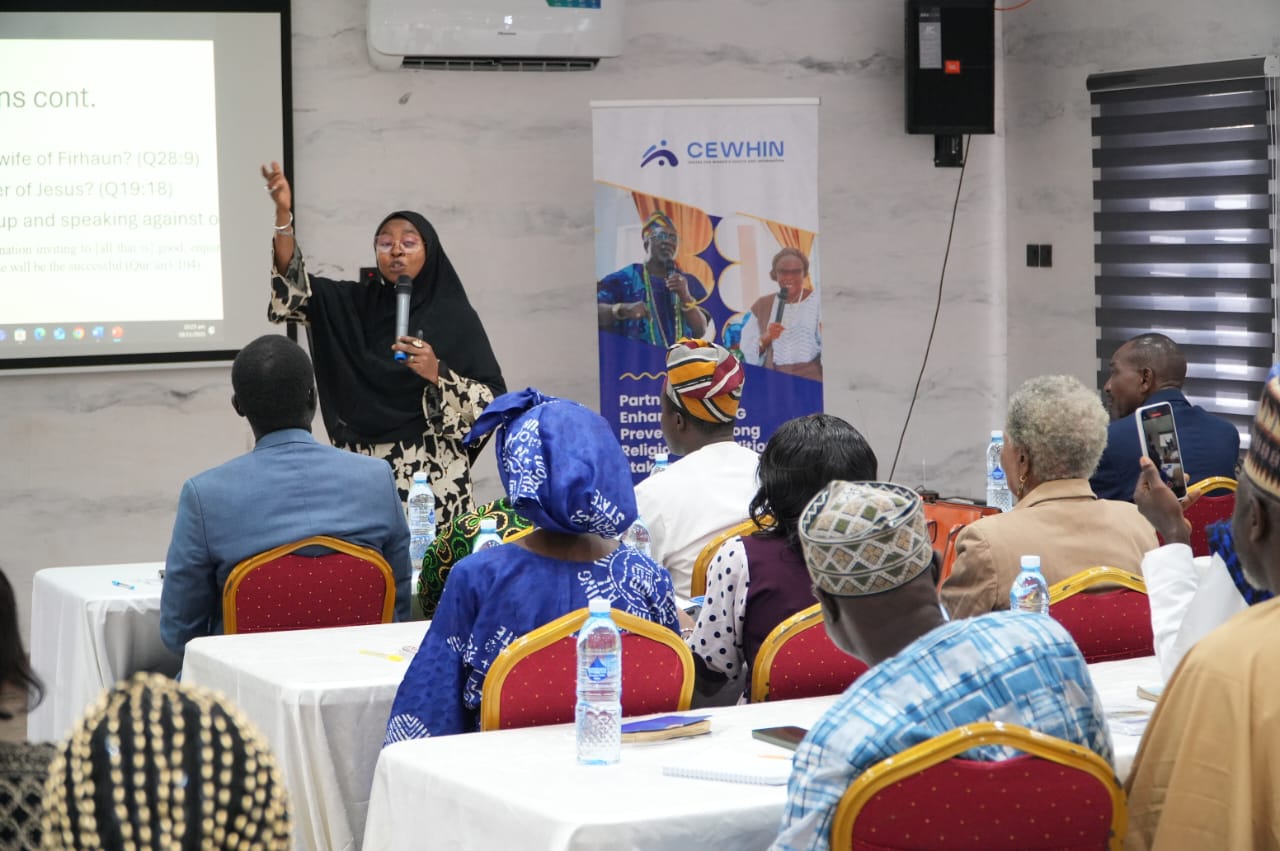
I have seen encouraging evidence from the Centre for Women’s Health and Information (CEWHIN), through the Partnership for Enhanced VAWG Prevention among Religious and Traditional Stakeholders in Ogun and Osun States, Nigeria (PVP Project), supported by the Ford Foundation. As I have also facilitated conversations at these engagements and seen encouraging responsiveness among the leaders being trained. This work is strengthening community action to prevent violence against women and girls.
CEWHIN engaged Muslim communities in discussions about the prevalence and underlying causes of VAWG, with particular attention to harmful social norms and cultural practices that enable violence, through town hall meetings.
CEWHIN also conducted capacity-building sessions for Islamic leaders, equipping them with knowledge and tools to become champions of prevention. I consider the consultative forum especially important because it brought Islamic leaders together to identify ethical values and standards they could uphold and promote within their congregations.
One major outcome of these engagements was the development and adoption of the Code of Conduct for Islamic Leaders, a material which I contributed to developing. I see the Code as a practical guide for dignity and respect, safeguarding, zero tolerance for abuse, accountability, confidentiality, legal compliance, and responsible leadership. It encourages leaders to integrate faith teachings with practical prevention strategies, promote awareness during sermons and mosque programmes, and create opportunities for women and girls to thrive within religious spaces. For me, the process shifted prevention from general discussion to shared commitment, helping Islamic leaders see VAWG prevention as part of their religious duty, not an external agenda.
From Programmes to Sustained Community Action
I believe the next step is to turn these programmes and activities into sustained community action. Muslim leaders must help create systems that prevent violence against women and girls, support survivors, and promote accountability. This includes preaching clearly against abuse, establishing safe and confidential reporting channels, protecting complainants from reprisals, supporting survivors with compassion, and referring cases to appropriate authorities when necessary.
The Code of Conduct provides a clear pathway for this work. In my opinion, it should guide leaders to model integrity, maintain professional boundaries in counselling and mentorship, avoid behaviours that may be misinterpreted as harassment, and promote regular safeguarding training. I also believe Islamic institutions should build partnerships with relevant agencies, civil society organisations, and law enforcement to strengthen prevention and response.
Call to Islamic Leaders
I call on Islamic leaders to rise with courage, compassion, and conviction. The Qur’an instructs believers to be a community that invites to good, enjoins what is right, and forbids what is wrong (Qur’an 3:104). Preventing violence against women and girls is part of this command. We must no longer allow silence, fear, shame, or harmful customs to protect perpetrators or endanger survivors. Every Imam, Alfa, women leader, teacher, and volunteer should adopt and implement the Code of Conduct and use their influence to affirm that abuse has no place in Islam, no place in the mosque, and no place in the Muslim community.
Closing: The Muslim Community We Hope to See
I hope to see Muslim communities where women and girls are safe, valued, heard, and protected; where leaders model mercy, justice, transparency, and accountability; and where survivors receive dignity instead of blame. I hope to see mosques that teach the Qur’an not only in words but also in action, becoming spaces where abuse is prevented, reports are treated seriously, and every person can worship and participate without fear. This is the community Islam calls us to build.

