 Follow Us on Google News
 Follow Us on Google Discover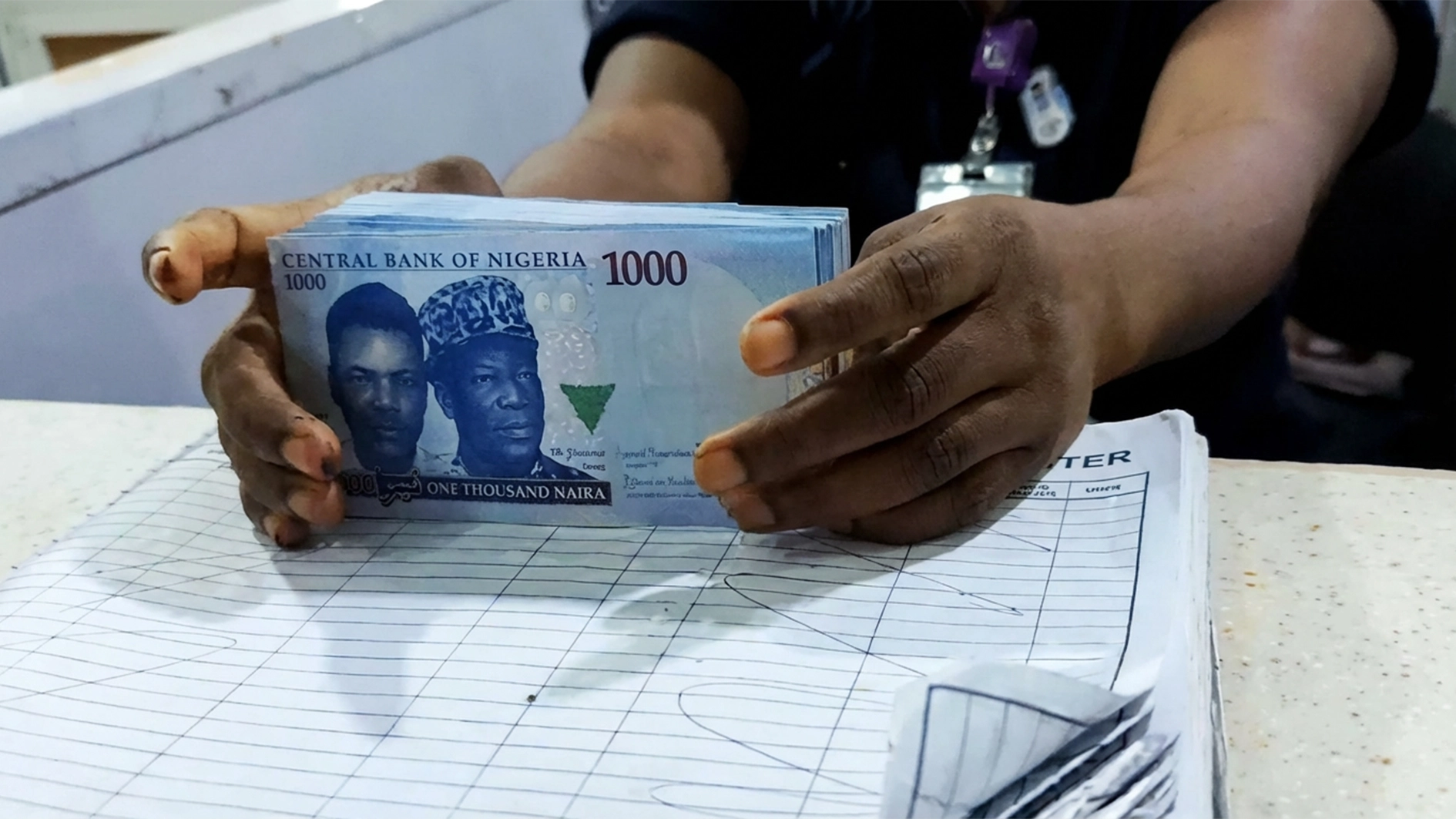
By Chris Enyinnaya
All seems infected that the infected spy,As all looks yellow to the jaundiced eye — Alexander Pope.
Let me begin this write up with a statement on the regulatory problems created by the Federal Ministry of Finance and the Central Bank of Nigeria (CBN). Their problem can be explained by the BOB PRINCIPLE. When Bob has a problem with everyone, Bob is usually the problem.
Every Nigerian has issues with both institutions because both are not in harmony with their function of making workable fiscal policy and monetary policy because the economy is not working. With regard to the CBN, the banker and adviser to the Federal Government, they are not giving sound financial advice.
For instance in 1986, the naira was devalued in line with deregulation of the economy leading to a regime of a move away from fixed exchange rate to a market determined exchange rate. The aim of the devaluation was to boost exports by making it cheaper and earning more foreign exchange. The devaluation is in order, following economic theory. What is not in order is that Nigeria is an import dependent economy not an export oriented economy that will reap the benefit of devaluation by making exports cheaper. Exports can only be cheaper if you invoice exports in naira, the home currency. When you invoice exports in USA dollar or other foreign currencies, how will the exports be cheaper?
Naira and USA dollar are parallel lines, mathematically speaking, which can only meet at infinity if at all they will meet, that is have same purchasing power. It is only when they have the same purchasing power that invoicing in dollar will be beneficial to Nigeria.
From initial devaluation rate of N4.64/$ in August 1986, naira is exchanging for USA dollar in recent times at any rate close to N1400/$.
In managing exchange rate, the CBN is behaving like a carpenter whose only tool is the harmmer The only thing they see is the head of a nail. To them every problem is the nail and they use the harmmar to drive the nail right into the wood. That nail is IMF and World Bank template which has perpetually led to continuous devaluation of the naira. Naira recovery is not in sight. Why has naira not recovered?

We can all conclude that the problem with Nigerian monetary authority is that they have not sat down, put on their thinking cap and find out the real cause of the problem and then work out a sustainable solution. Rather than think over it, we prefer to copy and paste the IMF and World Bank recovery model which applies to formal economies where there is no break in circular flow of income. In Nigeria, there is a break in the circular flow of income. Bebtors hardly pay creditors as and when due. Even government at all levels default in paying contractors, and government workers. They pay foreign creditors as and when due to maintain their credit rating and avoid sanctions.
There is a need for the Nigerian financial system to be restructured to align with the informal structure of the Nigerian economy as a first step. Nigerian economy is a trading economy and a well conceived trade policy will put Naira on recovery path in the short run. The naira for crude oil policy in favour of Dangote Refinery is key to naira recovery. That is why those who look at the Refinery as a monopoly need to rethink their position in national interest. Nigeria can also extend the policy to international buyers. However, this policy will be like walking away from the USA dollar which is the international reserve currency but it is not so.
In the course of further research on the naira for crude oil policy not just to Dangote Refinery but to other international buyers of Nigerian crude oil , this writer framed a question and got answers . The question is: “Can a country like Nigeria decide to invoice exports in naira and does that violate the terms of Bretton Woods agreement?” The answer from Google is: “Yes, Nigeria can legally choose to invoice exports in naira and doing so does not violate Bretton Woods agreement.”
The Bretton Woods system which pegged global currencies to the USA dollar and the USA dollar to hold (the Nixon shock). Today, the global financial system operates on a floating exchange rate model. No international law or treaty forces a sovereign nation to price its commodities in USA dollar.
The following are some of the reasons a country can choose to invoice exports in their home currency.
Sovereign autonomy. As a sovereign nation, Nigeria has the legal right to demand payment for its goods (including crude oil) in any currency it chooses provided it finds a willing buyer. Willing buyers of Nigerian crude oil, especially Bonny Light are there. They are there because it is cheaper to refine than heavy crude oil. There is a sustainable market for that trade window.
Modern precedents. Several countries have bypassed the USA dollar for trade. For example, Russia has demanded Rubles for gas exports and China and Saudi Arabia have engaged in negotiations to settle oil trade in Yuan. However, it is very difficult to implement.
While legally possible, implementing a “naira only” exports policy for major commodities like crude oil faces several economic hurdles which is why the naira for crude policy with Dangote Refinery is a blessing to Nigeria in disguise because there is no hurdle to surmount.
With many countries lining up to buy refined oil from Dangote Refinery ,the policy launches Nigeria into international oil and gas trade market even though it was designed to favour Nigerian consumers.
Thus the ability of NNPC to supply just 30 per cent of crude oil demand of Dangote Refinery is a big blow and a set back in reaping the economic benefits of naira to crude policy. Sourcing 70 per cent of crude oil demand from across the world especially the USA where payment will be made in dollar throws Nigeria and Dangote Refinery back to square one.
Foreign Reserve needs. Nigeria itself needs USA dolla to pay for its massive import Bill for industrial raw materials, finished products and food as well as servicing of foreign debts. If Nigeria stops receiving USA dollar for its crude oil, it will struggle to fund these critical dollar obligations. This is economic theory but in banking practice invoicing exports in naira will not stop Nigeria from earning USA dollar. How?
When this writer was working at Indo-Nigerian Merchant Bank, now a legacy group of Sterling Bank in the 1980s, we had an Indian that imports hand tools from India. The invoice for the hand tools was denominated in Indian Rupees. I thought it was a mistake but my boss, an Indian told me it came in Rupees because of their government policy that gave generous incentive to exporters that invoiced in Indian Rupees rather than USA dollar or any other foreign currencies.
What we did in settlement of the Bills for collection is to first convert the Rupees to naira. At that time, the exchange rate was R14/N1. We debited their naira account and then instructed our correspondent bank, State Bank of India London to debit our USA dollar account with them and transfer the Rupees to the exporter in India. That way, the government of India received USA dollar even though the export was invoiced in Indian Rupees. This is the financial aspect of the policy.
There is also the soveignty implication. The sovereign implication is that there is a political element in exchange rate determination. Every country allows the exchange rate to float within the band of what is in the best interest of the country given its minimum wage and income levels and earnings capacity.
Nigeria robbed itself of this sovereignty by wholesale floating of the naira when it is not an export oriented country which effectively placed exchange rate determination in the hands of currency speculators .This ought not to be so.
If we go back to the General Sanni Abacha era as Head of State and Commander In Chief of the Nigerian Armed forces. After devaluation of the naira, he fixed the exchange rate at N87/$ throughput his tenure. He had the political will to do so. Heaven did not fall. IMF and World Bank and other creditors did nothing. That is because Nigeria is a sovereign country and had the power to do so.
Invoicing in naira will put the CBN in a pole position to manage the exchange rate of the naira to the USA dollar and other foreign currencies better than what it is now.
This is because the Naira is a symbol of Nigerian sovereignty and the CBN had the constitutional power to issue the Naira and manage its circulation throughout Nigeria, its area of jurisdiction.
The Naira volume in circulation will be issued in synchrony with the amount of our foreign reserves. It must be backed by reserves otherwise it becomes paper money. Because of this requirement, the CBN can only sell the amount of Naira it issued and available to foreign importers of Nigerian goods and services. Due to high demand for Naira to exchange for USA dollars by foreign importers of Nigerian goods and services, Naira will become a scarce commodity and its value will rise. This is the best and sustainable way to manage. The exchange rate of the Naira. This home grown model is sustainable because it is anchored on the structure of the Nigerian economy.
Read the remaining part of this article on www.guardian.ng
Enyinnaya fellow, Chartered Institute of Bankers can be reached on [email protected]

