 Follow Us on Google News
 Follow Us on Google Discover
Nigerian labour unions have raised the alarm about growing job insecurity among young workers, demanding an end to casualisation, poor wages, and employment practices that deny workers social protection and the right to organise, GLORIA NWAFOR writes.
For decades, young people worldwide have agitated, struggled, and mobilised for change. Despite different political, social and economic contexts, many share common concerns: high youth unemployment, low wages, precarious work and a cost-of-living crisis that is making it increasingly difficult to build decent lives.
They are demanding a say in the decisions that shape their lives, with young workers saying clearly that the status quo is not delivering the future they deserve.
They expressed their views during this year’s World Day for Decent Work (WDDW) commemoration, held on October 7 with the theme “Young Workers Organising for the Future,” where they argued that the rising decent work deficit was leaving young Africans trapped in unstable informal employment.
In Nigeria, where young people seek opportunities across formal employment, informal businesses, and digital services, these issues raise questions about how labour protections can extend to workers whose employment arrangements fall outside conventional employer-employee relationships.
Statistics from the International Labour Organisation’s Global Employment Trends for Youth 2026 said nearly nine in 10 young workers in low- and lower-middle-income countries work informally.

The global body said the statistics hide millions of young men and women working under precarious conditions, often without formal contracts, social protection, or effective representation, and warned that this menace translates into a profound decent work deficit.
“Behind these figures are young women and men working without contracts, without social protection, without safe conditions and without a voice,” it said.
The General Secretary of the International Trade Union Confederation (ITUC), Luc Triangle, said that insecure jobs, low wages and a rising cost of living cannot become the norm for a new generation of workers.
He emphasised how the confederation is organising and leading change, and also demanded policies that deliver decent jobs, living wages, secure employment and workers’ rights.
According to him, trade unions play a vital role in ensuring young people can exercise their rights, organise collectively, and build the power to shape their workplaces, economies, and societies.
“Organising gives young workers the collective power to change those conditions. Trade unions must create the space for young workers to organise, lead and make their voices heard. Their fight for decent work is also a fight for a democratic future.”
The UNI Global Union has also warned that young workers face growing job insecurity and inadequate social protection, particularly in digital platform employment, where many people work without formal contracts, accident compensation, or guaranteed protection when technology fails.
The global union said access to employment remained the biggest concern for young people across sectors, despite rapid technological advances and the growing use of artificial intelligence in the workplace.
It warned that without enforceable labour protections, young people engaged in platform work risk being left to bear the costs of workplace accidents, algorithmic failures and unfair earnings arrangements without adequate support.
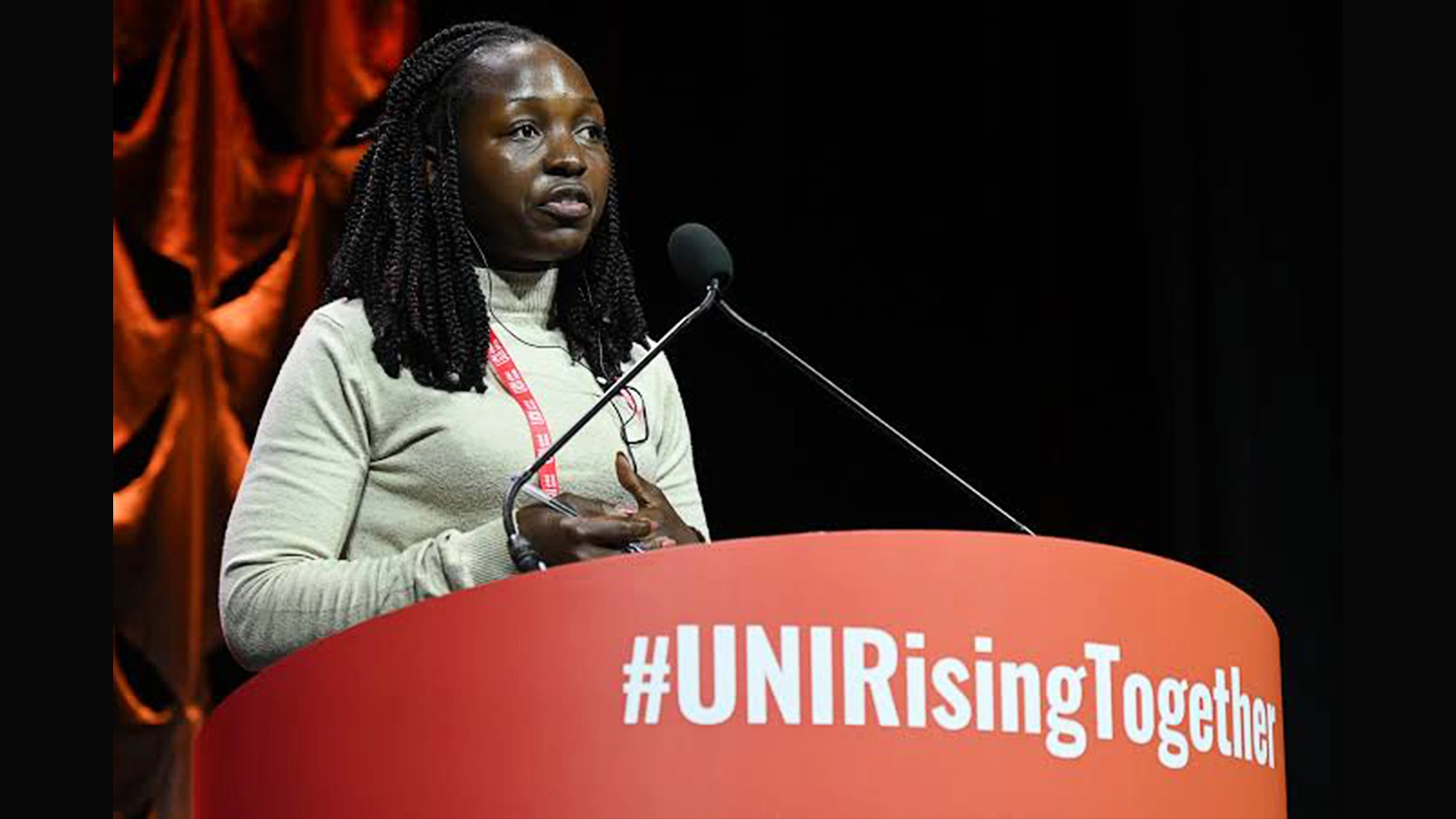
The UNI Youth Global President, Crisnalda Nhamucale, said decent work must go beyond securing employment to guarantee fair wages, equal treatment, safe working conditions, social dialogue and opportunities for professional development.
She said the challenges facing young workers cut across retail, finance, call centres and digital platforms, with access to jobs remaining their most pressing concern.
On digital platform employment, Nhamucale said the absence of traditional employment contracts exposed young workers to significant risks, leaving them without clear mechanisms for securing compensation or challenging unfair practices.
She called for protections to be introduced when workers join digital platforms, including compensation for workplace accidents and remedies for algorithmic failures.
According to her, such safeguards would also create room for negotiations over how workers and platform operators share earnings from completed tasks.
She said young platform workers were often left to fend for themselves because adequate protections and collective bargaining arrangements were lacking.
Nhamucale also urged trade unions to strengthen efforts to organise young workers, arguing that collective representation could help them demand better working conditions, professional training and recognised qualifications.
She said unions needed to engage young people through campaigns and activities that addressed their practical concerns, including employment prospects and the quality of available jobs.
Nhamucale called on governments to treat young people as active contributors to economic development rather than as a problem to be managed or a resource to be considered only in the future.
Similarly, ITUC-Africa also expressed concern about the risks confronting young Africans who migrate in search of better economic opportunities, as well as the growing vulnerability of workers in the platform and gig economy. It revealed how they are pushed into dangerous migration routes in search of dignity, exposed to exploitation in platform and gig work, and too often met with repression when they demand change.
The organisation called on African governments, the African Union, Regional Economic Communities and employers to make decent job creation a central component of economic policy.
It urged authorities to pursue industrial policies and structural transformation that can create quality employment for young people, including through opportunities associated with the African Continental Free Trade Area (AfCFTA).
On labour migration, ITUC-Africa called for stronger protection for African workers moving across borders, while urging governments and other stakeholders to tackle discrimination against migrants.
In Nigeria, organised labour has demanded an end to the casualisation of workers, poor wages and employment practices that deny employees job security, social protection and the right to organise, warning that technological changes and restructuring must not come at the expense of workers’ welfare.
The unions said employers must stop replacing permanent jobs with casual, contract, and outsourced employment, and urged the Federal Government and industry regulators to strengthen labour protections and ensure workers receive fair remuneration and decent working conditions.
The Association of Senior Staff of Banks, Insurance and Financial Institutions (ASSBIFI) and the Precision, Electrical and Related Equipment Senior Staff Association (PERESSA) made the demands, with both unions raising concerns over the growing insecurity confronting workers, particularly young people.
Acting National President of ASSBIFI, Fanimokun Isaac Adesina, called on the Central Bank of Nigeria (CBN), the National Insurance Commission (NAICOM) and other regulatory agencies to make compliance with decent work standards a mandatory corporate governance requirement for financial institutions.
Adesina said the banking, insurance and financial services industries had witnessed increasing displacement of permanent employment by casual, contract and outsourced jobs, leaving many qualified graduates without pension benefits, health insurance, job security and collective bargaining rights.
He alleged that some employers compelled workers to surrender their freedom of association rights before or during employment, describing such practices as unacceptable and contrary to the principles of decent work.
He urged employers to respect workers’ constitutional right to freedom of association and comply with relevant International Labour Organisation (ILO) conventions on union rights, collective bargaining and termination of employment.
The ASSBIFI president also demanded an urgent renewal of the association’s sector-wide collective bargaining agreement, which he said had been due for review since 2007, alleging that employers and management in the financial services industry had frustrated efforts to renew it.
He also called for a review of Section 12(4) of the Trade Unions Act, arguing that some employers had exploited its voluntary union membership provisions to discourage workers from joining trade unions.
On wages, Adesina said the N70,000 national minimum wage was inadequate to meet workers’ basic needs amid rising living costs.
He urged the Federal Government to reduce the costs of food, transportation, healthcare, housing and education, while strengthening security nationwide.
He also called on Nigeria to ratify ILO Convention 158 on termination of employment, stressing that workers should not be arbitrarily dismissed and that employers must follow due process and pay appropriate compensation when terminating employment.
The ASSBIFI leader appealed to employers in the organised private sector to restore gratuity payments for deserving employees, describing the benefit as recognition of workers’ years of service.
Similarly, PERESSA National President, Rufus Olusesan, condemned precarious employment and poor wages, warning that young Nigerians increasingly face insecure jobs, rising living costs, and exploitation in the digital economy.
In a solidarity message at the event, Olusesan said work must provide more than income, insisting that it must guarantee dignity, security and fair remuneration.
He identified casual and contract employment without adequate protection, low wages, digital exploitation and the growing migration of young Nigerians in search of better opportunities as major challenges confronting workers.
Olusesan urged the government to invest in practical skills development and implement policies that generate stable employment rather than relying on temporary relief measures.
He also challenged employers to stop keeping workers on short-term contracts for years without providing adequate employment security.
“A young worker on a three-month contract renewed for five years is not a worker; he is an industrial slave being brutally exploited,” he said.
The PERESSA president called on young workers to join trade unions, acquire relevant skills and collectively demand better working conditions, arguing that solidarity was essential to protecting their rights and influencing decisions affecting their future.
He maintained that the struggle for workers’ liberation should extend beyond workplace demands to broader economic and political reforms, advocating a socialist economy in which workers would place the commanding heights of the economy under democratic control and management.
At the event, the Southwest Zonal Director and State Controller of the Federal Ministry of Labour and Employment, Mienye Badejo, acknowledged the challenges facing young workers as recapitalisation and technological changes reshape the banking and insurance industries.
Badejo said that while recapitalisation was intended to strengthen financial institutions’ capital bases, technology and market performance, the reforms should not undermine workers’ job security, fair wages, career development or dignity.
She identified job displacement arising from automation and restructuring, increasing performance pressure and uncertainty over employment conditions as major concerns for young workers.
She urged employers to ensure that the transition produced not only stronger financial institutions but also better career prospects and more secure employment for workers.
Badejo said the ministry would continue engaging relevant stakeholders and push for a review of existing labour laws to better align them with emerging hybrid and flexible work arrangements.
She said mutual trust, fairness, respect, and ongoing consultation among government, employers, and organised labour remained essential to resolving workplace challenges.

