 Follow Us on Google News


 Follow Us on Google Discover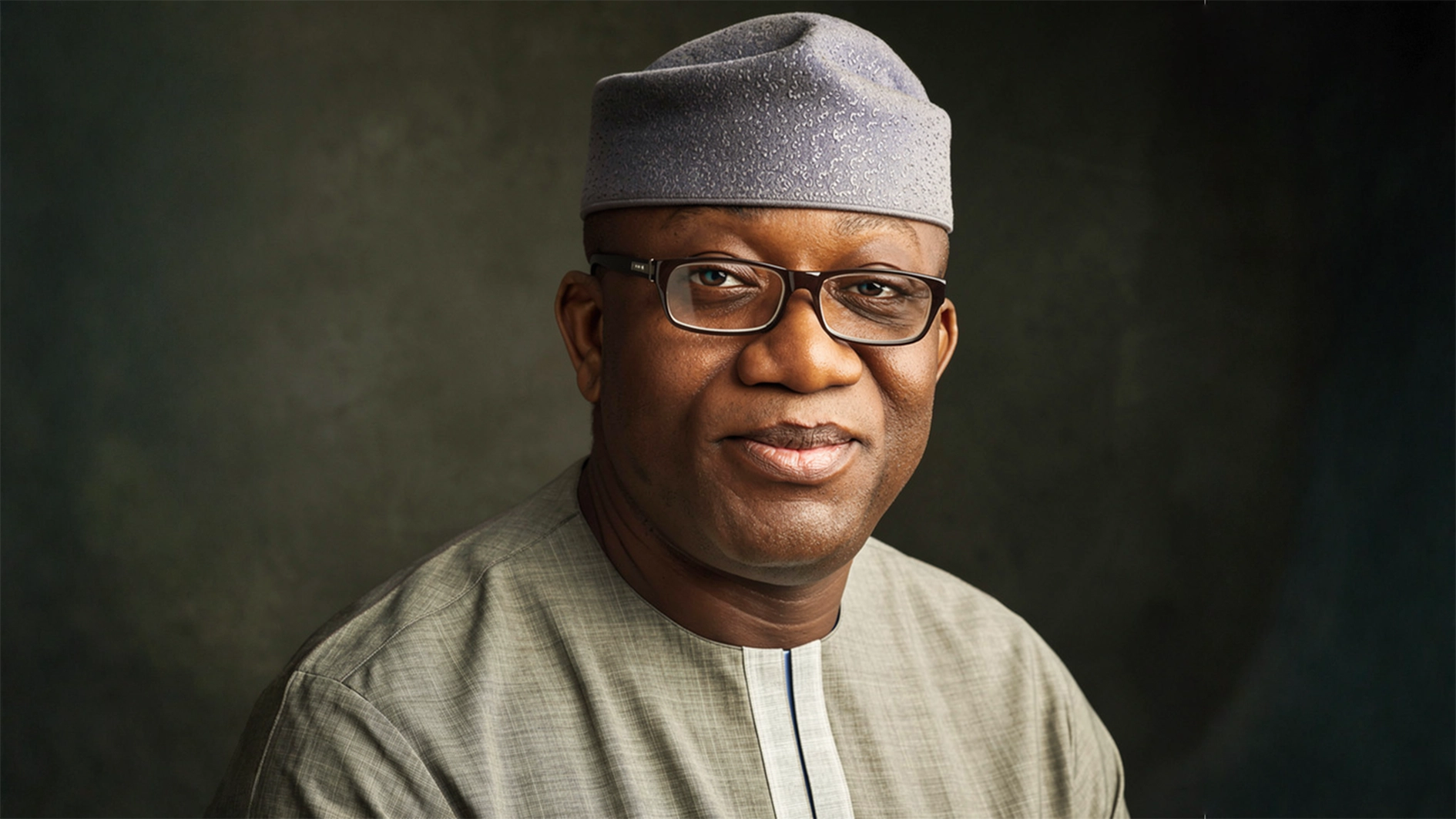
…FUHSI has 3,332 students, completes 20 projects in five years
Former Ekiti State Governor, Dr Kayode Fayemi, has urged the Federal Government to address the migration of Nigerian medical professionals by improving working conditions, strengthening diaspora engagement and negotiating agreements with countries recruiting the nation’s health workers.
Fayemi said Nigeria must move beyond lamenting the exodus of doctors and other health professionals to creating conditions that would make them willing to remain in the country or contribute to its healthcare system from abroad.
The former governor spoke on Thursday while delivering the maiden convocation lecture at the Federal University of Health Sciences, Ila-Orangun (FUHSI), Osun State.
In the lecture, titled “Rethinking 21st Century Specialised Medical University in the Nigerian Context: Are the Challenges Surmountable?”, the former governor identified poor remuneration, inadequate medical facilities, limited career progression and insufficient postgraduate training opportunities as factors driving health workers abroad.
He said the country was investing public resources in training medical personnel only for wealthier nations to benefit from their expertise after graduation.

Fayemi, however, warned against coercive measures to prevent health workers from leaving Nigeria, arguing that the country should focus on making its healthcare system attractive enough to retain them.
“A country that can only keep its health workers by compulsion will hold them without ever keeping them,” he said.
He advocated formal diaspora programmes through which Nigerian medical professionals abroad could teach, supervise research, mentor students and provide specialist services through telemedicine.
“Our diaspora is a national asset,” he said, adding that medical universities should establish structured arrangements to enable professionals abroad to contribute to training and research, either physically or remotely.
Fayemi also called for agreements with countries recruiting Nigerian health workers, arguing that destination countries should contribute to training replacement personnel and strengthening the institutions that produced the professionals they employed.
He said such arrangements should form part of Nigeria’s bilateral negotiations with countries benefiting from its health workforce.
The former governor urged the government to improve salaries, provide functional medical equipment and reliable electricity, expand career opportunities and increase residency and fellowship positions.
He added that health workers serving underserved communities should receive incentives, including housing and access to postgraduate training.
Citing the scale of the challenge, Fayemi disclosed that more than half of the 50 pioneer medical graduates of Ekiti State University who were employed as house officers in 2019 had left Nigeria in search of better opportunities.
He said increasing medical school admissions without expanding housemanship, residency and specialist training capacity could worsen the bottlenecks facing newly qualified doctors.
The former minister urged the Federal and state governments, teaching hospitals, regulatory agencies and university governing councils to collaborate in strengthening medical education, research and healthcare delivery.
He said specialised medical universities needed adequate and predictable funding, institutional autonomy and effective accountability to fulfil their mandates.
Also speaking, the Vice-Chancellor of FUHSI, Prof. Akeem Olawale Lasisi, said the university has grown its student population to 3,332 and completed more than 20 infrastructural projects within five years of its establishment.
Lasisi outlined the university’s achievements in infrastructure, academic development, research and healthcare delivery despite constraints in funding and manpower.
He said the institution, established in 2021, commenced academic activities under its pioneer principal officers appointed in January 2022 and had graduated its first set of students in four-year programmes without academic interruption.
According to him, the university has four faculties, while programmes that have reached the accreditation stage, including Medicine and Surgery, Nursing and Medical Laboratory Science, have secured full accreditation from the National Universities Commission and relevant professional bodies.
The Vice-chancellor said the university had also equipped several laboratories and developed its permanent site alongside its teaching hospital.
“In the space of two years, both the permanent site and the Teaching Hospital were ready for academic activities and healthcare delivery,” he said.
He said the institution was established to produce disciplined and innovative healthcare professionals capable of transforming healthcare delivery in Nigeria and beyond.
The vice-chancellor also highlighted research grants and international fellowships secured by members of staff.
He said Dr Akeem Rabiu of the Department of Microbiology won two United Kingdom grants between 2025 and 2026 for studies on microbial and molecular aspects of environmental pathogens in Nigeria.
Dr Fatai Afolabi and Dr Tawakalt Abolayo, he added, won the 2025 Early Career Grants of the Royal Society of Tropical Medicine and Hygiene, while the Deputy Vice-Chancellor (Academic), Prof. M.A. Adeleke, secured the GLIDE grant.
Two other academics, Dr Yusuf of the Department of Biochemistry and Dr O. Ojedoyin of the Department of Physiotherapy, won international research fellowships to South Africa, Lasisi said.
He added that Adeleke was appointed to the Technical Coordinating Committee of the Reaching the Last Mile Fund Project in 2025 and became a member of WHO/OTS in 2026.
Despite the progress, Lasisi acknowledged the difficulties of establishing a specialised health sciences university with limited human and financial resources.
He lauded former Osun State Governor, Chief Bisi Akande, for providing what he described as critical support at key moments in the university’s development.

