 Follow Us on Google News


 Follow Us on Google Discover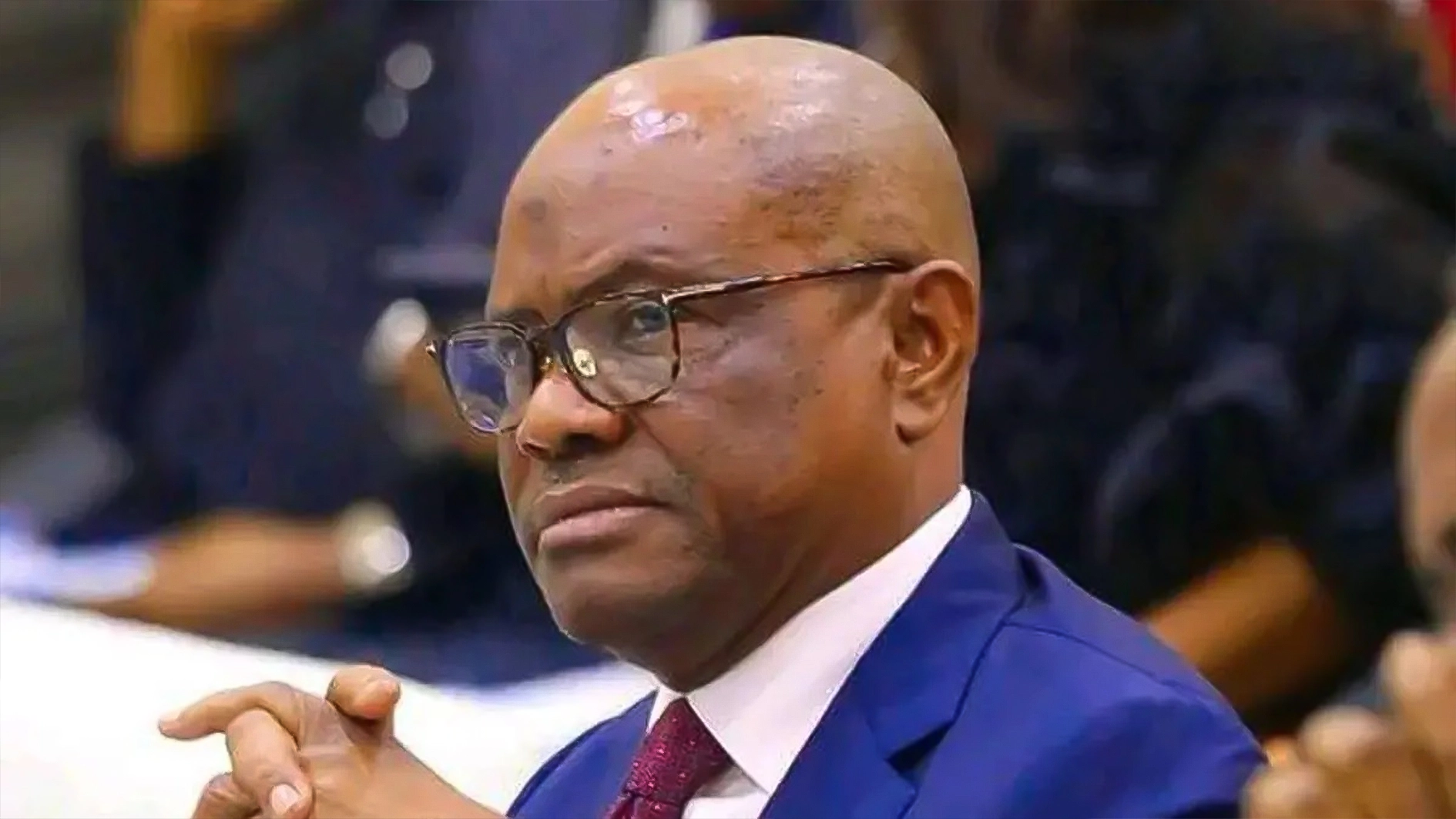
Minister of the Federal Capital Territory (FCT), Nyesom Wike, has called on Nigeria’s political leaders to move beyond the politics of ethnic entitlement and sectional interests.
He urged leaders to embrace a national responsibility-driven approach that prioritises equity, fairness, accountability and improved living conditions for citizens.
Wike, who spoke on Thursday at the first Idoma Hall of Fame induction ceremony, held in collaboration with Ochetoha K’Idoma as part of the Idoma Centenary Plus celebration in Abuja, said political power should be regarded as a public trust rather than a personal possession or an instrument for advancing the interests of particular ethnic groups.
Delivering a keynote address titled “People, Politics and Power Play in Nigeria: The Agitation for Equity and Fairness,” the minister argued that the country’s persistent struggle over political representation could not be resolved merely by ensuring that different ethnic groups took turns occupying positions of authority.
According to him, Nigeria must transition from the politics of “our turn” to a system in which political leaders are judged by their commitment to justice, competence, accountability and service to the people.
“We must move from the politics of ‘our turn’ to the politics of ‘our responsibility’,” he said, challenging political leaders to focus less on who occupies public office and more on what office-holders achieve for the people.

Wike maintained that although fair representation remained essential in a diverse federation such as Nigeria, it should not become an end in itself or an excuse for redistributing privileges among competing political and ethnic interests.
He said the real test of equity was whether political power translated into tangible benefits, including better schools, functional hospitals, secure communities, productive employment, reliable infrastructure and equal opportunities for citizens, irrespective of their backgrounds.
The minister warned that when public office became a vehicle for personal accumulation or sectional domination, citizens outside the circle of privilege could begin to perceive the state as an institution that belonged to others.
He added that such perceptions could deepen grievances, weaken national loyalty and fuel the recurring agitation for marginalisation that had characterised Nigeria’s political development.
Wike said the challenge before the country was to build a political order in which every citizen could participate meaningfully in national life without feeling compelled to capture political power merely to secure recognition, protection or access to public resources.
He noted that the 1999 Constitution, as amended, placed sovereignty in the hands of the people and established democracy, social justice, security and welfare as fundamental principles of governance.
He cited the federal character provisions of the Constitution, particularly Section 14(3) and (4), which require the composition and conduct of government institutions to reflect Nigeria’s diversity and promote national unity and a sense of belonging.
However, he argued that constitutional provisions and political arrangements alone could not guarantee fairness without the political will to implement them in good faith.
According to him, Nigeria’s experience with federalism, state creation, quota systems, zoning and rotational political arrangements demonstrates the country’s longstanding efforts to accommodate its diversity, but these mechanisms must be supported by institutions that promote fairness and accountability.
“The goal should not be to choose between diversity and merit, as though the two were inherently incompatible. The goal should be to build a system in which diversity enlarges the pool of talent available to the nation rather than narrowing it,” he said.
Wike stressed that no Nigerian should be excluded from public office because of their state of origin or ethnic identity, while insisting that competence and the ability to deliver results must remain essential considerations in the exercise of public responsibility.
He cautioned against appointing individuals solely to satisfy representational expectations without considering their capacity to perform, just as he warned against using merit as a pretext to perpetuate historical exclusion.
The minister also criticised political leaders who invoke marginalisation when their communities are disadvantaged but remain silent when similar injustices affect others.
He described such conduct as an attempt to gain access to the privileges of an unjust system rather than a genuine commitment to equity.
“If we complain about marginalisation only when our own people are excluded, but become silent when others are marginalised after our people gain power, we are not opposing injustice; we are seeking access to its privileges,” he said.
Wike urged Nigerians to interrogate claims of marginalisation with evidence and an understanding of their historical context, rather than allowing ethnic grievances to become instruments of political mobilisation.
He warned that political actors who exploit identity-based grievances for electoral advantage risk turning legitimate demands for inclusion into sources of division and hostility.
The minister further argued that political representation would remain inadequate if it failed to address the economic hardships and social inequalities confronting ordinary Nigerians.
He said a citizen’s sense of belonging could not be sustained merely by the appointment of someone from their ethnic group to a prominent public office, particularly when access to education, healthcare, employment, security and other essential services remained limited.
According to him, political inclusion must therefore be accompanied by economic inclusion, with government policies designed to expand opportunities and improve the welfare of citizens across geographical and social boundaries.
Wike urged political parties to strengthen internal democracy, electoral institutions to protect the integrity of the ballot and public institutions to operate transparently and independently.
He also called for greater opportunities for young Nigerians to participate in political and economic life without becoming dependent on powerful individuals for access or advancement.
The minister said the ultimate objective should be to build institutions strong enough to guarantee justice, irrespective of who occupies political office.
“Fairness begins when rules become more important than relationships,” he said, adding that public office-holders must recognise that history would judge them not merely by how long they held power but by what they did with the authority entrusted to them.
On the significance of the occasion, Wike commended the organisers of the Idoma Hall of Fame for establishing an institution dedicated to preserving the history, heritage and achievements of distinguished sons and daughters of the Idoma nation.
He said the initiative should serve not only as a celebration of accomplished individuals but also as an inspiration to younger generations to embrace integrity, scholarship, enterprise, innovation and service to humanity.
The minister urged the Idoma people to view their history as one of contribution to national development rather than merely a record of grievances or perceived exclusion.
He said the legitimate aspirations of every community for recognition, security and opportunity should be transformed into complementary contributions to a shared national purpose.
Wike maintained that Nigeria’s diversity should be a source of strength rather than suspicion, stressing that no community could build a sustainable future by seeking its advancement at the expense of others.
He challenged political leaders and citizens to work towards a country where public institutions command trust, opportunities are accessible regardless of background, and political power is exercised for the collective good.
“The question before us is therefore no longer simply: Who gets power? The more important question is: What do we do with power when we get it?” he asked.
Wike expressed optimism that Nigeria could overcome its recurring tensions over representation and belonging if political leaders translated their commitment to equity into credible institutions, effective policies and responsible conduct.
He concluded that the country’s future depended on transforming diversity from a source of division into an instrument of national development, adding that every Nigerian should have a fair stake in the affairs and future of the Republic.

