 Follow Us on Google News


 Follow Us on Google Discover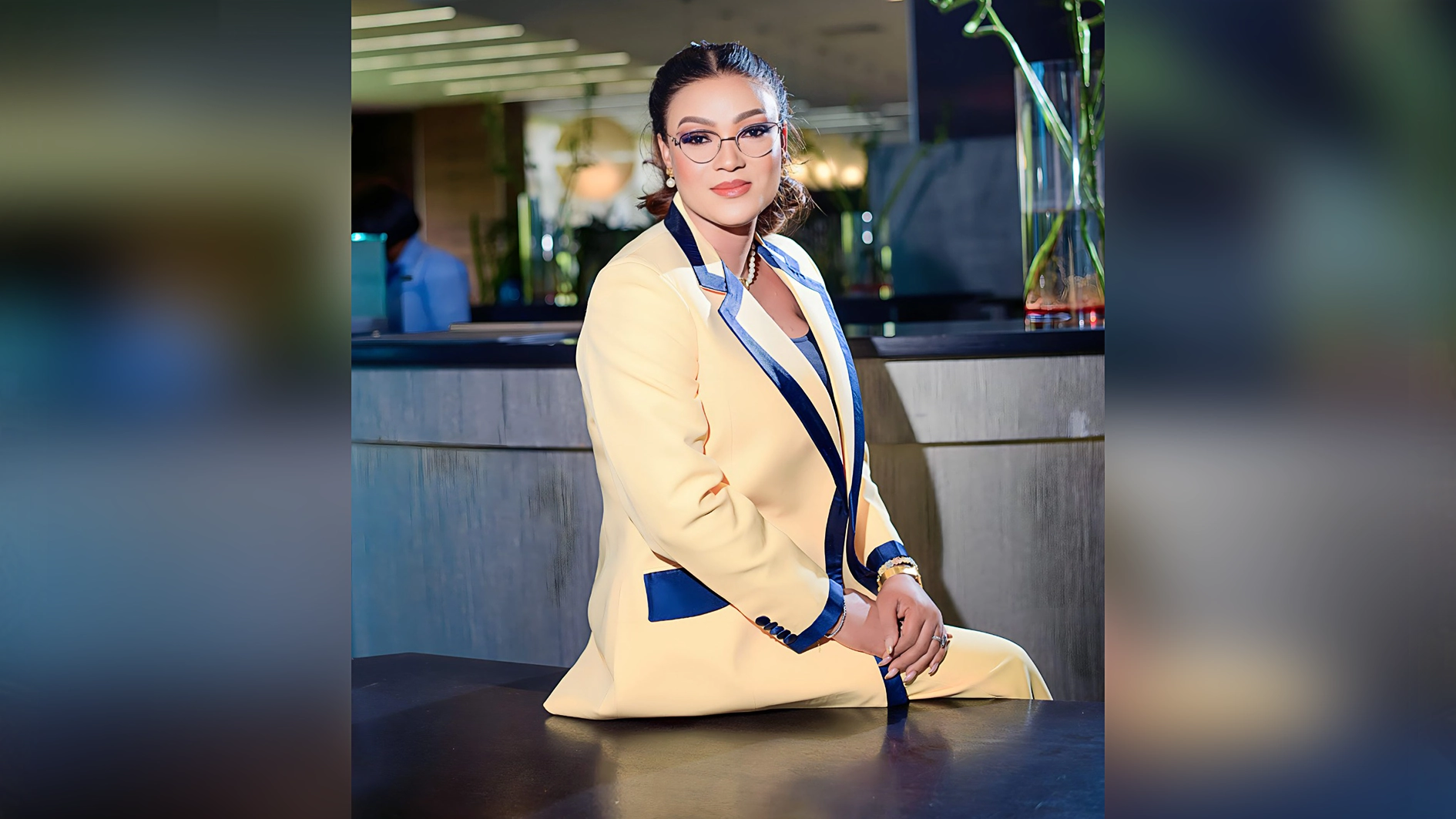
From journalism to corporate leadership, entrepreneurship and broadcasting, Kikelomo Atanda-Owo Abati’s career has taken several turns. At the seventh anniversary of her talk show, she celebrated the journey and unveiled a new podcast with her husband, Reuben Abati.
When Kikelomo Atanda-Owo Abati started Real Talk With Kike, she was stepping into a new phase of a career that had already taken her through journalism, corporate management and entrepreneurship. The programme would become one of the ways she returned to the media, bringing public officials, business leaders and other influential Nigerians into conversations about issues affecting the country.
Seven years later, she was back in a room filled with many of the people who had watched her journey, this time to celebrate the programme’s anniversary and more than 20 years in the media industry.
The celebration, held on Saturday, October 10, at Eko Hotels and Suites, Victoria Island, Lagos, also marked the unveiling of the Reuben and Kike Abati Podcast, a new project she will host with her husband, Dr. Reuben Abati.
The anniversary offered an opportunity to look at the career behind Real Talk With Kike, the people who have supported its host and the decisions that brought her to this point.
According to actress Shaffy Bello, who has known Kikelomo since the early days of the show, the achievement was worth celebrating because she had seen some of the difficulties that came with the journey.
“We’re very proud of her. I’m extremely proud of her,” Bello said at the event.

She recalled the conversations they had during difficult periods in Kikelomo’s life, when she needed encouragement to get through the storms. She also remembered visiting her at Silverbird after the programme had been running for about a year.
From journalism to corporate leadership
Kikelomo’s early career was rooted in journalism. In an interview published by The Guardian in 2019, she recalled starting at Silverbird Communications before moving to TVC and later working as a columnist and journalist with Nigerian Compass.
She subsequently moved into corporate roles, working in marketing and finance at Kruss Atlantic, taking on a senior supervisory role at the Lagos State Internal Revenue Service, and working in media and content management at Great Places to Work Nigeria.
Her career later took her to Peculiar People’s Management, where she worked with clients across several sectors, including banking, government, telecommunications, oil and gas, and religious organisations. She rose to the position of senior vice-president and handled projects involving international clients.
The shift from journalism to corporate work was a significant change, but it broadened her experience beyond reporting and broadcasting. It brought her into contact with organisations, executives and the demands of managing relationships, communicating ideas and delivering projects.
She had also spent years building professional experience before deciding to establish her own organisation.
In her 2019 interview with The Guardian, Kikelomo described the move into entrepreneurship as a turning point. After more than 12 years working for different organisations, she wanted to build something of her own. It was a decision that came with uncertainty, particularly because having a salaried job and running a business were different experiences.
She went ahead to establish Z-Edge, a consulting business focused on areas including corporate training, management, marketing communications and related services.
The experience would become part of the foundation for her return to the media. Rather than approaching broadcasting only as a presenter, she could draw on her understanding of corporate organisations, public relations, business and the people responsible for making decisions.
She also established the Kike Hub Foundation, through which she has pursued social responsibility initiatives.
Her work outside broadcasting has remained part of her professional identity. It also helps explain why Real Talk With Kike has sought to bring people from different sectors into the same conversation.
Finding her way back to broadcasting
Kikelomo’s return to the media was not a return to where she had started. The industry had changed, particularly with the growth of social media and digital technology, and she had to adapt to a different media environment.
In a 2022 interview with The Guardian, she spoke about leaving a senior corporate position because she wanted personal growth and the opportunity to build her own organisation. She also described her return to the media as challenging but rewarding, with technology changing the way journalists and broadcasters worked.
Real Talk With Kike grew out of that renewed engagement with broadcasting. The programme, which has aired on Silverbird Television and Inspiration FM, was conceived as a platform for conversations about issues with national and public relevance. Its focus has included politics, the economy, health, education, tourism, aviation and other matters affecting Nigerians.
The aim was not only to give guests room to speak, but to bring decision-makers and stakeholders into discussions that could help audiences understand issues and consider possible solutions.
Kikelomo’s professional background gave her experience of both the media and the corporate world. The show created a space where those experiences could meet.
Its seventh anniversary was therefore a milestone for the programme, but also for a career that had moved through several fields before finding a new expression in broadcasting.
The anniversary theme, Beyond the Studio, reflected that ambition. The gathering brought together government officials, business leaders, media professionals and figures from the creative industry to discuss leadership, innovation, culture and the media’s role in national development.
The people behind the milestone
The event featured a keynote address delivered by Lagos State Secretary to the Government, Bimbola Salu-Hundeyin, who represented Deputy Governor Dr Obafemi Hamzat.
In her opening remarks, Salu-Hundeyin praised Kikelomo’s work and acknowledged her comments about the need to do more to bring women together and support them.
She said women were proud of Kikelomo’s hard work and sincerity, adding that support did not always have to be financial. Sometimes, she said, it meant being present.
That point also emerged in remarks by the chairman and chief executive officer of the Nigerians in Diaspora Commission (NiDCOM), Dr Abike Dabiri-Erewa, who described Kikelomo as resilient as she believed in what she was doing, even through difficult periods.
Kikelomo also recognised seven men who, she said, had offered support, opportunities or interventions at different points in her life and career. They were the late former Oyo State governor, Abiola Ajimobi, Eko Hotels and Suites general manager, Danny Kioupouroglou, Air Peace chairman Allen Onyema, publisher Dele Momodu, Otunba Sesan Rufai, Oba Ghandi Afolabi Olaoye and Emma Heru-Oriakhi.
Her acknowledgement was not presented as a claim that men mattered more than women. Rather, she reflected on the specific ways those individuals had supported her. She also spoke about becoming more intentional about supporting other women and helping them gain opportunities and seats at the table.
Among the women she acknowledged were her godmother, chair of Ecobank Nigeria, Bola Adesola, and Omowunmi Milakani, whom she described as a significant figure in her life.
The event was not limited to speeches and professional discussions. A performance by saxophonist Beejay Sax, an Eyo masquerade display and a raffle draw featuring valuable gifts added a cultural and celebratory element to the occasion.
Beyond the studio and the national conversation
The keynote address returned to the question of what public conversations should achieve. Speaking on behalf of the deputy governor, Salu-Hundeyin delivered a speech that linked leadership, innovation, culture and the media to the practical challenges facing Nigerians. It opened with the example of manufacturers leaving the national electricity grid because unreliable power makes business increasingly difficult.
The address argued that the success of leadership should be measured by changes in people’s lives, not announcements made at conferences.
“The test of our success is not what we announce at conferences,” it stated. “It is what changes in the lives of our people.”
The speech also highlighted the roles of government and private enterprise in creating jobs, improving infrastructure and supporting innovation. It acknowledged that progress required more than policies and promises: government needed to provide predictable rules and functional infrastructure, while businesses needed to invest, create jobs and develop local capacity.
The themes continued in two panel discussions. The first, titled “Leadership: Fixing the System — Policy, Accountability and the Next 10 Years”, was moderated by Kikelomo. It featured Minister of Art, Culture, Tourism and Creative Economy Hannatu Musa Musawa; Dabiri-Erewa; Reuben Abati; and Onyema.
The discussion covered governance, policy implementation, accountability and the responsibilities of public officials and the media.
Musawa spoke about governance, legacy and the need for data to assess whether policies were being implemented and producing results. Dabiri-Erewa emphasised communication, arguing that government officials needed to explain their actions clearly, while also raising concerns about toxicity on social media and the need for responsible journalism.
Reuben Abati questioned how professional standards could be enforced in an era when social media had widened the number of people producing and distributing information. His intervention raised a question central to journalism: who is responsible for upholding standards when public conversation increasingly takes place outside traditional media organisations?
Onyema discussed the challenges and prospects of the aviation sector, including flight delays, airline capacity, entrepreneurship and the role of aviation in national development.
The second panel, “From Traditions to Trends: How Culture Shapes Our Values and Nationhood”, was moderated by media entrepreneur Chude Jideonwo. Its panellists included broadcaster and media trainer Eugenia Abu, Kioupouroglou, actress Shaffy Bello, food blogger Yemisi Odusanya, popularly known as Sisi Yemmie, Yinka Adebayo, Federal Airports Authority of Nigeria Director of Public Affairs Henry Agbebire, and Reverend Esther Ajayi.
The discussion examined culture, identity, creativity and the ways Nigerians present themselves to the world.
Bello urged people to embrace authenticity and continue learning, reflecting on her own experience of working abroad and returning to Nigeria. “America trained me, but Nigeria made me,” she said.
Sisi Yemmie spoke about cooking, passion and the potential to share Nigerian food and culture with wider audiences. Adebayo argued that Nigerians sometimes underestimate what the country has to offer, particularly as Nigerian music and culture gain international attention.
Abu raised questions about the content people consume online and the importance of mentorship, while Kioupouroglou commended Nigerians’ sense of community. Agbebire encouraged Nigerians to find new ways of doing things.
A new chapter with Reuben Abati
The next step for Kikelomo is a project that brings her professional and personal worlds together.
At the anniversary, she and her husband, Reuben, unveiled the Reuben and Kike Abati Podcast. The programme is expected to explore governance, relationships, family, the media industry and legacy.
For Kikelomo, the partnership brings another voice into the work she has been doing through her own show. Reuben Abati has spent decades in journalism and public affairs, including work as a columnist, broadcaster and presidential spokesperson. His experience gives the proposed podcast a different perspective from the conversations Kikelomo has led on her own.
Their marriage is now part of their public media work, but the project also brings together two distinct professional journeys. Kikelomo’s career has moved between journalism, corporate management, entrepreneurship and broadcasting. Reuben’s work has taken him through journalism, public communication and political commentary.
The podcast gives them a shared platform to discuss issues that affect public life and private relationships. Its success, however, will depend on what the conversations offer audiences beyond the interest generated by the couple’s names.

