 Follow Us on Google News


 Follow Us on Google Discover
Across the Lake Chad Basin, commanders have been killed, thousands have surrendered, and communities resettled. But a three-month HumAngle investigation find an insurgency still capable of replacing fighters, governing populations, and preparing an estimated 8,000 children for its next generation. Ahmad Salkida in collaboration with Guardian Digital Investigates writes.
Khalil was a child in 2015.
The son of Mohammed Zangina, a first-generation Kaid in the Boko Haram terror group, he was still a little boy when he was photographed in Gwoza around 2015. He grew up under the insurgent leadership, became a fighter, and later joined its media wing. Today, he is a senior member of Maktab al-Shar‘i (ISWAP’s apex religious committee), where he helps train another generation of children.
Khalil and his siblings were at home when soldiers raided their family house in Maiduguri in January 2013. Their father was killed during the operation, and the family’s account of how he died differed from the military’s.
The child in yesterday’s propaganda is now helping produce the children of tomorrow’s war.
HumAngle’s investigation, which spanned July, August and September, finds that the insurgents operating across northeastern Nigeria and the Lake Chad Basin retain substantial capacity to fight, mobilise people, and regulate civilian life. It further revealed a dedicated pipeline of next-generation insurgents, routinely prepared by training children of insurgent members in combat skills and administrative service.

Our investigation reveals the careful building of institutions that guarantee efficiency in battles and consistency in subduing foes. They are structuring family households, armies, and economies that are integrated, bold, and sacrificial, able to adapt under extreme conditions of scarcity and survive setbacks such as the destruction of camps.
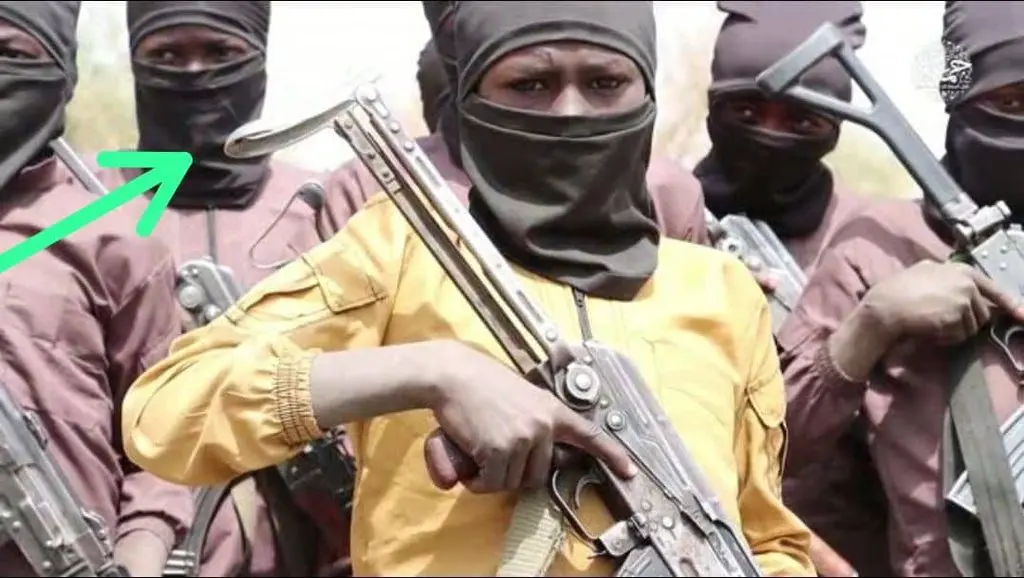
The different armies within one war
“Boko Haram” remains a common shorthand for the insurgency. Here, JAS refers to Jama’atu Ahlis Sunna Lidda’awati wal-Jihad and its associated networks, including the Lake Chad network led by Bakura Doro at the Nigeria-Niger border. The larger Boko Haram population are spread across the Mandara Mountains and northern and central Borno mainland.
ISWAP (Islamic State West Africa Province) is assessed separately.
JAS movement’s fragmentation became particularly visible in 2021 when ISWAP moved against the group’s leader, Abubakar Shekau, in Sambisa. Shekau’s death did not collapse his command structures or prevent his surviving members from joining ISWAP. Although some members surrendered, others moved, regrouped, or continued under commanders outside ISWAP’s authority.
The defections that followed Shekau’s death were substantial. HumAngle documented thousands who surrendered to Nigerian forces in the months after Shekau’s death. The government reported more than 15,000 Boko Haram members surrendered by November 2021. But surrender figures do not correspond directly to the number of fighters removed from battle. Nigerian military figures have repeatedly grouped adult men together with women and children. In one two-week period reported by Defence Headquarters in July 2022, for example, 2,016 suspected Boko Haram and ISWAP members and their families surrendered. Only 360 were adult males; 580 were women, and 1,076 were children.
HumAngle subsequently assessed that JAS had significantly weakened after Shekau’s death as fighters surrendered, joined ISWAP or reorganised into smaller formations. ISWAP, meanwhile, expanded into areas previously controlled by Shekau’s organisation. By 2024, the independent data monitoring group, ACLED, had recorded at least 106 clashes between JAS and ISWAP since Shekau’s death.
Five years after Shekau died, the two groups are still fighting the military and each other. ACLED recorded more than 300 clashes involving Boko Haram and ISWAP across the Lake Chad region in the first quarter of 2026, 30 per cent higher than the preceding quarter.
The mass defections therefore removed people from the insurgent environment and weakened particular formations, especially JAS, without significantly affecting the institution.
Bakura, also known as Abu Umaima, leads a network within the wider JAS organisation. Its leadership and local relationships give it substantial operational autonomy.
Between August and October 2026, multiple sources estimated to HumAngle that JAS’s male population is about 80,000, comprising roughly 30,000 within Bakura’s Lake Chad Basin network and about 50,000 across other formations, including the Mandara Mountains and surrounding mainland areas.
These categories describe mobilisation capacity, as not all 80,000 people are trained soldiers, have a firearm, or participate voluntarily.
This investigation distinguishes between armed personnel, people available for mobilisation, and civilians living under insurgent rule. Losing sight of it exaggerates some measures of insurgent strength while concealing others.
ISWAP’S armed formations and the people behind them
HumAngle identified 25 kaids, or senior commanders, within ISWAP’s structure. They include heads of the amniyya, responsible for intelligence, counter-intelligence, and clandestine security; the Hisbah, which enforces religious and moral codes; the shurta, the group’s policing and internal security apparatus; and territorial commanders. The investigation assesses that each identified command led by a kaid comprises at least 310 fighters, including subordinate ranks described as munzirs and naqeebs, as well as rank-and-file fighters.
Months of interviews with dozens of serving and former ISWAP members put its 25 formations at roughly 7,750 fighters with access to firearms. But HumAngle uncovered a revealing shift: while many retain their weapons, hundreds operating in the same mantiqa as the central leadership must now draw firearms from armouries and return them after operations, reflecting growing fears of defections and armed dissent.
A separate estimate places ISWAP’s active youthful male population outside this estimated fighting force. It accounts for over 20,000 across its five mantiqas (territories), including da’awah units, traders, farmers, tax collectors, judges, medical personnel, and fishermen, and largely from clandestine and support cells. Sources describe these roles as distinct from regular fighting duties, although members can be drafted when the organisation needs reinforcements. The population estimate excludes old men, women, and children.
Villagers living in areas under ISWAP’s direct authority enlarge the population affected by the organisation beyond these figures. HumAngle has not established a complete demographic status of that wider population.
Interviews with Mukhtar Abdullahi, Ibrahim Goni, and Bakura Banki, all former senior members of Boko Haram and ISWAP, describe the distinction between combatant units and personnel serving other institutions. Their testimonies offer a substantially higher assessment of armed strength than the 7,750 estimates.
One account by Abdullahi identifies four broad operating environments known as mantiqas: Sambisa; Timbuktu or Faruq; Kangarwa and Tumbun Gini around Lake Chad; and Tumbuma, associated with Kirenewa. It also identifies a Sambisa-linked branch extending towards Banki, Gulumba, Jere, Kwache, and Mayanti.
The testimony estimates approximately 3,000 armed fighters in Sambisa, 4,000 in the Timbuktu environment, 6,000 around the Abadam-Kukawa lake interface, 3,500 in the Tumbuma-Kirenewa environment, and 1,500 to 2,000 in the Banki-Mayanti branch.
“These are the selected ISWAP fighters who have weapons in their hands,” Abdullahi’s account puts ISWAP’s estimated strength at approximately 18,000 to 19,000 armed personnel, but Umar Gulani, who is still active, disputed this claim, insisting Abdullahi combined trained fighters with the civilian male population.
Multiple sources agree with the assessment of at least 7,750 derived from identified formations. Ibrahim Goni and Bakura Banki further estimated that at least 4,000 additional personnel across these territories could be drawn from zakat, da’awah, dara’ib, shurta and Hisbah functions. That estimate covers a specified pool of institutional reinforcements and is not a census of the wider population of more than 20,000 men as described earlier.
“They can take people from Zakat, they can take people from Da’awah,” Goni emphasises. Personnel assigned to taxation, policing, and religious enforcement can also be added to combat operations when required.
This explains the inconsistencies in the numbers. ISWAP retains people and institutions that can finance, supply, inform and reinforce its standing formations. Some personnel keep rules in force when fighting units leave. Others maintain the agricultural and commercial relationships through which the organisation obtains resources.
Losses inflicted by the Nigerian military, the Multinational Joint Task Force or rival factions therefore matter without necessarily exhausting the system.
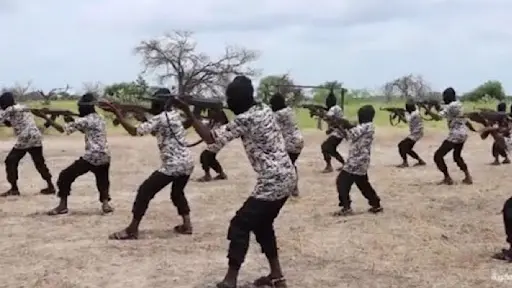
This raises a question that battlefield casualty figures alone cannot answer: if 100 insurgents are killed today, how long does it take the organisation to replace them?
There is no defensible fixed rate. The effect depends partly on who has been killed. “The loss of 100 rajals (rank-and-file) fighters is different from losing experienced kaids, amniyya commanders, trainers, logisticians, bomb makers or other specialised personnel whose knowledge and authority take longer to reproduce,” said Umar Gulani. But the structures documented in this investigation exposes their mechanisms for replacing some battlefield losses.
In March 2025, ACLED recorded at least eight Nigerian military airstrikes in Borno that reportedly killed more than 90 insurgents. Two months later, ISWAP conducted at least five attacks on military bases in Borno, including Buni Gari, Dikwa, Rann, Gajiram, and Marte. The resulting fighting pushed armed clashes in Borno to their highest level in 2025.
This means that substantial reported casualties did not prevent the organisation from retaining the capacity to mount coordinated attacks on multiple military positions shortly afterwards.
An annual count of insurgents killed also carries limitations. ACLED records reported fatalities from violent events, but reporting from the Lake Chad conflict does not always establish how many of the dead belonged to each armed actor. Many accounts group actors together, collapsing JAS and ISWAP into a single group.
What can be measured more reliably is whether sustained military attrition produces corresponding organisational decline. The evidence is uneven because the mass defections after Shekau’s death weakened JAS, but ISWAP simultaneously consolidated territory and absorbed personnel.
The more relevant measure of attrition is therefore whether the system producing, training, financing and replacing fallen fighters is shrinking with those losses.
The larger army is not necessarily the stronger one
JAS/Boko Haram substantially outnumbers ISWAP in the population available for mobilisation documented by this investigation. Yet military and non-state sources interviewed by HumAngle consistently assess ISWAP as the stronger military organisation.
The difference is attributed to organisation, training and discipline, which ISWAP prioritises. Its defined commands, specialised institutions, intelligence structures and trained fighting units allow a smaller population to generate a more organised fighting force.
The numbers conceal an important distinction: JAS outnumbers ISWAP, especially on the mainland, while ISWAP remains militarily stronger. HumAngle’s investigation found one major exception: Bakura-led fighters in the Lake Chad islands, a sub-faction of JAS, operate with an organisational level comparable to ISWAP’s stronger formations.
The undocumented fighting formations in North-central and North West
As alarming as the figures in the North East may be, it is not an estimate of the total armed fighting force of Boko Haram and ISWAP across northern Nigeria because it does not include the smaller Boko Haram splinter cells that have emerged in parts of north-central and Southwest Nigeria. Nor does it account for the hundreds of Boko Haram and dozens of ISWAP operatives across the North West.
This investigation is limited to the combat personnel and formations of ISWAP and Boko Haram, and their areas of operation in northeastern Nigeria and adjoining fringes in the Lake Chad Basin, including Niger Republic, Chad Republic, and Cameroon.
The children being prepared to inherit the organisation
The recruitment and exploitation of children extends beyond jihadist organisations. Across conflicts, armed groups have used children as fighters, informants, and messengers. UNICEF estimates that more than 105,000 children were verified as recruited or used globally between 2005 and 2022, with actual numbers likely higher.
A typical household of senior members harbours 5-10 children or more, as some men care for their own children in addition to the little children of dead members. Their accounts shift our gaze from the guns in the field today to something more consequential: the minds being prepared to carry them tomorrow. Wars endure when hatred learns how to reproduce itself.
“Not every child receives military training. Some become clerics, mechanics or auxiliary nurses,” Banki said, underscoring that they are preparing not only fighters, but a society built to endure.
Our investigation estimates that 8,000 children are being indoctrinated and trained for combat across ISWAP’s five mantiqas. The figure is an estimate and remains independently unverified.
Multiple sources interviewed for this report described a priority category called Andak or Handak amongst these children. The Andak are mostly children of dead ISWAP members whom the organisation calls shuhada, or martyrs, particularly those who have lost one or both parents in battle or airstrikes, as well as children whose parents have been arrested or detained by government security forces. But the term describes more than orphanhood. It reveals one of the most corrosive ways in which the insurgency reproduces itself across generations. These children, like Khalil, are born into, or raised within, an ideological world they did not choose, where the death of a parent is assigned a sacred meaning, the organisation becomes an authority over memory and belonging, and violence can be presented as inheritance rather than rupture.
A video recorded in October 2026 and obtained exclusively by HumAngle offers a rare glimpse inside the Andak classroom. In the footage, up to 30 children—many appearing to be between the ages of 3 and 10—sit in a circle beneath a makeshift shelter of tree trunks and grass thatch. Above them, a UNHCR-branded trampoline appears to have been repurposed to reinforce the roof, possibly salvaged from an IDP camp, as the makeshift structure braces against the rain.
HumAngle has withheld the most recent footage or screenshots to protect the identities of active ISWAP fighters who contributed to this investigation. Publishing the images could expose the sources and place them at risk.
For many of the Andak, there is scarcely an outside world against which this reality can be measured. Their formative universe is bounded by insurgent-controlled communities, religious instruction shaped by the organisation, stories of fathers killed as “martyrs,” memories of airstrikes and military operations, and an enduring distinction between those who belong and those cast as enemies. The danger lies precisely here. ISWAP does not need to recruit such children from an external society in the conventional sense; it can socialise them from childhood inside a closed moral and political order in which its assumptions acquire the familiarity of ordinary life. A child cannot meaningfully choose beliefs when the institutions capable of providing competing explanations of the world are absent, inaccessible or regarded as hostile.
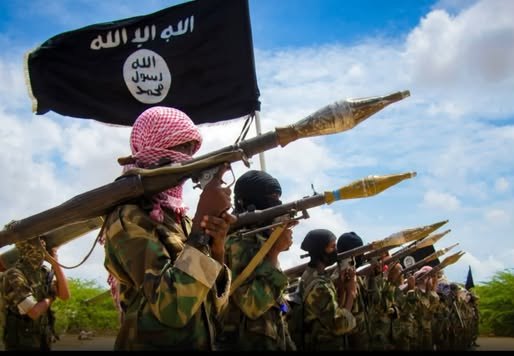
Wacera Macharia, a Nairobi-based child psychologist, told HumAngle that such exposure can profoundly damage children’s emotional development, leaving some psychologically numb, traumatised or vulnerable to internalising violence.
Abdullahi described the Andak (day care of violence) run and managed by Lajnat al-Shar’i (shariah or religious committee) providing schooling, feeding and clothing “as an obligation” to the children of their martyrs. HumAngle’s additional source revealed that the Wali, the organisation’s provincial leader, directly oversees the children’s care.
Umar Gulani, who remains closely associated with ISWAP, described the treatment of the families of dead fighters: “The women, wives and children of all martyrs are accorded a type of respect that sometimes our wives wished we were dead so they could enjoy the same treatment.”
Children first receive Qur’anic memorisation and instruction in fiqh and hadith. Sources say selected graduates then receive training for mostly military or administrative roles, with later cohorts following them.
The source identifies brand names translated as “Jilul Hilafah” and “Hajiyalul Kilafah”, which HumAngle’s multiple respondents for this reporting explained as indicating “future generations expected to continue their parents.”
HumAngle’s findings revealed that the children will be posted across amniyya, military commands, structures, dara’ib, zakat, shurta, Hisbah, judicial offices and other diwans, or departments.
Former members describe a rationale that combines an obligation to support the children of important members with concern about the limited schooling of many adult recruits. Leaders want a successor generation tutored within the organisation and available to run its institutions.
Additional source reporting estimates that children of current fighters and members number roughly three times the priority cohort, suggesting approximately 24,000 children in both JAS and ISWAP factions who are either being trained or indoctrinated to kill. That ratio remains a source estimate. It does not establish a separate, non-overlapping register, or show that those children all receive the training as the Andak cohort.
Experts HumAngle consulted say these children are not responsible for their parents’ decisions, and that their circumstances require protection and routes out of recruitment, rather than inherited suspicion. Treating them as an already-formed enemy force would reproduce the organisation’s claim that their lives belong to its war.
Joseph Danboyi, a lawyer practising in North Central Nigeria, says, “Articles 37 and 40 of the Convention on the Rights of the Child protect children in conflict with the law and emphasise age-appropriate treatment, dignity, and reintegration (United Nations, 1989). It is important that the courts should examine the individual’s ability to leave, exposure to threats, and opportunities to refuse particular orders.”
Wacera, the psychologist, also emphasised that recovery remains possible through sustained psychological assessment, therapy and supportive environments, although prolonged exposure can complicate rehabilitation.
Sex coercion and the reproduction of the fighting population
In the jihadist Dawla, scattered across clusters of makeshift camps, former members recounted harrowing experiences, as they were frequently at the mercy of swarms of mosquitoes, soldier ants, and poisonous snakes. They were also exposed to the rains. They equally recounted the horror and trepidation that descended in the camp at the sound of a jet in the sky or the sight of a drone. Food was frequently inadequate.
A separate group of former senior insurgents, now living in Maiduguri, gave remarkably similar accounts of life inside the Dawla, describing an existence defined by hunger, exposure, discomfort, and the persistent possibility of sudden death.
Umar Gulani offered a peculiar comparison. Between a forest camp and a luxury hotel in the city, he said there was at least one experience in which the difference somehow disappeared.
“Sex,” he said. “That one felt the same.”
It was a grim punchline to an otherwise miserable inventory of life in the Dawla. Apparently, some comforts were things even insurgency could neither improve nor completely ruin.
During this investigation, interview accounts repeatedly identify access to sex as a recruitment and retention incentive within Boko Haram and ISWAP. Sources place it second to ideological conviction, vengeance or access to power and money when explaining why many men join and remain.
Sources describe marriage within the insurgency as relatively cheap and accessible for male members. Marriage can be arranged quickly and with fewer financial requirements than are customary in many communities, while divorce and remarriage are also relatively easy. For recruits with limited income or marriage prospects, membership can therefore provide access to wives and sexual relationships that might otherwise be difficult to obtain.
Interviewees also describe access changing with rank and status. Fighters who rise within the hierarchy may acquire additional wives and, according to accounts gathered during this investigation, ‘gain access’ to female captives. Boko Haram has abducted large numbers of women and girls over the course of the insurgency, and previous investigations by Amnesty International and Human Rights Watch have documented forced marriage and sexual and gender-based violence like rape and sexual slavery against female captives.
Some unions within insurgent communities are treated as marriages, while abducted women and girls have also been assigned to fighters without meaningful consent. Accounts collected for this investigation describe rape of female captives held as slaves alongside forced marriage.
The interviews indicate that sexual access operates through several arrangements within the insurgency: facilitated marriage, divorce and remarriage, status-linked access to women, forced marriage, and the sexual exploitation of female captives.
The former members estimated that a significant per cent of the drugs consumed by fighters are being taken to improve sexual performance rather than endurance in battle, an unexpected priority for men living under the near-constant pressures of hunger, disease, military strikes, and death.
HumAngle could not independently verify the consumption estimate for pain relief, sexual performance or physical endurance, including combat and long-distance movement. It is based on accounts from former members and does not establish insurgency-wide patterns.
Its significance is in what the men chose to describe: substantial attention to sexual gratification within organisations whose leaders preach sacrifice and obedience.
Former members say even Shekau became alarmed by the scale of sexual activity inside the insurgency, complaining that fighters were having too much sex, producing children they could not feed, then blaming him when food ran out.
In an August 2016 exchange following Boko Haram’s split, ISWAP’s Mamman Nur played an audio recording of Abubakar Shekau disclaiming responsibility for fighters’ children, whether their fathers were dead or alive. “I didn’t ask anyone to engage in iskanci (sex),” Shekau implied. ISWAP challenged him, insisting that caring for fighters and their families was central to the struggle itself. The irony was striking: two factions fighting over religious duty could not agree on who should feed the children of their own war.
Another irony was that Shekau, who fathered 26 children in total, 19 from his wives and seven from women he enslaved and abused, was warning his followers about too much sex and too many children.
The accounts connect how sexual access and household growth held the key to supplying a future generation of insurgents.
Women subjected to sexual violence live with the pain beyond the moment of the assault. Pregnancy, childcare, and dependence bind a household to the conditions set by armed men, and the children born within those relationships grow up where the organisation provides the only schooling and determines the route into adulthood.
The narrative of Andak further connects to this account of sexual assault to reveal the institutional weaponisation of childhood and sex.
In Boko Haram territory, more men can be called to fight
Boko Haram maintains a broader conception of who can be required to fight than ISWAP’s distinction between standing soldiers and other institutional roles within its areas of control.
HumAngle’s interviews with sources identified nine kaids on the mainland and seven in the Lake Chad area loyal to the Boko Haram formations. The sources describe a kaid command with about 1,000 people available for fighting, others with 2,000, and some exceeding 3,000. These command descriptions do not, by themselves, produce a complete account of the fighting population.
Unlike ISWAP, Boko Haram does not maintain separate amniyya and shurta structures in the same way. Hisbah members usually also carry weapons and join raids, and adolescent boys and physically able adult men are expected to fight despite having little formal training and identification as soldiers.
More than 25 interviewees, including vigilantes, hunters, military officers, and former JAS members, informed a source-based estimate of approximately 60,000 AK-47s/AKM/AKMS and other pattern rifles, AK-74s, machine guns, RPG-7s and other RPG launchers, pump-action rifles, and IEDs across the JAS Lake Chad basin and Mandara mountains and mainland formations, alongside other firearms. HumAngle could not verify this inventory, and group members were not apprised of the exact numbers.
Sources also said more than 20 per cent of those regarded as fighters have no firearm of their own or ready access to one. However, separate estimates placed access at eight or nine in every ten adult males assessed within Bakura’s Lake Chad fighting population, compared with about six in every ten in mountain and mainland formations of Boko Haram.
It would seem inappropriate to assign an exact figure to the armed headcount. Applying the access ratios to the estimated 30,000 lake and 50,000 mainland populations would imply approximately 54,000–57,000 people with access to a firearm, leaving roughly 29 to 33 per cent without access.
A former JAS fighter described another way the organisation expands participation: “Some are sent on operations unarmed, alongside armed fighters, and acquire a weapon during a raid or from a fighter who has been killed.”
The territorial administration that a camp counts misses
ISWAP’s mantiqa system distributes responsibility across territorial commands. HumAngle’s mapping identifies Buhaira, Tumbuma, Banki, Sambisa, and Faruq, alongside areas associated with JAS/Boko Haram.
These are approximate zones of authority, access, and organisational responsibility. The group exercises authority through taxation, courts and dispute resolution, preaching and religious administration, agricultural regulation, fishing access, market relationships, intelligence collection, checkpoints, logistics and punishment for non-compliance.
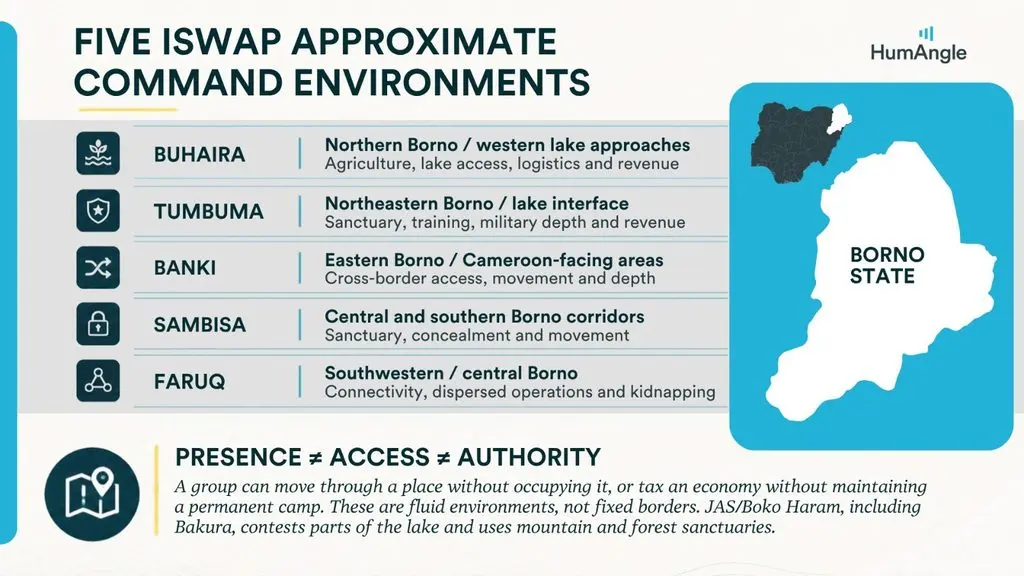
The mantiqa combines six functions. It organises fighters, defensive positions, raids, and movement; collects revenue from farming, livestock, fishing, and trade; regulates civilian livelihoods, movement, disputes, and religious practice; and uses local information networks to warn of military movements, suspected informants, and other threats. Logistics connect food, fuel, weapons, motorcycles, boats and personnel. Da’wa and Shari’a institutions translate armed presence into religious and political authority.
The system is decentralised within a wider hierarchy. Local commands have sufficient responsibility to manage their environments and respond to pressure without every activity depending on one headquarters.
This helps explain why the killing of Al-Mainuki by a joint Nigerian and US military operation, or destroying a camp or clearing a settlement, may leave much of the organisation’s territorial power intact.
What exactly has been cleared?
Mohammed Hadu’s captors made him tell his family that his brother Jidda was dead. They had killed Jidda and four other men after their families failed to raise the ransom demanded.
Jidda had six children, and he and Mohammed supported their extended family. After their displacement camp closed in May 2025, the family moved to Gome in Borno’s Mafa Local Government Area under the state government’s resettlement programme.
When Mohammed eventually returned, relatives were mourning him too because they thought he had been killed. His family said it had reported the abduction to soldiers and members of the Civilian Joint Task Force stationed at the security post in Gome, without any action.
“I told them if we had ₦30 million, we wouldn’t have come to the bush,” Mohammed told HumAngle, referring to an earlier ransom demand. His captors beat him.
His account revealed something that the reconstruction narrative of Borno State often ignored: People do not cross into dangerous territories because they misunderstand the war. They understand it but still need to feed a household.
There is indeed evidence of new developments: displacement camps shutting down, a few rebuilt houses, reopened markets, families returning. Beyond these, an extensively precarious reality exists for farmers, fishers, traders, and people collecting firewood.
Governor Babagana Umara Zulum has made reconstruction and resettlement central to Borno’s recovery programme. The programme is judged by the number of displacement camps shut, villagers returned, and markets reopened.
Years in displacement sever a family from its livelihood, privacy, and community, but reopening a settlement never guarantees the surrounding economy is safe.
For a returnee, that affects whether coming home restores a livelihood or brings another form of dependence.
The evidence from this investigation exposes a dangerous gap between territory declared recovered and the lives people can actually live there. This is why reconstructed houses, reopened communities and military clearance operations do not, by themselves, measure recovery.
An insurgency that has become a population
The deeper warning lies in what has developed beyond effective state authority.
Based on years of monitoring settlements and movements, tracking defections and population shifts, and interviewing current and former members, HumAngle estimates that over 300,000 people across the Lake Chad Basin profess membership of Boko Haram or ISWAP. They are overwhelmingly concentrated in Nigeria, with smaller populations extending into the Republic of Niger, Cameroon, and Chad.
The estimate includes fighters, wives, children, dependents, and others incorporated into insurgent communities. They live among a much larger civilian population of over one million people spread across the islands, shores, and hinterlands of Lake Chad.
In April 2026, the International Organisation for Migration (IOM) counted about 6.5 million conflict-affected people across northeastern Nigeria, Far North Cameroon, Niger’s Diffa region and Chad’s Lac Province, including displaced people, returnees, and refugees. UNHCR separately estimated in July that 8.2 million people across the wider Lake Chad Basin required humanitarian assistance.
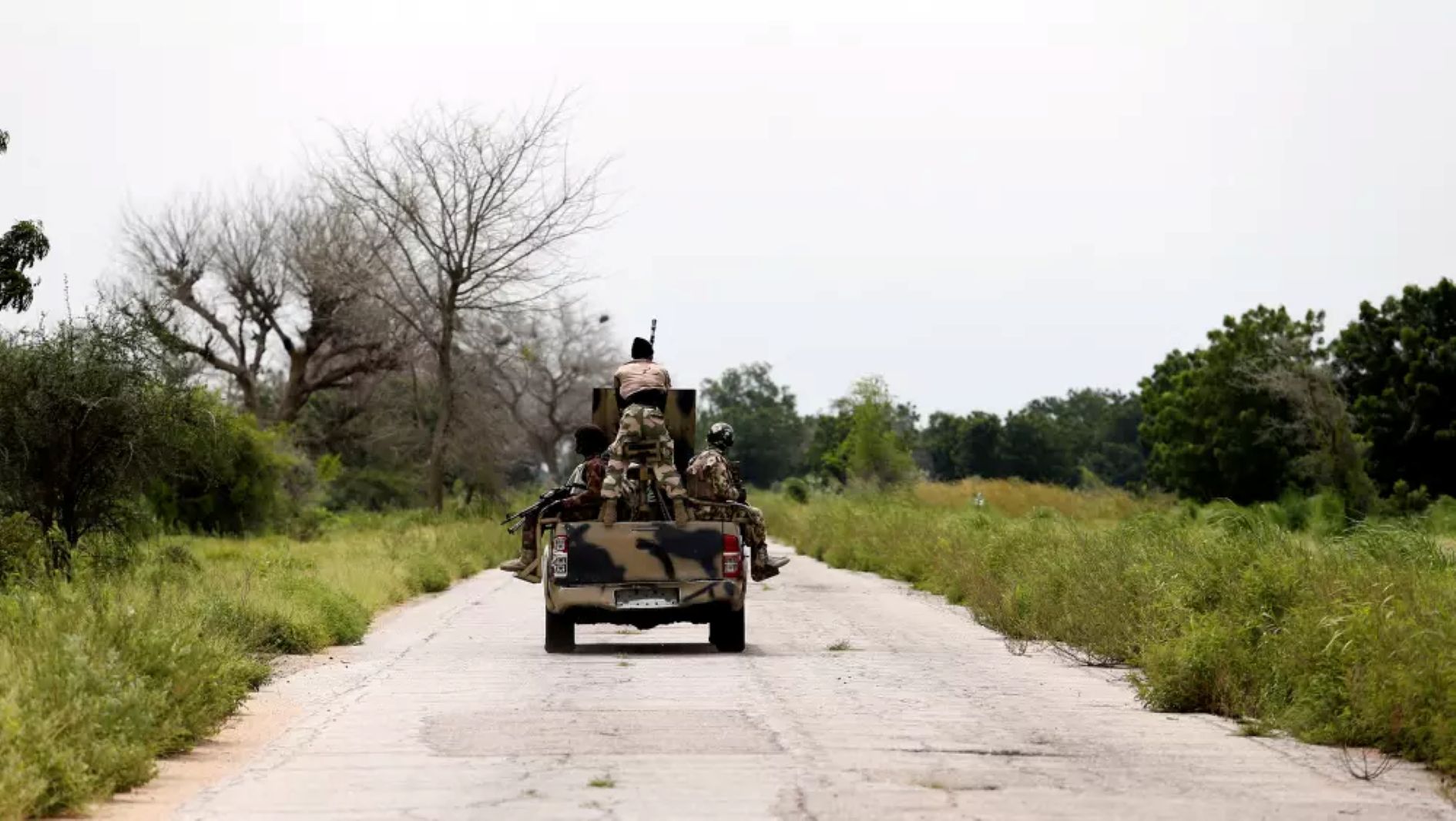
That population extends through old fishing, farming, and trading communities such as Baga, Doro, Kauwa, and Kukawa on the Nigerian side; Bosso, N’Guigmi, and Kablewa in Niger; Darak, Blangoua, Hilé-Alifa, and Fotokol in Cameroon; and Bol, Baga Sola, Liwa, Ngouboua, and Kaiga-Kindjiria in Chad. These communities form part of the human geography in which insurgents, civilians, traders, fishermen, displaced families and returnees continue to move and interact. IOM assessments have repeatedly documented displacement and return across many of these locations, including more than 4,000 people displaced from Darak and neighbouring communities after attacks in February 2026 alone.
A former ISWAP Shura member who surrendered and subsequently underwent rehabilitation under Borno State’s deradicalisation program warned that the bigger risk lies within the broader support environment in which armed groups remain embedded.
He argued that years of heavy investment in military operations have not been matched by comparable resources for non-kinetic interventions aimed at disengagement, prevention, community resilience, and reintegration.
“Unless there is equal investment in non-kinetic approaches, as we have seen over the years with military force, the 300,000 professed members will continue to expand,” he said.
His warning points to a critical pressure within the Lake Chad conflict: even where military operations reduce the number or operational capacity of armed fighters, a much larger constituency of professed members and sympathisers may continue to coexist within the wider civilian population. If that social and ideological ecosystem remains largely unaddressed, it could sustain recruitment, facilitate regeneration and prolong the conflict despite battlefield gains. Boko Haram and ISWAP can no longer be adequately understood as bands of armed men occupying remote camps. They have produced populations.
A UN report verified 5,741 grave violations against children in North East Nigeria between 2017 and 2019, with Boko Haram factions responsible for most documented cases. Children were recruited, abducted, and used as fighters, informants, cooks, messengers, sexual slaves, and carriers of explosives, while 1,433 child casualties were recorded. UNICEF also documented, between 2016 and 2021, at least 21,000 child soldiers in West and Central Africa.
International child-protection principles recognise children recruited by armed groups primarily as victims, requiring individualised rehabilitation rather than collective criminalisation.
Children have been born within these systems who have never experienced civil state authority. The threat is therefore no longer confined to the men carrying rifles today but extends to the institutions, families, and children through which these networks may reproduce themselves tomorrow.
Khalil was one of those children. Today, he is helping train the next generation

