 Follow Us on Google News


 Follow Us on Google Discover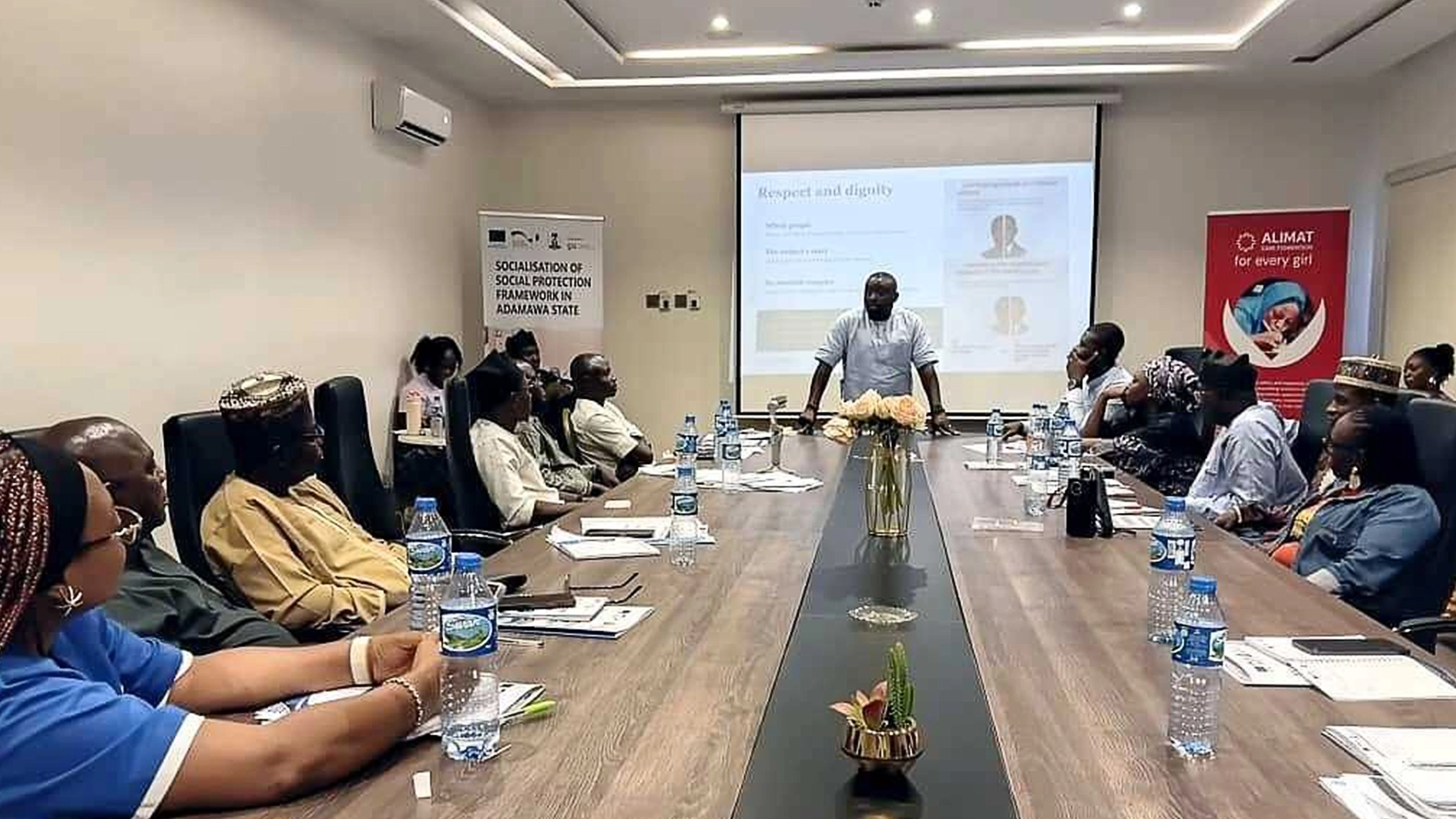
Journalists have been charged to leverage their media platforms to promote transparency and accountability in in-depth reporting, especially on social protection programmes, and create public awareness of the system.
The call was made in Yola during a capacity-building workshop organized by the Alimat Care Foundation under a social protection awareness assignment supported by GIZ and co-funded by the European Union and other development agencies.
The Managing Director of Alimat Care Foundation (ACF) and team leader of the workshop, Ibrahim Bello, urged journalists to go beyond official announcements and investigate who benefits from social protection programmes, who is excluded and whether funds released for interventions reach their intended recipients. He said balanced reporting that highlights both achievements and shortcomings would help government identify failures and hold implementing agencies accountable.
He highlighted the media’s role in educating citizens about available programmes, correcting misconceptions and giving affected communities a voice, urging journalist to obtain information from beneficiaries, frontline workers, civil society organizations and relevant government agencies rather than relying exclusively on official statements.
According him, journalists should also explain eligibility requirements, verify programme figures and report beneficiaries’ experiences, particularly in rural and underserved communities. He also cautioned that reporting only official statistics without investigating those left out could give decision-makers a false impression that programmes were working effectively.
GIZ’s Social Protection Policy and Stakeholder Engagement Adviser, Ruth Adzege, said greater public awareness could strengthen civic participation and encourage political parties to present clear social protection plans. Adding that social protection is a right, not a privilege.
She further called on the Adamawa State Government to enact social protection law, explaining that a policy provides a framework for action, while legislation would give the system a stronger legal foundation.

Adamawa adopted its social protection policy in 2024, setting a target of reducing poverty by at least 15 per cent from the stated 75 per cent level by 2027. According to GIZ-supported analyses, weak coordination among government agencies, delayed funding, inconsistent information systems and concerns about beneficiary targeting are challenges to effective implementation.
Social protection comprises of policies and programmes designed to prevent and reduce poverty, vulnerability and social exclusion. It includes cash transfers, school feeding, health insurance, pensions, skills training and assistance for displaced people, helping households cope with economic hardship, illness, unemployment, disability and disasters such as flooding.
From Joy Dennis, Yola

