 Follow Us on Google News



 Follow Us on Google Discover
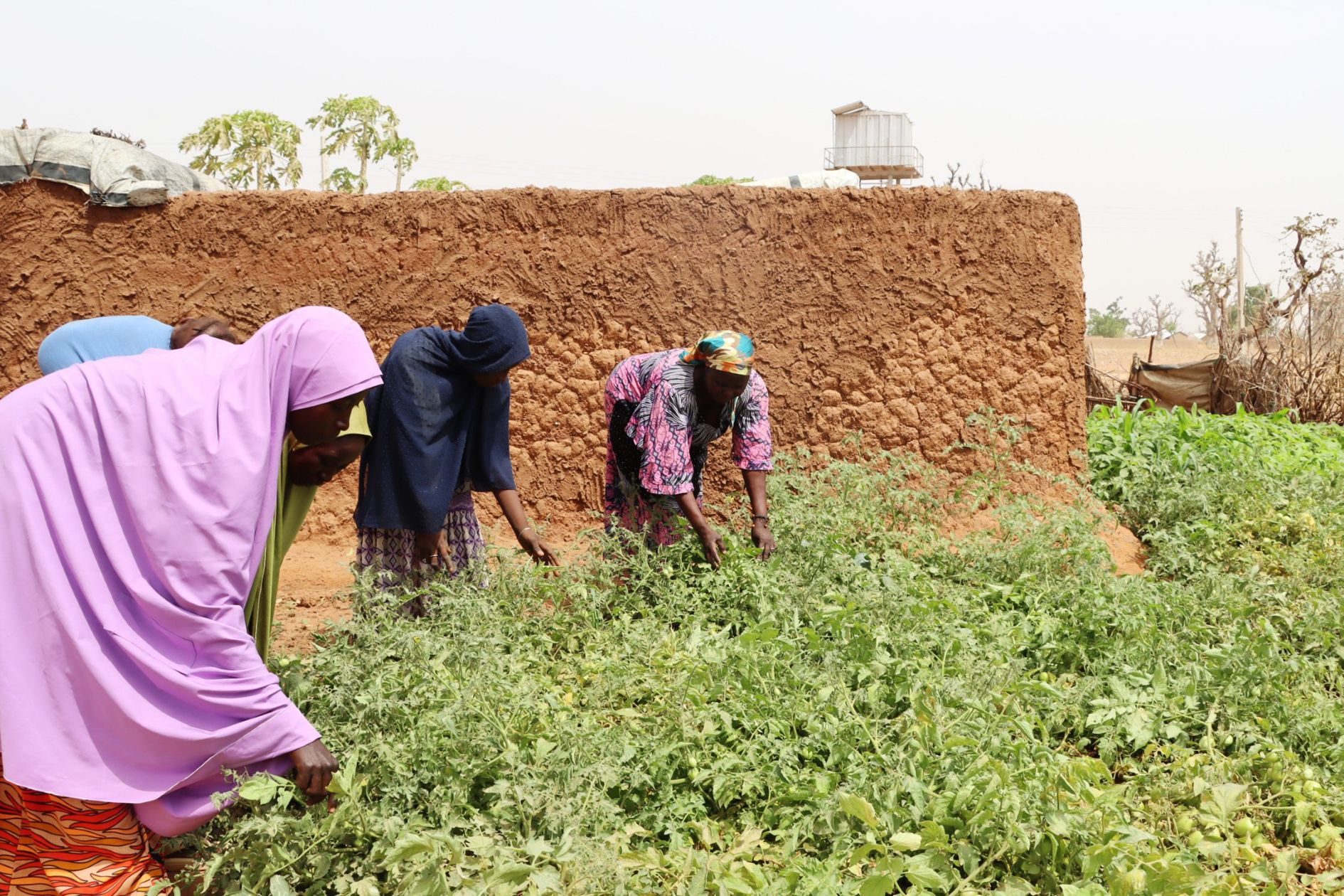
After more than a decade of Boko Haram violence, women in Adamawa’s Mubi South are rebuilding their lives through cooperative farming system, sharing a solar pump and a harvest. In the International Year of the Woman Farmer, their cooperative offers a glimpse of what recovery looks like when women set the terms. Bankole Taiwo James, in collaboration with The Guardian Digital Investigates, reports
Gella, Mubi South, Adamawa State, Nigeria – Her fetus was buried beside a road in Lokwacha, a place Hauwa Haruna had never heard of until the night she needed it. She was six-months pregnant. Behind her, in Mubi, she was running away from Boko Haram militiamen who had already attacked her village, killing people and taking others away.
Before that, Haruna had been hiding with about 30 relatives and neighbors in her single house in Mubi.
It was while escaping that she developed stomach cramps somewhere on the long road towards the Cameroonian border with Nigeria, and eventually went into preterm labour. Strangers found her bleeding by the roadside. They gave her water and a wrapper to wear. Then they helped her bury the child. Then she kept walking.
“I had no choice,” she says now, sitting on a dry wooden stool at the entrance of her house.
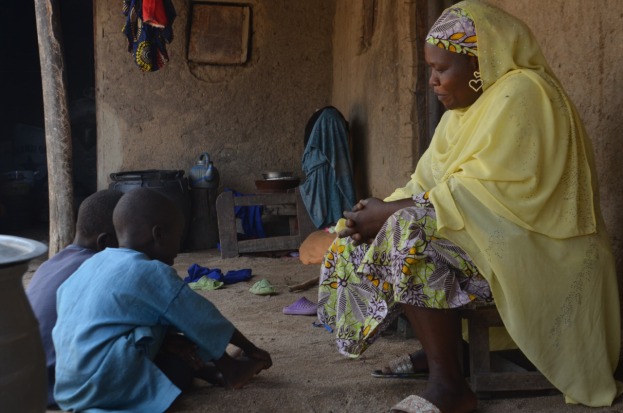

Hauwa Haruna with two of her children at a house in Nigeria. Photo credit: Bankole Taiwo James
That was in 2014, at the peak of Boko Haram insurgency in northeast Nigeria. Haruna is now a mother of several children. She is back to her home, and is the elected women’s leader of a cooperative of 30 farmers in Gella, a farming community in Mubi South Local Government Area. In a few months, she expects to harvest what would once have been unimaginable: 30 to 40 bags of grain from a single season, from a farm that no longer depends on rain water.
A war that reached the harvest
The Boko Haram invasion that began in 2009 has reshaped life across Borno, Yobe and Adamawa states. Adamawa was not the epicenter, but it absorbed much of the shock. When fighters seized Mubi in October 2014, Nigeria’s National Emergency Management Agency (NEMA) and the Adamawa State Emergency Management Agency recorded 10,496 displaced people in five camps in Yola South and Fufore within days, with more still arriving. Many more sheltered in host communities or crossed into Cameroon.
The military retook Mubi weeks later, but the displacement was never a single event. Years later, a United Nations situation report counted more than 209,000 displaced people in Adamawa. Their urgent needs were food, shelter and livelihood support. In mid-2026, UNICEF reported that 5.9 million people across Borno, Adamawa and Yobe still needed humanitarian support, with armed conflict remaining the main driver. Because the violence in the state was most devastating in Madagali, Michika, Mubi and Maiha, the World Food Programme said it was feeding 130,000 people affected by conflict in Madagali and Michika, Adamawa’s northern districts, closest to the Sambisa Forest.
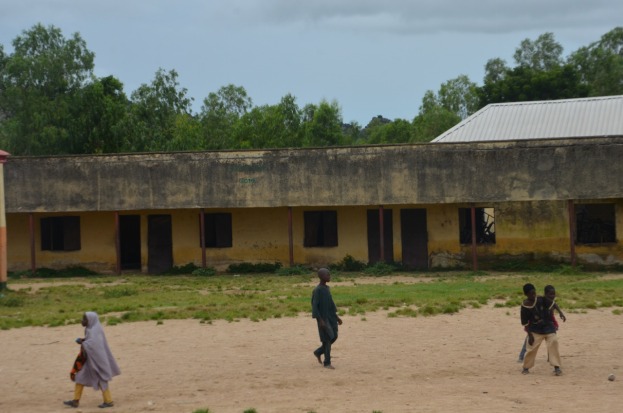
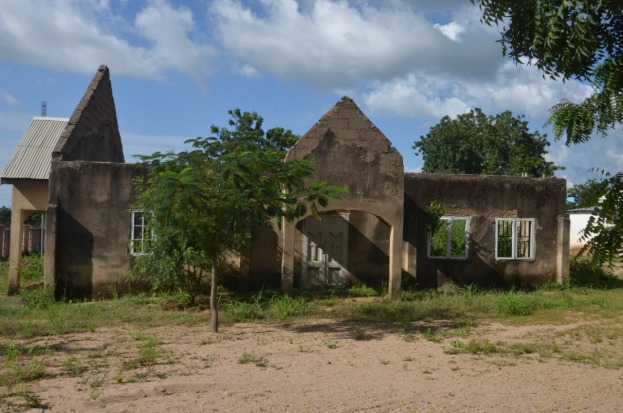
Abandoned classrooms and churches after they were burnt during the 2014 Boko Haram invasion in Gella. Photo: Bankole Taiwo James.
Behind those numbers lay the quieter economic crisis. Northeastern Nigeria is an agricultural region, and the decades of insurgencies struck at the calendar itself. Villagers had no choice but to abandoned fields at planting and, worse, at harvest. Markets emptied. Schools closed. The ones who stayed behind, or returned, found their homes emptied.
Aishat Muhammad, 55, a mother of 11, and a farmer in Gella, remembers that her family did not flee at once. The attack came during the rains, when crops were nearly ready. At home, the grain in her store depleted so fast, because neighbours who were also fleeing from the Boko Haram kept arriving at her door, and she fed them. When she and her family eventually ran, she sold what she could to raise fare for the journey across the Cameroon border.
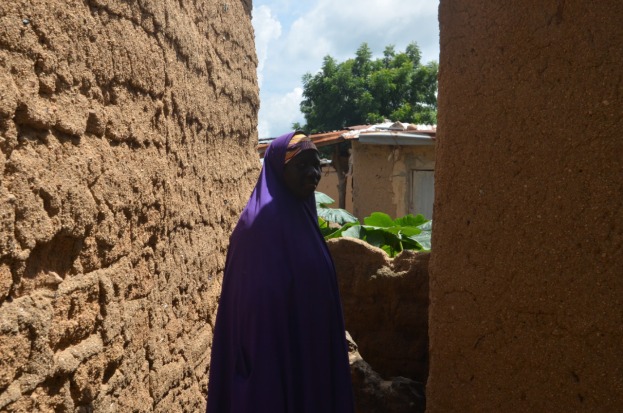
Aishat Muhammad, one of the cooperative women farmers in Gella. Photo Credit: Bankole Taiwo James
“We had planted and the crops were almost ready, around October. Then the attack came. We just left the farm and everything we had planted and grown went to waste,” she says
Coming back to nothing
When the army finally retook Mubi from the armed fighters and it felt safe enough, Aishat and Haruna returned to Gella. They found nothing left. Farm labour was the only available work, and they took whatever wage that was paid.
“We took 10 Naira for work that would initially pay 15 Naira. We were desperate. We had returned home with nothing, to find nothing that we had left behind,” says Muhammad.
The region has not fully recovered. The United Nations Population Fund (UNFPA) stated in its January 2026 situation report that the humanitarian situation across Borno, Adamawa and Yobe remained critical. Humanitarian partners and the Nigerian government had launched an appeal for $516 million to help 2.5 million most vulnerable people, with women and adolescent girls making up 80 per cent of those in immediate need. At the time, food insecurity was escalating in the north-east, with some aid pipelines at risk of collapse.
It was against this backdrop, between emergency relief and genuine recovery, that Alimat Care Foundation (ACF) arrived in Gella community.
From a savings circle to a farming cooperative
Before ACF, Gella’s women mostly farmed during the rains. When rains stopped, there was little to do. The change in Gella began with a preexisting cooperative.
The women had an association that gathered regularly and pooled small savings to support one another through illness, births and funerals. When the Alimat Care Foundation (ACF), a youth-led women’s rights organisation, arrived in the community, it started with that structure rather than building a new one.
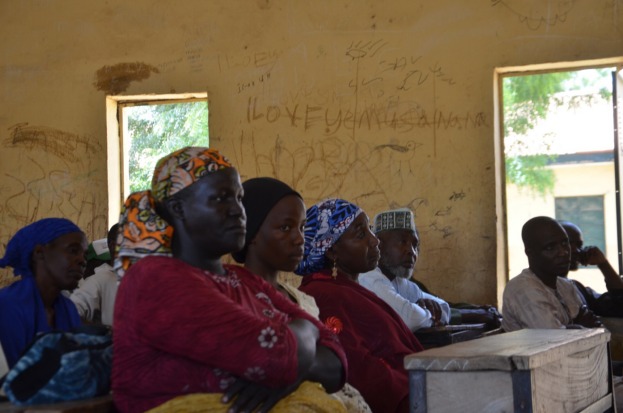
A group of Gella women during one of their general community meetings. Photo Credit: Bankole Taiwo James.
ACF was established in 2020 and registered with Nigeria’s Corporate Affairs Commission in 2022. It works in crisis-affected communities where inequality, conflict and poverty overlap, and its programmes span girls’ education, prevention of gender-based violence, sexual and reproductive health, climate-resilient livelihoods and economic empowerment. Its stated approach is to let the girls and women it serves help shape its programmes.
Out of the existing women’s association grew working groups. One is an irrigation cooperative of 30 women, led by Haruna, who share a solar-powered pump, tools and know-how through the dry season. The other is a cohort of 20 young women, led by Bilkisu, who grow cucumbers, sell their harvests together and bank the proceeds in a shared fund.
“Before, everybody was on their own. When they came, they started gathering us to work as a group, to share ideas,” Haruna says.
The rhythm of the group working is deliberate, and different from the lonely scramble it replaced. It begins with a meeting. The group has a secretary, who also serves as its public relations officer. She assembles the members and notes down what they agree on.
“Everyone brings their ideas. We plan, and everyone agrees,” Haruna says
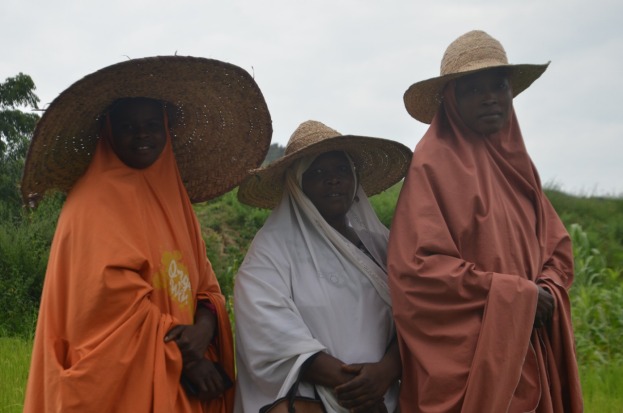
Hauwa Haruna with two other members of their farmers cooperative group. Photo Credit: Bankole Taiwo James
Dates are fixed so that all members arrive at once. They clear the land together. Members then pool money to buy pesticide and herbicides. And because spraying is considered men’s work, they pay for the services. It is one place where the cooperative still bends to local gender norms. They do everything else themselves. After planting, the members keep checking, and where seeds fail, they replant. When the crops grow, they gather with hoes to weed. Not all 30 members work on the same day; 10 go at a time, in rotation, so that no one is stretched beyond what her household can bear.
Bilkisu’s smaller group of 20 girls operates in much the same way, reaching members by short messages or, for those without phones… “If someone has an excuse, 10 go this week and the others go next week,” she says.
Working alone, Aishat says there was a time weeds grew faster, before she finished the next field. Planting after separate rains meant uneven germination, unlike when they plant together.
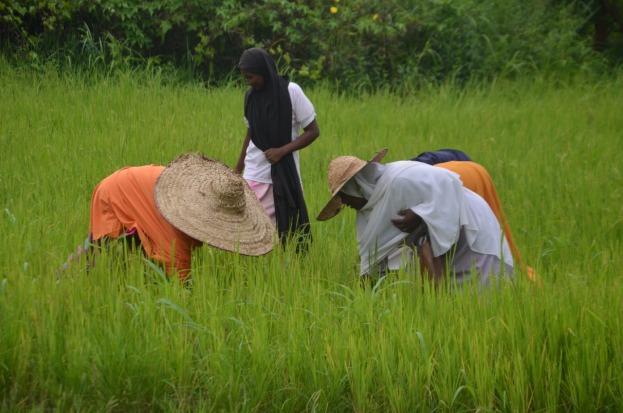
Gella women cooperative farmers working on their rice field. Photo Credit: Bankole Taiwo James
“It saves so much time, and in a group, there is a high chance of profit and a low chance of loss,” she says.
At harvest, the arrangement turns into a small financial system. A treasurer stores the produce. The members then divide it into three. One portion is kept as seed for the next season. One is shared among members so that every household has food. The third is sold, and the proceeds put into businesses and savings. “It helped us avoid financial problems,” Aishat says.
When a member of the group falls sick, members visit, and they pool money for medicine. At naming ceremonies, they cook and carry the load together. “We show people what our group is made of,” Haruna says.
Aishat’s group has a few men. Women are the majority. Hard decisions are put to a vote. “If the majority agrees, we go with it. If the majority disagrees, we forget the matter,” she says
The pump that changed the game
For years, dry spells presented women in Gella with a simple but devastating choice; either watch crops deteriorate or find water. Before solar irrigation, Gella women had no realistic means of watering their farms. “We would just pray to God to bring rain,” Haruna says.
But with the solar power, there is no fuel bill, which for a household with almost no cash is the difference between owning a pump and being able to use it. The women can now irrigate their farms, and say there is a striking difference in production.
Haruna says she previously harvested three bags of rice, compared with 10 after adopting the new farming approach. Now she expect 30 to 40 bags.
Dr Foluke Olatoye, a visiting research scientist with CIFOR-ICRAF, and a climate-smart agriculture expert, says increasingly unpredictable rainfall, shorter rainy periods and dry spells are making solar irrigation an increasingly relevant adaptation measure. Its most important function is to reduce agriculture’s dependence on rainfall. Solar irrigation can allow farmers who previously depended entirely on rain-fed agriculture to continue producing vegetables in the dry seasons, and potentially cultivate more than one production cycle in a year.
For households like Gella recovering from conflict, that can have effects beyond the harvest.
Olatoye says irrigated production can improve food and nutrition security, provide income after the rains have stopped and potentially reduce seasonal migration to urban areas when farming remains viable closer home. But the intervention is especially important for women because they often face more severe barriers to finance and productive assets.
In programmes like Alimat Care Foundation, where women have received mechanized irrigation equipment and been organized into cooperatives, she has seen women earn direct income from vegetable sales, contribute to household expenses and take part in decisions about water scheduling, plot allocation and input purchasing. That is the difference between a machine being handed to a farmer and a productive asset being placed within a structure that women can collectively manage.
Power, at home and in the field
In many farming households across Nigeria, women’s contributions are visible only when they fail. Until recently, farming in Gella was a man’s role. But the women’s cooperative farming has changed this.
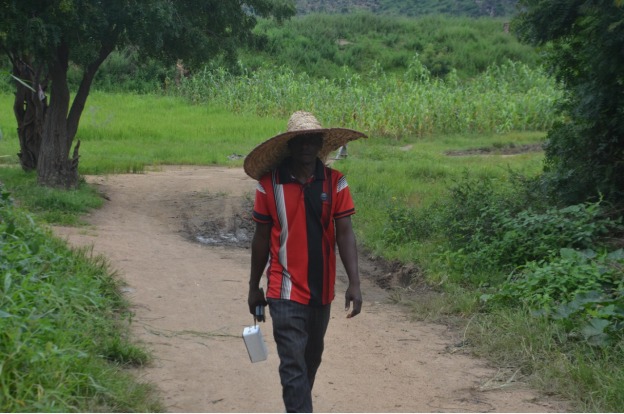
Abdullahi Jimoh, a male farmer in Gella community. Photo Credit:Bankole Taiwo James
The United Nations General Assembly declared 2026 the International Year of the Woman Farmer, and the Food and Agriculture Organization (FAO), working with the International Fund for Agricultural Development and the World Food Programme, is coordinating its observance. The aim is to highlight the essential and often undervalued role women play in food systems, and to push for policies and investment that follow. FAO figures show that in 2021, agri-food systems employed 40 per cent of working women globally, nearly as many as men. In sub-Saharan Africa and South Asia, more than 60 per cent of women’s employment is tied to agriculture. However, FAO data shows women earn around 82 cents for each dollar men earn in agri-food systems, and farm plots run by women are typically smaller and less productive, with a land productivity gap of 24 per cent.
At the launch, FAO deputy director-general Beth Bechdol said that through 2026 the work must move from personal stories to practical action: national policies, community partnerships, research and investment, and dialogue with farmers and cooperatives. This is what researchers at CGIAR say. Its Gender Equality and Inclusion Accelerator, known as the GENDER Accelerator, leads research on gender equality, youth opportunity and social inclusion in food, land and water systems. It draws on more than 100 scientists across 14 research centres and describes its mission as identifying, testing and scaling solutions. CGIAR gender director Nicoline de Haan has described the Accelerator as a “centre for excellence” for such work.
Speaking at CGIAR Science Week in Nairobi in 2025, CGIAR executive managing director Ismahane Elouafi framed the task not as repairing women but as changing the surrounding system. Cooperatives like Gella women are one version of that: they change the conditions around the farmer, such as access to water, tools, advice and markets, rather than asking them to do more with less.
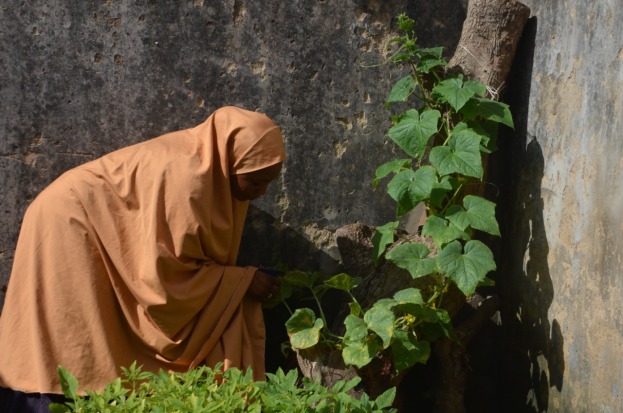
Bilkisu, leader of Gella young girls farmers tending to her Cucumber field. Photo Credit: Bankole Taiwo James
Bilkisu, who leads the young girls’ farmers group, argues that some women are better at farming than many men. She thinks women also have an advantage because what they harvest goes straight into the household’s food. “If you look at how some women profit, you will see a woman get two times what a man got.”
Haruna speaks of the change that has been measured in school fees and respect. She worried at first, perhaps, about how her husband would take her new position. Her income now buys more food and pays her children’s fees, and occasionally her husband, who runs a small business, turns to her for help.
“He is even happier than me. He is proud because he is the husband of the women’s leader, for which he gets a lot of respect,” she says.
Climate change as a gender issue
Milcah Gaman, a women’s rights advocate and gender expert, says climate shocks do not affect men and women equally. In rural communities like Gella, where women depend heavily on agriculture, drought can result in lower yields, reduced income and greater economic dependence, and that dependence can deepen existing inequalities within households.
She speaks of instances where women produce food and income, but men control the proceeds. When production falls, the resulting financial pressure can increase tension and, in some cases, contribute to gender-based violence, she says. Reliable irrigation therefore gives women more productive capacity.
Milcah believes that the women’s groups can create another source of income from renting irrigation equipment to other farmers. This, she says, can address “time poverty”: the hidden cost of the hours women spends collecting water, irrigating farms and still returning home to undertake unpaid domestic work.
“If I’m spending two hours on the farm, now it has been reduced to 30 minutes. The saved time can be used for other economic activities or family responsibilities,” she says.
The control of an agricultural asset can matter as much as the asset itself. Milcah says that the women that collectively manage irrigation equipment can participate in decisions about its use and develop a stronger sense of ownership and leadership.
That does not mean gender relations automatically change. “In strongly patriarchal communities, she warns, husbands or other community members may object when women become the direct beneficiaries of productive assets. Therefore, interventions need careful engagement with men and community structures from the beginning, so that women’s economic empowerment is understood as strengthening household and community livelihoods rather than threatening men’s status,” she says.
Olatoye says the technology should be considered both a technical and social intervention. “Women-led groups can strengthen accountability when responsibilities, assets and financial contributions are managed transparently. Gella women-led cooperatives have demonstrated stronger savings and accountability. Climate resilience is not only about equipment but also about the institutions that manage it,” he says.
A process still unfolding
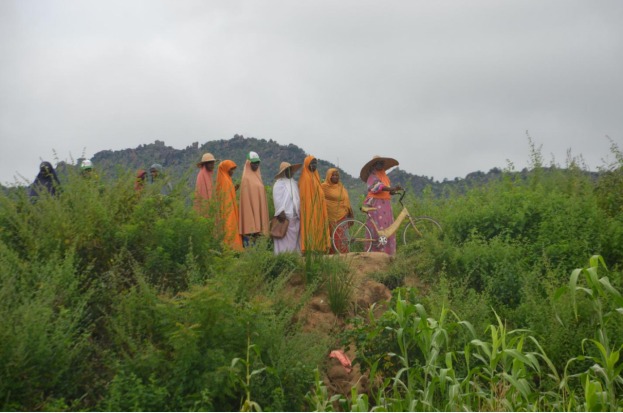
Gella women farmers gathers together as they head back together to their various houses . Photo Credit: Bankole Taiwo James
The women of Gella community have created systems for scheduling work, sharing produce, retaining seed and discussing disagreements. What they are building is not simply access to solar power but also a local governance system around women’s agricultural asset.
The women of Gella are trying to connect those pieces. They are farming together because working alone made survival harder. They are using solar power because waiting for rain leaves too much at risk. They are sharing harvests because food and income matter beyond the individual plot. And they are building leadership into the process because production without decision-making power leaves the old inequalities intact.
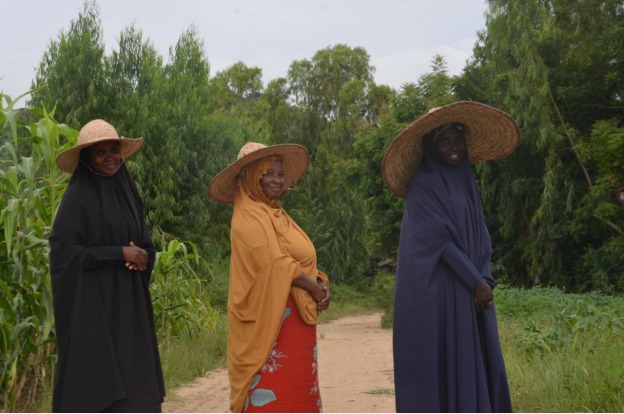
Some members of the Gella women farmers group. Photo Credit: Bankole Taiwo James.
Haruna and other women around her are proof that women do not need to be discovered as farmers. They already are.
This story was published in partnership with the Kenyan based Media for Environment, Science, Health and Agriculture (MESHA).

